


110/220 Conical Twin-Screw Barrel
110/220 Conical Twin-Screw Barrel
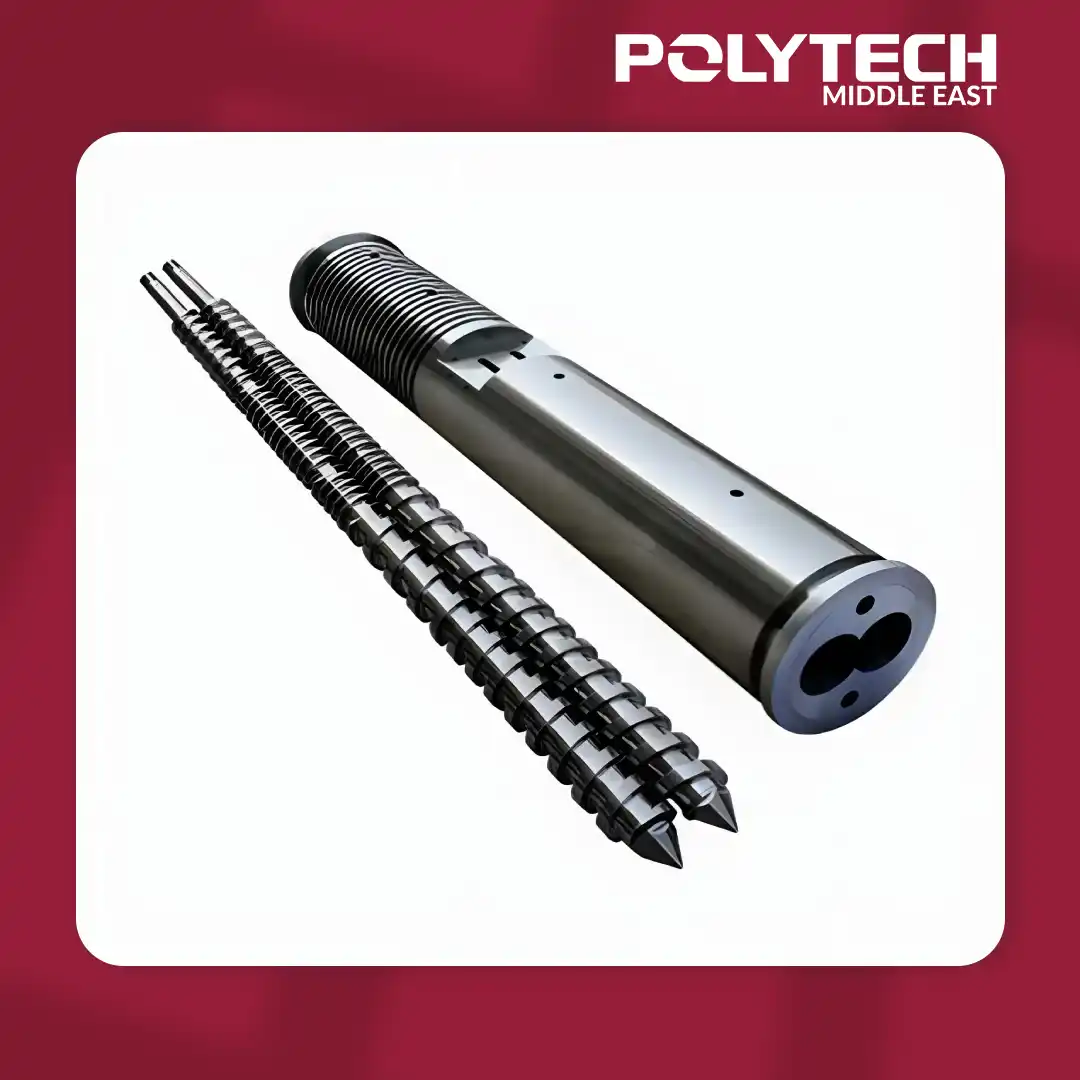
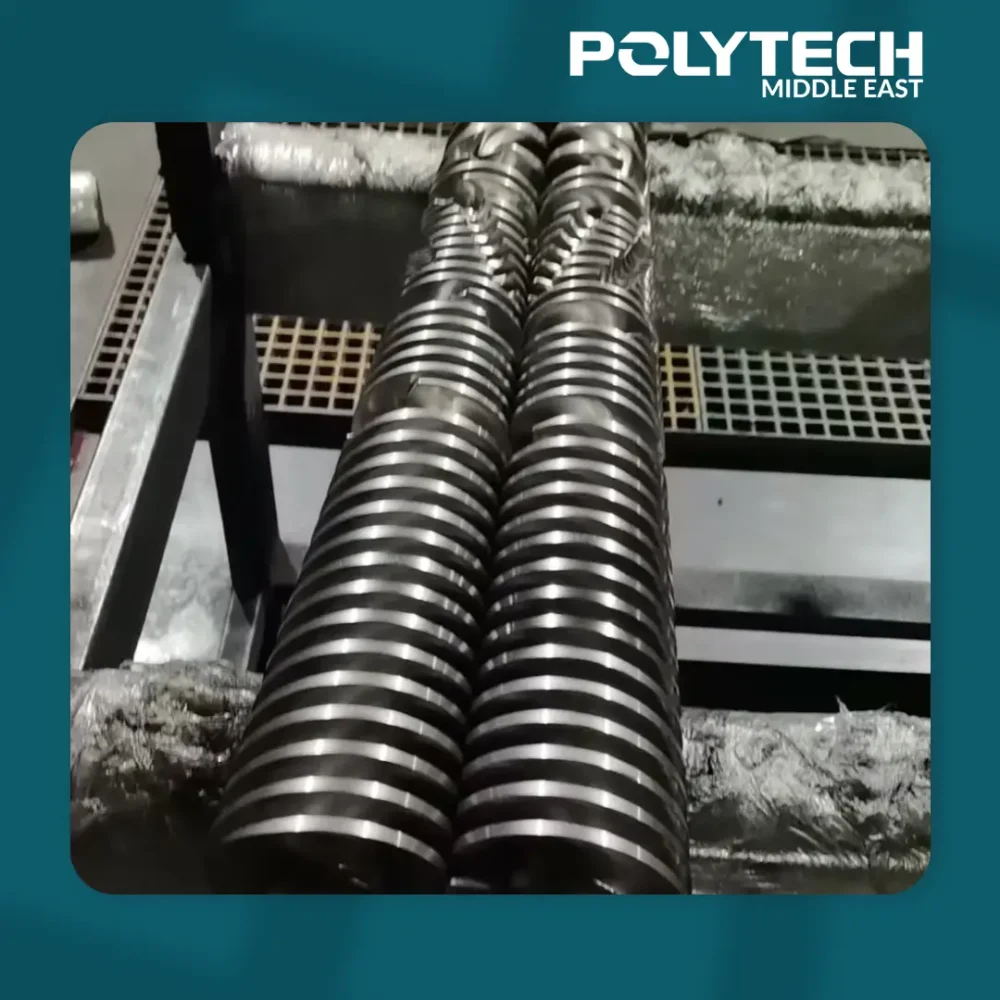
Discover the massive 110/220 conical twin-screw barrel by Polytech Middle East. Engineered for maximum industrial throughput of large PVC pipes, WPC, and thick profiles.
Category -> Machines and Spare Parts
Description
Executive Summary
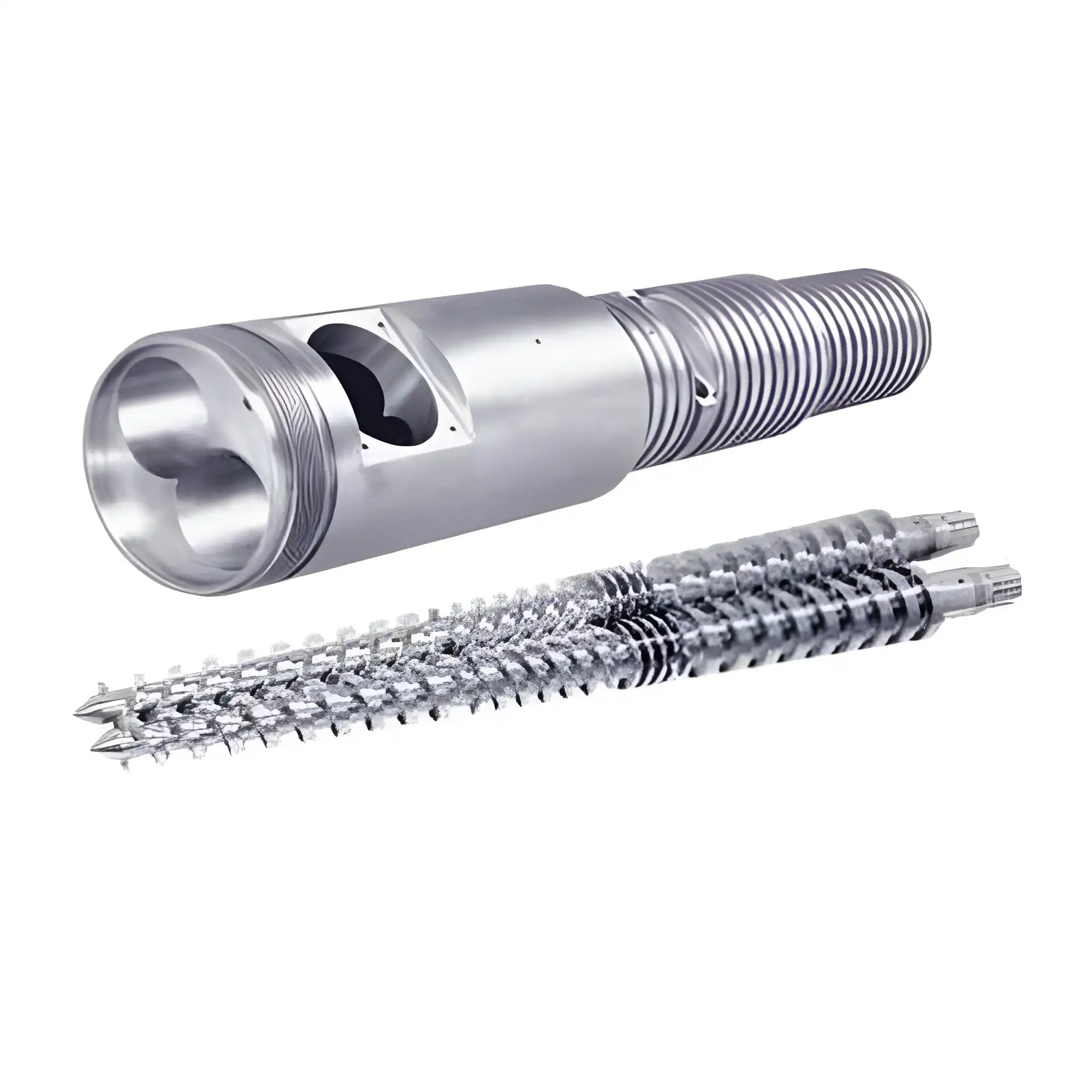
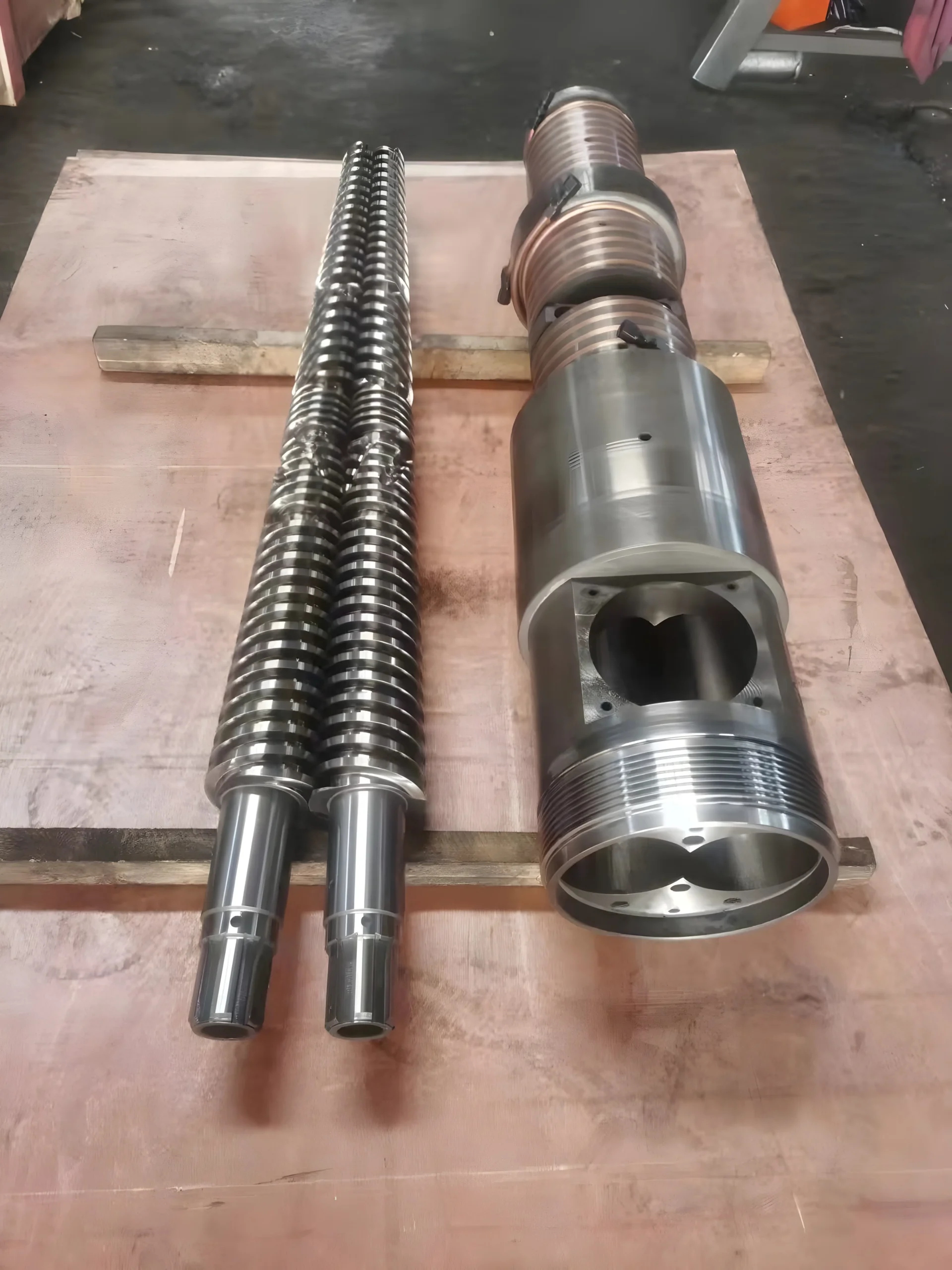
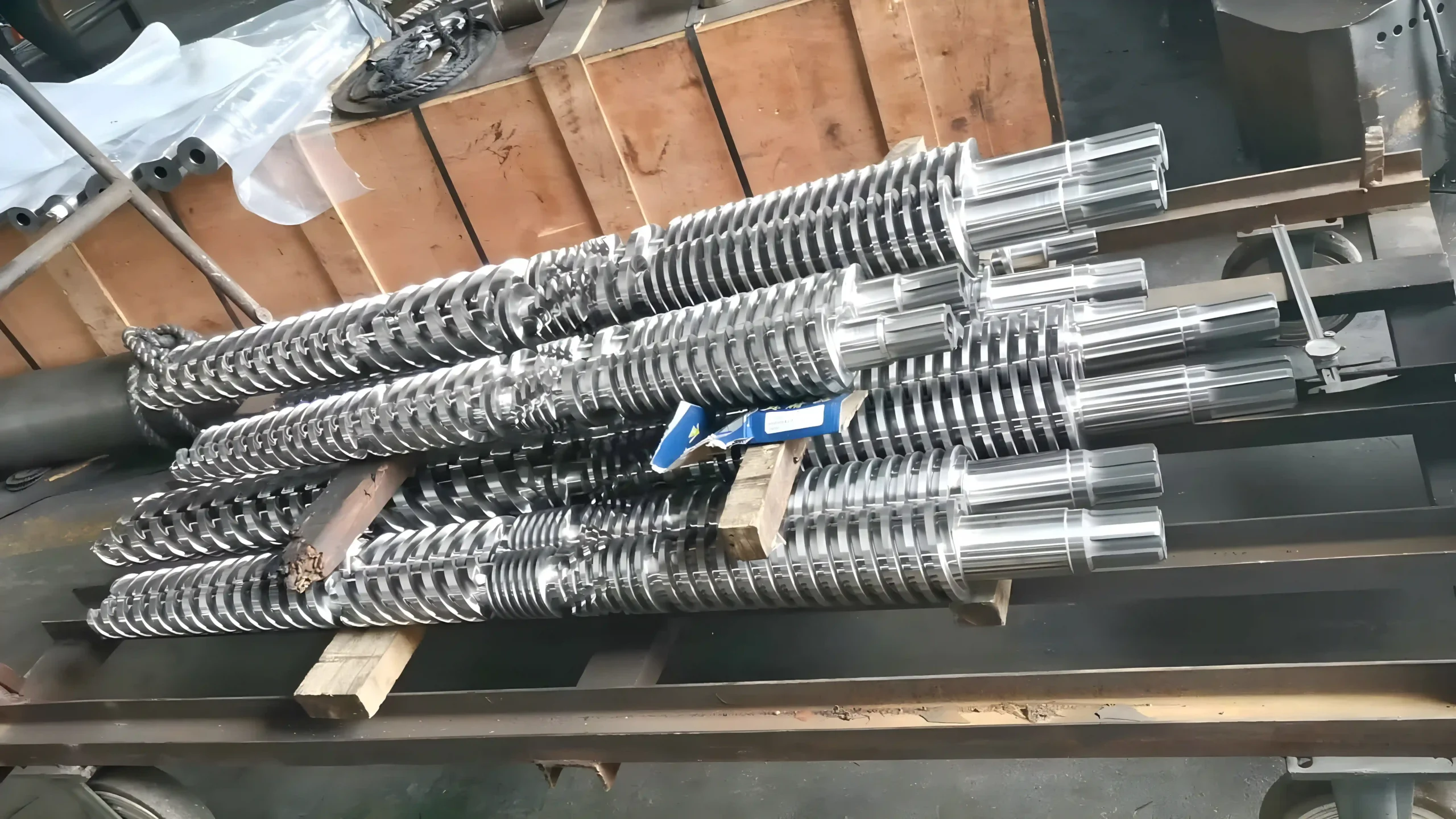
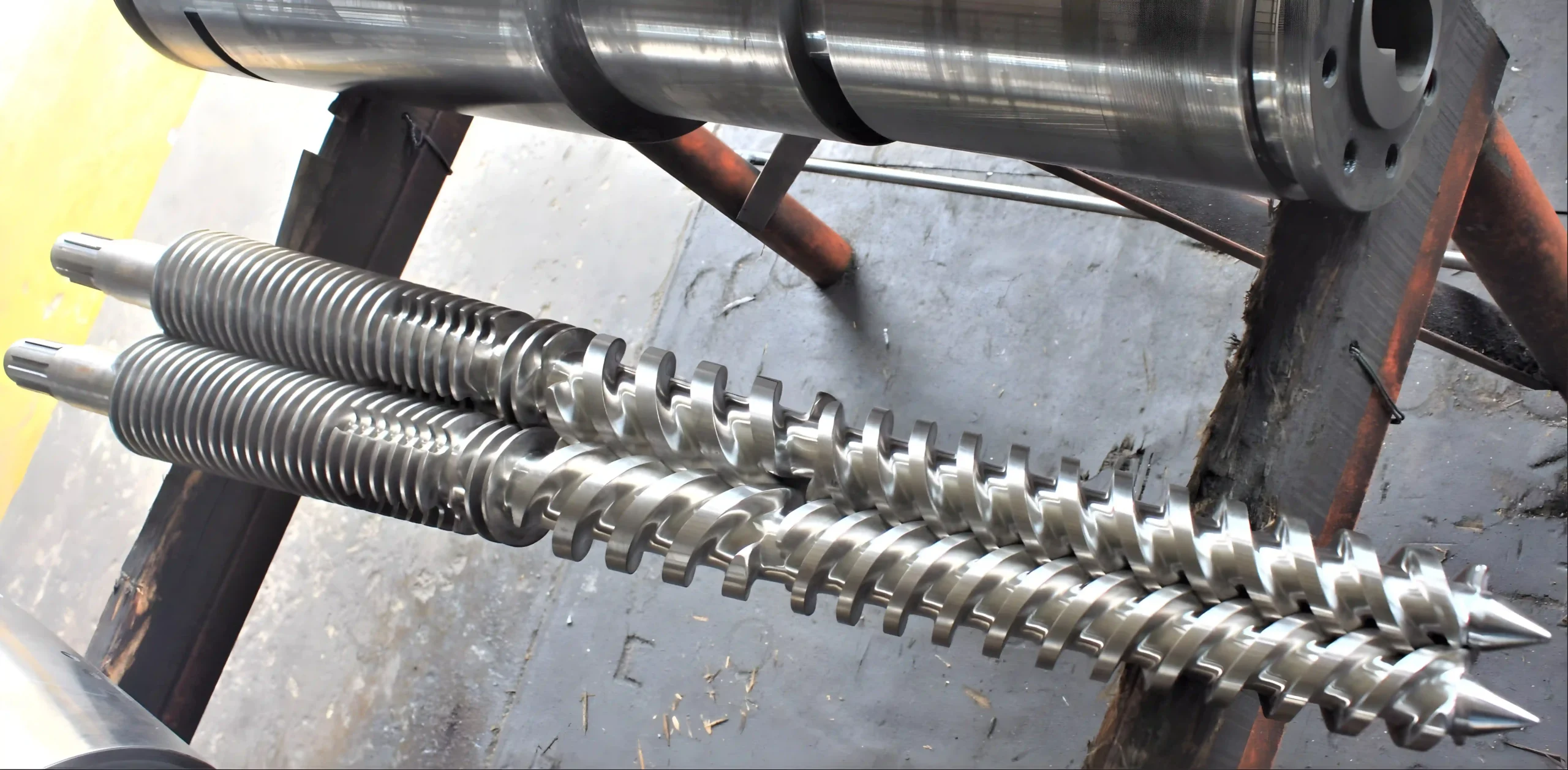
The 110/220 conical twin-screw and barrel represents the pinnacle of high-capacity plasticization for mega-scale industrial extrusion lines. Featuring a colossal 220 mm feed zone that progressively tapers to a 110 mm discharge, this formidable unit is engineered to process extraordinary volumes of rigid PVC, UPVC, and wood-plastic composites (WPC) with unmatched melt stability.
Manufactured to the exacting specifications of Polytech Middle East, the 110/220 configuration effortlessly handles continuous production throughputs ranging from 800 to 1,200 kg/h. Machined from premium 38CrMoAlA forged alloy steel and optionally armored with advanced bimetallic layers, it delivers uncompromising durability against the extreme shear forces and abrasive fillers inherent in large-diameter pipe networks and heavy board manufacturing.
Design & Materials
The sheer scale of the 110/220 system requires uncompromising material integrity. Its counter-rotating, intermeshing architecture provides a massive natural compression ratio, vital for expelling trapped air and volatiles while rapidly plasticizing the polymer matrix.
- Base Construction: Forged from high-grade 38CrMoAlA (JIS SACM645) structural alloy steel, ensuring the structural rigidity necessary to withstand extreme torsional loads over its extended length.
- Deep-Case Nitriding: Both screws and the barrel bore undergo a multi-stage, deep gas/ion nitriding process (case depth up to 0.8 mm), yielding a formidable surface hardness of 950–1050 HV (~58–62 HRC).
- Heavy-Duty Bimetallic Lining: For maximum longevity against high-calcium carbonate (CaCO₃) and wood fiber formulations, a 3–5 mm thick tungsten-carbide or cobalt-based alloy is centrifugally cast into the barrel bore and PTA-welded to the screw flights.
- Precision Machining: Despite its massive dimensions, surface roughness is strictly maintained at Ra ≤ 0.4 µm, enabling a uniform, low-friction flow path for heat-sensitive PVC compounds.
Technical Advantages
- Ultra-High Throughput: The 220 mm feed diameter accommodates extreme bulk density feeding, rapidly converting raw powder into a homogenous melt capable of outputting 800+ kg/h efficiently.
- Optimized Shear & Heat Profile: The enormous surface area of the conical design generates consistent, internal mechanical shear heat. This drastically reduces the reliance on external barrel heaters, saving energy while preventing localized burning of the PVC.
- Unmatched Homogenization: Tailored flight pitches and compression ratios ensure aggressive yet uniform kneading, perfectly dispersing heavy mineral fillers and complex stabilizer packages.
- Extended Service Lifecycle: The combination of Polytechme’s advanced metallurgy and ultra-hard bimetallic shielding minimizes the wear rate, keeping the crucial screw-to-barrel gap within tolerance for tens of thousands of hours.
Installation & Compatibility Notes
Due to the immense size and weight (often exceeding 2.5 metric tons), installation requires heavy overhead lifting equipment and meticulous rigging. The 110/220 barrel must be perfectly aligned with a correspondingly massive distribution gearbox using laser alignment or precision dial indicators (flange runout ≤ 0.02 mm).
Thermal expansion management is critical. Operators must implement a staged pre-heating protocol lasting 3–4 hours before starting the main drive. Initiating cold rotation will result in catastrophic mechanical failure or immediate shearing of the drive splines.
Maintenance & Lifespan
Extrusion engineers must continuously monitor motor amperage and head pressure. An unexplained drop in melt pressure or output indicates a widening screw-to-barrel clearance (standard operating clearance is 0.20–0.35 mm for this size class).
Rigorous purging with specialized thermal stabilizer compounds before every shutdown is mandatory to prevent massive HCl off-gassing and subsequent metal corrosion. When properly maintained, a bimetallic 110/220 barrel will deliver an operational lifespan of 35,000 to over 50,000 hours in demanding industrial environments.
Products
Applications & Industries
- Mega-Diameter PVC Pipe Extrusion: Essential for the production of heavy-wall UPVC and CPVC municipal water mains, sewage infrastructure, and large agricultural conduits.
- Wide PVC & WPC Foam Boards: Delivers the stable, high-volume melt pressure required for extruding thick, wide-format construction boards and furniture-grade WPC panels.
- High-Capacity Cable Sheathing: Handles massive volumes of flexible PVC compounding for heavy industrial cable and marine wire jacketing.
- Heavy Structural Profiles: The high output ensures continuous, dimensionally stable extrusion of large architectural profiles, piling, and sheet piling.
Applications
Gallery
Main Features
Technical Specifications
| Property | Specification (Typical) |
| Model / Screw Diameters | 110 mm (Discharge End) / 220 mm (Feed End) |
| Extruder Type | Conical Twin-Screw (Counter-Rotating) |
| Base Material | 38CrMoAlA (JIS SACM645) forged alloy steel |
| Nitriding Depth & Hardness | 0.6–0.8 mm depth; 950–1050 HV (~58–62 HRC) |
| Bimetallic Layer (Optional) | Tungsten-Carbide/Ni-Alloy (3–5 mm thickness, 60–65 HRC) |
| Straightness Tolerance | ≤ 0.015 mm/m |
| Surface Roughness | Ra ≤ 0.4 µm (Flights); Ra ≤ 0.2 µm (Bore) |
| Typical Extrusion Output | 800 – 1200 kg/h (depending on formulation) |
| Operating Temperature | Up to 400 °C (multi-zone cooling & heating) |
Related products
-
 Machines and Spare Parts
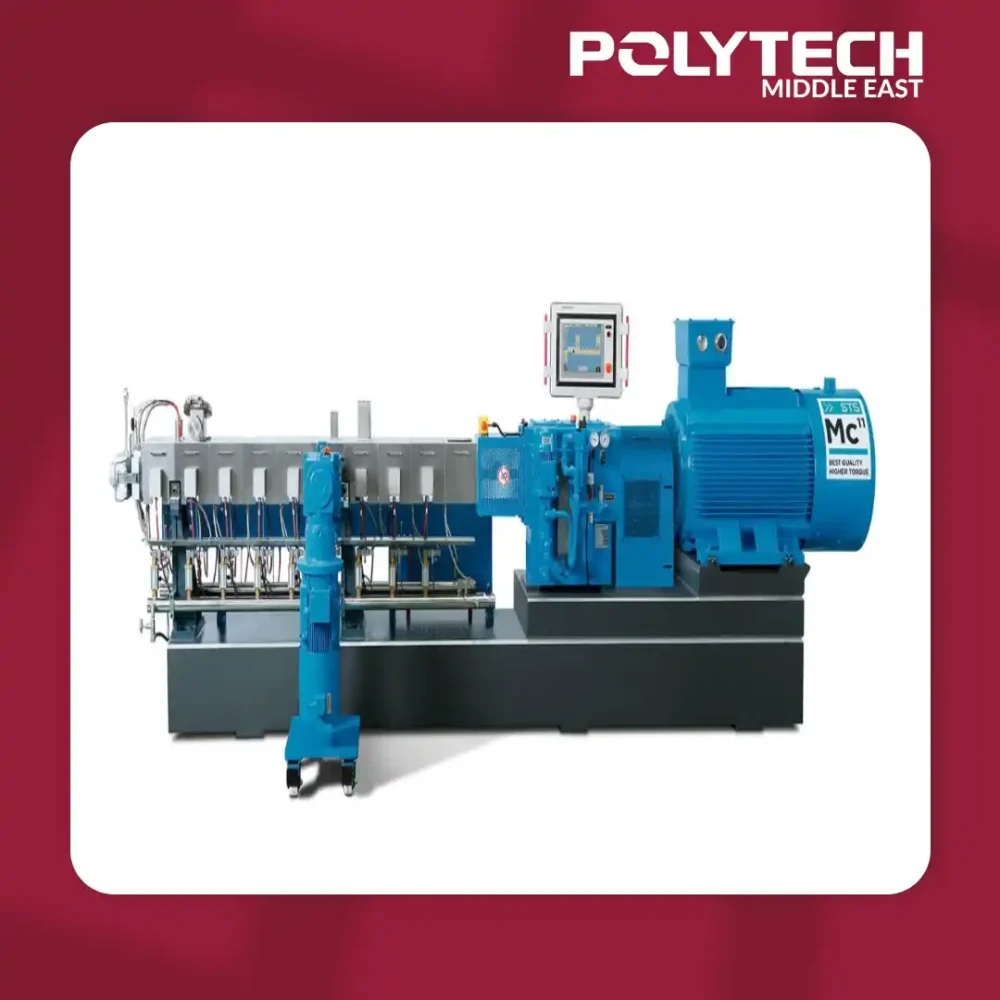
High-Torque Twin-Screw Extruder
-
 Machines and Spare Parts
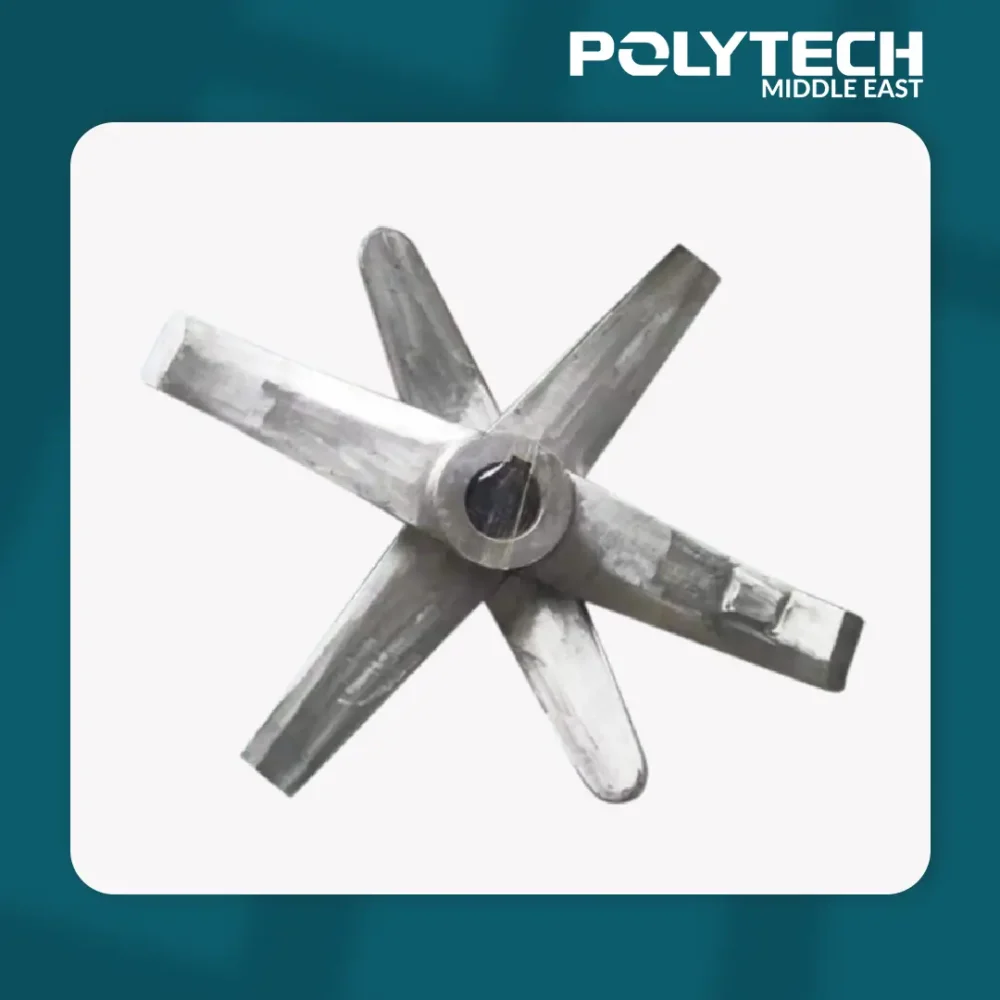
PVC Mixer Blades
-
 Machines and Spare Parts
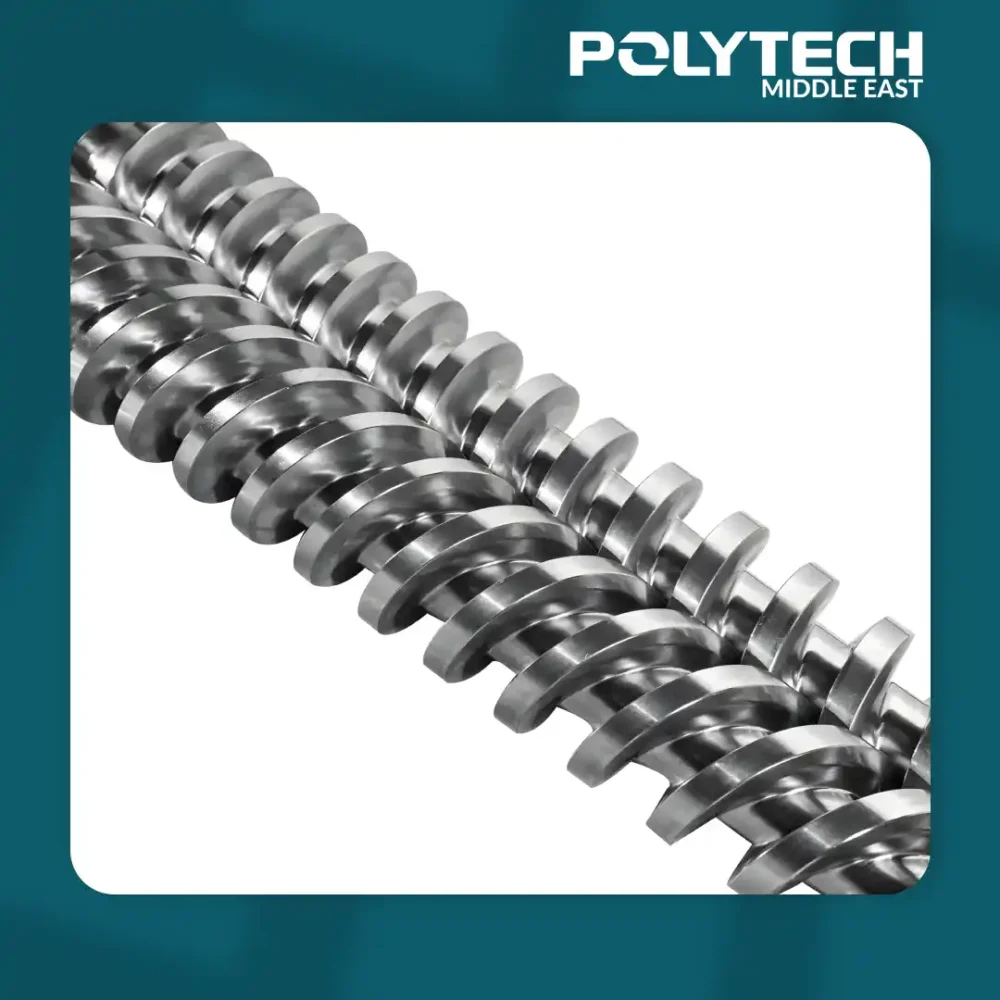
55/110 Conical Twin-Screw Barrel
-
 Machines and Spare Parts
65/132 Conical Twin Screw Barrel