


115/230 Conical Twin-Screw Barrel
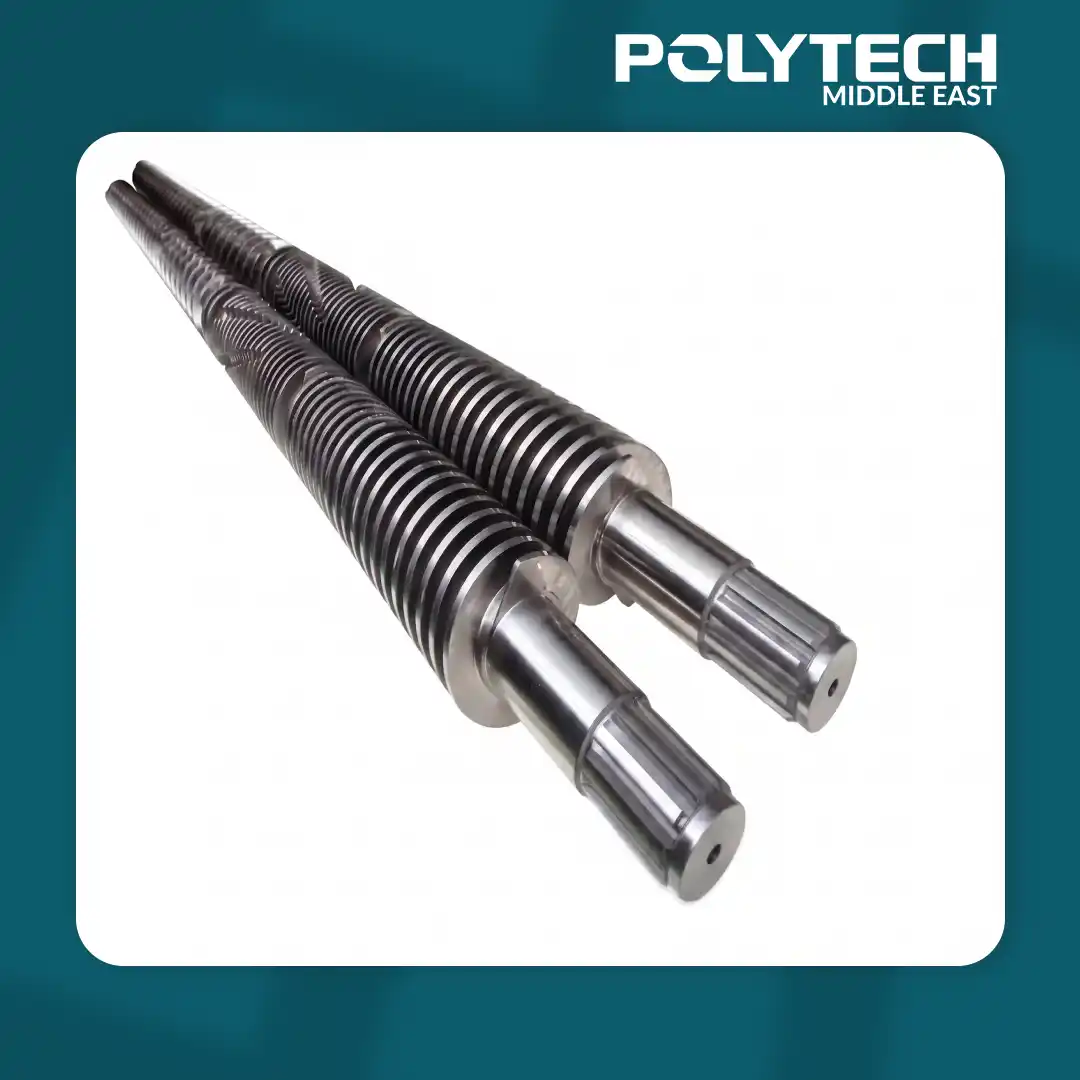
115/230 Conical Twin-Screw Barrel
Maximize your production with the 115/230 conical twin-screw barrel from Polytech Middle East. Unrivaled throughput for mega-diameter PVC pipes and massive WPC boards.
Category -> Machines and Spare Parts
Description
Executive Summary
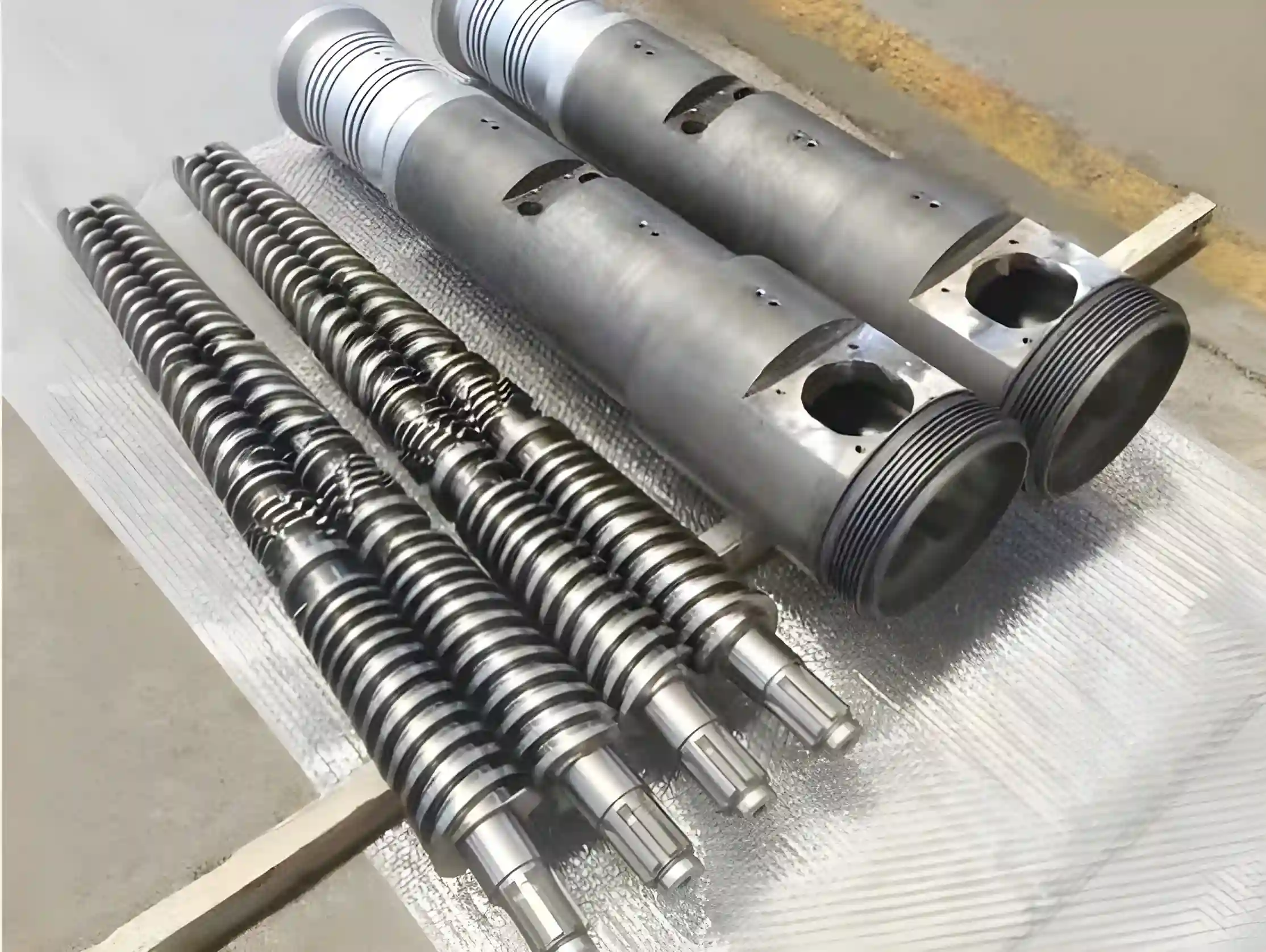
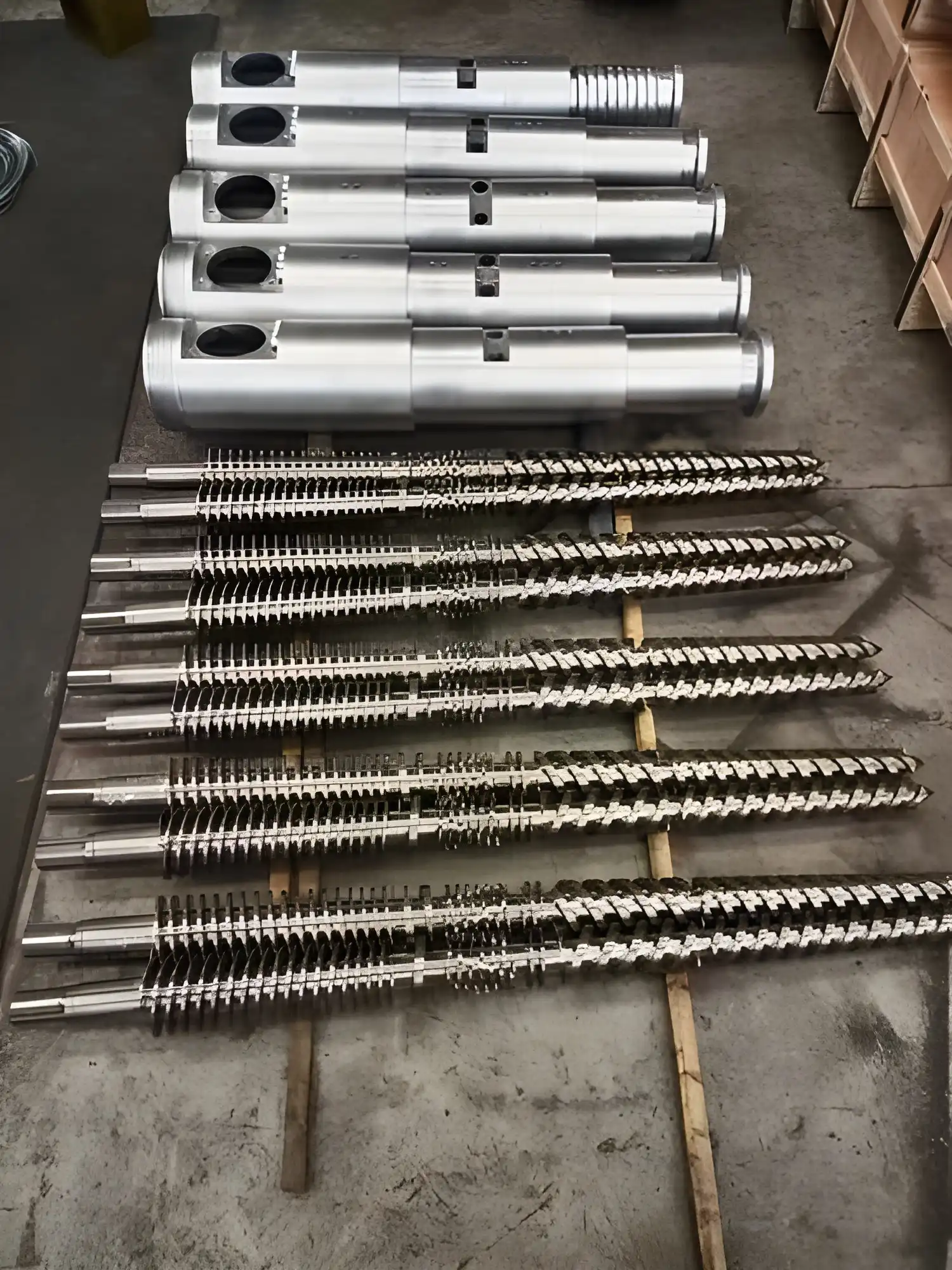
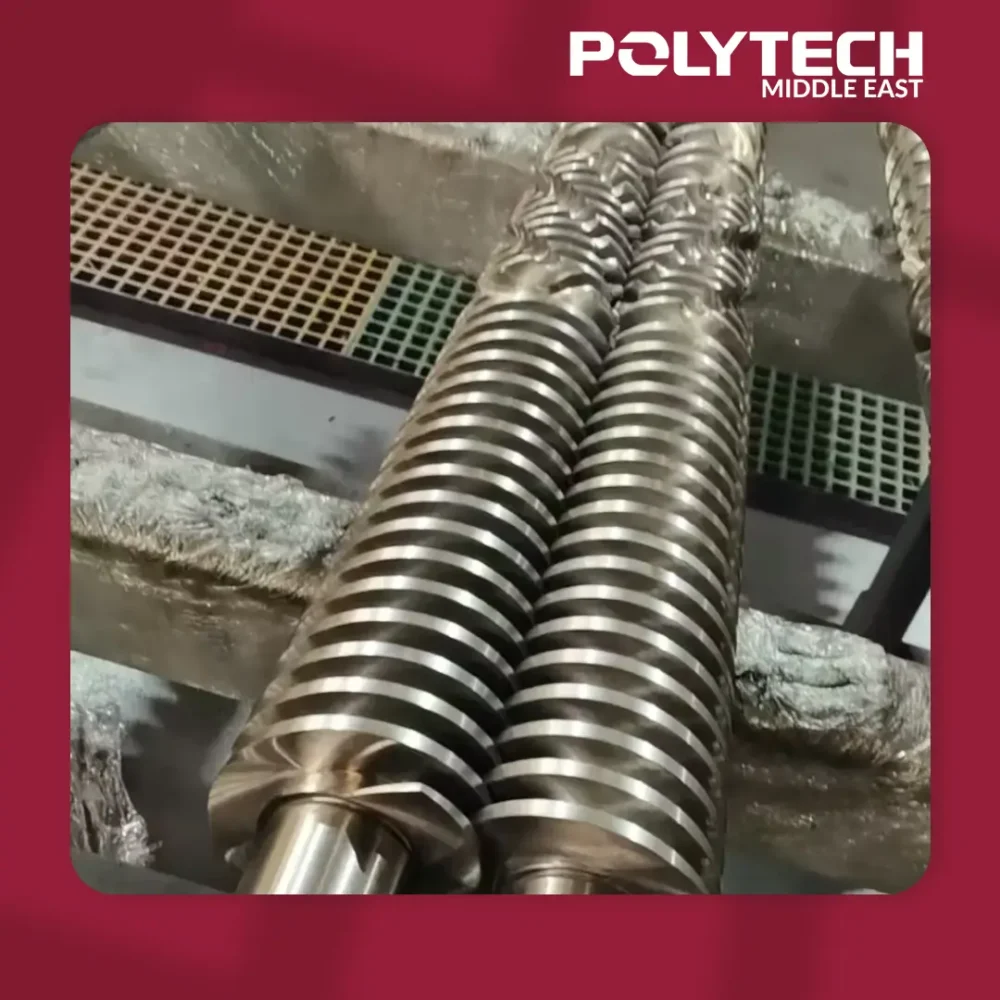
The 115/230 conical twin-screw barrel is a flagship plasticization unit designed for the absolute peak of industrial extrusion capabilities. Sporting a monumental 230 mm feed section that tapers to a 115 mm discharge, this colossal assembly is built specifically for mega-scale operations that require extreme continuous output of rigid PVC, UPVC, and heavy-duty Wood-Plastic Composites (WPC).
Manufactured to the world-class engineering standards of Polytech Middle East (Polytechme), the 115/230 unit pushes throughput boundaries, safely achieving production rates between 1,000 and 1,500 kg/h. Machined from premium nitriding alloy steel and protected by extreme-wear bimetallic coatings, it ensures unparalleled melt homogeneity and pressure stability while processing highly filled, abrasive formulations.
Design & Materials
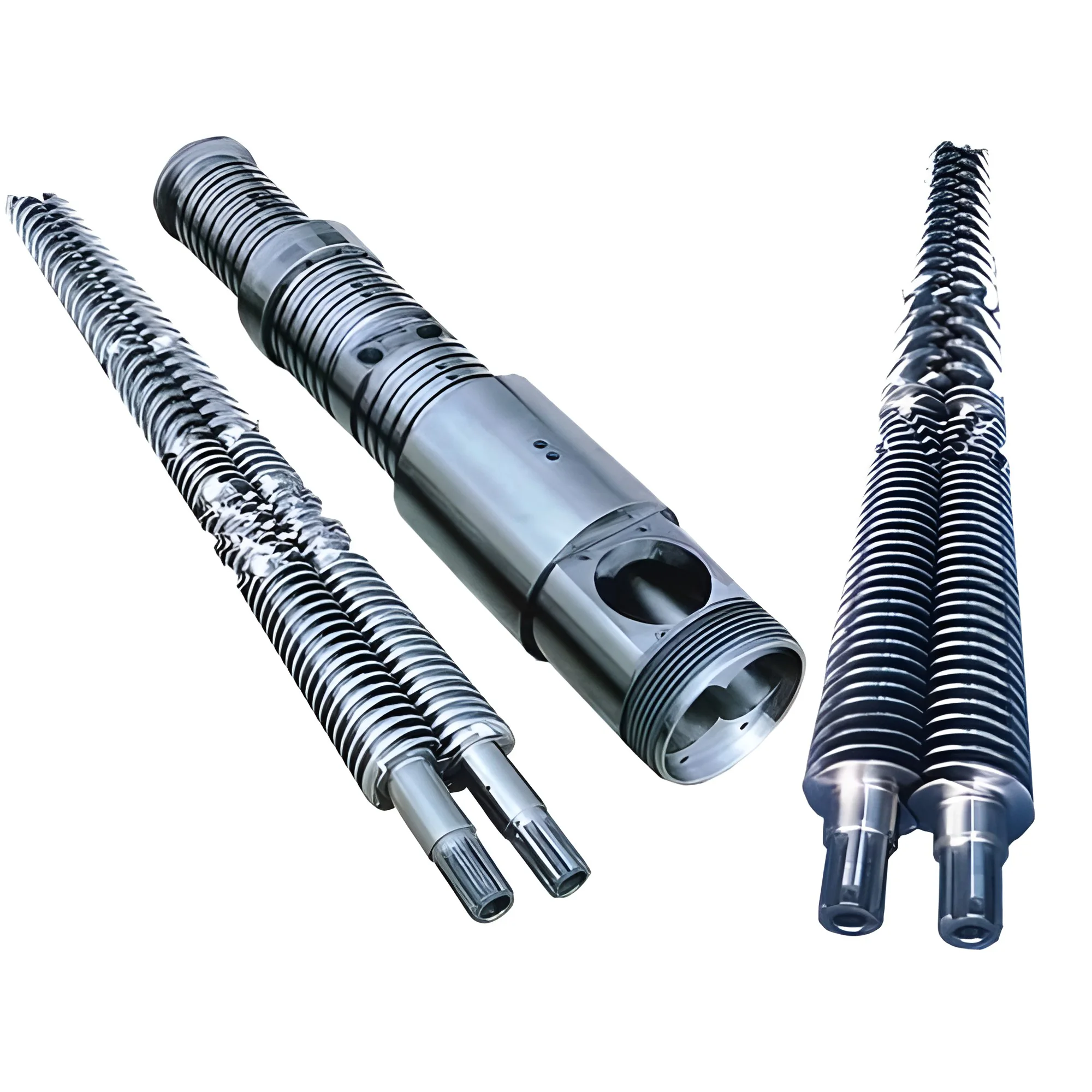
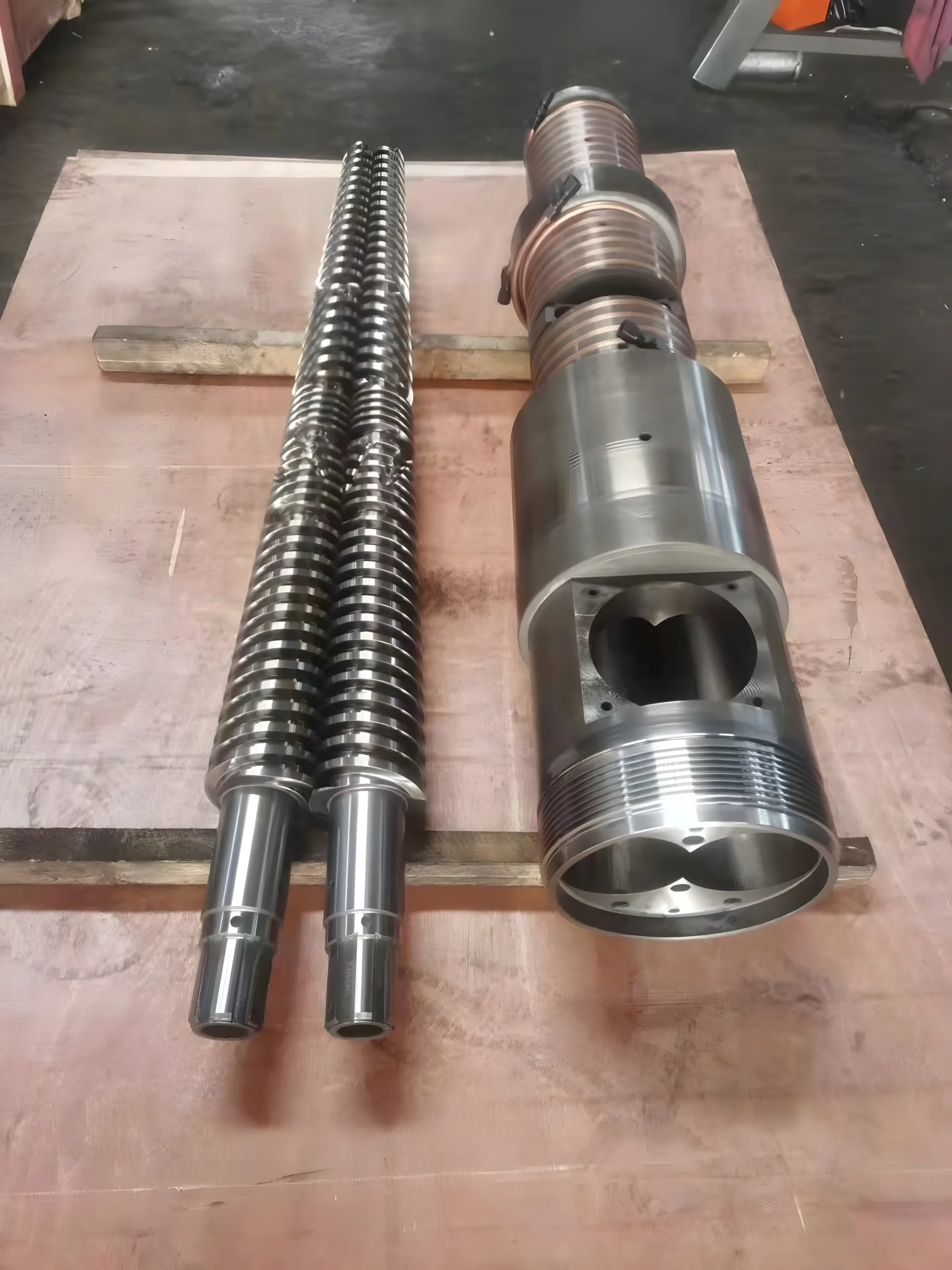
Constructing a barrel of this magnitude requires advanced metallurgy to prevent structural deflection under immense torque and internal pressure. The counter-rotating, intermeshing conical design provides an exceptional surface area, optimizing the natural compression ratio to handle massive raw material intake.
- Base Construction: Precision-forged from superior 38CrMoAlA (DIN 1.8509) alloy steel. This guarantees the core elasticity and tensile strength needed to endure relentless heavy-duty operation.
- Advanced Heat Treatment: Components undergo an extended 120-hour gas/ion nitriding process (case depth up to 0.8 mm), securing a surface hardness of 950–1050 HV (~58–62 HRC).
- Premium Bimetallic Shielding: To combat the severe abrasive forces of massive CaCO₃ and wood fiber volumes, a 3–6 mm thick tungsten-carbide or Ni/Co-based bimetallic layer (up to 65 HRC) is centrifugally cast into the bore and PTA-welded to the screw flights.
- Micro-Precision Finish: Despite its massive scale, the inner geometries are polished to a strict surface roughness of Ra ≤ 0.4 µm to prevent PVC stagnation and degradation.
Technical Advantages
- Unrivaled Throughput: The cavernous 230 mm feed zone consumes raw materials at an unprecedented rate, easily sustaining outputs of 1,000–1,500 kg/h, making it the most efficient choice for high-tonnage factories.
- Exceptional Melt Uniformity: The elongated conical profile ensures a gentle but thorough kneading action. This perfects the dispersion of pigments, impact modifiers, and heavy mineral fillers without inducing excessive shear degradation.
- Energy-Efficient Plasticization: The immense internal friction generated by the screws drastically reduces the need for external heating, optimizing the kW/kg energy ratio of the entire extrusion line.
- Extreme Durability: Engineered by Polytechme for heavy industrial environments, the reinforced bimetallic layer ensures a prolonged service life, maintaining critical clearances far longer than standard nitrided barrels.
Installation & Compatibility Notes
The monumental size and weight of the 115/230 barrel (often exceeding 3 metric tons) demand specialized heavy-lifting infrastructure. Flange alignment with the massive high-torque distribution gearbox must be calibrated using laser-guided tools, ensuring axial runout remains below 0.02 mm to prevent catastrophic shaft fatigue.
A rigorous thermal expansion protocol is mandatory. The barrel must be pre-heated in a staged sequence over 4 to 5 hours to allow the massive steel core to expand uniformly before any rotational torque is applied. Engaging the drive on a cold barrel will result in immediate internal shear failure.
Maintenance & Lifespan
Due to the sheer volume of material processed, operators must maintain a strict monitoring regimen for motor load and melt pressure. A consistent drop in head pressure indicates an expansion of the screw-to-barrel gap (optimal standard clearance is 0.25–0.40 mm for this scale).
Comprehensive purging with high-grade thermal stabilizers before scheduled shutdowns is absolutely critical; residual PVC in a barrel this large can generate dangerous amounts of highly corrosive HCl gas. With proper maintenance protocols, a bimetallic 115/230 barrel can reliably exceed 40,000 to 50,000 operational hours.
Products
Applications & Industries
- Mega-Diameter PVC Pipe Networks: The primary choice for extruding massive heavy-wall UPVC and CPVC pressure pipes used in municipal water, sewage, and deep-well casing projects.
- Massive PVC & WPC Construction Boards: Provides the enormous melt volume and stability required for wide-die extrusion of thick structural WPC panels and formwork boards.
- High-Volume Compounding & Pelletizing: Easily handles the intense shear requirements of continuous PVC and composite masterbatch compounding.
- Extra-Wide Sheet Extrusion: Guarantees defect-free, continuous flow for wide PVC roofing sheets and industrial waterproofing membranes.
Applications
Gallery
Main Features
Technical Specifications
| Property | Specification (Typical) |
| Model / Screw Diameters | 115 mm (Discharge End) / 230 mm (Feed End) |
| Extruder Type | Conical Twin-Screw (Counter-Rotating / Intermeshing) |
| Base Material | Premium 38CrMoAlA (DIN 1.8509) alloy steel |
| Nitriding Depth & Hardness | 0.6–0.8 mm depth; 950–1050 HV (~58–62 HRC) |
| Bimetallic Layer (Optional) | Tungsten-Carbide/Ni-Co Alloy (3–6 mm thickness, 60–65 HRC) |
| Straightness Tolerance | ≤ 0.015 mm/m |
| Surface Roughness | Ra ≤ 0.4 µm (Flights); Ra ≤ 0.2 µm (Bore) |
| Typical Extrusion Output | 1,000 – 1,500 kg/h (depending on motor & formulation) |
| Operating Temperature | Up to 400 °C (multi-zone cooling & deep-hole heating) |
Related products
-
 Machines and Spare Parts
110/220 Conical Twin-Screw Barrel
-
 Machines and Spare Parts
3.85 kW Vacuum Pump
-
 Machines and Spare Parts
80/156 Conical Twin Screw Barrel
-
 Machines and Spare Parts
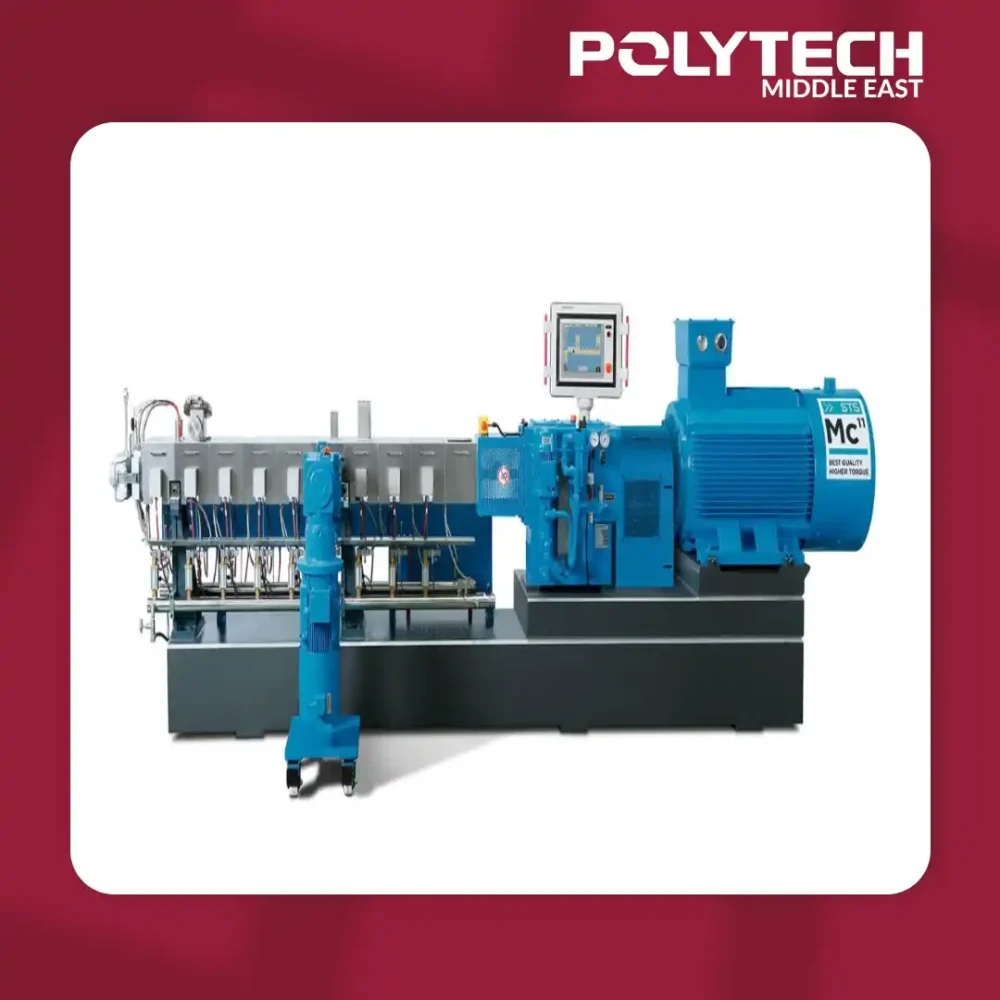
High-Torque Twin-Screw Extruder