


HDPE Drainage Sheet Extrusion Line
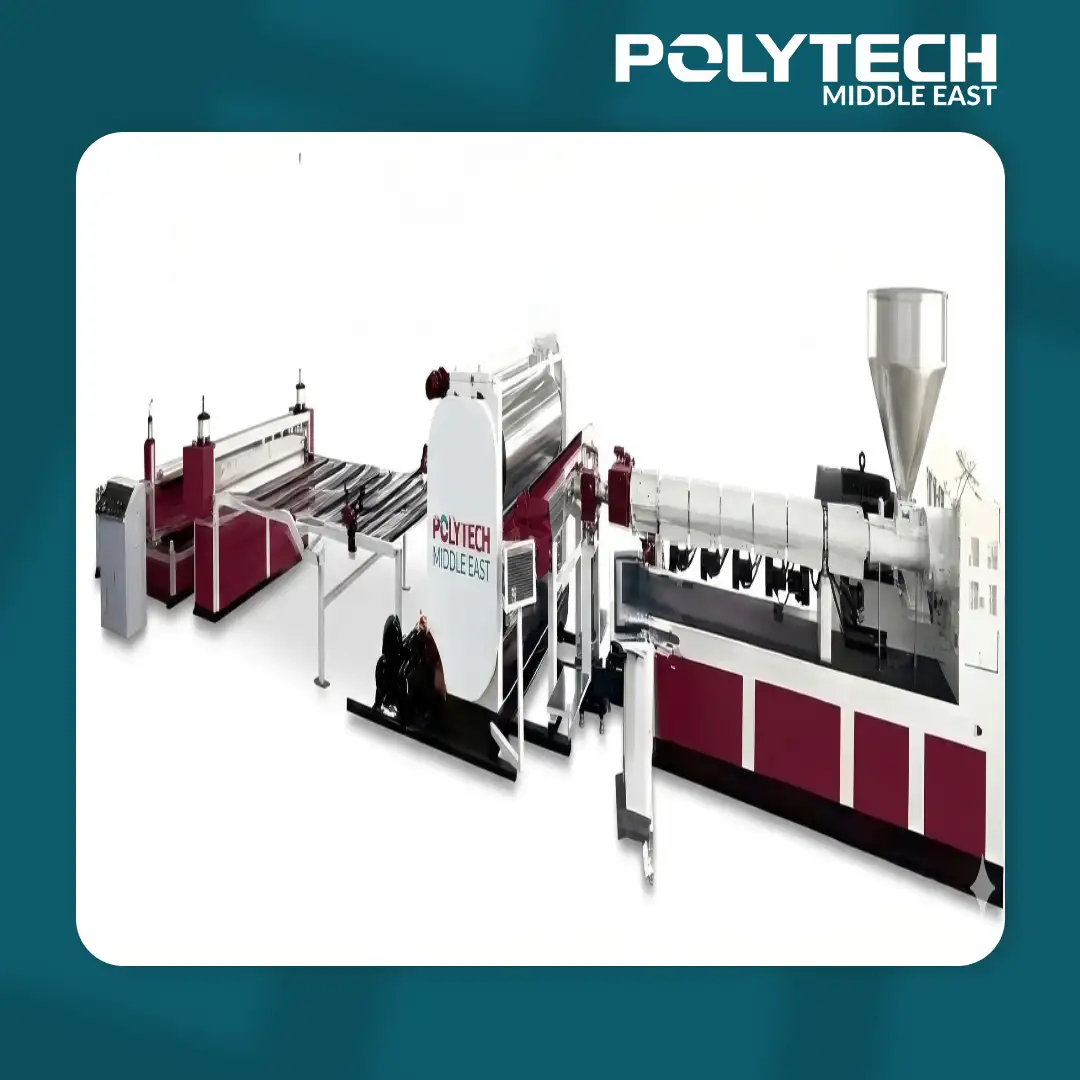
HDPE Drainage Sheet Extrusion Line
High-efficiency HDPE Drainage Sheet Extrusion Line (0.5–5 mm thick, up to 5 m wide) producing dimpled waterproofing panels. Ideal for foundation and roof drainage applications.
Category -> Full Extrusion Lines
Description
Introduction
( HDPE Drainage Sheet Extrusion Line )
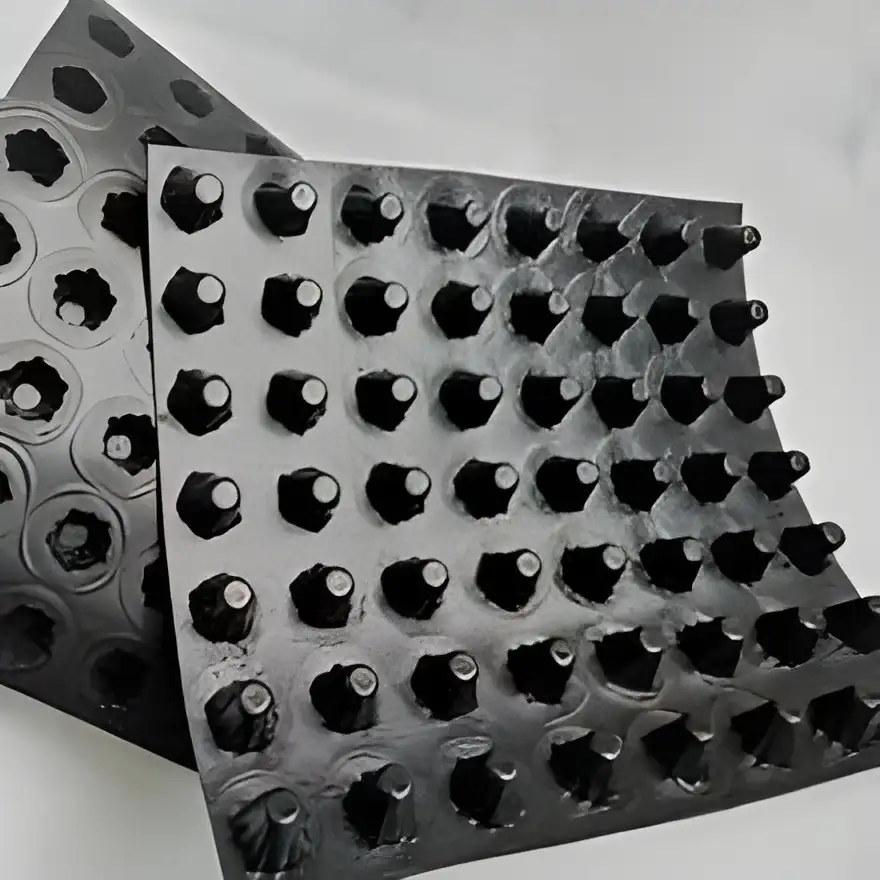
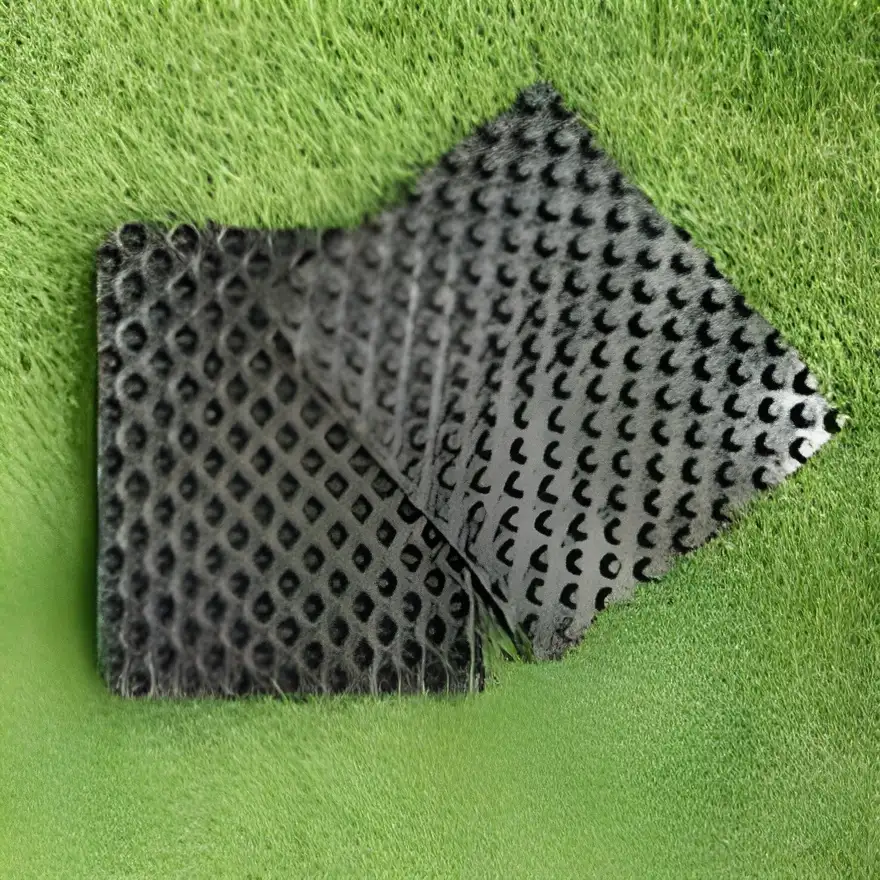
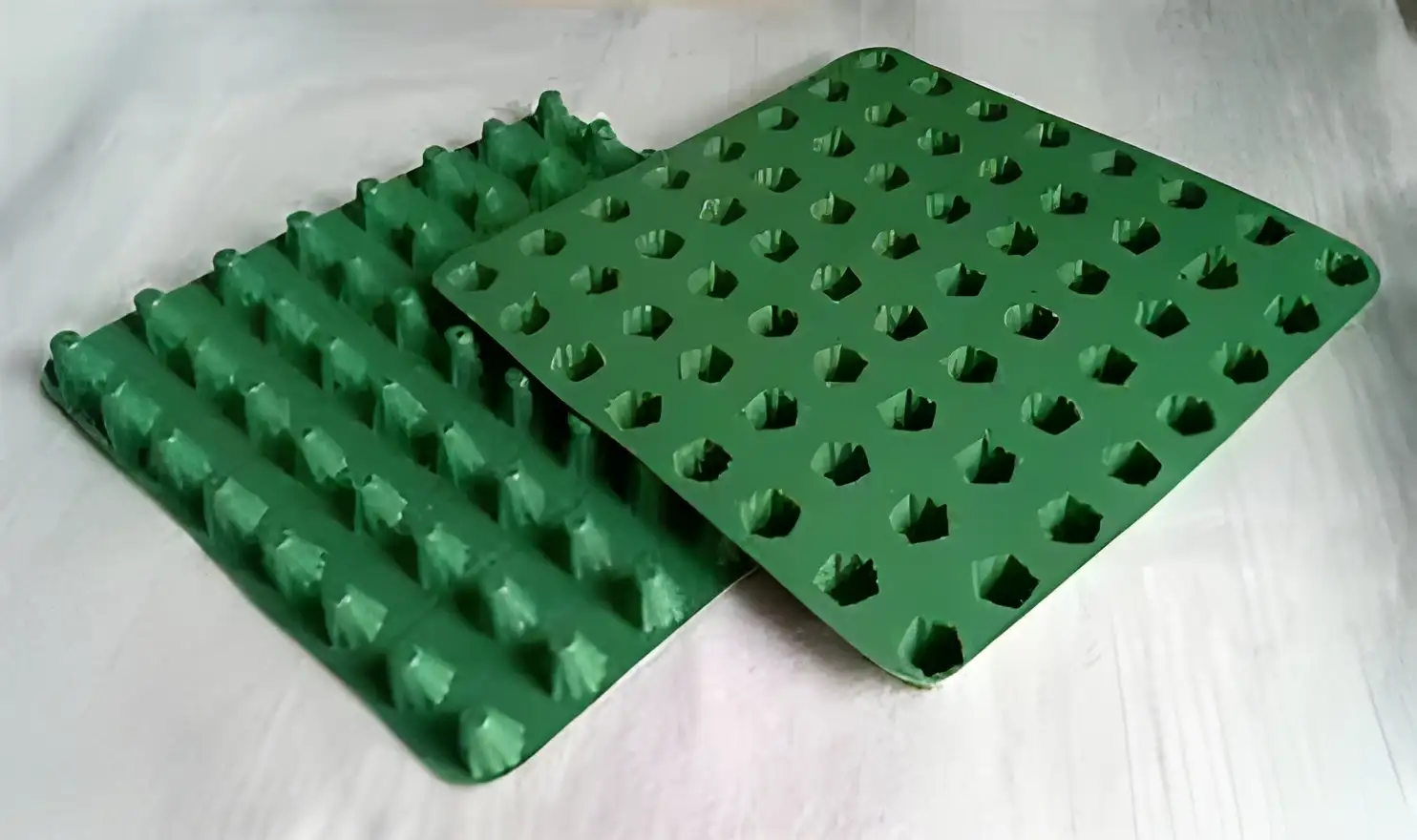
Modern infrastructure projects demand effective water management. Traditional drainage often uses gravel layers, but HDPE (high-density polyethylene) dimpled drainage boards offer a lighter, prefab solution with built-in water channels. Extrusion lines continuously produce these boards to specified dimensions. The result is a strong, waterproof panel (typically 0.5–5 mm thick) used in construction and landscaping, replacing bulky gravel filters and saving time and space.
Problem / Challenge
Inadequate drainage around structures leads to hydrostatic pressure buildup and water damage. Conventional methods (brick or concrete blocks with stones) are time-consuming, labor-intensive, and require large filter layers. Poor water control can saturate soils, cause freeze-thaw damage, and lead to leaks. Key challenge: Delivering a consistent, large-volume supply of engineered drainage panels (with the required rigidity and permeability) to replace these manual drainage systems.
Solution
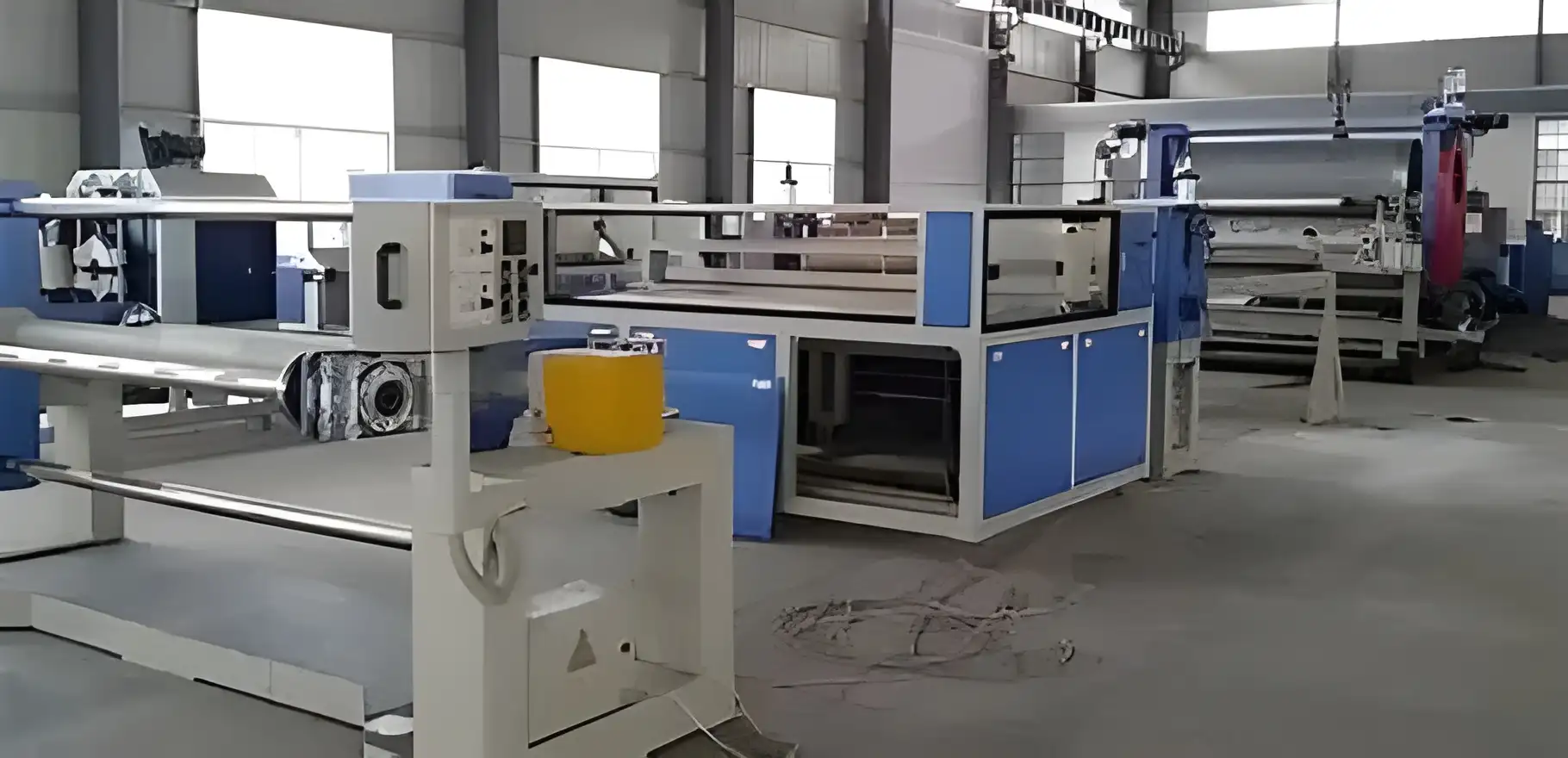
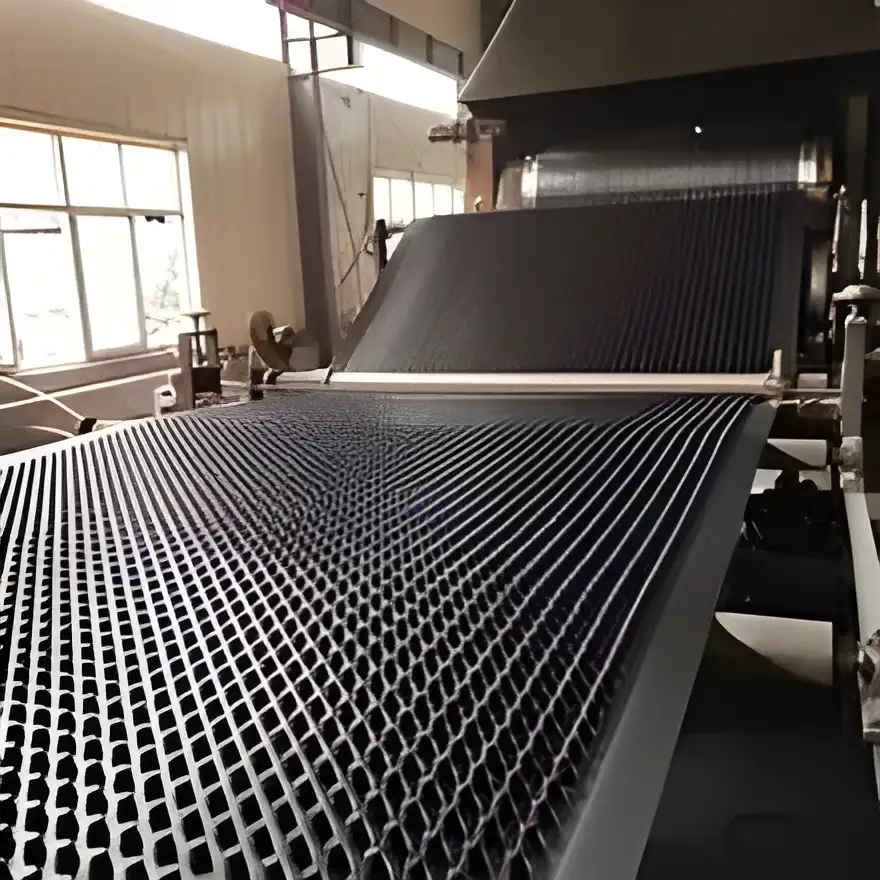
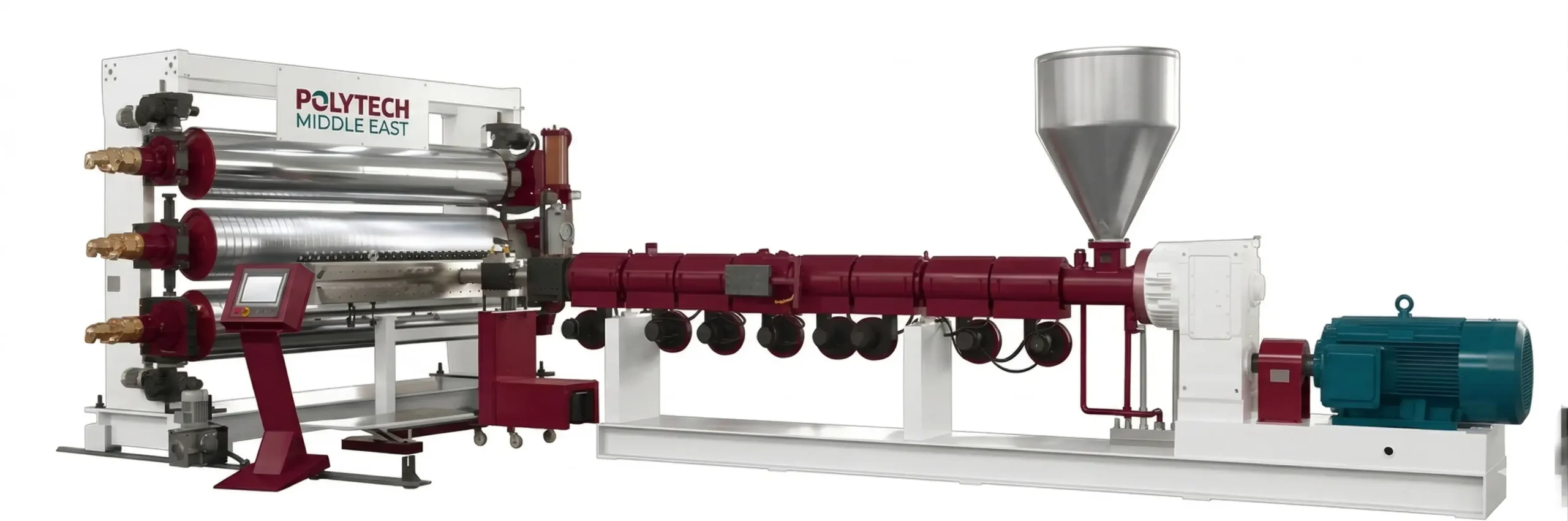
An HDPE Drainage Sheet Extrusion Line automates panel production. It melts HDPE granules in a high-performance screw extruder, then forces the melt through a flat T-die to form a sheet. The sheet is pulled through a vacuum-embossing roller that forms an array of conical dimples (typically 6–20 mm high) on its surface. These dimples (cone-shaped protrusions) create air channels for water flow and storage. The embossed sheet then passes through cooling/calibration (water-cooled rollers or vacuum calibration) to set the thickness and dimensions. The line uses PLC automation to precisely control screw speed, heating zones, and pulling speed. As a result, panels are produced with uniform thickness and dimple geometry. Typical outputs are 500–1000 kg/h, yielding continuous sheets (which are cut to length or rolled).
Features & Specifications
- Extruder: High-output single- or twin-screw extruder (screw Ø ~90–160 mm, L/D ~30:1) that melts HDPE (often mineral-filled for stiffness). Motor power typically 55–150 kW. PLC controls screw speed via frequency drive.
- T-Die & Calibration: Precision flat sheet die (T-die) with adjustable lips for even melt flow. Downstream, a vacuum calibration table or chilled rollers solidify and dimension the sheet to spec.
- Dimple Forming Unit: Vacuum-embossing roller (water-cooled) containing a dimple mold. The heated sheet is drawn over this roller by vacuum, forming an array of bossed protrusions. Dimple height is configurable (commonly 6–20 mm) per project requirements. A specially designed embossing cylinder ensures sharp, consistent bosses.
- Cooling System: After embossing, the panel is cooled rapidly (typically by water-cooled rollers or a bath) to fix the shape. Secondary vacuum under the sheet can improve cooling under each dimple.
- Cutting & Handling: The cooled panel is either cut into specified lengths (guillotine cutter) or wound into rolls. High-speed cutters (flying knife or oscillating) maintain throughput. Pullers (haul-off) synchronize with extrusion speed, and tension controllers manage roll winding or stacker feeding.
- Control & Quality: Integrated PLC + HMI system controls all drives, heaters, and vacuum pumps. Sensors monitor temperature, pressure, and panel thickness. Many lines include automatic thickness control: feedback sensors adjust die gap or roller pressure to keep thickness within tight tolerances (often ±0.1 mm).
- Capacity: Typical throughput is 500–1000 kg/h. For example, a 3 m-wide line might produce ~600 kg/h, while a 5 m line can approach 1000 kg/h, depending on panel thickness and material grade. Output rate scales with screw size and line speed.
Products
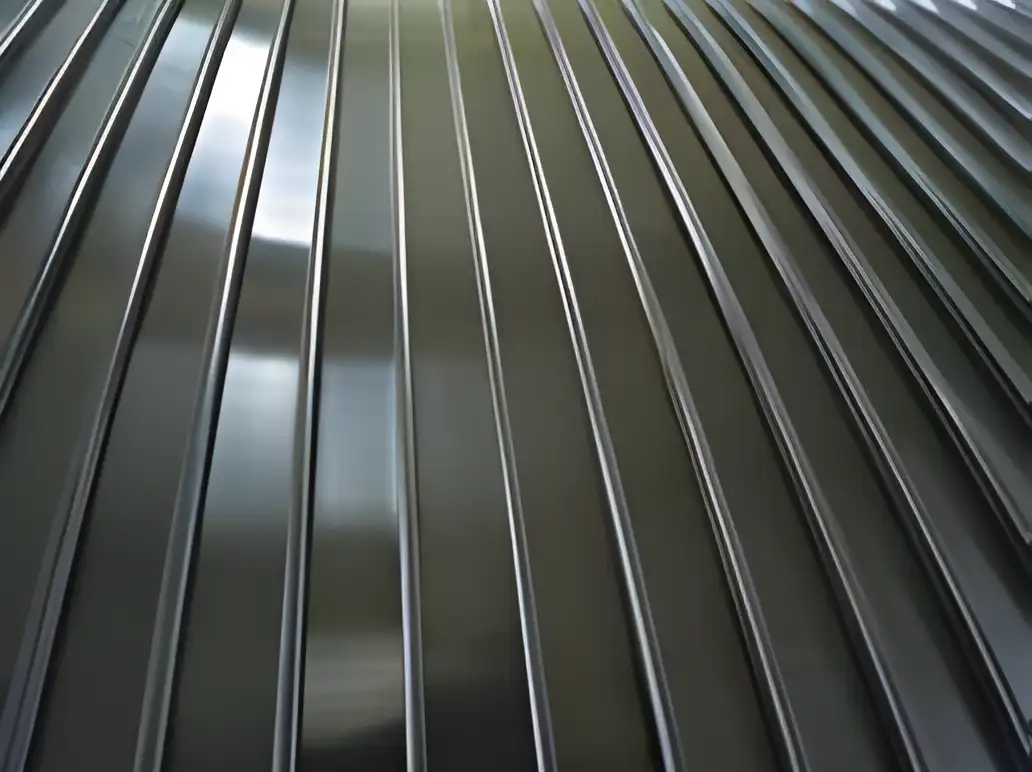
Use Cases / Applications
HDPE drainage panels are used anywhere reliable water evacuation is needed:
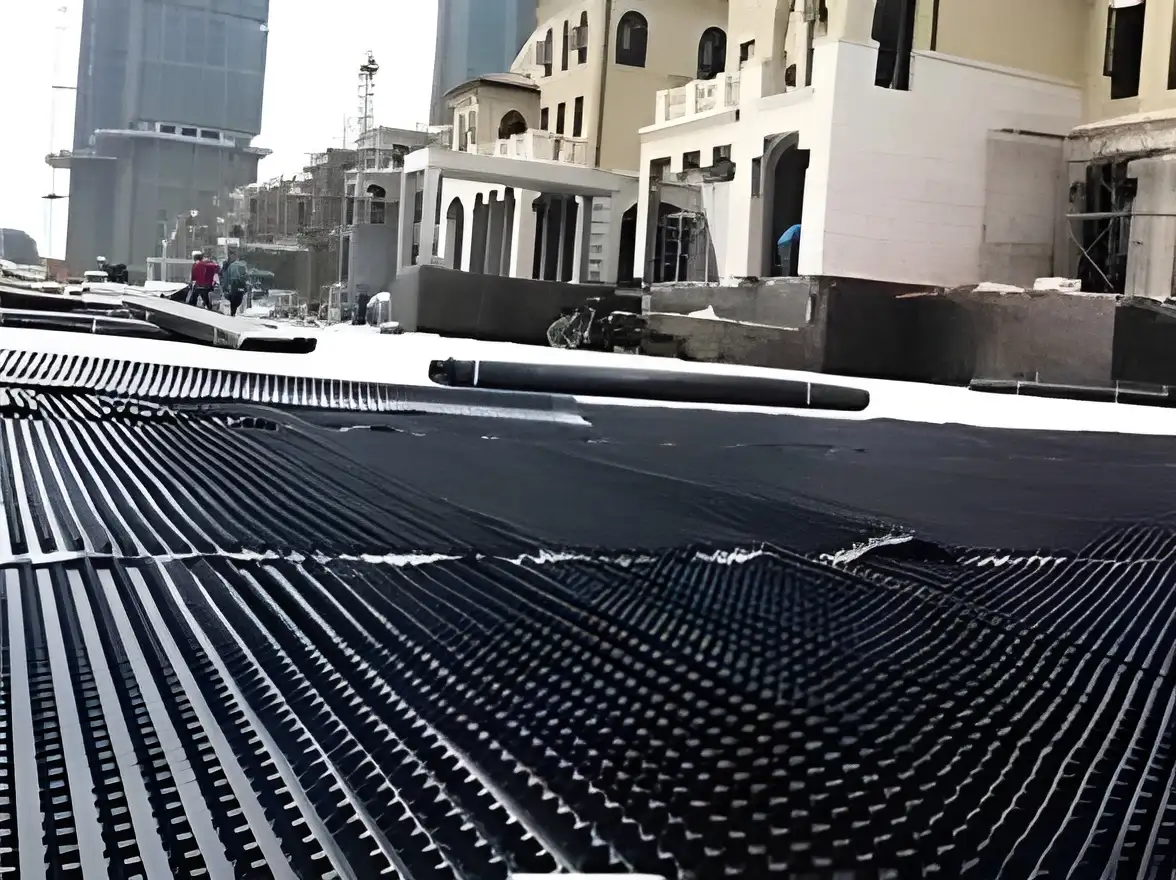
- Building Foundations/Basements: Installed against footings and underground walls, these panels channel groundwater to perimeter drains, preventing basement flooding and reducing hydrostatic pressure. They protect the waterproofing membrane and foundation.
- Roof Gardens / Green Roofs: Laid under the soil layer to rapidly drain excess rainwater while holding enough moisture for plants. They also act as root barriers and insulation (with geomembranes) in vegetated roofs.
- Tunnels, Subways, Underground Garages: Applied along tunnel or shaft walls to intercept seepage. Panels guide water to drainage pipes, keeping structures dry. This protects shotcrete lining and reduces maintenance.
- Roads and Rail: Placed under pavement or along embankments to remove rainwater and protect subgrade soils. This mitigates frost damage and slope erosion. Panels drain horizontally into side ditches or pipes.
- Landscaping & Sports Fields: Used beneath gardens, golf courses, and athletic fields. They quickly evacuate stormwater to prevent waterlogging of turf. Combined with filter fabrics, they form effective drainage layers under plazas and planters.
- Competitive Advantages
- High Strength & Durability: HDPE panels resist long-term compressive loads without crushing. Unlike gravel, plastic boards do not settle or degrade over time, providing stable drainage performance.
- Consistent Quality: Automated extrusion yields uniform board thickness and boss geometry. Large-volume production meets construction demand faster than manual gravel placement. This saves labor and speeds up projects.
- Design Flexibility: Dimple height and spacing can be tailored to project needs (e.g. taller bosses for higher flow). Custom widths and thicknesses accommodate unique site requirements. Special embossing molds produce variable patterns (single- or double-sided bosses, etc.).
- Ease of Installation: Lightweight panels handle easily (vs. heavy gravel). They integrate with geomembrane liners and filter fabrics for turnkey drainage systems. Edge tabs or welds can join panels for large coverage. Reduced labor and transport costs (no bulk rock to move).
- Proven Technology: HDPE drainage panels have been tested per engineering standards (compressive strength, flow rate). Field studies confirm they match or exceed traditional drainage layers in performance. Proper quality control during extrusion (e.g. vacuum levels, thickness gauges) ensures product reliability.
Applications
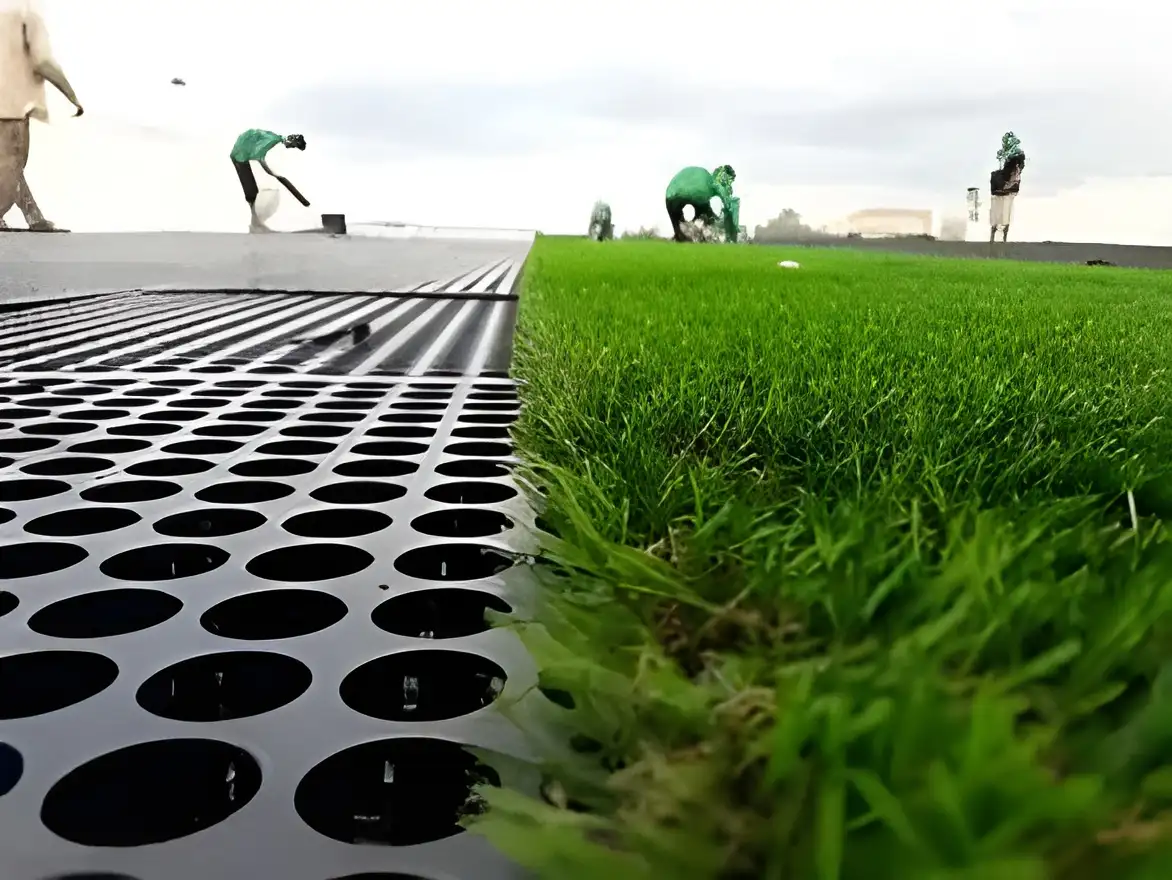
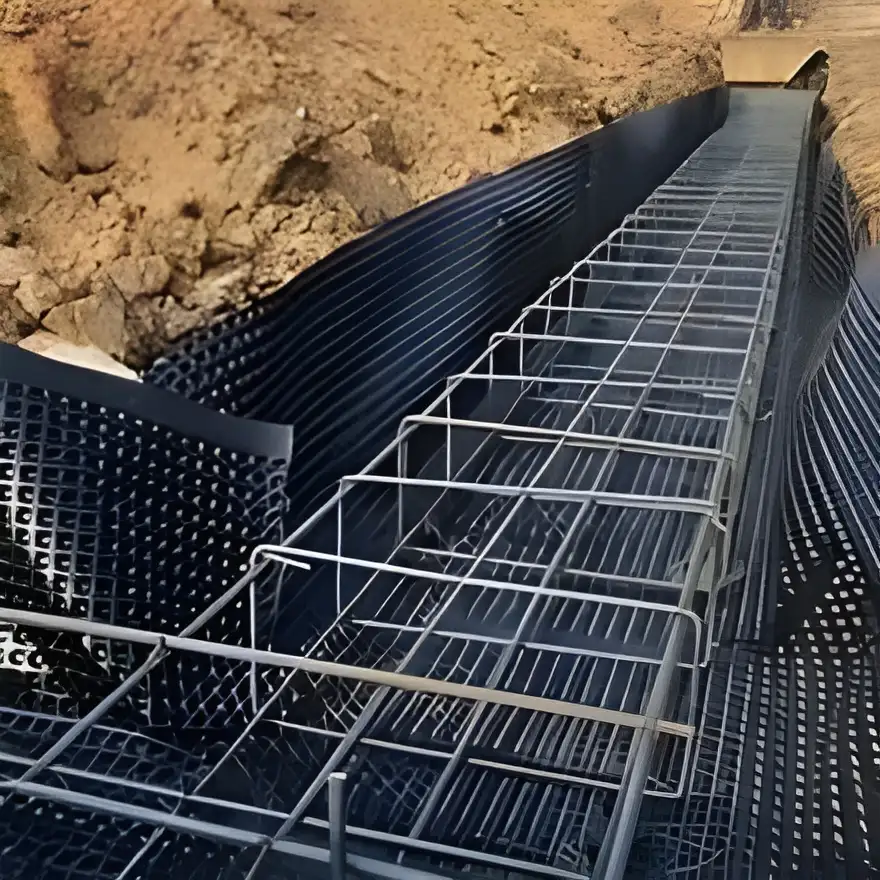
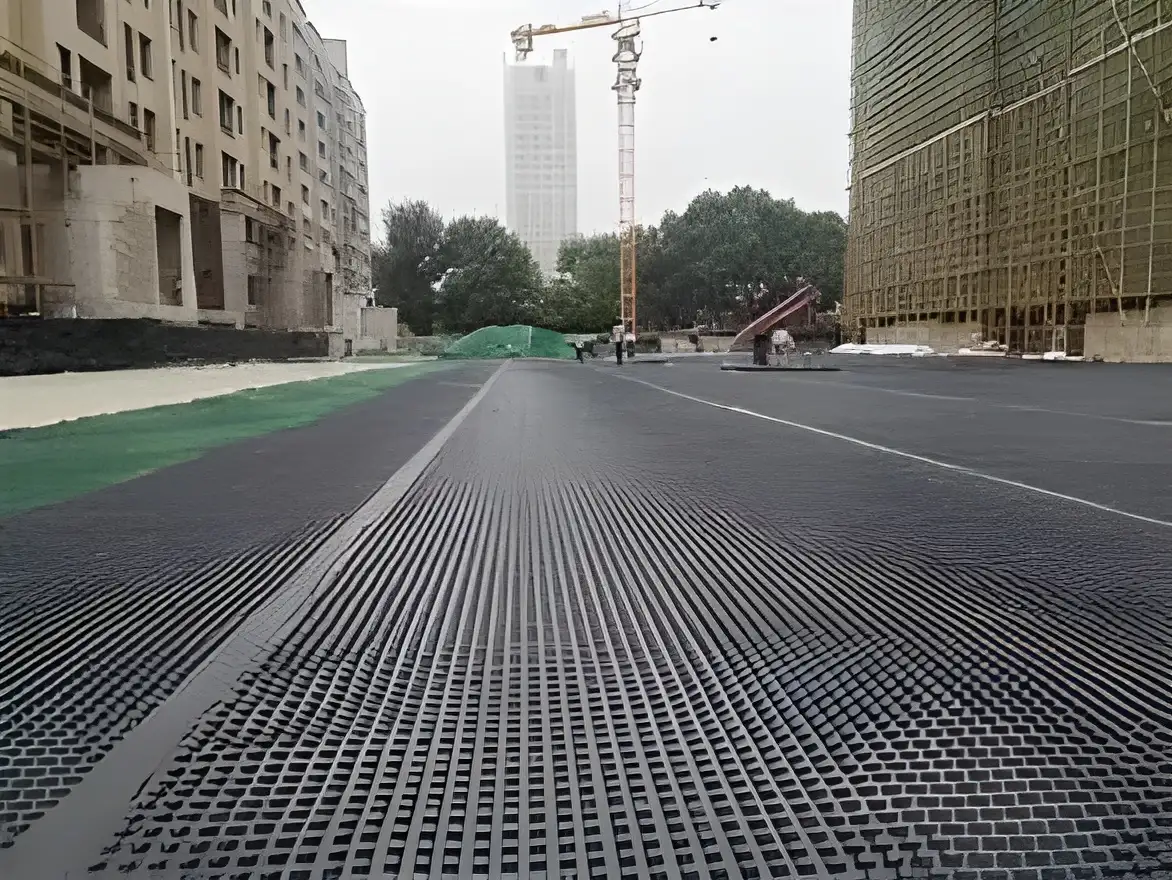
Gallery
Main Features
| Parameter | Typical Value/Range | Notes |
| Raw Material | HDPE (and sometimes PP) | High-density grades for stiffness; virgin/recycled blend |
| Sheet Width | 1000–5000 mm | Up to ~5 m on large lines |
| Sheet Thickness | 0.5–5 mm | Commonly 1–3 mm; some lines support up to ~5 mm |
| Dimple (Boss) Height | ~6–20 mm | Configurable per mold; prototypes up to ~40 mm |
| Extruder Screw Diameter | 90–160 mm | Single-screw (30–33:1 L/D) |
| Throughput (Output) | ~500–1000 kg/h | Line-dependent (e.g. 600 kg/h at 3 m, 1000 kg/h at 5 m) |
| Extruder Motor Power | ~55–132 kW (55–150 kW range) | Plus additional for ancillaries |
| Control System | PLC + HMI | Automated control of speeds, heaters, vacuum, etc |
| Cooling Method | Water-cooled rolls / vacuum bath | Ensures rapid solidification; vacuum embossing roller must be cooled |
| Typical Panel Formats | Flat or coiled | Option to cut boards or coil into rolls; edge trimming available |
Related products
-
 Full Extrusion Lines
WPC Foam Board Extrusion Line
-
 Full Extrusion Lines
SPC Flooring Extrusion Line
-
 Full Extrusion Lines
PC Wave Tile Extrusion Line
-
 Full Extrusion Lines
POE Polymer Spinneret Pad Production Line