


55/110 Conical Twin-Screw Barrel
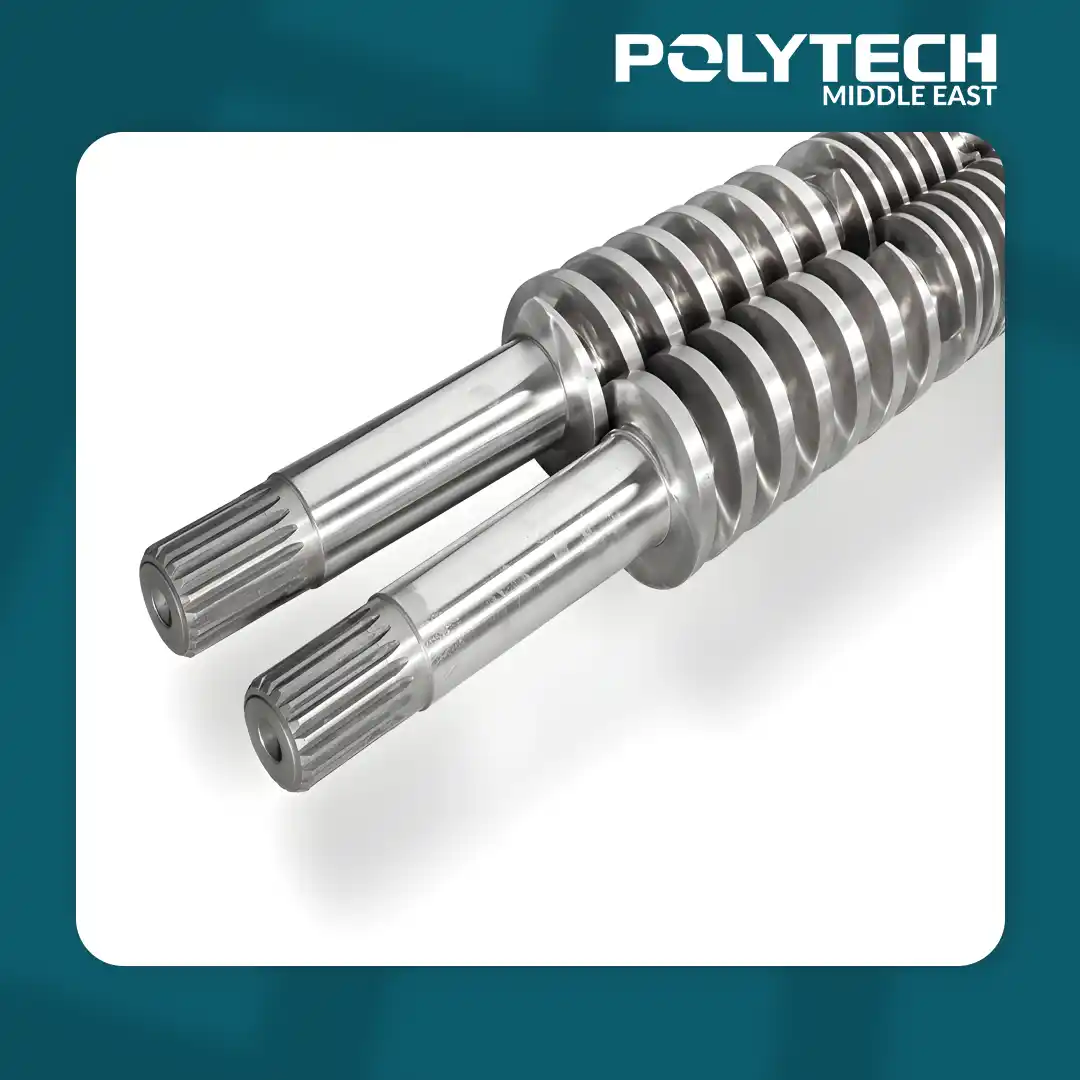
55/110 Conical Twin-Screw Barrel
Premium 55/110 conical twin-screw barrel for rigid PVC, UPVC, and WPC extrusion. Features nitrided 38CrMoAlA alloy steel & bimetallic alloy coating for high output.
Category -> Machines and Spare Parts
Description
Executive Summary
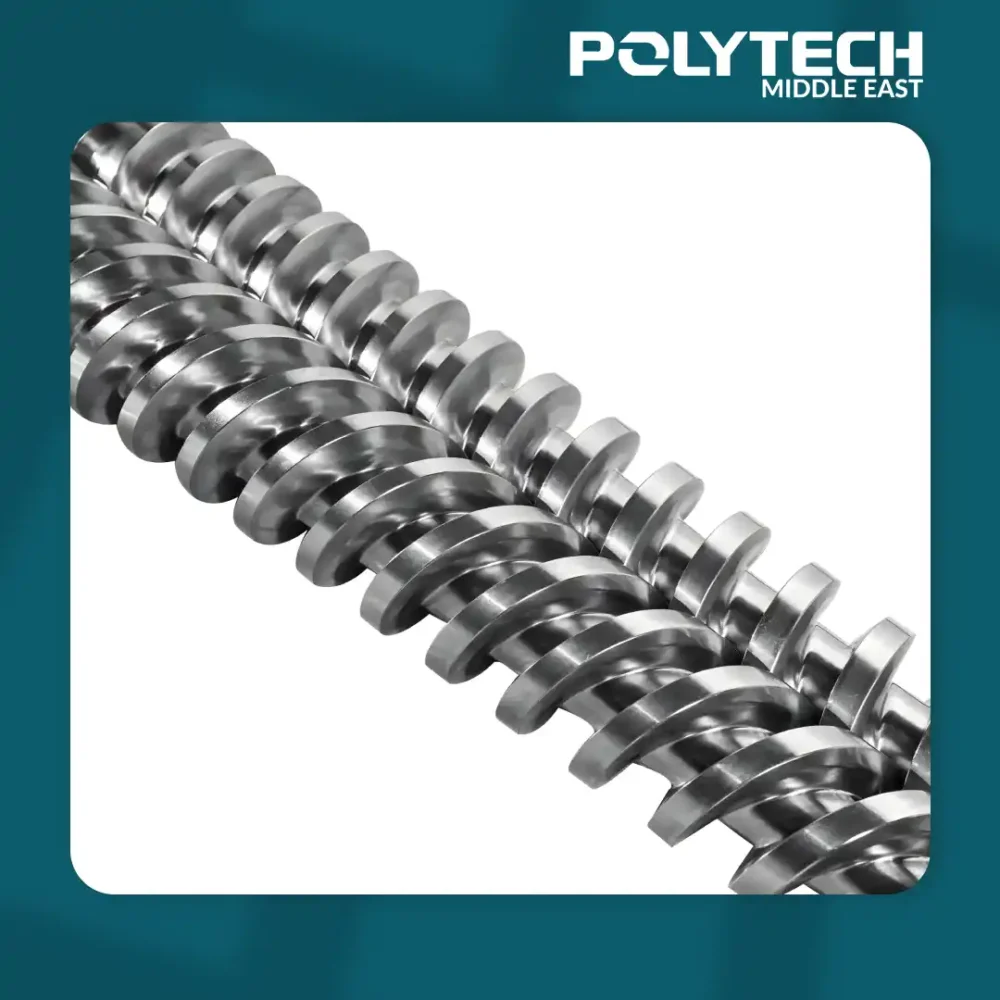
The 55/110 conical twin-screw barrel is precision-engineered for high-output, energy-efficient extrusion of rigid PVC, UPVC, CPVC, and wood-plastic composites (WPC). It utilizes two intermeshing, counter-rotating screws tapering from a 110 mm feed-end diameter down to a 55 mm discharge-end diameter, establishing a natural, progressive compression profile along the barrel bore.
Manufactured from high-grade nitriding alloy steel (such as 38CrMoAlA / SACM645) or premium bimetallic alloys, both screws and barrel undergo rigorous heat treatment. Standard treatments include gas and ion nitriding (case depth: 0.5–0.8 mm at 950–1020 HV) alongside wear-resistant bimetallic PTA welding or hard chrome plating.
This conical geometry delivers exceptional melt pressure, uniform plasticization, and superior shear control at low-to-moderate screw RPM. This configuration enables higher throughput (typically 120–200 kg/h depending on formulation) while strictly preserving thermal stability in heat-sensitive compounds.
Key operational benefits include extended wear life on highly filled PVC blends (CaCO₃/TiO₂), low energy consumption, and uniform self-wiping action that prevents material stagnation and thermal degradation.
Design & Materials
The 55/110 barrel system consists of two counter-rotating, intermeshing conical screws housed within a matched dual-bore cylinder. The taper from 110 mm at the feed section to 55 mm at the metering section generates uniform pressure progression and steady compaction.
- Base Construction: Built using high-integrity 38CrMoAlA (JIS SACM645 / DIN 1.8509) or 42CrMo structural alloy steel, providing core toughness, high tensile strength, and impact fatigue resistance under heavy torque loads.
- Heat Treatment & Nitriding: After precision rough machining and stress relief, components are quenched, tempered, and subjected to deep gas or ion nitriding for over 72–120 hours. This creates a hardened diffusion layer (0.5–0.8 mm depth) with a surface hardness of 950–1050 HV (~58–62 HRC).
- Bimetallic & Specialized Coatings: For processing abrasive compounds (high calcium carbonate loadings) or corrosive polymers (CPVC/fluoropolymers), an inner bimetallic alloy lining (2.0–3.5 mm thick, 58–65 HRC) using tungsten carbide, nickel-base, or cobalt-base alloys is cast into the barrel bore and welded onto the screw flights.
- Precision Machining & Tolerances: Machined on multi-axis CNC screw milling centers with tight straightness tolerances (≤0.015 mm/m) and ultra-smooth surface roughness (Ra ≤0.4 µm on flights; Ra ≤0.2 µm in barrel bores).
Technical Advantages
- High Throughput & Uniform Homogenization: The conical reduction (110 mm → 55 mm) maximizes intake capacity at the feed zone while efficiently building high extrusion pressure at the head, achieving higher output per kilowatt compared to parallel twin-screw designs.
- Self-Wiping & Anti-Stagnation: The intermeshing flight geometry continuously cleans opposing surfaces, eliminating resin dead spots and minimizing burn-on or degradation during long production runs.
- Optimized Thermal Efficiency: Because the conical design generates consistent mechanical shear heat, external electric heating demand is minimized. Multi-zone cast-aluminum or ceramic heater bands paired with integrated cooling jackets deliver tight temperature control across all zones.
- Extended Wear Resistance: The synergy of nitrided base steel and tungsten/nickel bimetallic layers allows the assembly to operate reliably for tens of thousands of hours on heavily filled formulations without losing critical clearances.
- Custom Flight Profiles: Screw geometries (flight pitch, channel depth, decompression zones, and venting/vacuum sections) can be customized for specific applications, such as high-filler PVC pipe extrusion or delicate foam profile production.
Installation & Compatibility Notes
- Drive Alignment: Ensure exact mechanical alignment with the extruder gearbox output shafts. Verify coupling tolerances and axial thrust bearing alignment prior to bolting.
- Clearance Verification: Before initial startup, rotate the screw set by hand at ambient temperature to verify zero metal-to-metal contact and uniform backlash.
- Heating & Sensor Calibration: Calibrate all zone thermocouples and inspect heater band contacts. Pre-heat the barrel assembly to processing temperature for at least 60–90 minutes to ensure uniform thermal expansion before feeding resin.
- Venting Setup: If equipped with a degassing/vacuum port, ensure moisture traps and vacuum pump interlocks are operating properly to prevent vent-flow blockage.
- Standard Mounting: Barrels feature standardized flange patterns (DIN/ANSI or custom OEM specifications) compatible with standard conical twin-screw extruders (e.g., SJSZ-55/110 models).
Maintenance & Lifespan
- Clearance Monitoring: Periodically check the radial clearance between the screw flight outer diameter and the barrel bore. Standard operating clearance is ~0.08–0.15 mm; refurbishment or liner replacement is recommended when wear exceeds 0.35 mm.
- Purging Protocol: Purge the extruder thoroughly with purging compound or thermal stabilizer blends immediately before shutdowns to prevent residual PVC from releasing corrosive hydrochloric acid (HCl) gas.
- Expected Lifespan: Standard nitrided barrels deliver 15,000–25,000 operating hours; premium bimetallic barrels operating on abrasive blends typically achieve 35,000–50,000+ operating hours with proper maintenance.
Safety & Quality Standards
- Manufacturing Standards: Manufactured in accordance with ISO 9001:2015 quality management and international metallurgy standards (ASTM, DIN, JIS).
- Material Certification: Delivered with complete raw material mill test reports (MTR), ultrasonic flaw detection certificates, and heat treatment hardness charts.
- Operational Safety: Ensure all thermal insulation guards, emergency-stop tripwires, and barrel pressure relief mechanisms are inspected and active during production.
Products
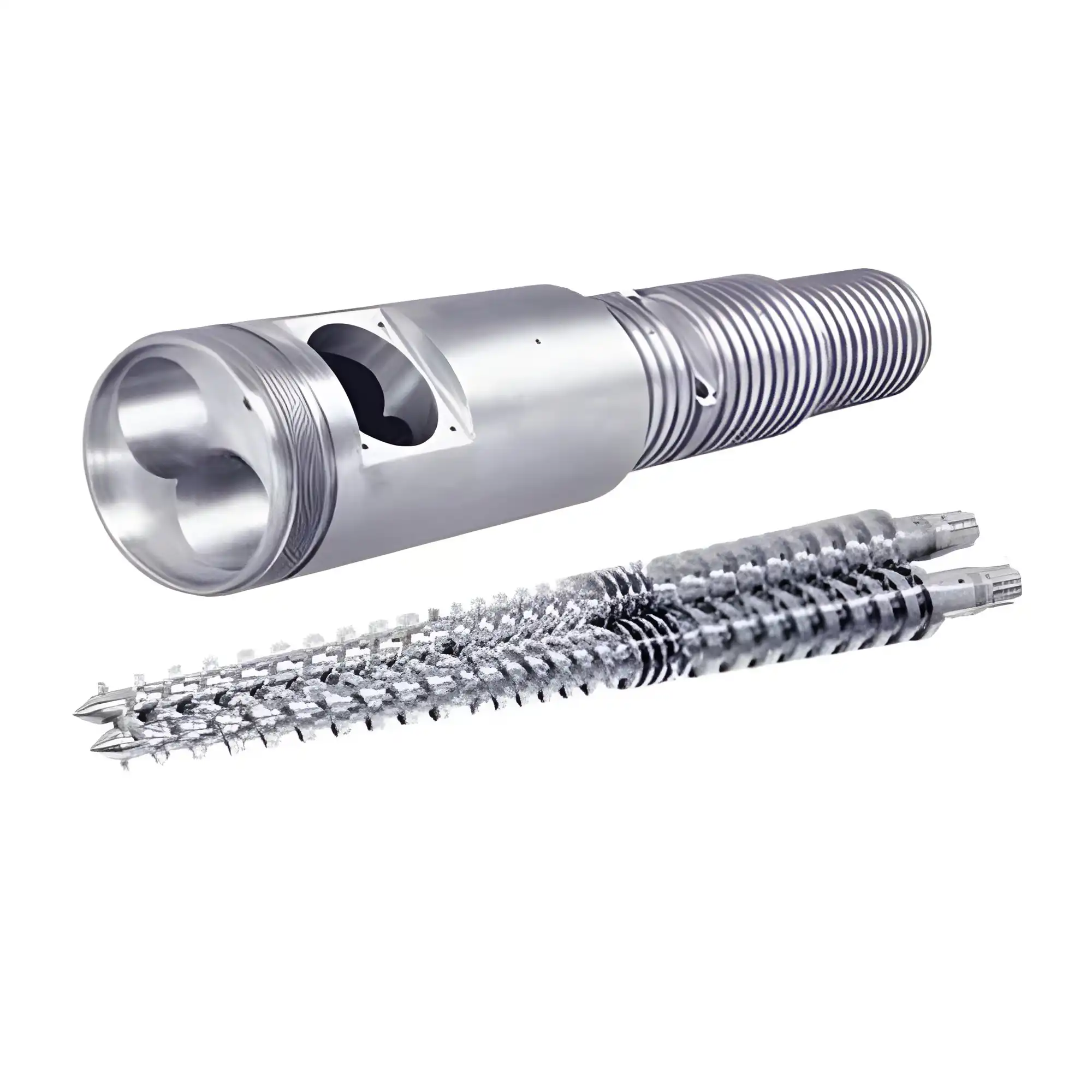
Applications & Industries
- PVC Pipe Extrusion: Ideal for producing rigid PVC (UPVC) conduit, pressure pipes, agricultural water pipes, and drainage systems with high mineral filler contents.
- Window & Door Profiles: Extrusion of multi-chamber UPVC window frames, sills, and architectural trim requiring tight dimensional stability and high surface gloss.
- Wood-Plastic Composites (WPC): Manufacturing WPC decking, wall claddings, and decorative moldings with high wood fiber and polymer blending ratios.
- PVC Ceiling & Wall Panels: Continuous extrusion of hollow PVC ceiling boards, decorative marble sheets, and foam profiles.
- Cable Sheathing & Compounding: Continuous pelletizing, masterbatch compounding, and PVC wire/cable insulation jacketing.
Applications
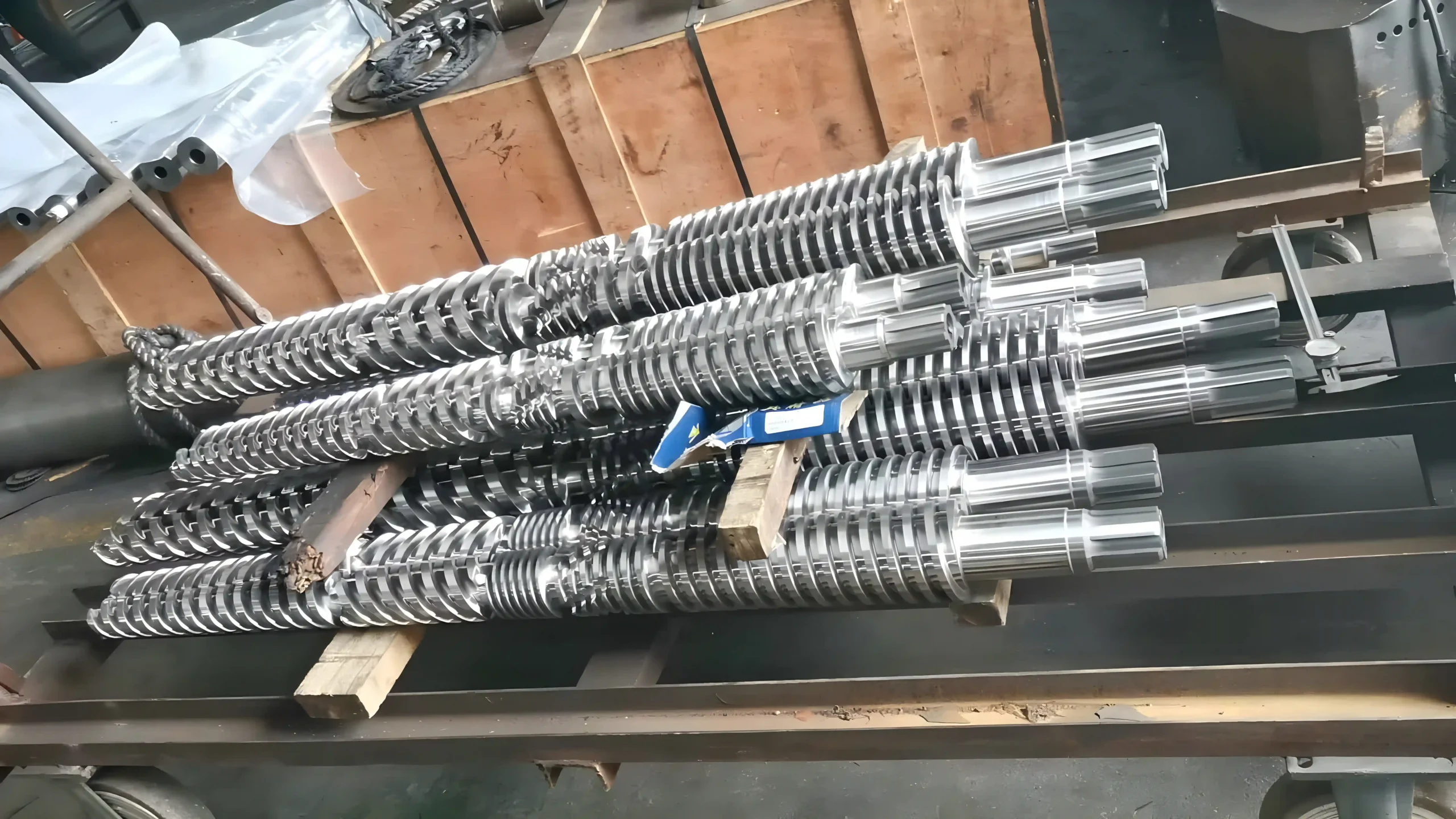
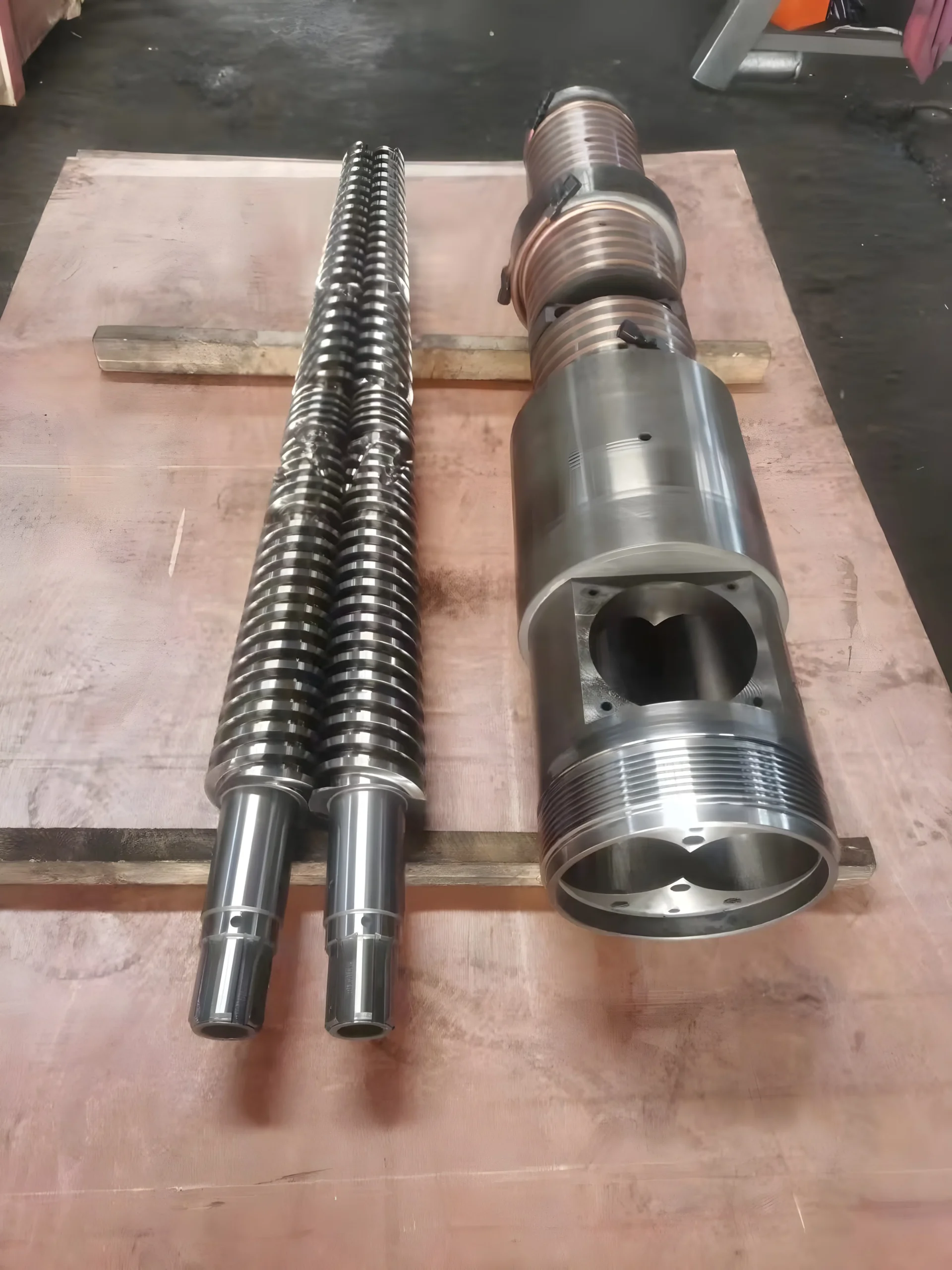
Gallery
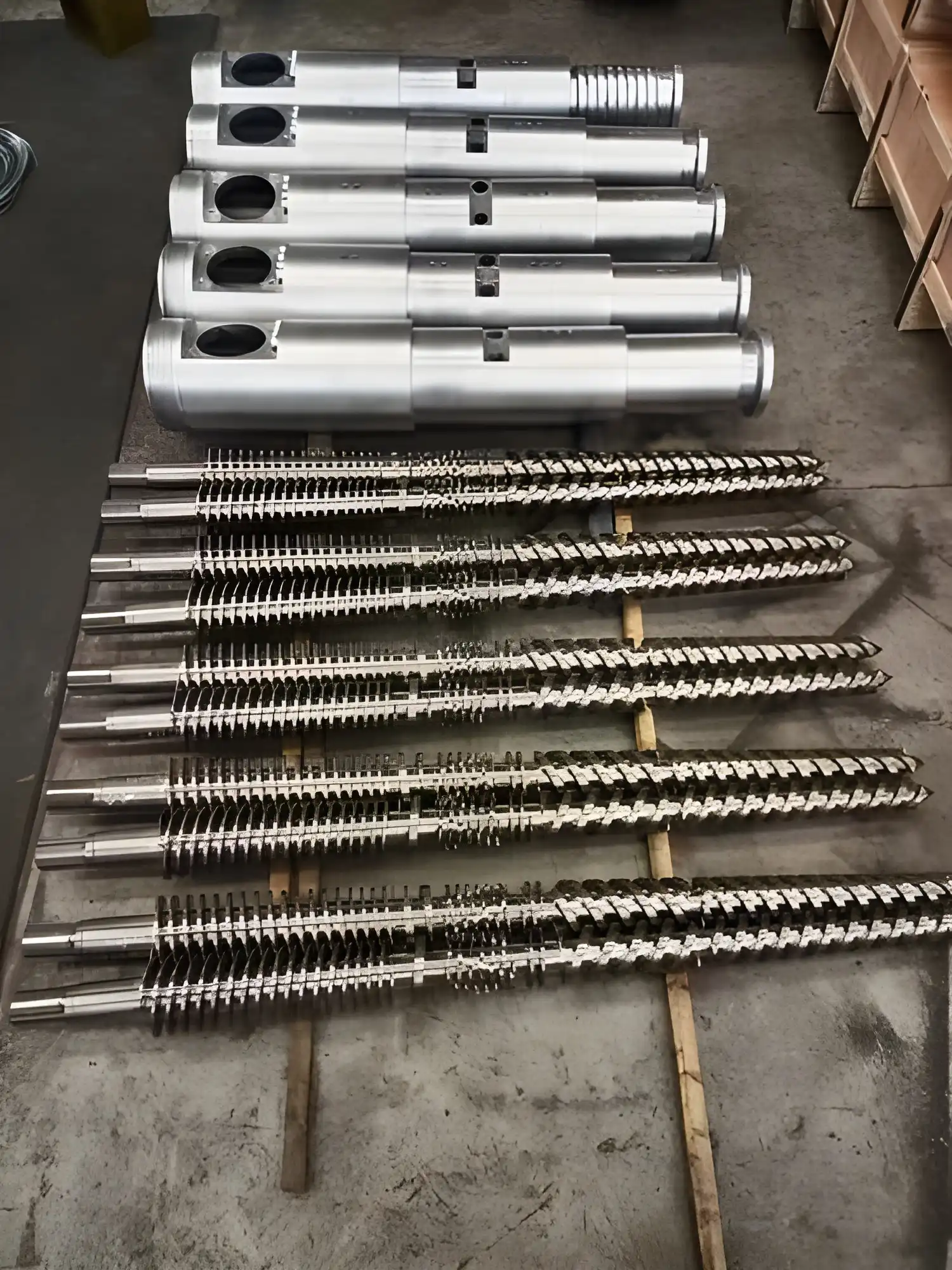
Main Features
Technical Specifications
| Property | Specification (Typical) |
| Model / Screw Diameters | 55/110 mm (55 mm Discharge / 110 mm Feed End) |
| Extruder Type | Conical Twin-Screw (Counter-Rotating / Intermeshing) |
| Length-to-Diameter (L/D) Ratio | ~18:1 to 22:1 (Effective Length ≈ 1200–1450 mm) |
| Base Material | High-grade 38CrMoAlA (JIS SACM645 / DIN 1.8509) or 42CrMo |
| Heat Treatment | Quenched & tempered + multi-stage gas/ion nitriding |
| Nitriding Depth | 0.50 – 0.80 mm |
| Surface Hardness (Nitrided) | 950 – 1050 HV (~58 – 62 HRC) |
| Bimetallic Layer (Optional) | Ni-based / Co-based / Tungsten Carbide alloy (thickness: 2.0–3.5 mm, hardness: 58–65 HRC) |
| Surface Roughness | Ra ≤ 0.4 µm (Screw Flights); Ra ≤ 0.2 µm (Barrel Bore) |
| Straightness & Coaxiality | Straightness ≤ 0.015 mm/m; Alignment tolerance ±0.015 mm |
| Surface Plating (Optional) | Hard chrome plating (0.05–0.10 mm, ≥950 HV) or titanium coating |
| Cooling Method | Integrated deep-hole barrel cooling channels (Cast-Al heaters with cooling fans/water jacket) |
| Operating Temperature | Up to 400 °C |
| Typical Extrusion Output | 120 – 220 kg/h (depending on motor power and material formulation) |
| Applicable Polymers | Rigid PVC, UPVC, CPVC, WPC, PVC Foam Board, ABS, PP/PE Filled Compounds |
Related products
-
 Machines and Spare Parts
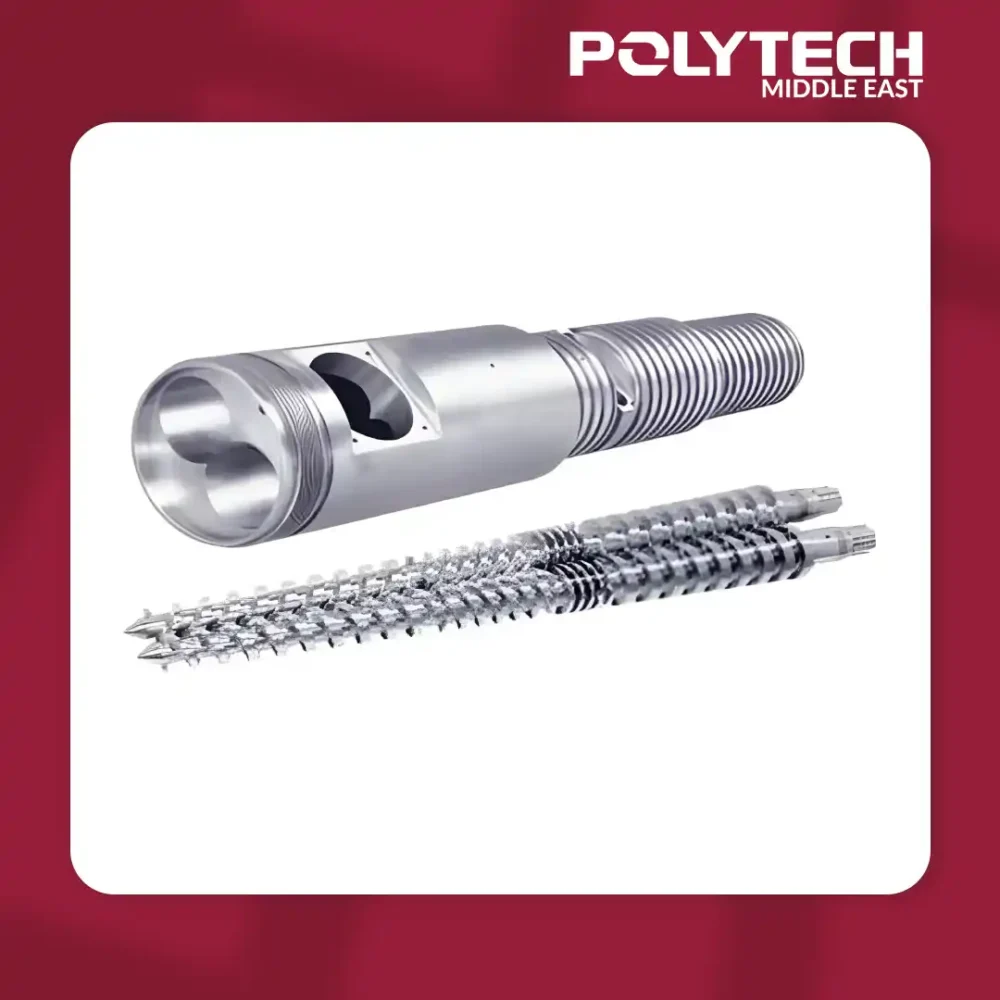
110/220 Conical Twin-Screw Barrel
-
 Machines and Spare Parts
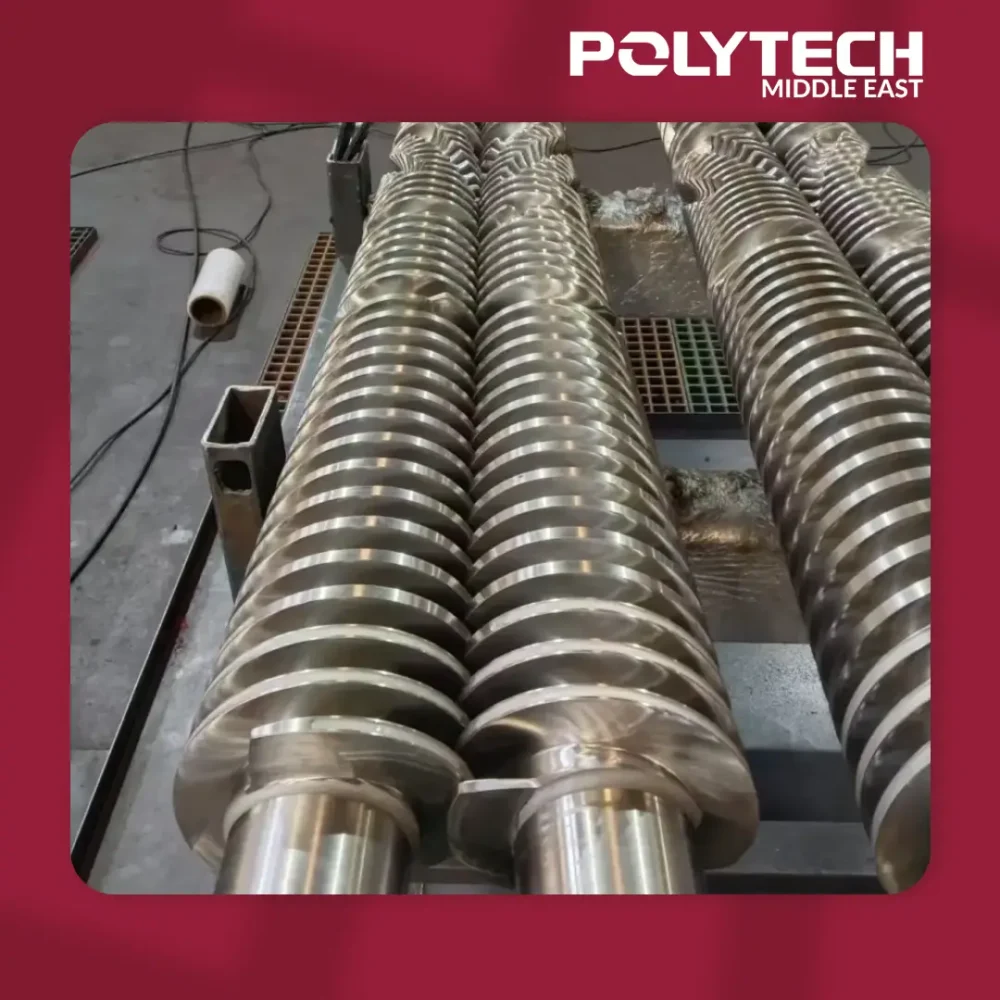
92/188 Conical Twin-Screw Barrel
-
 Machines and Spare Parts
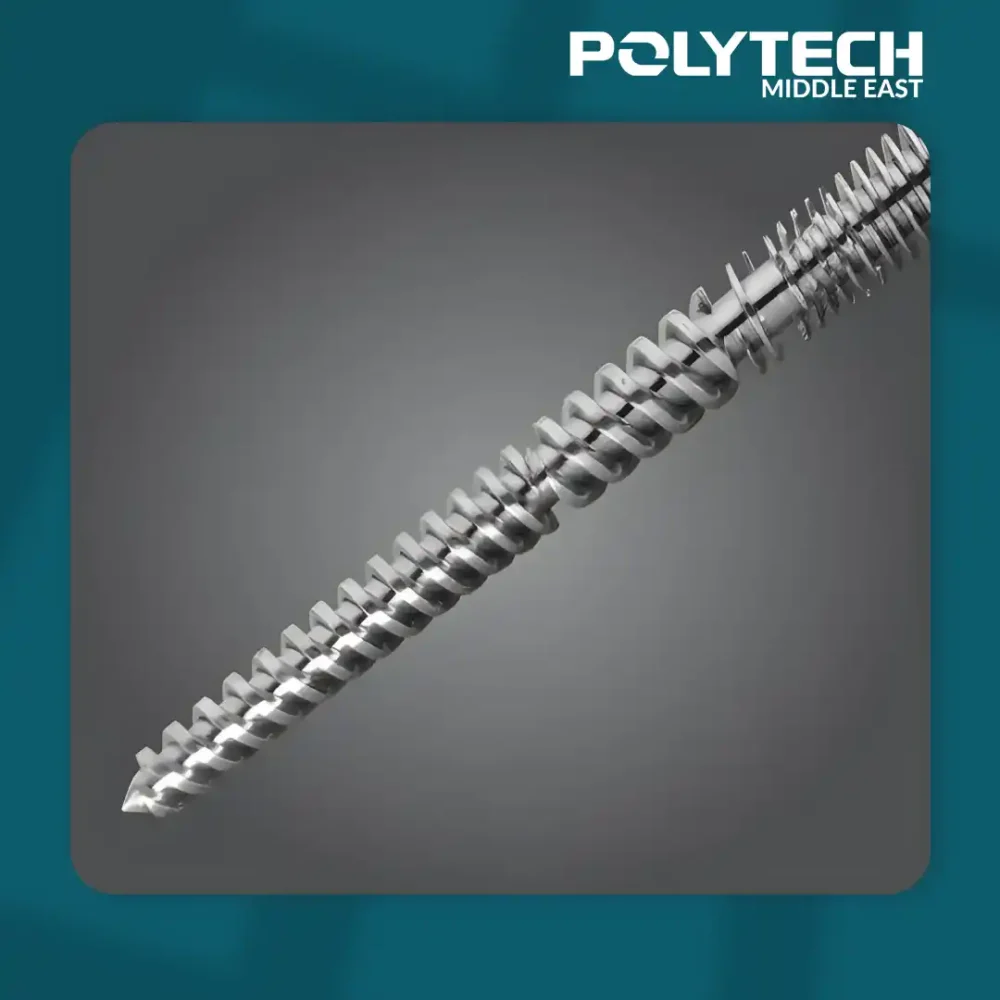
80/172 Conical Twin-Screw Barrel
-
 Machines and Spare Parts
115/230 Conical Twin-Screw Barrel