


45/90 Conical Twin-Screw Barrel
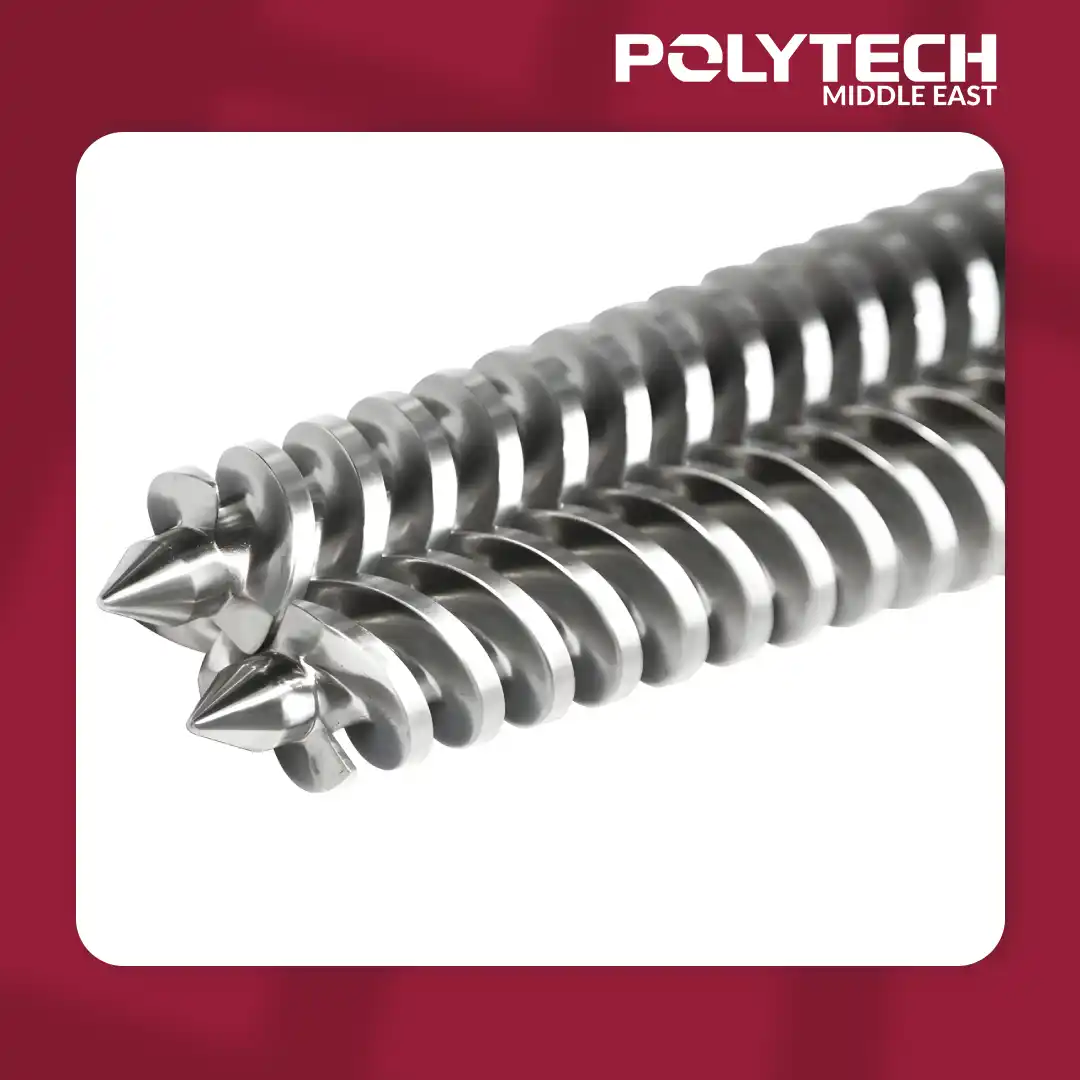
45/90 Conical Twin-Screw Barrel
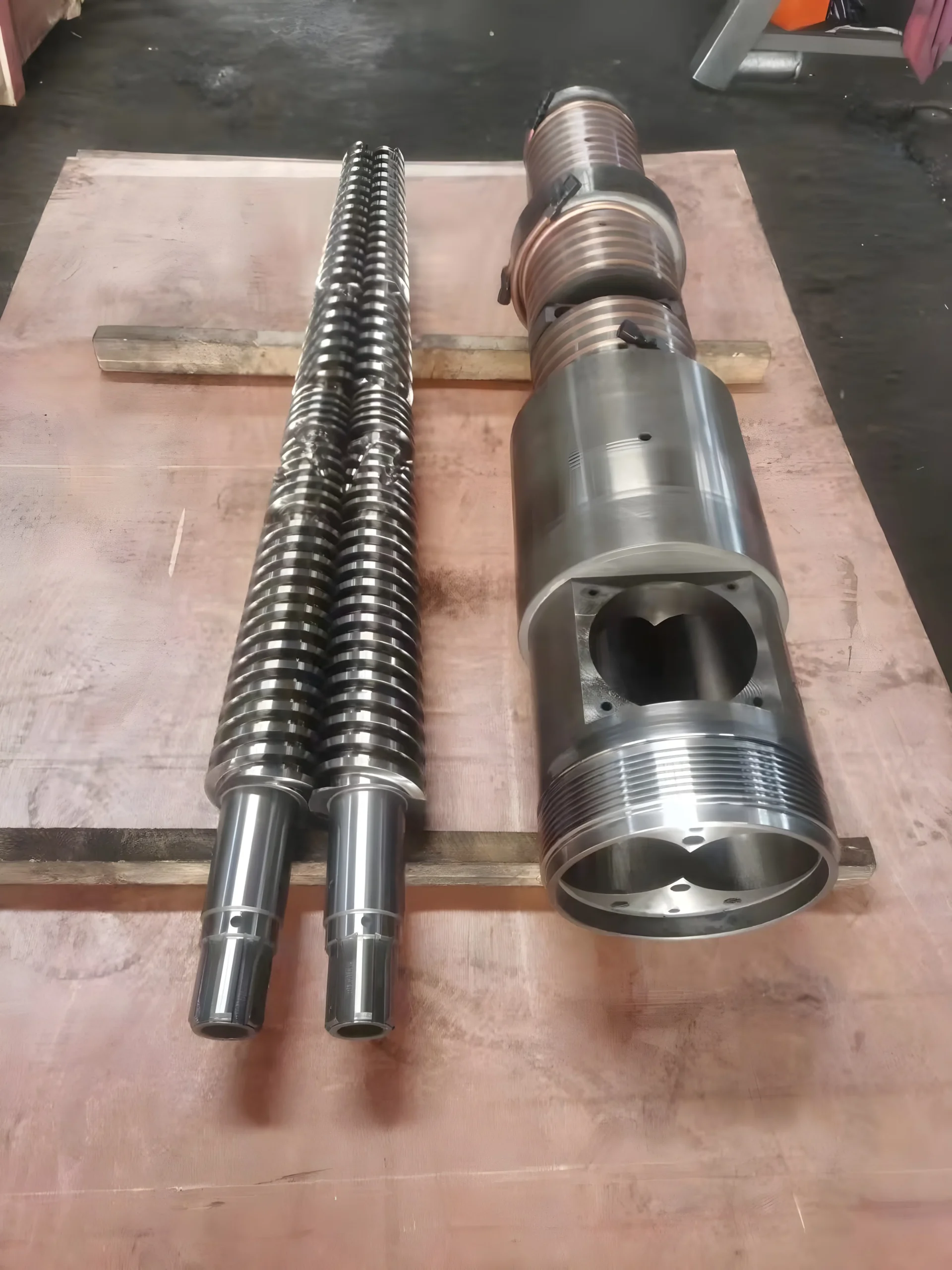
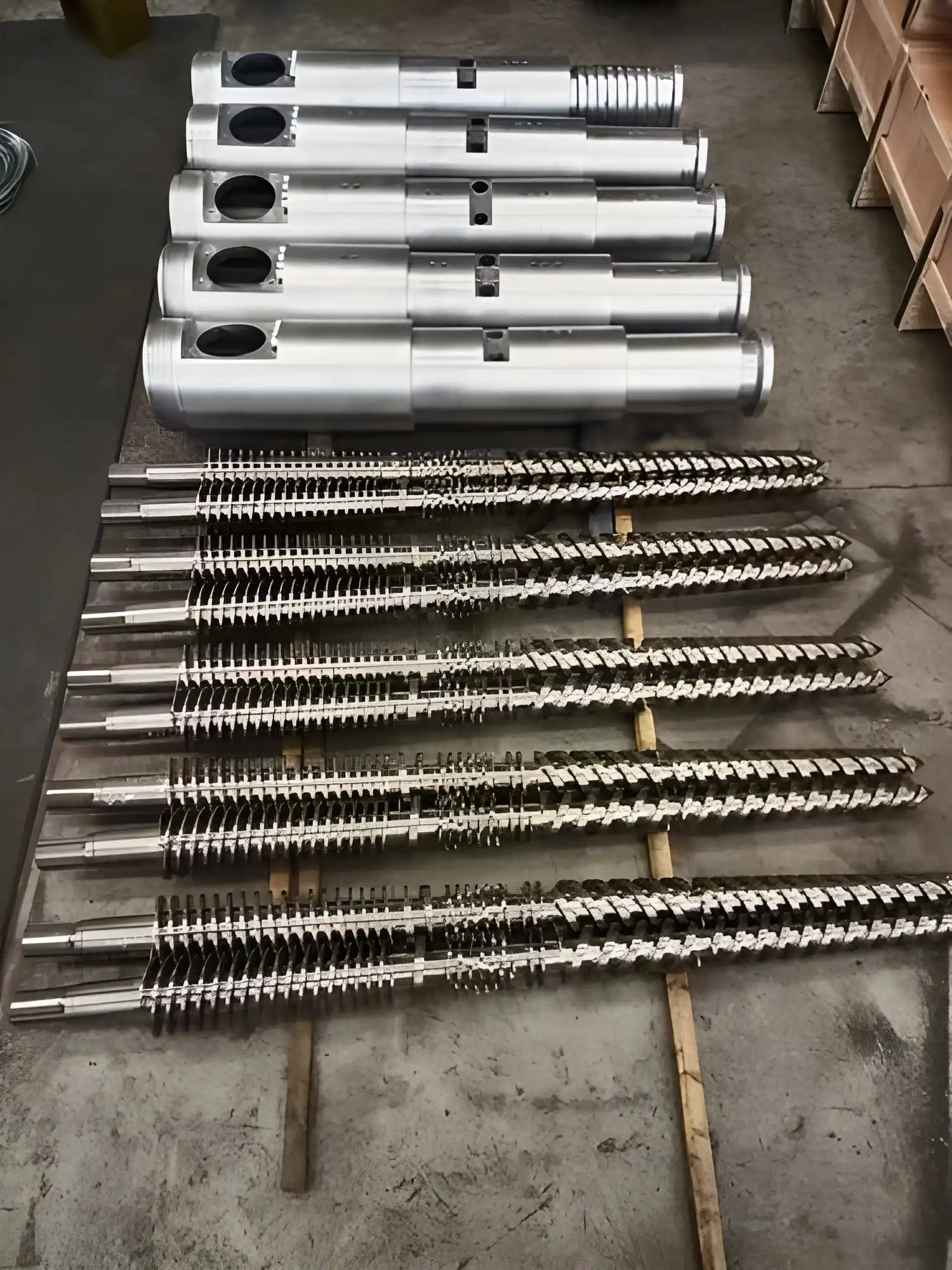
High-performance 45/90 conical twin-screw extrusion barrel for PVC and plastics. Hardened nitrided alloy steel with wear-resistant coatings ensures high throughput and long life.
Category -> Machines and Spare Parts
Description
Executive Summary
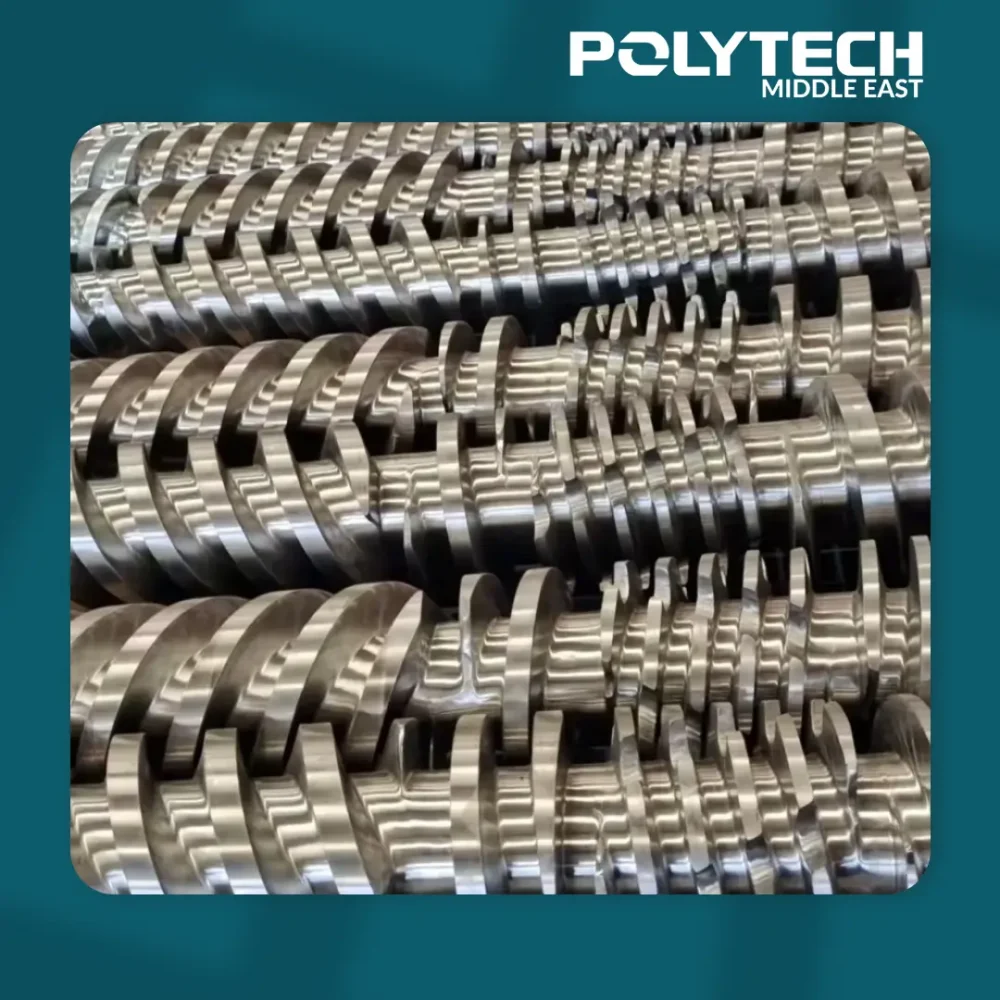
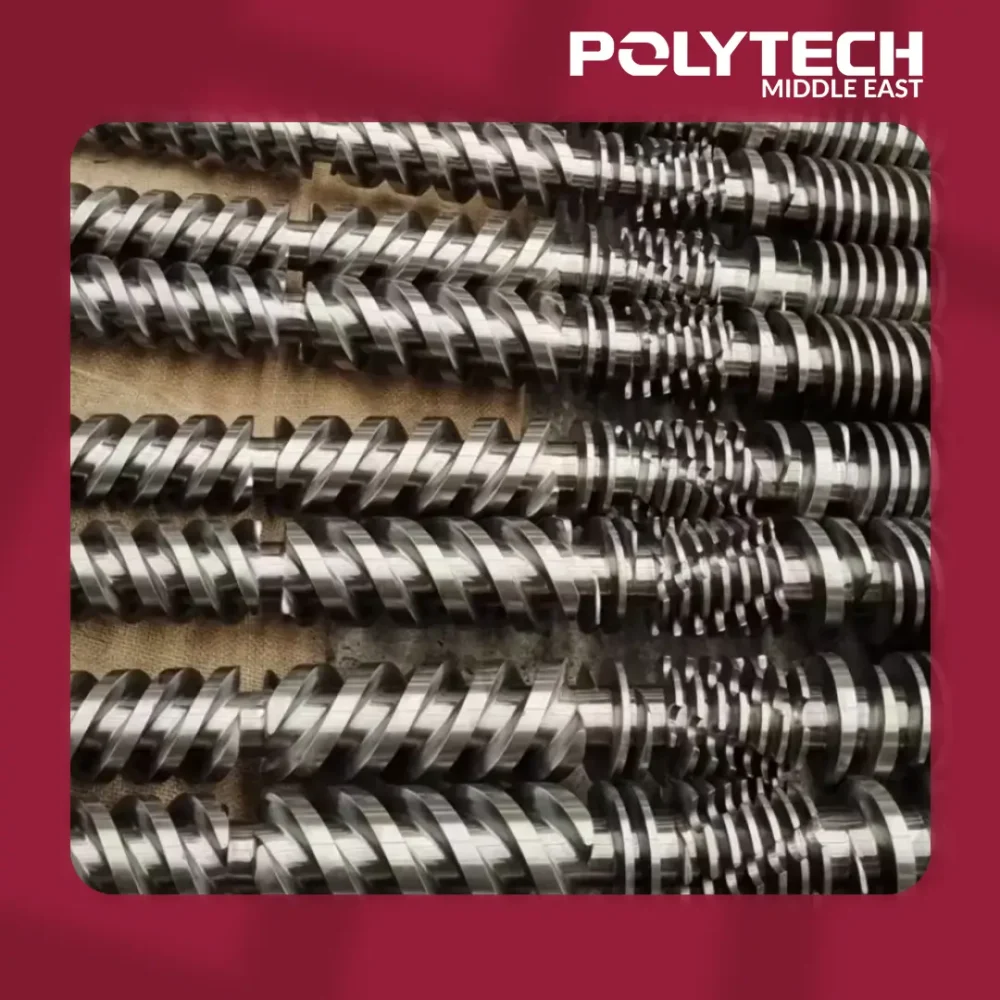
- The 45/90 conical twin-screw barrel is engineered for high-efficiency extrusion of rigid PVC and similar thermoplastics. It uses two intermeshing screws that taper from 90 mm to 45 mm diameter along the barrel, creating a built-in compression zone.
- Precision-machined from nitriding-grade alloy steel (e.g. 38CrMoAlA), both screws and barrel are hardened and treated for extreme wear resistance. Typical treatments include gas nitriding (0.5–0.8 mm case at ~900–1000 HV) and hard chrome or nickel plating (0.05–0.10 mm at ≥950 HV).
- This design delivers high melt pressure and thorough mixing with moderate screw speed, enabling very high throughput (hundreds of kg/h) while preserving melt quality.
- Key benefits include excellent durability (long service life on abrasive PVC compounds) and energy-efficient operation. The self-wiping action of the conical screws ensures uniform melt and reduces sticking.
- Applications range from PVC pipe/profile extrusion and WPC decking to cable insulation and ABS/PC compounding. The barrel’s robust construction and smooth operation make it ideal for processing filled or heat-sensitive polymers with high precision.
Design & Materials
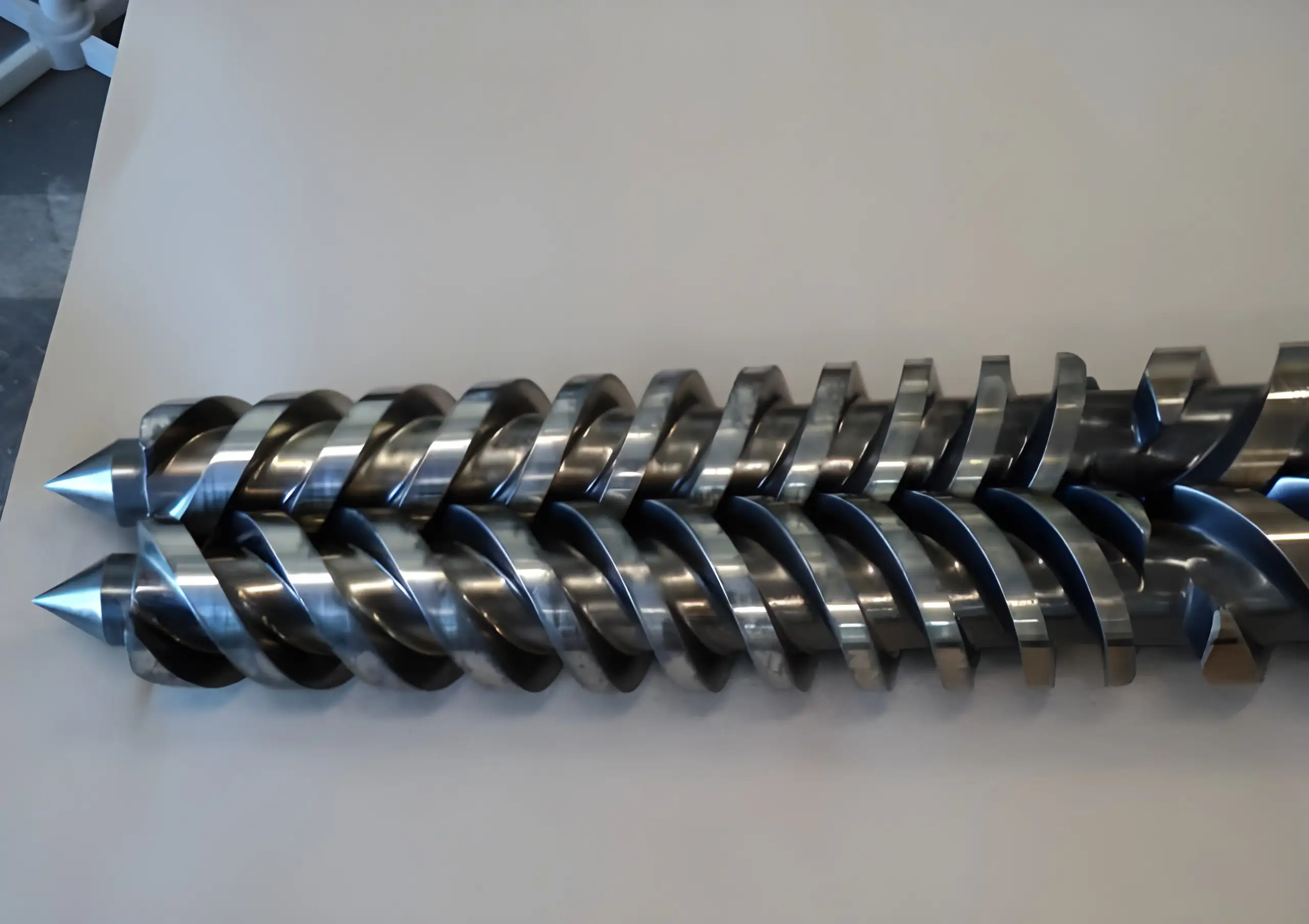
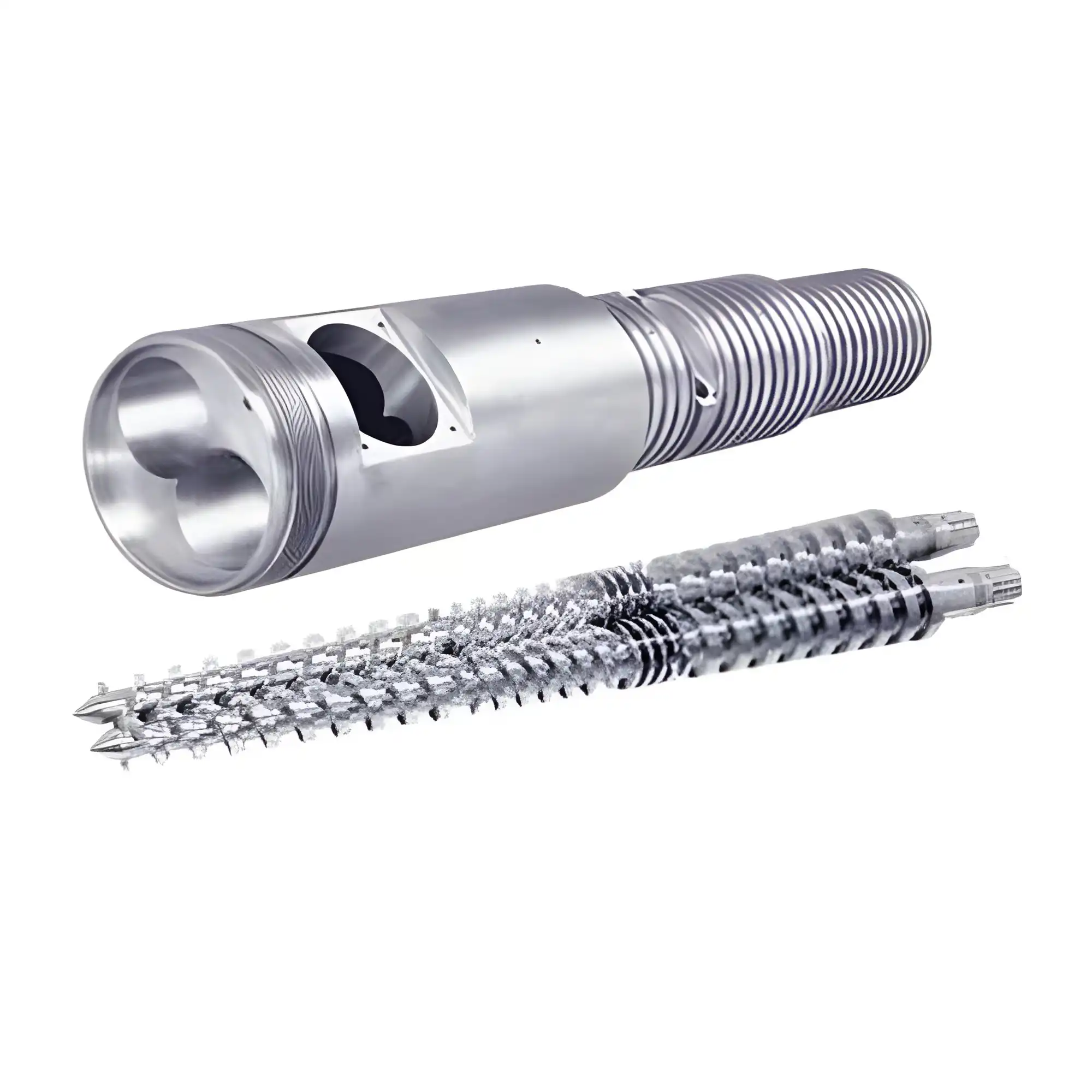
The 45/90 barrel is a counter-rotating, two-screw system whose screws taper conically (45 mm feed-end to 90 mm discharge-end). These screws intermesh in a single barrel, creating a natural compression zone. Typical overall length is set by the chosen L/D ratio (around 20:1, so ≈1.8–2.0 m for this size). The taper angle is shallow (total cone angle ≈3°, each screw ~1.5° half-angle), which provides steady build-up of melt pressure.
Construction: High-grade alloy steels are used. A common choice is 38CrMoAlA (JIS SACM645), a medium-carbon, nitriding-grade steel known for excellent core toughness. After rough machining, screws and barrel bore are heat-treated: typically hardened and gas-ion nitrided. Nitriding yields a hard surface layer (~0.5–0.8 mm deep) with hardness ~900–1000 HV (~56–60 HRC). This greatly improves wear resistance against abrasive fillers (like CaCO₃ in PVC).
Surface Coatings: To further extend life, a hard chrome plating (~0.05–0.10 mm thick at ≥950 HV) or specialized Ni/Co alloy coating may be applied over the nitrided steel. These coatings protect against corrosion and micro-abrasion by aggressive polymers (e.g. chlorinated PVC or flame-retardant compounds). In some designs, a bimetallic inner layer (2–3 mm thick at ~55–72 HRC) is cast or welded into critical sections for extra wear resistance.
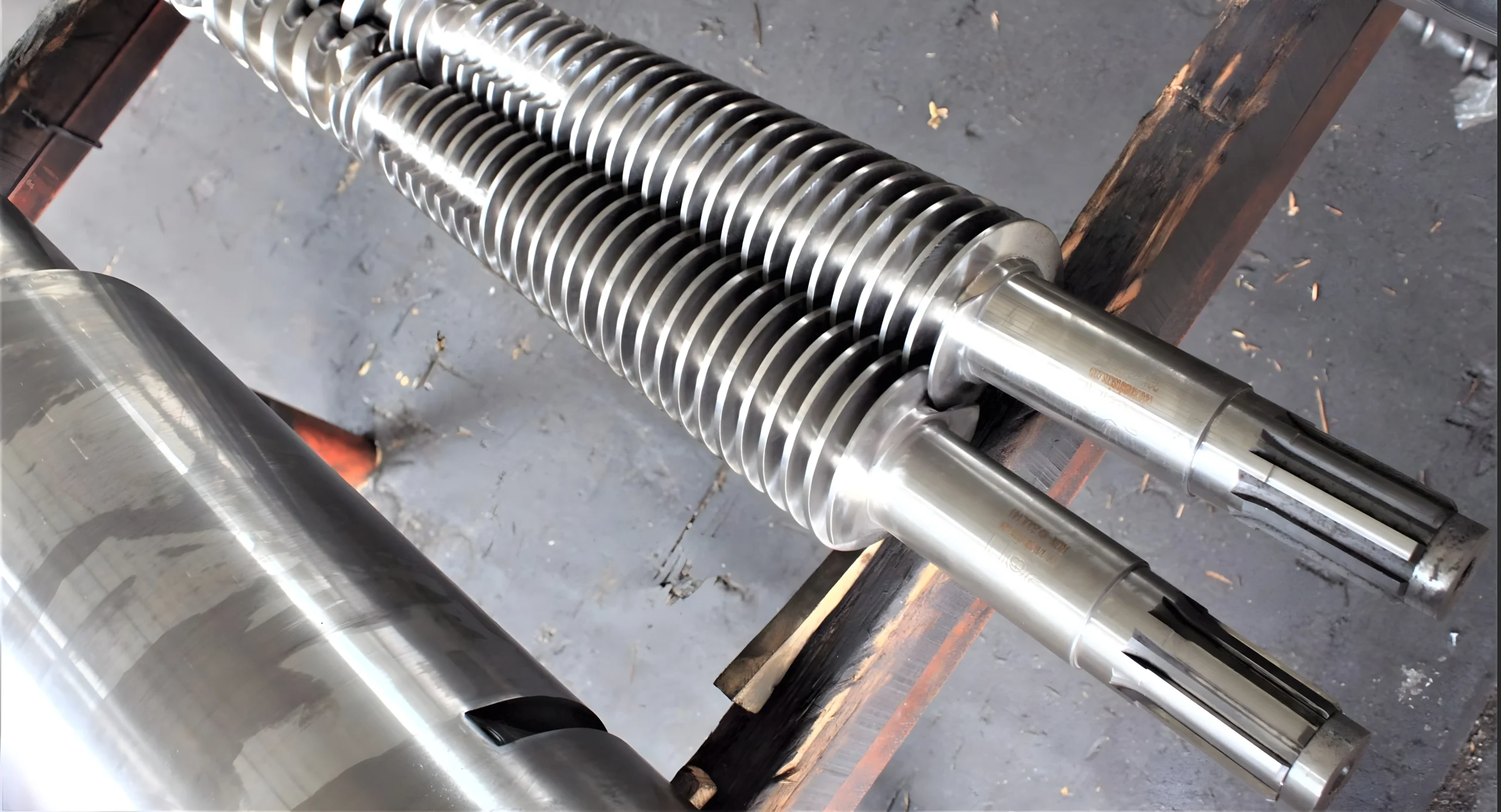
Precision Machining: All surfaces are finished to tight tolerances. Surface roughness is kept very low (Ra ≤0.4 μm) to ensure smooth plastic flow. Screw straightness and coaxiality are typically controlled to ≤0.015 mm over the length. End faces and flanges are machined for exact fit. The barrel often comes in modular segments (feed, transition, metering) with precision alignment features. The result is a barrel/screw assembly that remains rigid and well-aligned under high torque.
Technical Advantages
- High Output & Mixing: The conical twin-screw design inherently builds pressure: as the 45→90 mm taper compresses the melt, it raises discharge pressure at moderate RPM. This means a given motor power yields higher throughput than a parallel twin or single screw. Intermeshing action produces self-wiping mixing – each screw cleans the other’s flight – resulting in very uniform melt. Manufacturers report throughput gains of 30–50% over comparable single-screw barrels on similar motors.
- Wear Resistance: Hardened base steel plus coatings deliver exceptional durability. Nitriding and plating form a hard shell that resists abrasion from fillers. In practice, the barrel and screws withstand highly filled PVC (with CaCO₃) or wood-plastic blends for tens of thousands of hours before replacement is needed. The combined treatment reduces downtime and maintenance: for example, plating and coatings can delay wear until the next major overhaul.
- Efficient Heat Management: Conical barrels tend to run cooler since lower screw speeds can achieve the same output. Multi-zone heating/cooling allows precise temperature control across feed, transition, and metering zones. The gradual compression generates heat internally, so external heaters can be lower. This helps avoid hot spots and degradation of heat-sensitive PVC.
- Self-Cleaning Feed Zone: The decreasing channel depth near the feed end creates a self-cleaning effect: old material and moisture are less likely to stagnate. This improves start-up reliability and is particularly useful when processing moist recyclates or compounds with plasticizer liquids.
- Compact Design: With an L/D around 20:1, the 45/90 barrel is shorter than typical 32:1 machines but provides similar melt homogeneity. This reduces machine footprint and screw power requirements. It also allows higher screw RPM if needed for more throughput.
- Customization: Screw profiles (flight depth, pitch, mixing elements) can be tailored for specific polymers or additives. For example, PVC compounding might use deeper feed flights, while cable jacketing benefits from kneading blocks. Many suppliers offer custom design services so the 45/90 barrel fits the end-use exactly.
Installation & Compatibility Notes
- Mechanical Fit: The barrel is installed in the extruder’s barrel housing, aligning with the drive shafts of a counter-rotating conical twin-screw extruder. Installers must ensure all flange connections are level and square. Segment joints should be bolted in the correct order (feed through metering) and tightened evenly.
- Alignment: Confirm that the two screws intermesh without contact. A typical commissioning step is to rotate the screws slowly by hand or at very low speed (no polymer) to check for interference. Flange alignment tools or feeler gauges can be used.
- Cooling and Heating: Connect all barrel cooling circuits and heat zones. Before adding polymer, pressure-test the water jackets to check for leaks. Verify that all thermocouples and heater bands are correctly placed.
- Startup Checks: With screws turning empty, calibrate each zone’s temperature controller and observe rotation torques. Any abnormal vibration or binding must be fixed before extrusion.
- Machine Compatibility: Ensure the host extruder’s drive train can handle the torque of the 45/90 screws. These barrels usually attach via a standard DIN/ANSI flange. If replacing an existing barrel, verify the L/D and feed geometry match (some custom adaptors may be needed for different screw L/D or vent positions).
- Quality Inspection: After installation, operators should perform a test run with virgin resin. Check that output meets expectations (throughput, melt quality) and that there are no leaks at flanges or vent ports.
- Documentation: Manufacturers often supply a drawing or datasheet. Keep this for reference on dimensions, sectoring of zones, and recommended start-up parameters (rpm, temperatures).
Maintenance & Lifespan
- Wear Monitoring: Record baseline screw-barrel clearances. During operation, monitor throughput and product quality; a drop can indicate wear. Inspect the gap between screw flights and barrel ID every few hundred hours. Action: If the gap reaches ~0.2–0.3 mm, plan a re-chroming or liner replacement. Once wear exceeds ~0.5 mm, the section is typically replaced.
- Cleaning: After PVC runs, immediately purge and clean the barrel to remove any residual polymer or corrosive stabilizers. PVC can release HCl when overheated; cleaning protects the metal. For polyolefins, use recommended cleaners to avoid residues.
- Preventive Service: Check barrel end-bearings, gearbox oil, and coupling to screws each shutdown. Inspect heater bands and insulation. Any cooling leaks should be fixed. Keep spare screws or barrel liners on hand to minimize downtime.
- Life Expectancy: With proper treatment, a 45/90 barrel can last on the order of 10^4–10^5 operating hours. Much depends on feed quality and maintenance discipline. Avoiding contaminants (e.g. metal, sand) in feed stock greatly extends life.
- Reconditioning: Some parts (e.g. inner bimetallic layers or hard chrome) can be refurbished by thermal spraying or chrome plating. When ordering a new barrel, consider reclaiming the driveshaft ends and cooling port fittings if they are still within tolerance.
Safety & Quality Standards
- Quality Assurance: Components are made to international standards (e.g. DIN/JIS/ASTM material grades). Material certificates (heat treatment charts, hardness tests) should be provided. Reputable suppliers follow ISO 9001 quality management and may have CE marking (for machines) or PED certification (for pressure parts) if needed.
- Safety Practices: The barrel itself has no moving parts beyond the screws. Standard extruder safeguards apply: install guards around the hot barrel zone, ensure emergency stops and interlocks on feed and discharge. If the barrel has venting, vent fumes (especially from PVC) to a scrubber or exhausted environment.
- Regulatory: Ensure compliance with local regulations for machine safety (lockout/tagout, thermal insulation). If used in food-contact or medical plastics, confirm the alloy and coatings meet the relevant standards (food-grade chrome, etc.).
- Operational Safety: Operators should be trained on startup/shutdown procedures. High-pressure points (pumps, vent blocks) should have pressure relief. Always follow the equipment manufacturer’s guidelines for maximum screw speed and back pressure when configuring the 45/90 barrel on an extruder.
Products
Applications & Industries
- PVC Pipe and Profile Extrusion: The 45/90 barrel is widely used for rigid PVC pipe and window profile lines. Its high output and low-shear action suit long PVC products (fencing, piping, siding) where stable melt pressure is critical. Double-cone screws handle fillers (CaCO₃, TiO₂) and stabilizers efficiently, ensuring a smooth finish.
- Wood-Plastic Composite (WPC): In WPC decking and trim lines, blends of PVC or PE with wood flour demand intense mixing. The twin-screw barrel’s strong compounding and self-wiping surfaces prevent fiber accumulation and ensure even dispersion of wood and additives.
- Construction and Building Materials: The barrel can extrude PVC boards, skirting, lattice panels, and cement-bonded sheets. Its controlled melt output ensures dimensional accuracy in sheets and profiles.
- Cable and Conduit Manufacturing: For insulation of electrical cable or conduit, polymers like PVC, XLPE, and compound blends are extruded continuously. The high back-pressure capability yields a defect-free outer sheath, and the design handles PVC compounding (stabilizers, plasticizers) without corrosion.
- General Thermoplastics: Although optimized for PVC, it also processes PP, PE, ABS, HIPS, and engineering plastics. Industries making consumer plastic parts or composite profiles may use a 45/90 barrel when high shear and pressure improve part quality.
- Specialty Compounding: The design can be adapted for pelletizing or mixing lines where devolatilization is needed. Vented barrel sections with vacuum can be added to strip off moisture or monomer, making it useful for PVC compounding or PET sheet extrusion.
Applications
Gallery
Main Features
Technical Specifications
| Property | Specification (typical) |
| Screw diameters | 45 mm (feed end) and 90 mm (discharge end) |
| Length-to-Diameter (L/D) | ~20:1 (total length ≈ 20×90 =1800 mm) |
| Cone angle | ~3° total taper (≈1.5° half-angle each screw) |
| Base material | Alloy steel (e.g. 38CrMoAlA SACM645) – nitriding-grade steel |
| Heat treatment | Hardened (quenched & tempered) + gas/ion nitriding (0.5–0.8 mm depth); optional bimetallic inner layer |
| Hardness | After H&T: ~280–320 HB (≈HRC 30–35); Nitrided layer: ~900–1020 HV (~HRC 56–60) |
| Surface coating | Hard chrome plating 0.05–0.10 mm (≥950 HV); Ni/Co alloy coating optional |
| Straightness tolerance | Screw straightness ≤0.015 mm/m; diameter tolerance ±0.02 mm |
| Cooling | Integrated cooling jacket (water-cooled) across barrel segments |
| Weight | ≈300 kg (varies by length and wall thickness) |
| Operating Temp. Range | –40 to +400 °C (limited by cooling and heater design) |
| Compatible Polymers | Rigid PVC/UPVC/CPVC (including filled grades), ABS, PA, PC, PP, PE, PS, TPU, etc. |
Related products
-
 Machines and Spare Parts
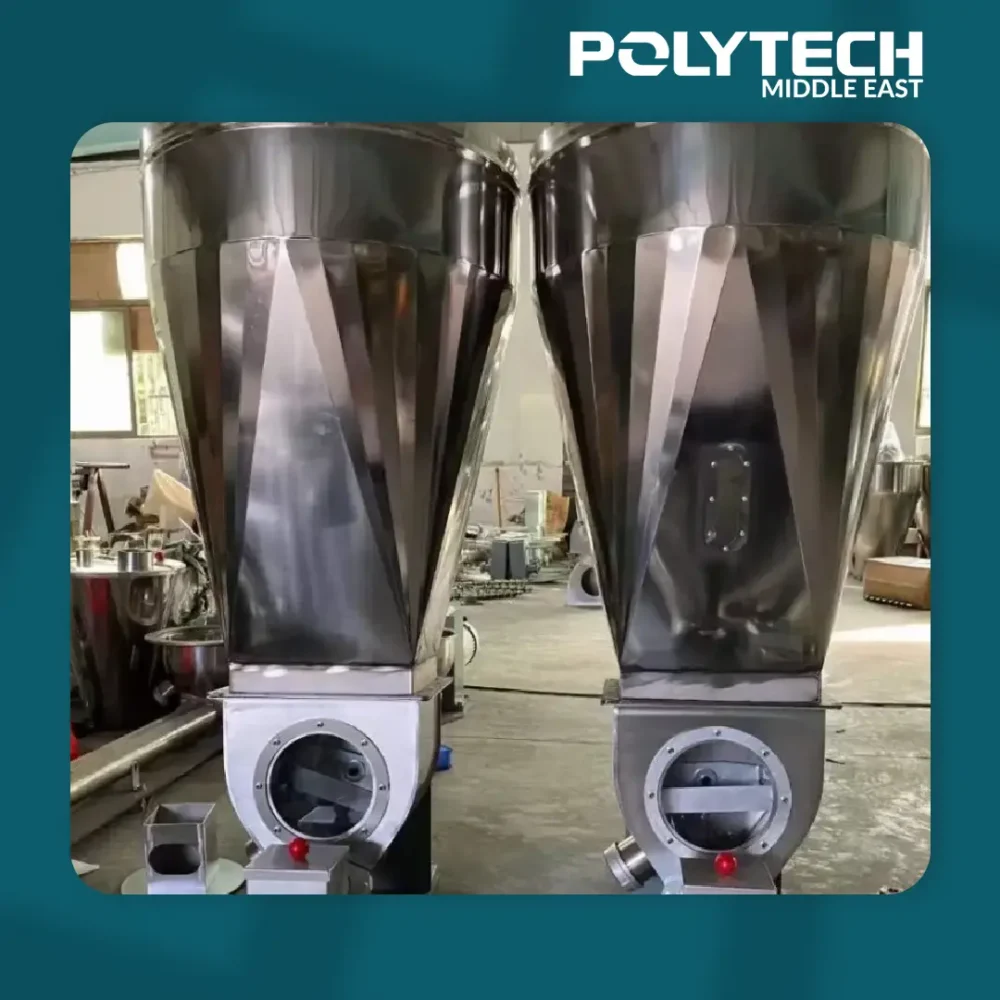
Twin Screw Feeder
-
 Machines and Spare Parts
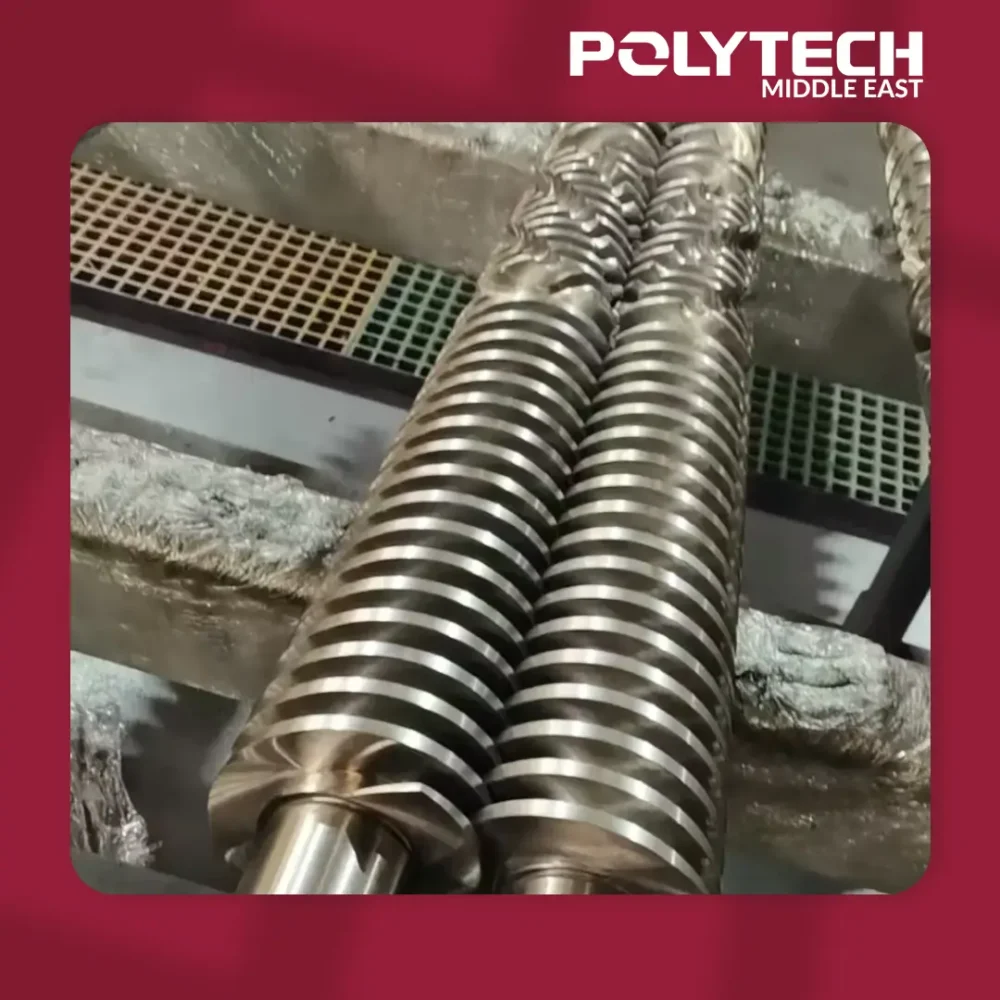
80/156 Conical Twin Screw Barrel
-
 Machines and Spare Parts
55/120 Conical Twin Screw Barrel
-
 Machines and Spare Parts
51/105 Conical Twin Screw Barrel