

Introduction
Factory machines are the driving force behind modern industrial manufacturing, enabling businesses to produce high-quality products with greater speed, accuracy, and efficiency. From processing raw materials to assembling finished goods, factory machines automate complex production tasks while reducing labor requirements and improving overall productivity.
Today’s manufacturing facilities rely on advanced machinery equipped with intelligent control systems, precision engineering, and automation technologies. Whether producing plastic products, metal components, packaging materials, or construction supplies, factory machines ensure consistent product quality and reliable production performance.
What Are Factory Machines?
Factory machines are industrial equipment designed to perform specific manufacturing operations during the production process. They can process raw materials, shape products, assemble components, inspect quality, package finished goods, and transport materials throughout the production facility.
Modern factory machines are built to operate continuously under demanding industrial conditions. Their ability to perform repetitive tasks with exceptional precision allows manufacturers to increase output while maintaining strict quality standards.
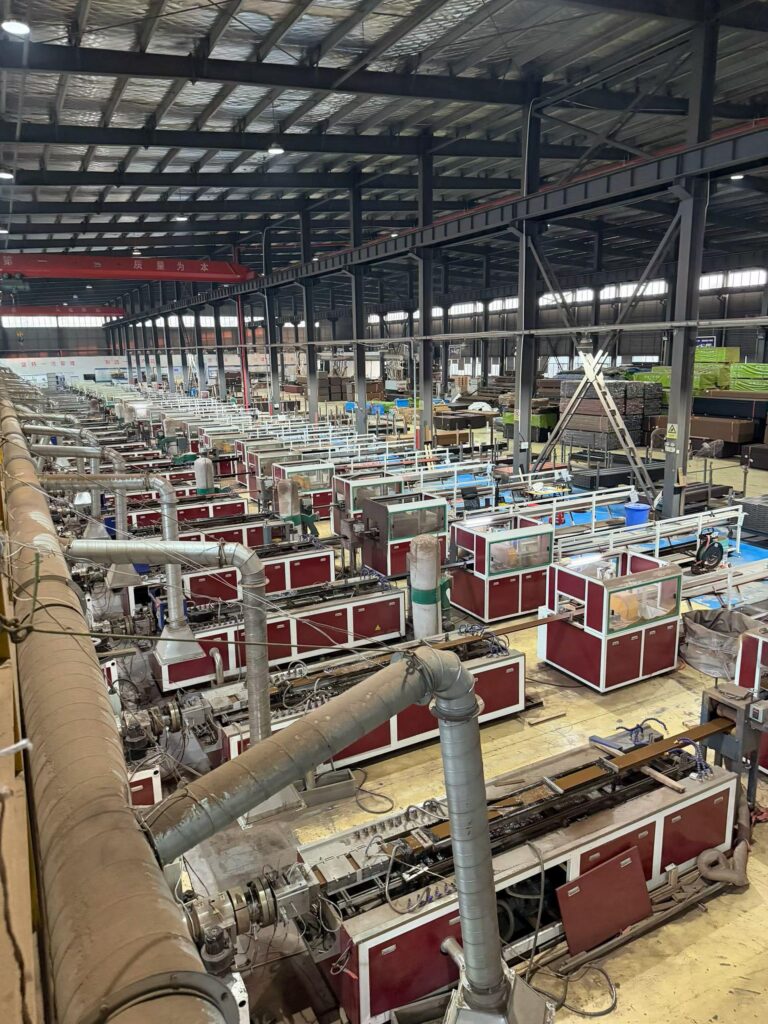
Depending on the industry, factory machines can operate independently or as part of a fully integrated production line controlled by advanced automation systems.
Types of Factory Machines
Manufacturing facilities utilize a wide variety of machines depending on production requirements.
Extrusion Machines
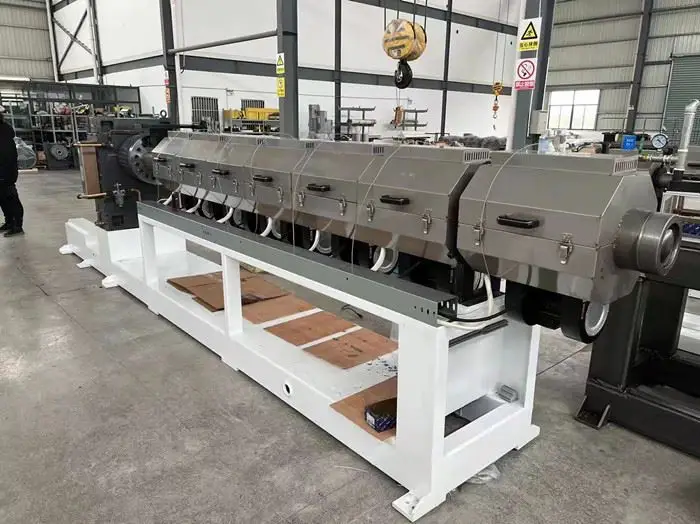
Extrusion machines manufacture continuous plastic products such as pipes, sheets, profiles, wall panels, cable trunking, and tubing.
Injection Molding Machines
These machines produce precision plastic components by injecting molten material into specially designed molds.
Recycling Machines
Plastic recycling equipment converts production waste and post-consumer materials into reusable raw materials for sustainable manufacturing.
Mixing and Compounding Equipment
These systems blend polymers with additives, fillers, stabilizers, and pigments to produce customized material formulations.
Cutting and Finishing Machines
Industrial cutting equipment provides accurate sizing, trimming, drilling, milling, polishing, and finishing of manufactured products.
Packaging Machines
Automated packaging systems prepare finished products for storage, transportation, and distribution while increasing production efficiency.
Each machine contributes to creating a streamlined and productive manufacturing environment.
Main Components of Factory Machines
Although designs vary by application, most industrial machines include several essential systems.
Drive System
Electric motors and transmission components provide the power required for machine operation.
Processing Unit
The core section where raw materials are processed, shaped, formed, or assembled.
Control System
Modern PLC and HMI systems monitor machine performance, automate production, and simplify operation.
Material Handling System
Feeders, conveyors, and transport systems ensure smooth movement of materials throughout production.
Safety System
Emergency stop devices, protective guards, sensors, and safety interlocks help protect operators and equipment.
Cooling and Lubrication Systems
These systems maintain optimal operating conditions and extend equipment lifespan.
Key Features of Modern Factory Machines
Modern industrial machinery incorporates advanced technologies that improve productivity and operational reliability.
Key features include:
- High production capacity.
- Automated operation.
- Precision manufacturing.
- Energy-efficient performance.
- Continuous production capability.
- User-friendly control interfaces.
- Smart monitoring systems.
- Durable industrial construction.
- Flexible production configurations.
- Low maintenance requirements.
These features enable manufacturers to achieve maximum efficiency while maintaining excellent product quality.
Benefits of Factory Machines
Investing in advanced factory machines offers significant advantages for manufacturers.
1. Increased Productivity
Automation enables faster production cycles and higher output with minimal manual intervention.
2. Improved Product Quality
Precision engineering ensures consistent dimensions, accurate processing, and reliable finished products.
3. Reduced Operating Costs
Efficient machinery minimizes material waste, lowers energy consumption, and decreases production expenses.
4. Enhanced Workplace Safety
Modern safety systems reduce operational risks and create a safer working environment.
5. Greater Manufacturing Flexibility
Many machines can be configured to produce different products with minimal setup changes.
6. Long Equipment Service Life
Industrial-grade construction allows machines to operate reliably under continuous production conditions.
7. Better Production Control
Digital monitoring systems provide real-time data that helps optimize manufacturing performance and reduce downtime.
Applications of Factory Machines
Factory machines support production across numerous industries worldwide.
Plastic Manufacturing
Production of pipes, sheets, profiles, pellets, panels, films, and technical plastic components.
Construction Industry
Manufacturing building materials, insulation products, decorative panels, structural profiles, and infrastructure components.
Automotive Industry
Production of interior trim, lightweight engineering parts, technical assemblies, and protective components.
Packaging Industry
Manufacturing containers, trays, bottles, films, sheets, and protective packaging materials.
Electrical Industry
Production of cable ducts, conduits, electrical housings, insulation products, and technical components.
Food and Consumer Goods
Automated processing, packaging, labeling, and assembly of consumer products for high-volume production.
The versatility of factory machines allows manufacturers to meet the demands of both standard and specialized industrial applications.
Maintenance and Performance Optimization
Regular maintenance is essential for maintaining machine performance and extending equipment lifespan. A preventive maintenance strategy helps reduce unexpected downtime while improving production efficiency.
Recommended maintenance practices include:
- Routine machine inspections.
- Lubrication of moving parts.
- Cleaning production equipment.
- Calibration of control systems.
- Replacement of worn components.
- Performance monitoring.
- Safety system verification.
- Scheduled preventive maintenance.
Consistent maintenance ensures reliable operation and reduces long-term repair costs.
The Future of Factory Machines
Industrial manufacturing continues to evolve through automation, artificial intelligence, robotics, and smart factory technologies. Modern factory machines increasingly feature remote monitoring, predictive maintenance, energy optimization, and digital process control.
Sustainable manufacturing is also driving innovation, with equipment designed to reduce waste, improve energy efficiency, and process recyclable materials more effectively. These advancements help manufacturers increase productivity while meeting environmental and operational goals.
Conclusion
Factory machines are essential for modern industrial production, providing the technology needed to manufacture high-quality products efficiently, accurately, and consistently. From extrusion and molding to recycling, packaging, and automated assembly, these machines support countless industries around the world. By combining advanced engineering, intelligent automation, and reliable performance, modern factory machines help manufacturers improve productivity, reduce costs, and achieve long-term success in an increasingly competitive global market.