


67/22 Parallel Twin-Screw Barrel
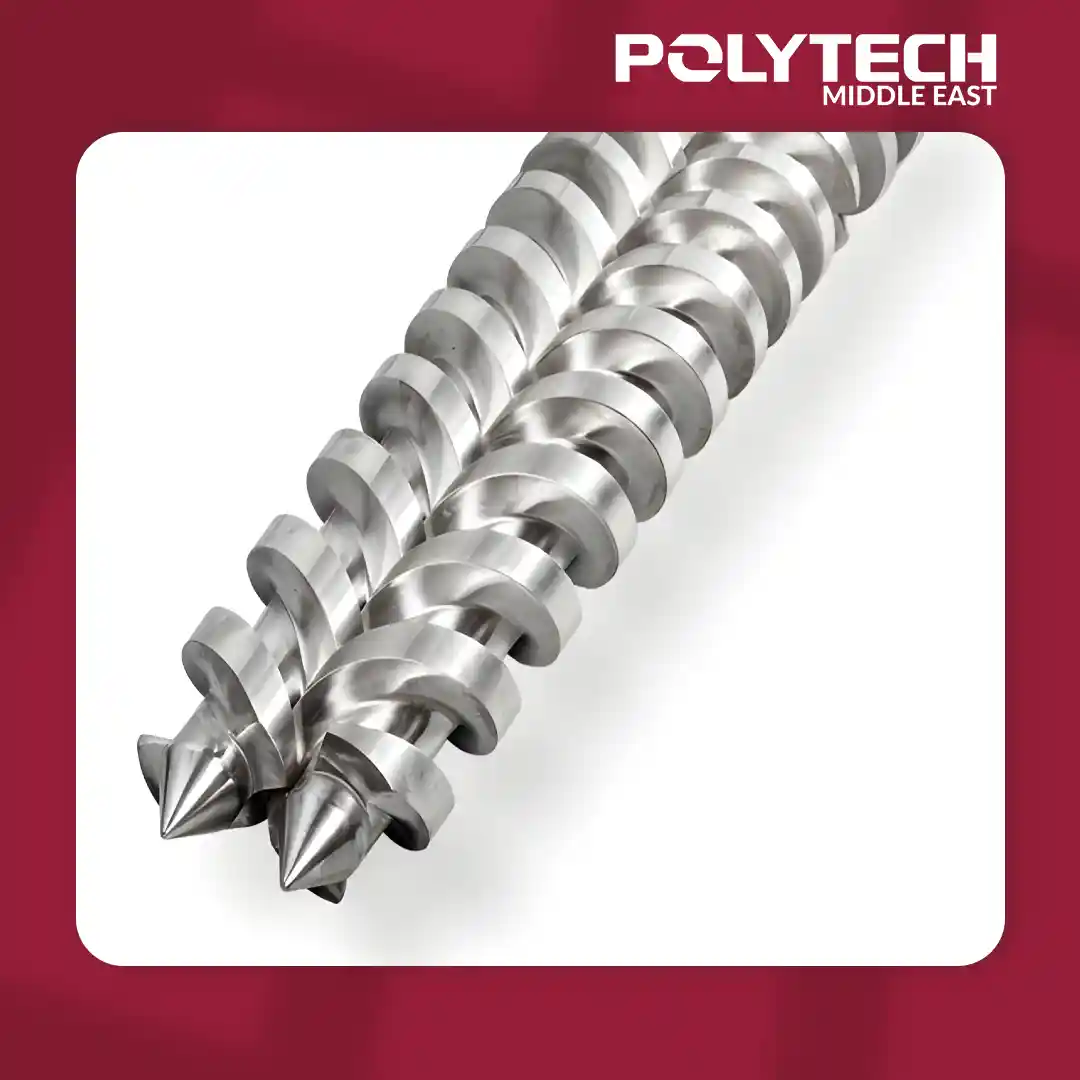
67/22 Parallel Twin-Screw Barrel
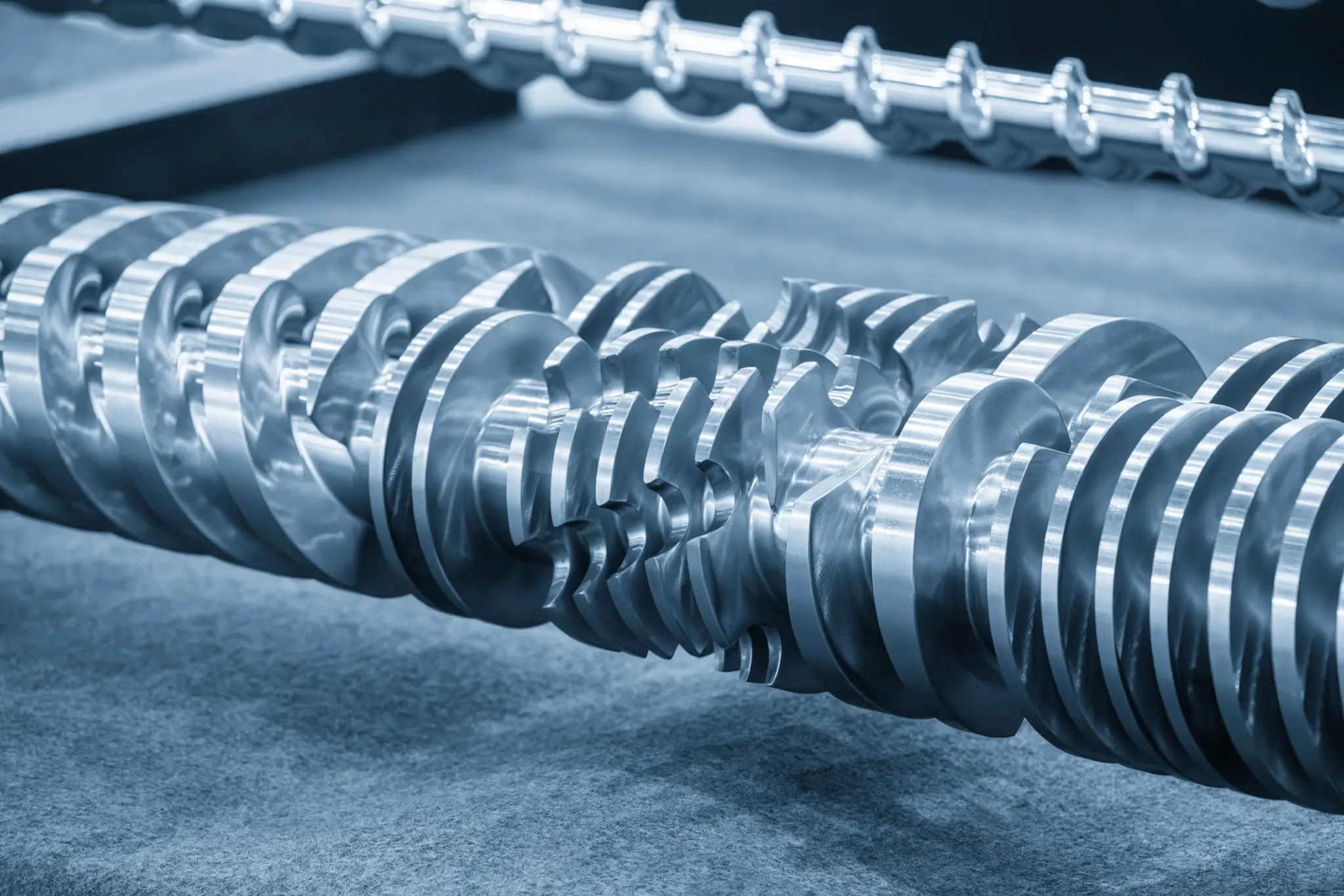
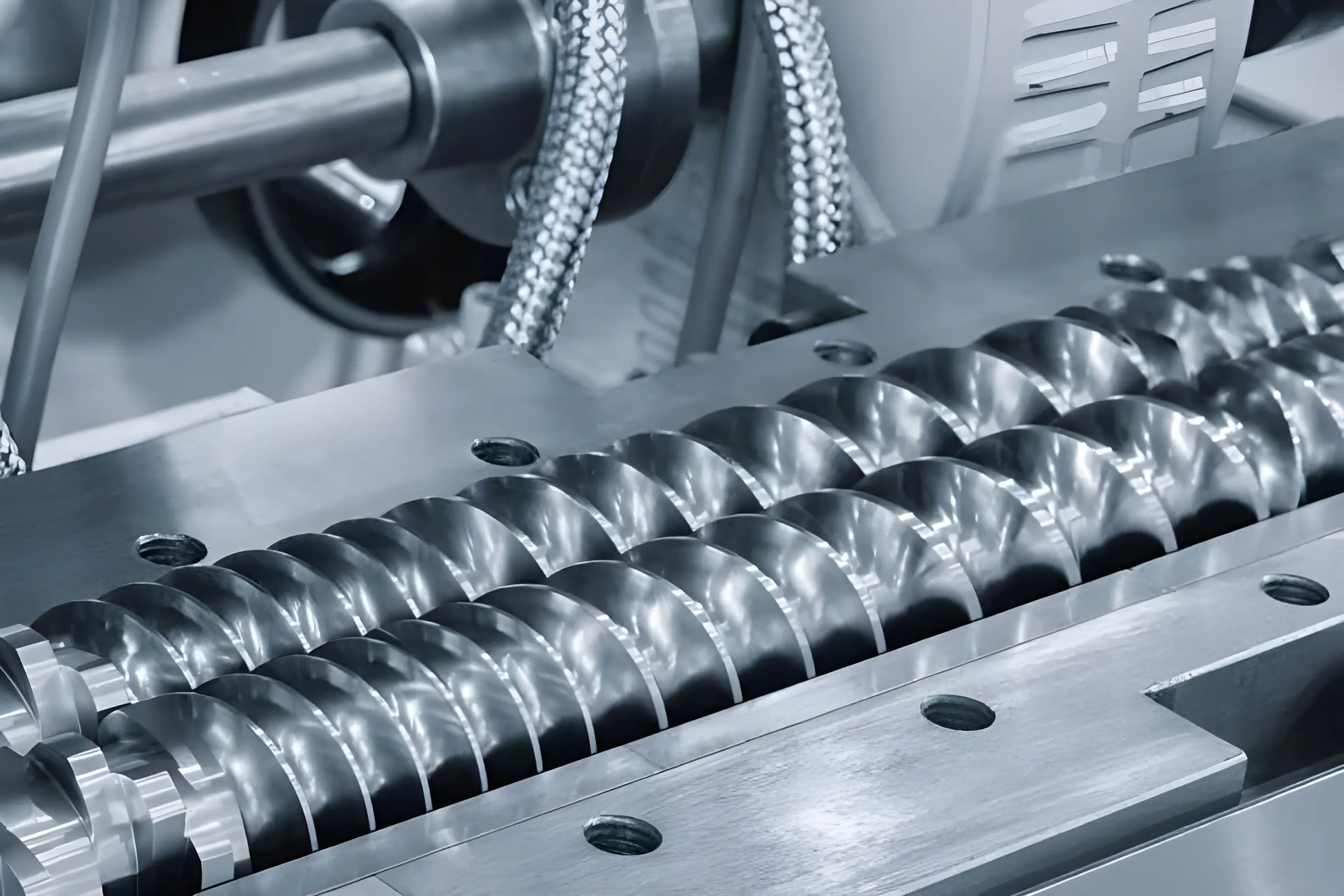
Discover the 67/22 parallel twin-screw barrel, designed for high-throughput plastic extrusion. Its double-screw design ensures uniform mixing and long service life.
Category -> Machines and Spare Parts
Description
Introduction
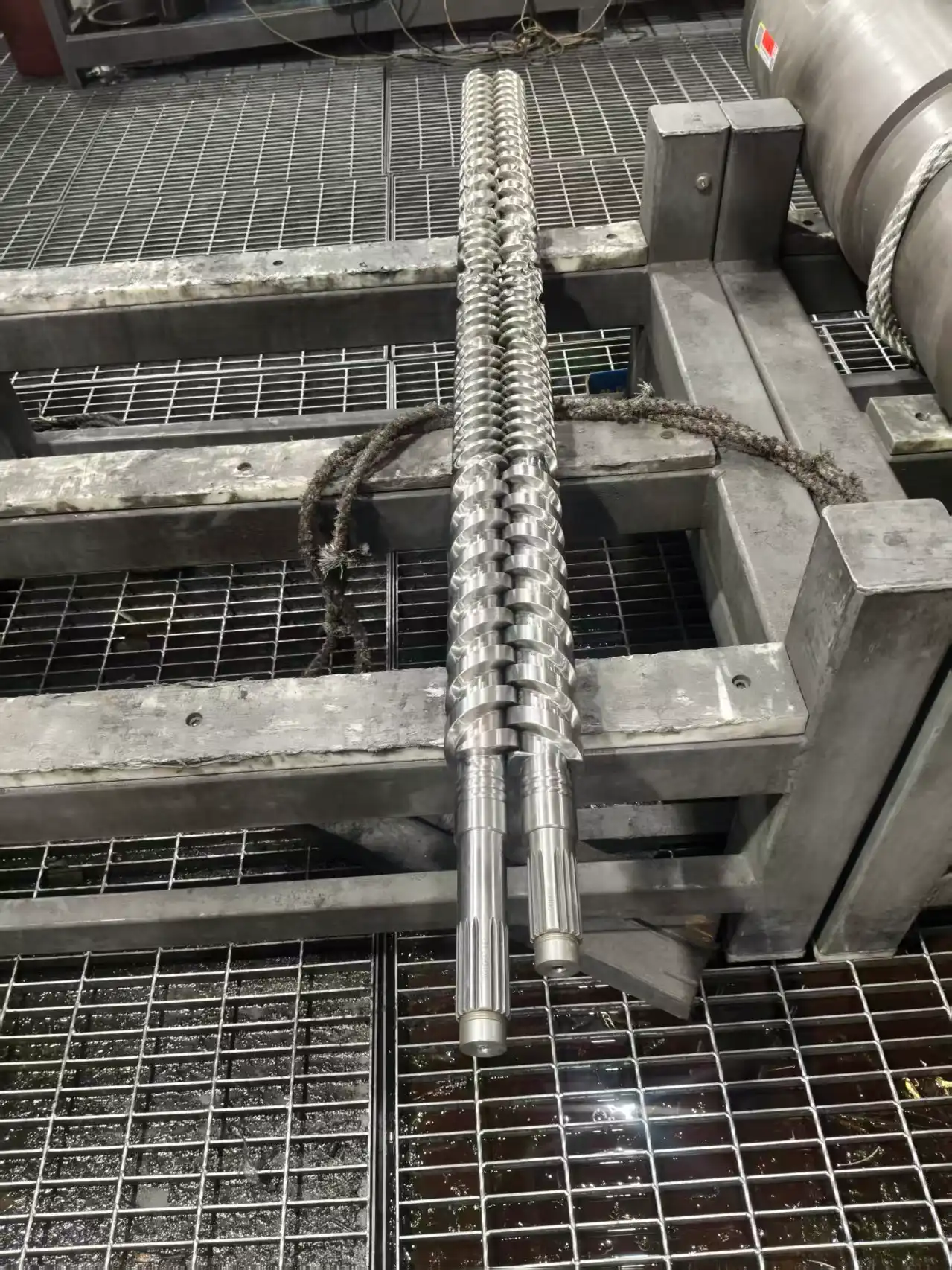
The 67/22 parallel twin-screw barrel is a precision extrusion component featuring two co-rotating screws side by side. It is engineered for large-scale plastic processing, providing steady high output and superior mixing. With a 67 mm screw diameter and an L/D (length-to-diameter) ratio of 22, this barrel supports high throughput in demanding extrusion lines. The parallel layout forces material through two intermeshing screws, enabling uniform melting and continuous operation. Thanks to its sturdy construction, it handles tough jobs with additives and fillers, making it ideal for high-quality PVC profiles, pipes, sheets, and wood-plastic composites.
Design & Quality
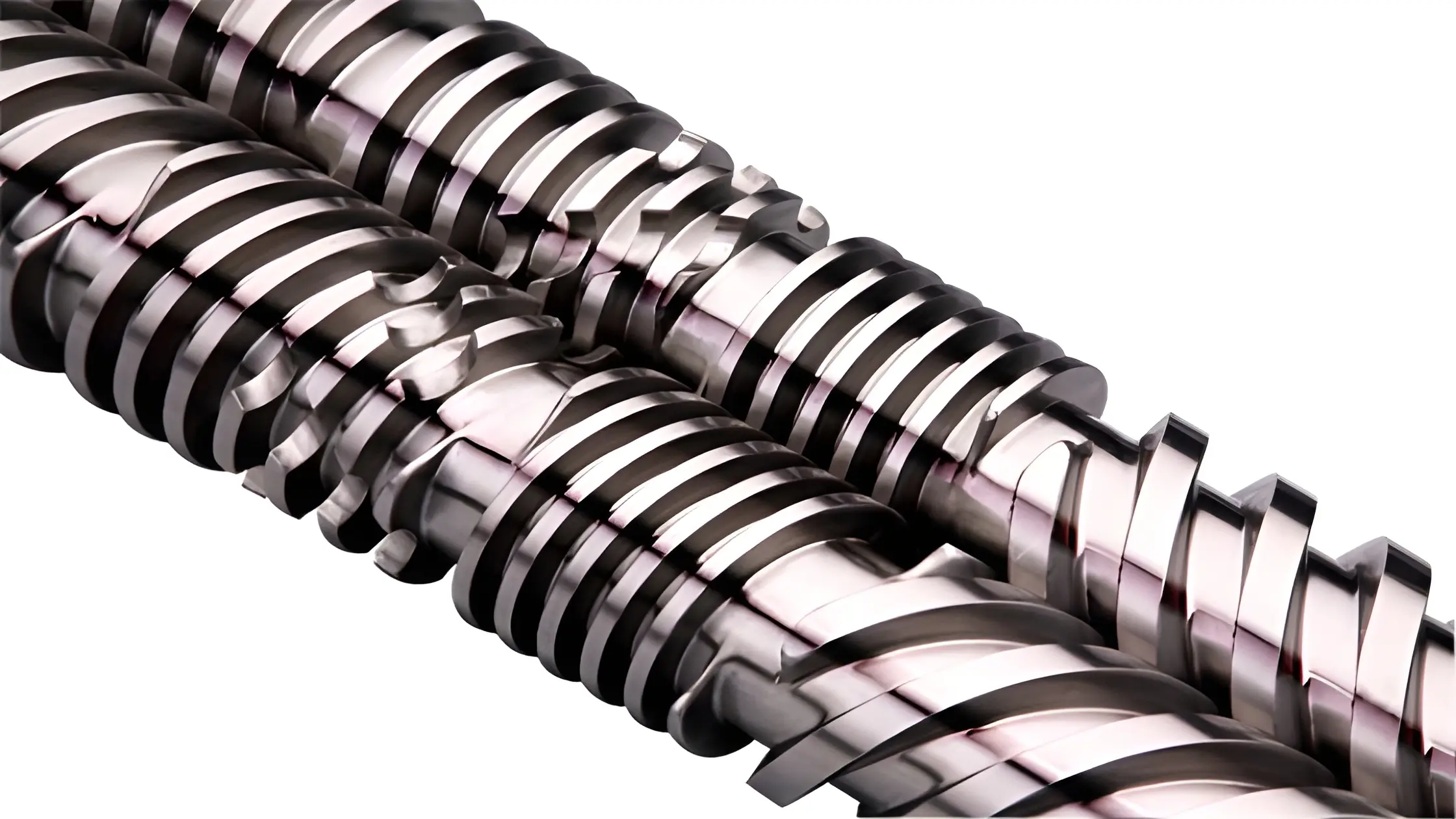
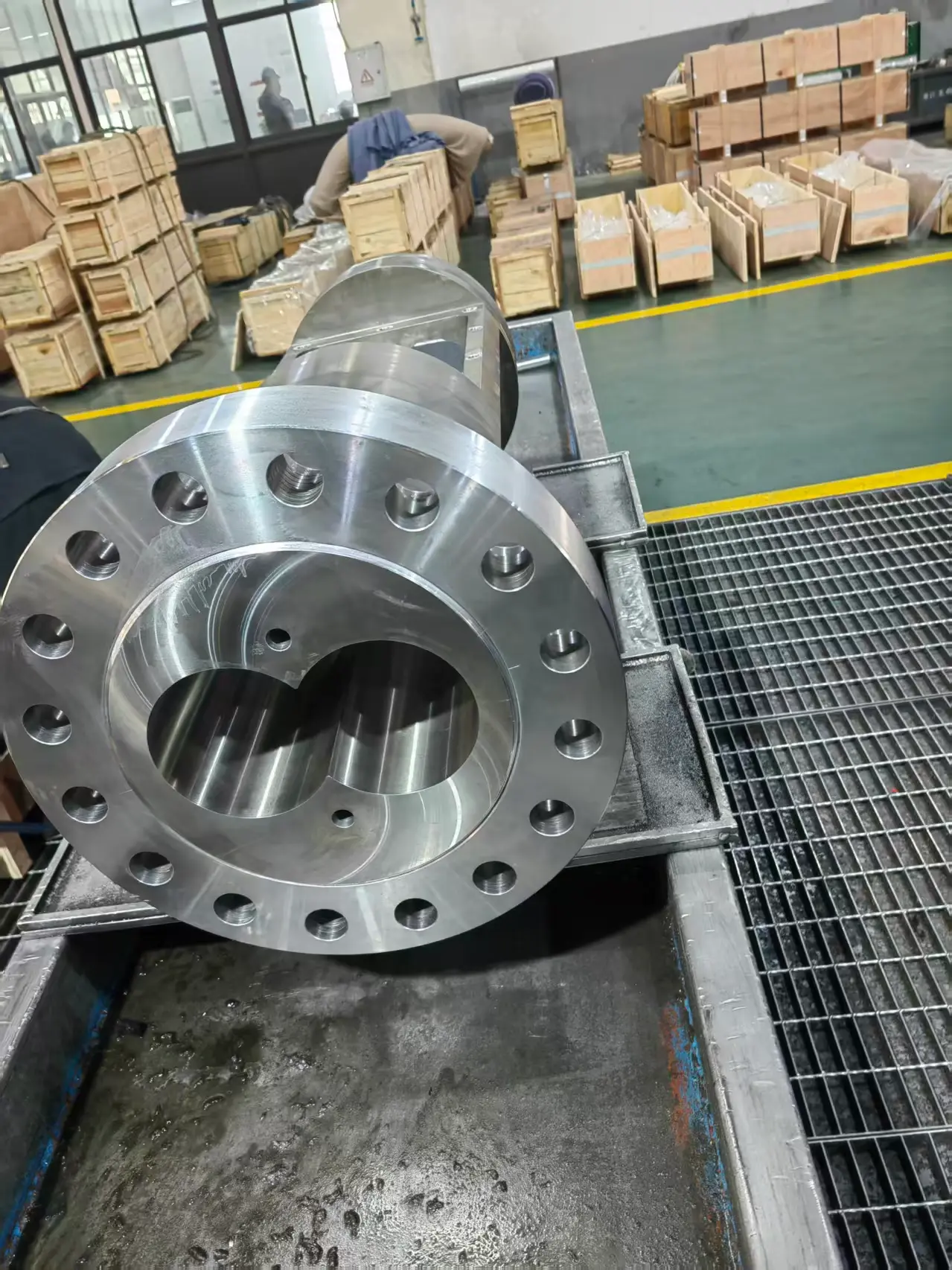
This twin-screw barrel is manufactured from high-grade alloy steel (such as nitrided 38CrMoAl) with bimetallic construction for durability. Both screws maintain the same diameter along their length to ensure consistent flow. Advanced heat treatment (hardening, tempering, nitriding) creates a hardened surface layer (HRC ~56–58) and strong alloy core (HRC ~56–64). The barrel is typically made in split halves bolted together, which simplifies assembly and cleaning. Many barrels include replaceable liner segments and modular screw sections. This modular design means screw blocks (for feeding, compression, mixing, etc.) can be changed to suit different materials and shorten maintenance time. High-quality surface coatings (e.g. nickel or tungsten carbide) further enhance wear and corrosion resistance. Overall, the precision machining and robust materials ensure long service life and stable extrusion performance.
Applications
Parallel twin-screw barrels like the 67/22 are widely used in the plastics industry for continuous extrusion of profile and pipe products. Typical applications include PVC and WPC decking, PVC wall panels, rigid and flexible PVC profiles, and composite sheets. They are also used for processing filled plastics (e.g. PVC with CaCO₃) and engineering polymers (PP, PE, ABS). The twin-screw design handles high filler content and recycled material well, making it suitable for wood-plastic composites, pelletizing, and compounding lines. Industries that benefit include construction, automotive, and packaging, where consistent product quality is critical. In these processes, the parallel twin-screw barrel provides excellent mixing and degassing, enabling clear, uniform sheets or dense pipes without streaks or weak spots.
Performance & Advantages
Uniform Mixing: The dual screws intermesh to create strong shear forces, breaking down clumps and distributing additives evenly. This yields homogeneous melt with consistent properties. Studies show co-rotating twin screws deliver superior mixing compared to single screws.
High Throughput: A 67/22 twin-screw setup allows higher throughput under the same operating conditions. The larger combined flight area and enhanced pumping action push more material through the barrel. This boosts production rates (often over 100 kg/h for PVC) while maintaining quality. In practice, increasing throughput improves mixing uniformity and particle dispersion, provided screw design and speed are optimized.
Improved Quality: Consistent residence time and melting ensure each part of the melt sees the same heat history. The result is more uniform color, density and fewer defects. High intermeshing efficiency also stabilizes pressure and minimizes surging. In effect, this design reduces scrap and downtime.
Durability: Tough materials and surface treatments give the barrel high wear resistance. Nitrided steel and bimetallic liners withstand abrasion from fillers and regrind. The design typically includes robust bearings and easy cooling, keeping temperatures stable under high load. Overall, the 67/22 twin-screw barrel offers a reliable, long-lasting solution for heavy-duty extrusion.
Operation & Maintenance
Parallel twin-screw barrels are designed for ease of use and maintenance. The split-barrel construction (top and bottom halves) allows quick access for inspection and cleaning. Each screw and barrel segment can be individually removed. Regular oil lubrication of bearings and drives ensures smooth rotation; the barrel is usually water- or air-cooled to control temperature.
Wear parts (screw tips, mixing elements, liners) can be replaced in sections, reducing downtime. For example, worn kneading blocks or screw flights are exchanged without replacing the entire screw. Deep nitriding (0.5–0.8 mm case depth) and low roughness (Ra ~0.4 μm) help minimize wear, but routine inspection is recommended. Cleaning is straightforward: bolts are loosened to open the barrel, the screws are withdrawn, and the insides cleaned. This self-cleaning, modular design keeps the extruder running reliably and reduces labor between production runs.
Products
Applications
Gallery
Main Features
| Parameter | Typical Value | Notes |
| Screw Diameter | 67 mm | Two parallel screws, co-rotating |
| L/D Ratio | 22 | Length/Diameter (unitless) |
| Screw Configuration | 2 screws, same diameter | High-intermeshing, co-rotating |
| Base Material | 38CrMoAl (JIS SACM645) | Bimetallic steel, nitrided |
| Surface Coating | Tungsten carbide or Ni alloy | On inner barrel liner and screw flights |
| Nitrided Hardness | HRC 56–58 | Core hardness of screw; case depth 0.5–0.8 mm |
| Alloy Core Hardness | HRC 60–64 | Bimetallic inner layer hardness |
| Surface Roughness (Ra) | 0.4 μm | Screw and barrel inner finish |
| Straightness | 0.015 mm | Screw runout tolerance |
| Typical Throughput | ~100–150 kg/h (PVC) | Depends on resin, screw speed |
| Applications | PVC pipes, profiles, WPC, compounding | High-filler and rigid/plastic materials |
| Cooling Method | Air-cooled barrel, oil-cooled screw | Maintains uniform temperature |
Related products
-
 Machines and Spare Parts
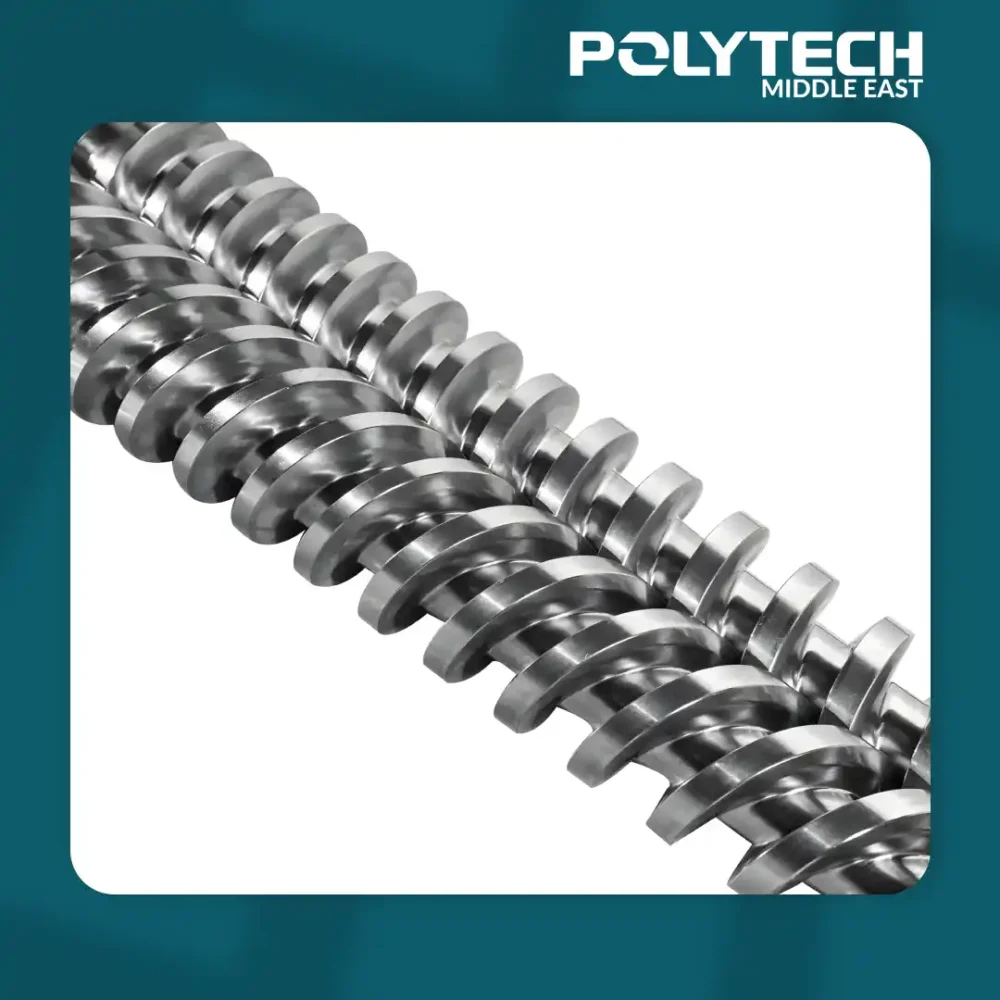
55/110 Conical Twin-Screw Barrel
-
 Machines and Spare Parts
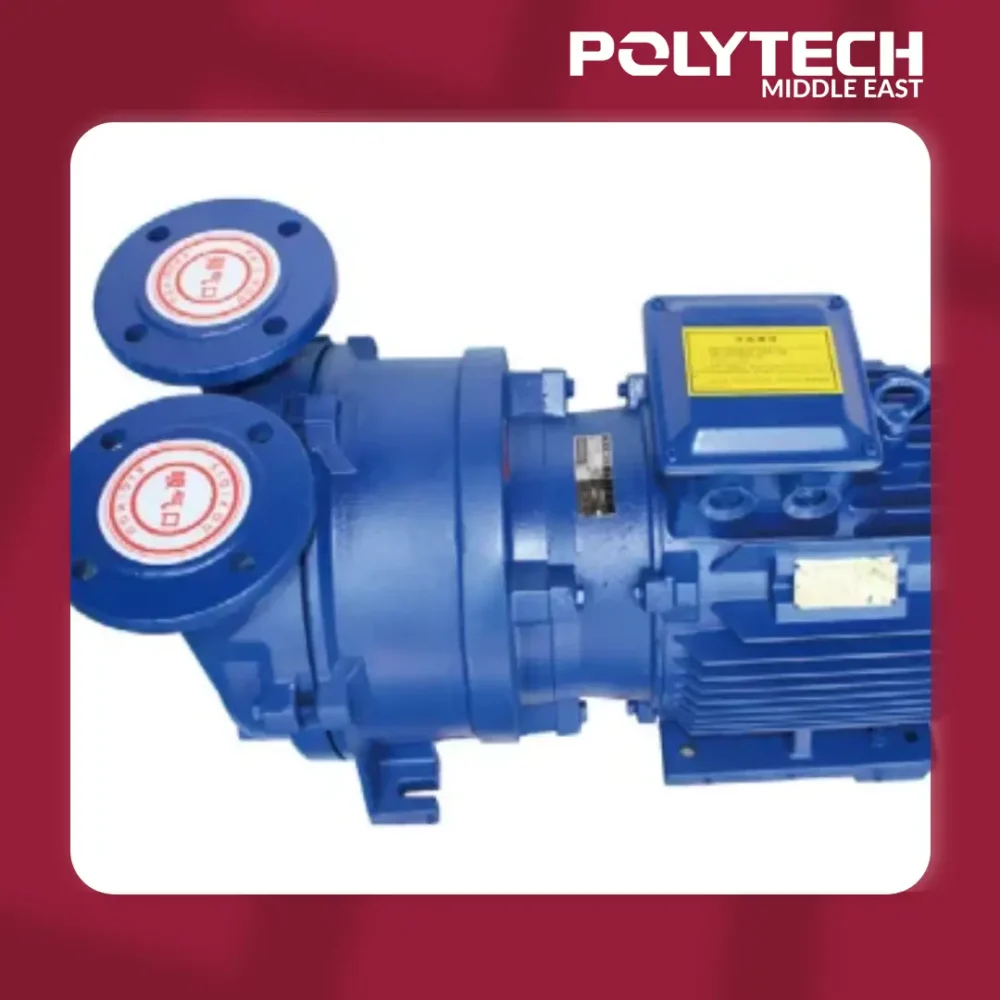
5.5 kW Vacuum Pump
-
 Machines and Spare Parts
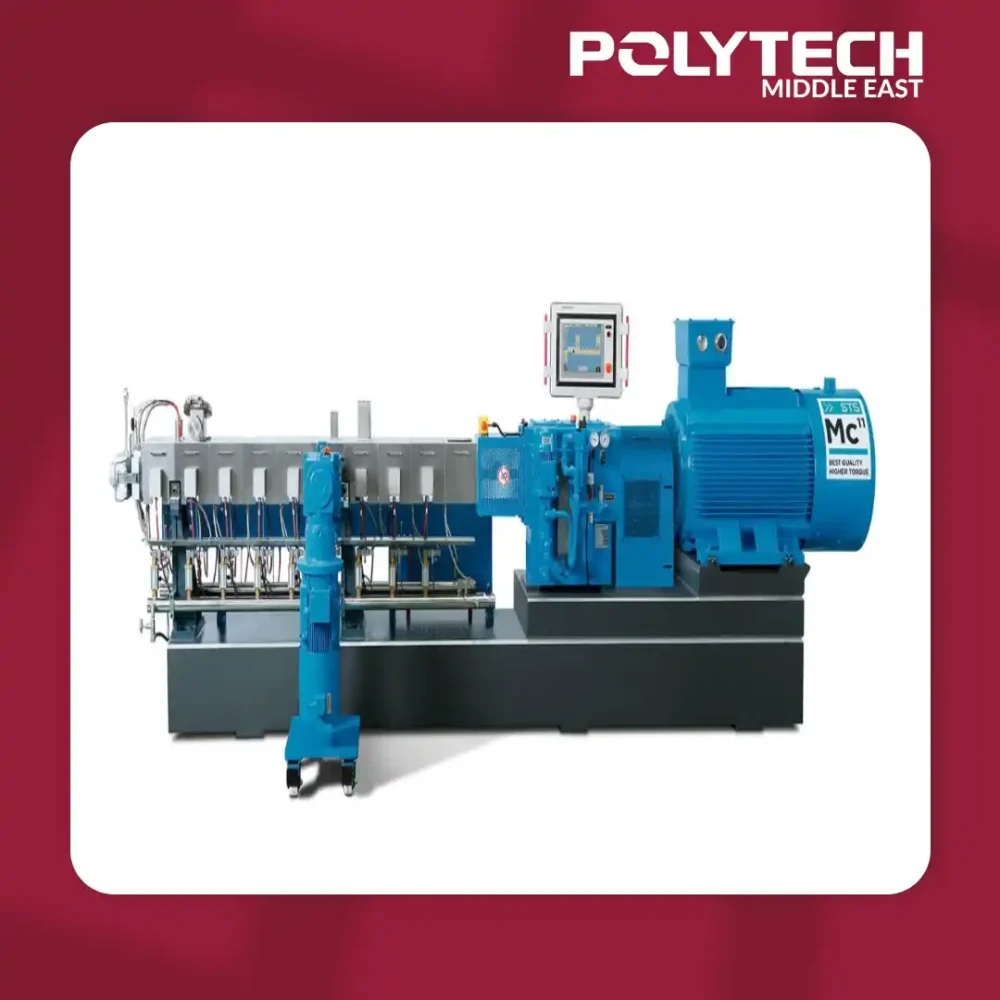
High-Torque Twin-Screw Extruder
-
 Machines and Spare Parts
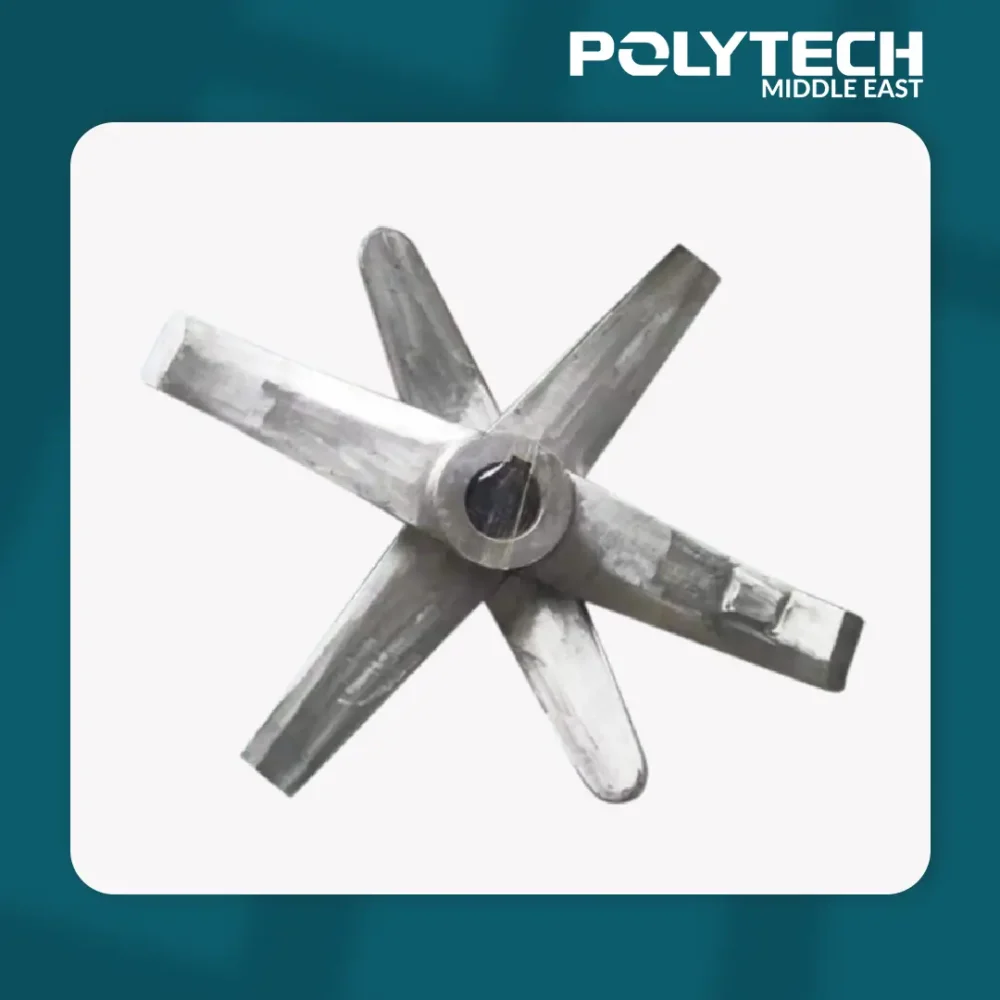
PVC Mixer Blades