

PVC extrusion is a fundamental process in plastics manufacturing, transforming raw Polyvinyl Chloride (PVC) materials into a wide array of useful products. From pipes and window frames to roofing sheets and foam boards, PVC extrusion underpins many construction, industrial, and consumer applications. This comprehensive guide explains what PVC extrusion is, how it works, and the types of products and machinery involved, while highlighting how Polytech Middle East provides advanced solutions and expertise in this field.
Understanding PVC Extrusion
PVC extrusion refers to the continuous process of forcing heated PVC material through a shaped die to create products with a fixed cross-section. In simpler terms, PVC granules or powder (often mixed with additives for heat stability, color, etc.) are melted and pushed through a mold opening that gives the desired shape – such as a pipe profile, sheet, or other continuous profile. As the PVC exits the die, it retains that shape and is then cooled and cut to length. Unlike molding processes that make individual pieces, extrusion is ideal for long, continuous products like tubing, siding, and profiles.
PVC is a versatile thermoplastic that can be extruded in both its rigid form (uPVC, unplasticized PVC) and flexible form (plasticized PVC with additives like plasticizers). Rigid PVC extrusion is commonly used for building materials (pipes, profiles, panels) due to PVC’s strength and weather resistance. Flexible PVC extrusion is used for items like hoses, cable insulation, and tubing where elasticity is needed. Both types rely on the same basic extrusion principles, with adjustments in formulation and equipment to suit the material’s behavior.
Why PVC?
PVC’s popularity in extrusion stems from its favorable properties – it’s durable, chemical-resistant, flame-retardant, and cost-effective. Extruded PVC products have long lifespans (for example, uPVC pipes and window frames can last decades), and the extrusion process itself is efficient and scalable for high-volume production. Overall, PVC extrusion enables mass production of consistent, high-quality parts at relatively low cost, making it indispensable in various industries.
How the PVC Extrusion Process Works?
Extruding PVC follows the general steps of any plastic extrusion, but with special attention to temperature control and mixing (because PVC has a narrower processing window to avoid degradation). The key stages in the PVC extrusion process include:
Rigid PVC usually starts as a dry blend of PVC resin powder with stabilizers, lubricants, fillers, and other additives. These ingredients are pre-mixed to ensure a homogeneous feed (often using high-speed mixers). For flexible PVC, ready-made pellets or compounds are used. Proper formulation is critical to ensure the PVC will process smoothly and meet the final product properties.
The PVC material (powder blend or pellets) is loaded into the hopper of the PVC extruder. The hopper feeds the material into the barrel of the extruder at a controlled rate. Consistent feeding is important; sometimes gravimetric or twin-screw feeders are used for precise dosing of PVC and additives into the extruder.
Inside the extruder, a rotating screw (or screws) pushes the PVC material forward. Heaters around the barrel raise the temperature, melting the PVC. For many PVC applications, a twin-screw extruder is preferred over a single-screw type. Twin-screw extruders (particularly conical twin-screw designs) provide intensive mixing and uniform melting of PVC at lower screw speeds, which helps avoid thermal degradation of the polymer. The material is compressed and sheared as it travels, ensuring any pigments, fillers, or modifiers are well dispersed. By the time the PVC reaches the end of the barrel, it is a hot, well-mixed molten mass.
The molten PVC is forced through a custom-designed die opening that shapes it into the desired cross-section. The design of the die varies depending on the product – a ring-shaped die for pipes, a flat slit die for sheets, or a profile die for complex cross-sections like window frames. As the PVC exits the die, it takes on the intended profile. This hot extrudate is still soft and needs support to maintain its shape.
Immediately after the die, the new PVC shape is guided through a calibration system or sizing sleeve to maintain accurate dimensions. For example, PVC pipe extrusion lines use a vacuum calibration tank that cools the pipe and holds its diameter precise. Profile and sheet extrusions also pass through cooling tanks or plates. Water baths or spray cooling are common to gradually bring the PVC to a solid state. Proper cooling ensures the product hardens without warping or losing tolerances.
A set of puller belts or caterpillar tracks grips the cooled PVC product and continuously draws it away from the extruder at a controlled speed. The haul-off speed is synchronized with the extruder output to avoid stretching or compressing the profile. It provides steady tension so that the extrusion process is stable and the product has uniform cross-section along its length.
Finally, the continuous PVC extrusion is either cut into set lengths or rolled onto coils, depending on the product. Pipes, profiles, and boards are usually cut by saws or knives at regular intervals (often automated by a metering system for length). Flexible products like tubing or profiles that will be coiled can be wound up for storage and transport. The cutting mechanism must be well-timed with the extrusion speed to ensure clean, accurate cuts without damaging the product.
Although not a mechanical step, it’s worth noting that PVC extrusions often undergo continuous quality monitoring – checking dimensions, surface finish, and sometimes performing pressure tests (for pipes) or other property tests on samples to ensure the extrusion meets specifications.
These steps happen in a continuous sequence, allowing the PVC extrusion line to run non-stop and produce large quantities efficiently. A well-optimized foam board extrusion line or pipe line, for example, can run for many hours or days continuously, with automated control systems maintaining temperature, pressure, and speed for consistent output.
Types of PVC Extruded Products and Applications
One of the strengths of PVC extrusion is the diversity of products that can be made. Different dies and downstream equipment can tailor the process to create everything from sturdy pipes to lightweight foam sheets. Here are some of the most common PVC extrusions and their applications:
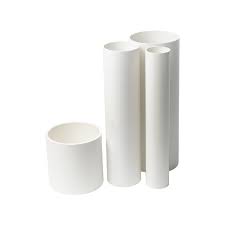
Extruded PVC pipes are widely used in plumbing, irrigation, drainage, and electrical conduit systems. Rigid PVC pipe extrusion lines produce pipes of various diameters for transporting water, sewage, and other fluids. These lines typically use a conical twin-screw extruder (optimized for PVC’s powder feed and high output) and include a calibration/cooling tank to set the pipe diameter. PVC pipes owe their popularity to the material’s corrosion resistance, pressure tolerance, and ease of installation (lightweight compared to metal pipes). From potable water supply lines to sewer pipes, PVC extrusion provides a cost-effective way to mass-produce pipe with consistent wall thickness and diameter. Polytech’s extruders and tooling ensure that the pipes meet international standards for quality and longevity.
PVC profile extrusion covers a broad category of products with constant cross-sectional shapes. A prime example is uPVC window and door profiles – the frames for windows, sliding doors, and façade elements are extruded from weather-resistant PVC. These profiles often have internal chambers to improve insulation and reduce weight, all formed in the die design. Custom PVC profiles are also common in construction (e.g. PVC cable trunking, skirting boards, wall panel trims) and in industrial applications (PVC edge protectors, guides, etc.). Manufacturers often require unique shapes for specific needs – this is where profile tooling is critical. Polytech Middle East offers specialized profile tooling that allows clients to extrude custom shapes with precise dimensions and smooth finishes. By crafting the right die and calibration tools, virtually any profile geometry can be achieved, from simple L-shaped corner guards to complex multi-chamber window profiles. PVC profile extrusion lines include downstream pullers and cutters to handle even very long pieces without sagging or dimensional errors.
PVC can be foamed during extrusion to create lightweight sheets and boards that retain good rigidity. A foam board extrusion line produces sheets (often called Celuka boards or PVC foam boards) used in signage, display panels, furniture, cabinetry, and construction (e.g. false ceilings, wall cladding). These boards have a smooth outer skin and a foamed cellular core, making them lighter than solid PVC sheets and providing some insulation. The extrusion process for foam boards introduces a foaming agent into the PVC melt, creating bubbles (cells) in the material as it exits the die. The result is a board with reduced density but sufficient strength for many uses – an attractive replacement for wood or heavier polymers in certain applications. Polytech’s PVC foam board extrusion line is designed to carefully control the foaming process, cooling, and calibration to ensure uniform cell structure and flatness of the boards. The boards can later be cut or sanded and are easy to fabricate, which is why they’re popular for cabinetry and interior decoration. Their moisture resistance and rot-proof nature (being PVC) also make them suitable for outdoor signs and humid environments where wood or MDF would deteriorate.
PVC is also extruded into roofing products, such as corrugated sheets, synthetic tiles, and membrane panels. These lightweight roofing sheets offer weather resistance and insulation, often used for sheds, warehouses, and even residential projects. A modern innovation in this area is ASA/PVC roofing sheet production, where a thin layer of ASA (Acrylonitrile Styrene Acrylate) is co-extruded on top of a PVC base layer. The ASA cap layer greatly enhances UV resistance and color stability (preventing the roof from fading or becoming brittle under harsh sun), while the PVC provides strength and form. Polytech supplies complete PVC roofing sheet extrusion lines that can produce multi-layer sheets – for example, a glossy colored ASA top layer, a rigid PVC core, and even an underside layer if needed. The extrusion line uses multiple extruders feeding into a single co-extrusion die to form the layered sheet in one pass. Profiles can mimic traditional clay tiles, corrugated metal roofing, or be flat panels. The extruded sheets are cut to length and often embossed or textured for aesthetics. These ASA/PVC roofing sheets are widely used in tropical and desert climates (common in the Middle East) because they withstand intense sunlight and high temperatures without corroding or leaking. They are also much lighter than metal or ceramic roofing, reducing structural load.
(POLYTECH’s PVC Roofing Sheet lines include models for single-layer and co-extruded roofing products. For instance, a PVC roofing sheet extrusion line from POLYTECH Middle East is capable of producing durable corrugated or tile-pattern sheets with consistent thickness and profile, ensuring each sheet overlaps and installs correctly. The equipment can handle various widths and profiles, giving manufacturers flexibility to produce roofing tailored to different needs.)
Beyond the categories above, PVC extrusion finds many other niche applications. PVC is commonly extruded as insulation and jacketing for electrical wires and cables – pellets of flexible PVC compound are extruded around copper conductors in a continuous process, forming a protective coat. Small-diameter PVC tubing (for medical or laboratory use) can be extruded in cleanroom environments. PVC film and tape can be produced by extrusion (though other plastics like PE are more typical for films, PVC finds use in cling films and specialty films). Extruded PVC siding and cladding panels are popular in some regions for building exteriors. The list goes on – if the product demands consistent cross-section and leverages PVC’s properties, extrusion is likely the manufacturing method. Polytech’s portfolio even includes wood-plastic composite (WPC) extrusion lines and stone plastic composite (SPC) lines, where PVC is combined with wood flour or minerals to produce products like WPC decking and SPC flooring. These are technically co-extrusion processes with PVC as a key ingredient, expanding the horizons of what PVC extrusion technology can create.
Key Extrusion Machinery and Components for PVC
Producing high-quality PVC extrusions requires specialized machinery designed to handle PVC’s characteristics. Polytech Middle East is a machinery expert in this domain, offering everything from complete extrusion lines to individual components and upgrades. Let’s look at the critical machinery and parts involved in PVC extrusion:
Extruders (Single vs Twin Screw)
The heart of any PVC extrusion line is the extruder, which melts and pressurizes the PVC. Extruders come primarily in two designs: single-screw extruders and twin-screw extruders.
- Single-Screw Extruder: This has one rotating screw in the barrel. Single-screw extruders are common in many plastics extrusion processes and can be used for PVC, especially for flexible PVC or when processing pre-pelletized compounds. They are relatively simple and cost-effective, suitable for products like tubing or simple profiles. However, PVC (particularly in rigid form) can be sensitive to shear and heat; running PVC powder in a single-screw extruder requires careful control to prevent degradation (burning or discoloring of PVC). Single-screw machines are less efficient at mixing additives into PVC, so they are often limited to already compounded material.
- Twin-Screw Extruder: PVC manufacturers frequently opt for twin-screw extruders (either conical or parallel twin-screw designs) for rigid PVC products. Conical twin-screw extruders feature two screws arranged in a conical shape, which rotate together to move material. This design provides a high conveying force at the feed section (important for PVC powder) and intense mixing as the material is worked toward the smaller end of the cones. The advantages of conical twin-screw extruders include better homogeneity of the melt, superior feeding of powders, and often lower melt temperatures (since two screws can process the material more gently than one at very high speed). These factors make twin-screw extruders ideal for PVC pipe, profile, and sheet production where consistent quality is critical. Additionally, twin-screw extruders can be self-cleaning and offer easier venting of gases (PVC can release hydrogen chloride gas if overheated – twin screws often have vent ports to remove volatiles and moisture).
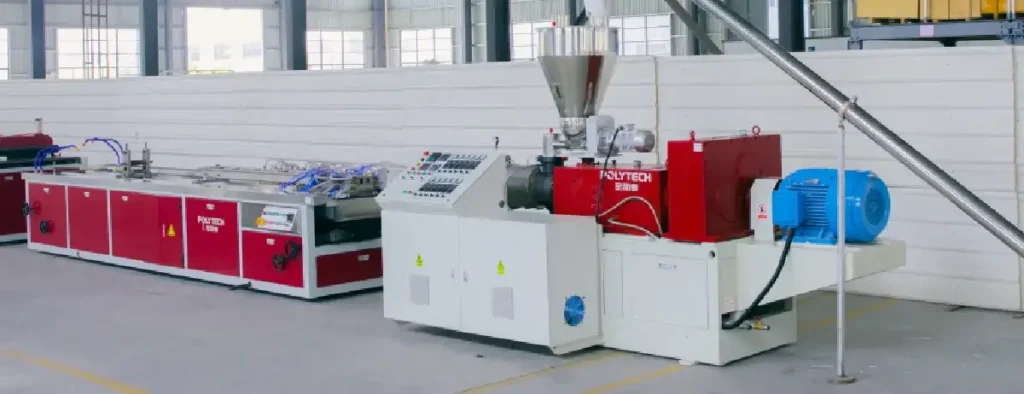
POLYTECH Middle East provides advanced extruders tailored for PVC. For example, the Sizes series conical twin-screw extruders are a special line of equipment optimized for PVC powder extrusion, offering features like precise temperature control, wear-resistant screw designs, and user-friendly operation. If you are considering a new PVC extrusion line or upgrading an existing one, choosing the right PVC extruder is crucial – factors like screw diameter and length, motor power, and whether a single or twin-screw setup is used will depend on the output required and the product type. Polytech’s engineering team guides customers in selecting the optimal extruder configuration for their needs.
Screws and Barrels
Within the extruder, the screw and barrel do the heavy work of melting and mixing PVC. The design and quality of these components directly affect extrusion performance. PVC, especially with abrasive fillers or high load of additives, can be tough on the equipment, so durable materials and precise engineering are needed. One of Polytech’s specialties is in high-performance conical twin screw barrel sets. The conical twin-screw barrel is a paired component – two intricately machined screws and a matching barrel with two intermeshing helical channels. This system must be manufactured to very tight tolerances to ensure proper meshing of the screws and efficient conveyance of PVC.
Key features of Polytech’s screw and barrel technology include:
- Optimized Screw Design: The screw geometry (flights, channel depth, pitch) is tailored for PVC’s properties. Conical twin screws have a decreasing diameter and carefully controlled compression ratio that helps build pressure gradually, which is ideal for PVC melting. This results in thorough gelation of PVC (so the melt is uniform) without causing excessive heat.
- Wear Resistance: PVC compounds may contain calcium carbonate, titanium dioxide, or other additives that are mildly abrasive. Polytech’s screws and barrels use high-strength alloy steels treated by nitriding or bimetallic linings, giving a hard surface that resists wear and corrosion. This extends the life of the screw/barrel and maintains tight clearances over time.
- Venting and Mixing Sections: Many PVC screw designs include vacuum vent sections to remove trapped air or gases. They may also have mixing elements to ensure any colorants or modifiers are fully blended. A good screw design prevents issues like undispersed pigment (which could cause streaks) or overheating.
- Fast Delivery from Local Stock: Uniquely, Polytech Middle East keeps inventory of common sizes like the 55/120 conical twin screw barrel in its Turkey warehouse for fast delivery to regional customers. This means minimal downtime if you need a replacement or an upgrade of your screw barrel – a significant advantage in maintaining production continuity.
The barrel, which houses the screws, is fitted with heating elements and cooling channels to precisely manage the temperature zones. For PVC, temperature control is vital – typically the barrel has multiple zones that gradually heat the material to the ideal melt temperature (often in the range of 160–190°C for PVC) and then might cool slightly near the metering zone to avoid overheating. The combination of a well-designed screw and barrel ensures the PVC melt is homogeneous and at the right viscosity when it reaches the die.
Extrusion Dies and Tooling
After the screw and barrel, the extrusion die is the next critical component. The die gives the PVC product its shape. Each product type has a custom die:
- Pipe dies create a hollow circular profile, usually via a mandrel that forms the inner diameter while the outer part of the die shapes the outside. They are designed to ensure even wall thickness.
- Profile dies for things like window profiles have very complex openings that mirror the cross-section of the part (including any hollows or details). They require precision machining and often iterative tuning to get the flow of PVC just right into all sections of the profile.
- Sheet dies have a long flat slit opening. For PVC foam boards, the die may also introduce gas or blowing agent and has features to control expansion.
- Co-extrusion dies allow multiple materials (like ASA and PVC, or two colors of PVC) to join into one profile or sheet. These are carefully engineered so flows meet at the correct ratio and bond together.
Supporting the die are calibration and tooling downstream, which we touched on earlier. For instance, profile and pipe lines have calibrators – metal tools right after the die that the hot extrudate passes through for sizing and initial cooling. Vacuum calibration tables for pipes or vacuum forming molds for complex profiles ensure the product doesn’t sag and maintains shape until it’s cool enough to be rigid. In the case of custom profiles, Polytech not only delivers the machinery but also the expertise in designing the dies and calibration tooling. High-quality extrusion tooling and moulds are essential for making custom PVC profiles successfully. They often involve a bit of art and science – flow simulation, trial runs, and adjustments – to achieve perfect results. Polytech’s experience in producing European and American standard profile tooling helps clients get to production faster, whether they need a unique panel design or a specific PVC part for automotive or construction use.
Downstream Equipment and Auxiliary Machinery
A PVC extrusion line is more than just the extruder and die. Downstream equipment plays a big role in overall efficiency and product quality:
- Vacuum Calibration and Cooling Tanks: As mentioned, these stainless steel tanks use vacuum suction to shape pipes/profiles against calibrators and circulate chilled water to rapidly cool the PVC. Polytech’s lines include automated vacuum systems and water temperature control to ensure optimal cooling without distortion.
- Haul-Off (Puller): This unit must grip the product firmly without deforming it. It often has adjustable belts or caterpillar tracks and speed control linked to the extruder screw speed. A stable haul-off prevents any stretching of soft PVC.
- Cutting Unit: Depending on product, it could be a saw (for rigid pipes and profiles) or a flying knife cutter (common for tubes, small profiles) that moves with the product briefly to cut without stopping the line. Precision in cutting ensures each piece is exactly the right length, which is vital for products like window profiles that must fit together during assembly.
- Stackers or Coilers: For long boards or profiles, automated stackers can neatly pile the cut lengths. For flexible PVC hose or profiles, coiler machines wind the product onto spools.
In addition, there are auxiliary machines that support the extrusion operation:
- Mixers and Compounding Equipment: Prior to extrusion, PVC formulations often need mixing. Polytech supplies high-speed mixers and cooler mixers that prepare dry blends of PVC powder and additives. A good mix leads to consistent extrusion with fewer defects.
- Material Feeding Systems: Hopper loaders, screw feeders, and dosing units ensure the extruder never starves and that additives (like color masterbatch or UV stabilizer) can be metered in during extrusion if needed.
- Temperature Control Units: Besides the main barrel heaters, some lines use external heaters or chillers for dies and calibration tools to fine-tune temperatures.
- Vacuum Pumps: Vacuum pumps remove air in calibration tanks and sometimes in the extruder vent ports. Polytech offers reliable vacuum pumps and systems as part of their machinery lineup, which are crucial for pipe manufacturing (preventing air bubbles and ensuring roundness).
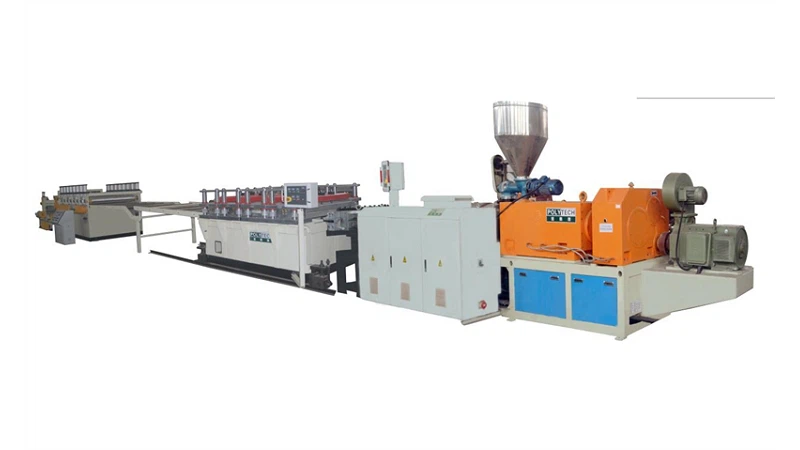
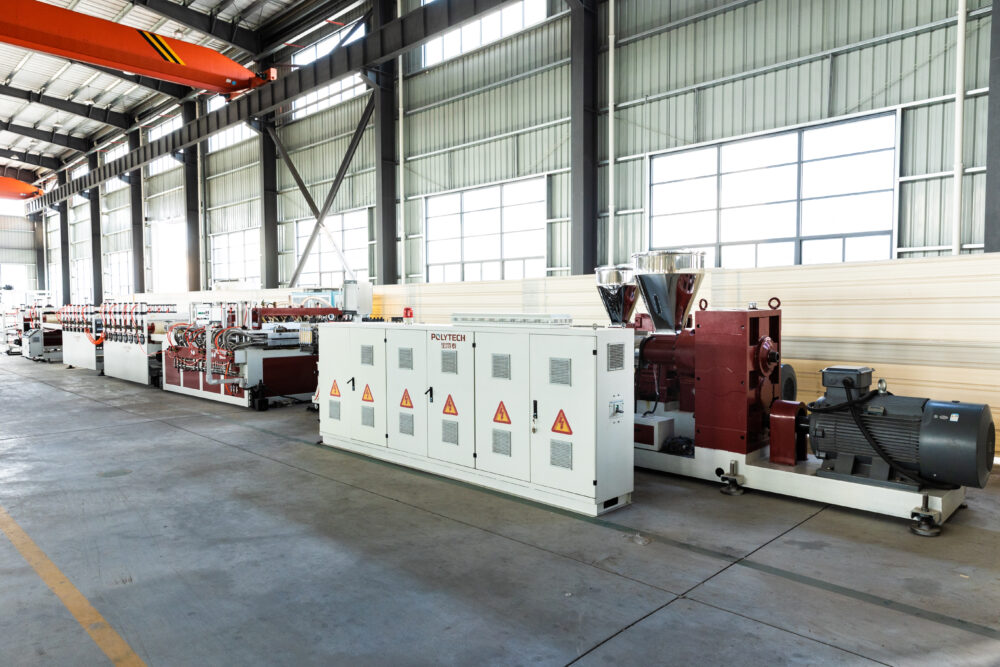
Every component, from the extrusion machinery at the front to the smallest sensor at the end, contributes to a smooth-running PVC extrusion line. Polytech’s equipment is designed as an integrated solution – for example, the extruder’s PLC can often synchronize with downstream motors, so the entire line’s speed and performance are centrally controlled. This integration is key to maintaining product quality and quick changeovers.
POLYTECH Middle East’s PVC Extrusion Capabilities
POLYTECH Middle East (an extension of China’s POLYTECH Plastic Machinery) has established itself as a one-stop solution provider for PVC extrusion projects in the region. With over 20 years of experience in extrusion technology, POLYTECH offers both the machinery and the process know-how to ensure customers succeed in their production goals.
Here are some of the ways POLYTECH Middle East stands out in PVC extrusion:
- Complete Extrusion Lines: POLYTECH supplies turnkey lines for PVC pipes, profiles, sheets, and boards. Whether a client needs a PVC foam board extrusion line for making furniture-grade boards or a line for manufacturing ASA/PVC roofing sheets, POLYTECH has a solution ready. Each line is engineered for high output and energy efficiency, using the latest drives and control systems. They also feature quick product change capabilities, which means minimal downtime when switching dimensions or formulations.
- Custom Engineering: Not every manufacturer’s needs are standard. POLYTECH’s team works closely to design custom die and tooling setups, or even modify machine specifications, to produce unique PVC extrusions. For instance, if you have a proprietary PVC profile design, POLYTECH can develop the necessary custom PVC profile tooling and adjust the calibration tables, caterpillar pullers, etc., to handle it. This level of customization allows clients to innovate in their product offerings without being limited by off-the-shelf machine constraints.
- Quality Components & Spare Parts: POLYTECH not only builds machines but also produces critical components in-house (or sources from top-tier suppliers). Their conical twin screw barrels, screws, and gearboxes are of exceptional quality, ensuring longevity and consistent performance. In the Middle East, POLYTECH has warehousing for common spare parts – like screws, barrels, extruder gearboxes, and vacuum pumps – meaning replacement parts can be delivered quickly. This local stock is a huge advantage to avoid long shipping waits if a part needs replacing. It underscores POLYTECH’s commitment to after-sales support.
- Technical Support and Service: Commissioning a PVC extrusion line and optimizing it can be challenging. POLYTECH provides on-site support for installation and startup of their machines. They train the customer’s operators and maintenance staff on best practices – such as temperature profiling for PVC, screw cleaning procedures, and preventive maintenance schedules. Should any issues arise, POLYTECH Middle East’s technical team is available for troubleshooting, and they carry the experience of having set up hundreds of extrusion lines globally. Furthermore, the company offers ongoing support like process improvements, upgrades, and even sourcing of raw materials or advising on PVC formulations through its network, giving customers a holistic partnership.
- Innovative Solutions: POLYTECH stays at the forefront of extrusion technology. They have incorporated modern features into their PVC lines, such as PLC control systems with IoT connectivity (for remote monitoring and production data logging), servo-driven cutters for precision, and low-energy cooling systems. Innovations like co-extrusion for multi-layer products, foam extrusion technology, and high-speed twin-screw extruders are all part of POLYTECH’s offerings. By investing in R&D and collaborating with industry partners, POLYTECH Middle East ensures that clients in the region have access to world-class extrusion technology adapted to local market needs.
In summary, POLYTECH Middle East has the capability to supply everything from a single spare part to an entire factory’s worth of extrusion equipment. Their expertise covers not just PVC, but the full spectrum of thermoplastic extrusion – however, PVC remains a core focus given its prevalence in the market. With manufacturing centers and a dedicated Middle East support hub, they combine global quality with local convenience.
Conclusion
PVC extrusion is a vital manufacturing process enabling the production of countless products we rely on every day – fresh water flows through PVC pipes, buildings are adorned with PVC windows and siding, signs and displays use PVC foam boards, and roofs are protected by ASA/PVC sheets. Achieving success in PVC extrusion requires understanding the process and investing in reliable, high-performance extrusion machinery. By mastering the nuances of PVC materials, choosing the right extruder and tooling, and maintaining precise control at every step from melting to cooling, manufacturers can create top-quality PVC products efficiently and profitably.
Polyvinyl Chloride has proven to be an incredibly adaptable polymer, and extrusion technology has evolved alongside it. Modern PVC extruders (especially twin-screw systems) have unlocked higher outputs and better quality, while new co-extrusion techniques allow composite products that enhance PVC’s strengths. The result is that PVC extrusion remains at the forefront of plastic manufacturing, continually finding new applications.
For businesses in the Middle East and beyond looking to expand or improve their PVC extrusion operations, POLYTECH Middle East stands out as a partner of choice. With a deep bench of technical knowledge, a wide range of internally developed equipment, and a track record of successful projects, POLYTECH can deliver end-to-end solutions – from initial concept and custom PVC profiles design to the installation of a complete PVC pipe extrusion line or any other extrusion system. Their customer-centric approach ensures that each solution is tailored to performance requirements and budget, without compromising on quality or support.
In the world of PVC extrusion, having the right machinery and support can make all the difference. POLYTECH’s advanced extruders, precision conical twin screw barrel technology, and fully integrated extrusion lines empower manufacturers to produce superior PVC products consistently. As demand for PVC products continues to grow in construction, infrastructure, and consumer goods, aligning with an expert like POLYTECH Middle East gives companies a competitive edge – the ability to extrude PVC products with efficiency, excellence, and confidence.
Whether you are extruding hundreds of kilometers of pipe or developing a new PVC profile for a niche market, the principles remain the same: robust equipment, technical mastery, and a commitment to quality. PVC extrusion has a bright future, and with partners like POLYTECH, manufacturers can fully unlock the potential of this versatile material. Get in touch with POLYTECH Middle East to explore how their extrusion solutions can drive your PVC production to new heights, backed by reliable machinery and seasoned expertise.