


PP Carton Sheet Extrusion Line
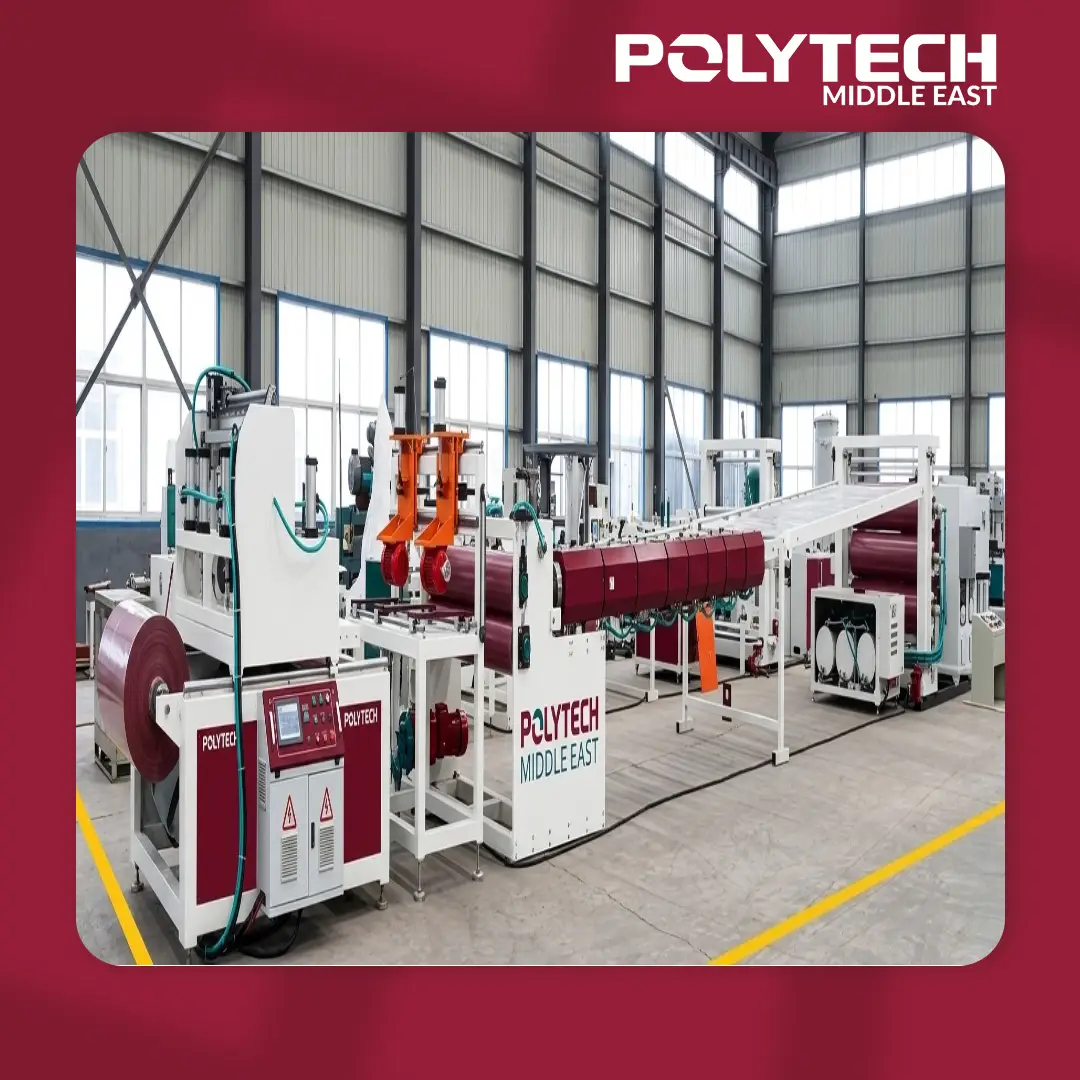
PP Carton Sheet Extrusion Line
High-output PP Carton Sheet Extrusion Line (2–20 mm thick, up to 3 m wide) for producing durable PP panels used in packaging, signage, and construction.
Category -> Full Extrusion Lines
Description
Introduction
PP hollow or corrugated sheets are lightweight polypropylene panels used as durable alternatives to cardboard or wood. A PP Carton Sheet Extrusion Line melts and shapes PP resin into fluted sheets continuously. Typically, dried PP pellets feed an extruder that pushes molten PP through a corrugated T-die to form hollow cores. The sheet is then cooled (vacuum tables or chilled rolls), cut to length, and finished with surface treatments or lamination. These panels are strong, moisture-resistant, and find use in heavy-duty packaging, signage, and construction.
Problem / Challenge
Manufacturers need high volumes of thick, corrugated PP panels with exact dimensions. Manual assembly of corrugated boards is laborious and inconsistent. Common issues include residual moisture in PP (causing voids) and shrinkage during cooling, which can warp the sheet. The PP Carton Sheet Extrusion Line must handle various sheet widths (e.g. 1000–3000 mm) and thicknesses (2–20 mm) with tight tolerances. Consistent flute geometry and surface finish are essential, as is integration with downstream processes. In short, the challenge is automating production of reliable, high-quality PP carton sheets at scale.
Solution
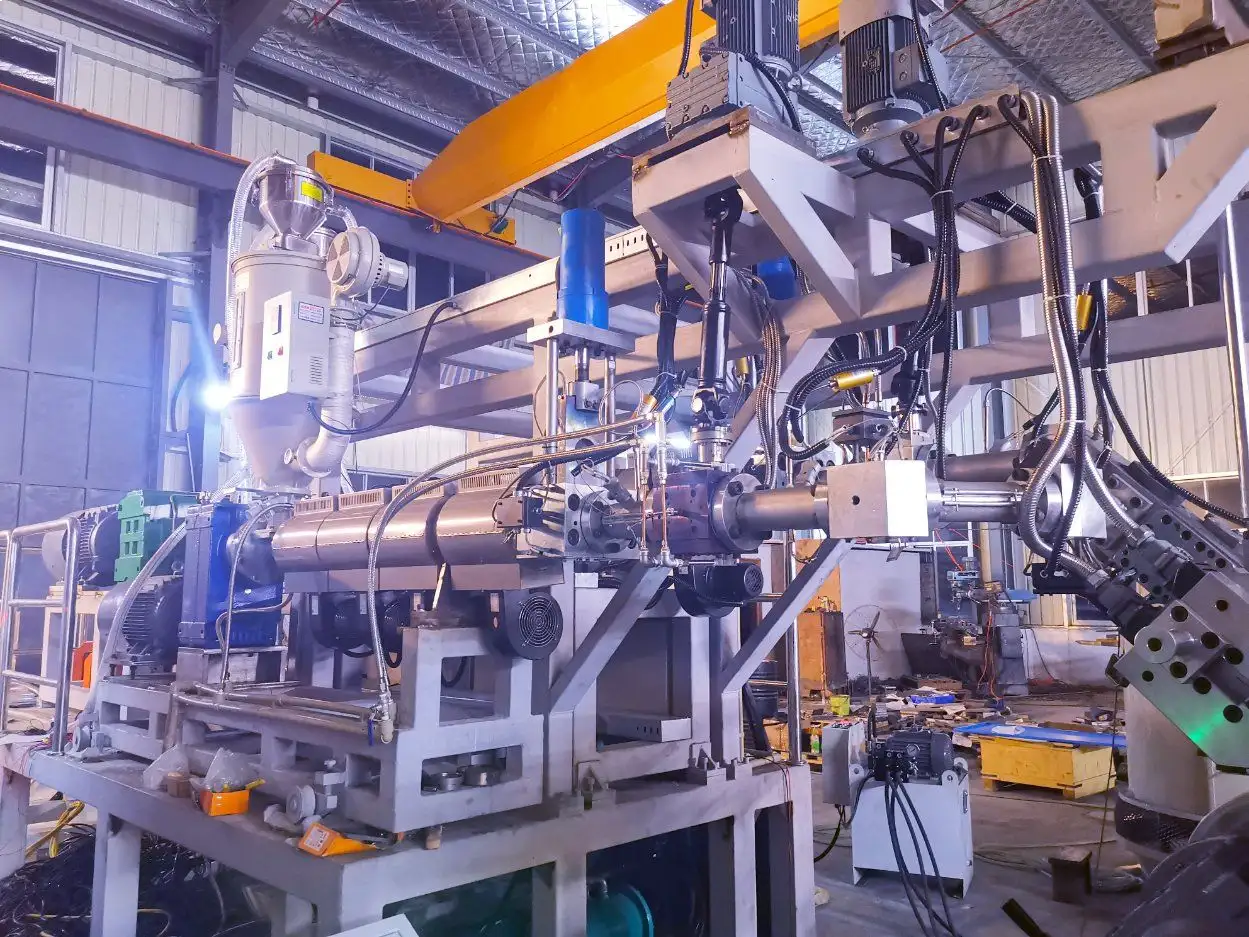
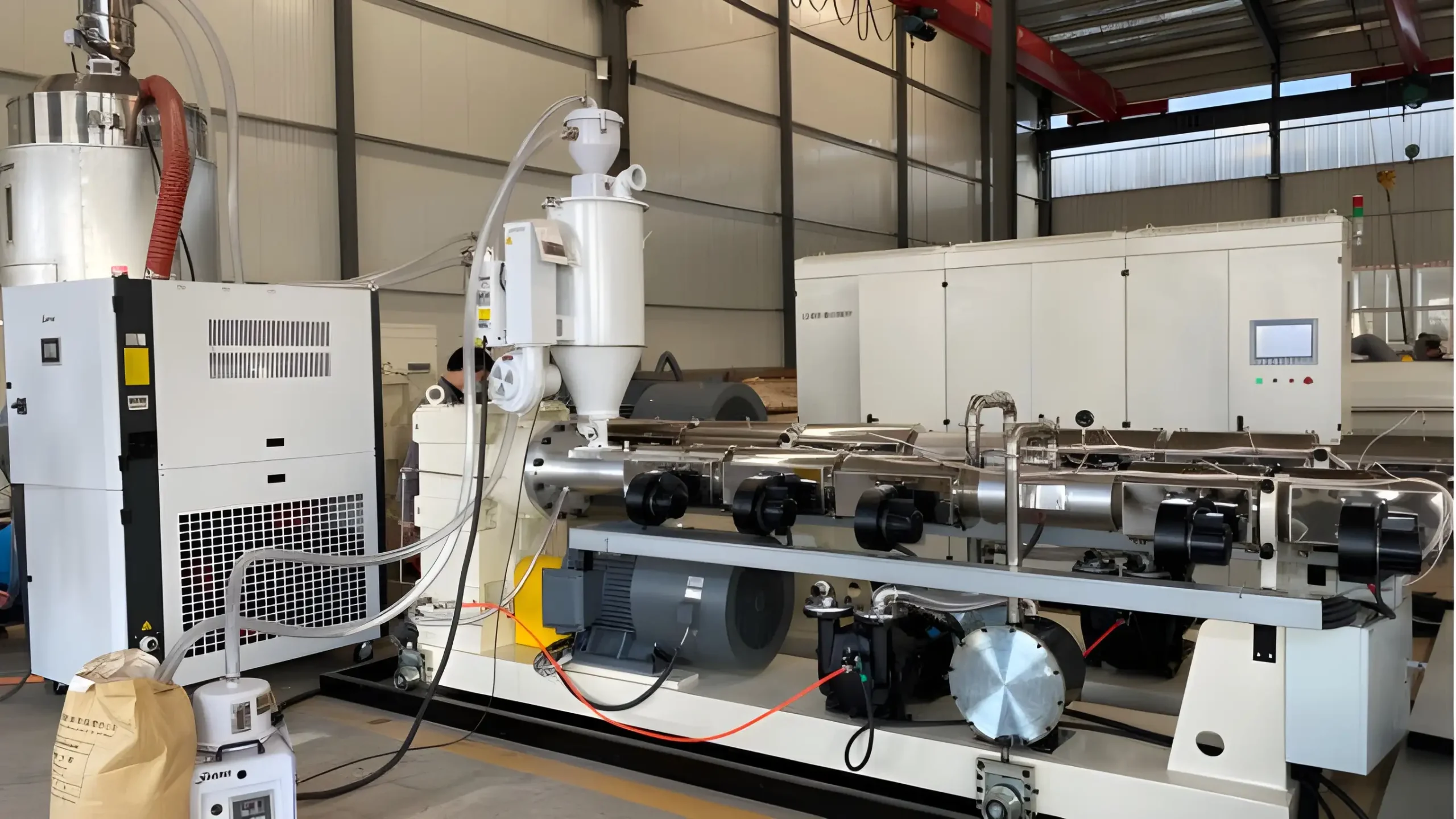
A PP hollow-sheet extrusion line fully automates production. Dried PP resin is fed into a high-torque extruder (single- or twin-screw) which melts and homogenizes the plastic. The molten PP passes through a filter and metering pump (for uniform flow) before entering a corrugated T-die that imprints the flute structure. Immediately after the die, the hot sheet enters a vacuum calibrator or chilled-roll stack that rapidly cools and flattens it. Multiple haul-off rollers draw the sheet through the cooling stage at precise speed. A servo-driven saw then cuts the panel to length. Control is via PLC: temperature zones, screw speed, and belt tension are finely tuned. The result is a uniform corrugated PP sheet ready for printing or use.
Features & Specifications
- Raw Material: Virgin or recycled PP granules (often mixed with CaCO₃ filler, up to ~50–60%). UV stabilizers or flame retardants can be added. Material is thoroughly dried (<0.05% moisture) prior to extrusion to prevent bubbles.
- Extruder: High-performance single-screw (Ø90–180 mm, L/D ~33–36) or twin-screw extruder. Screw design (compression ratio ~2:1) ensures uniform melt and can handle high filler load. Extruder motors typically 75–185 kW in large lines. Upstream vacuum venting may be used for degassing.
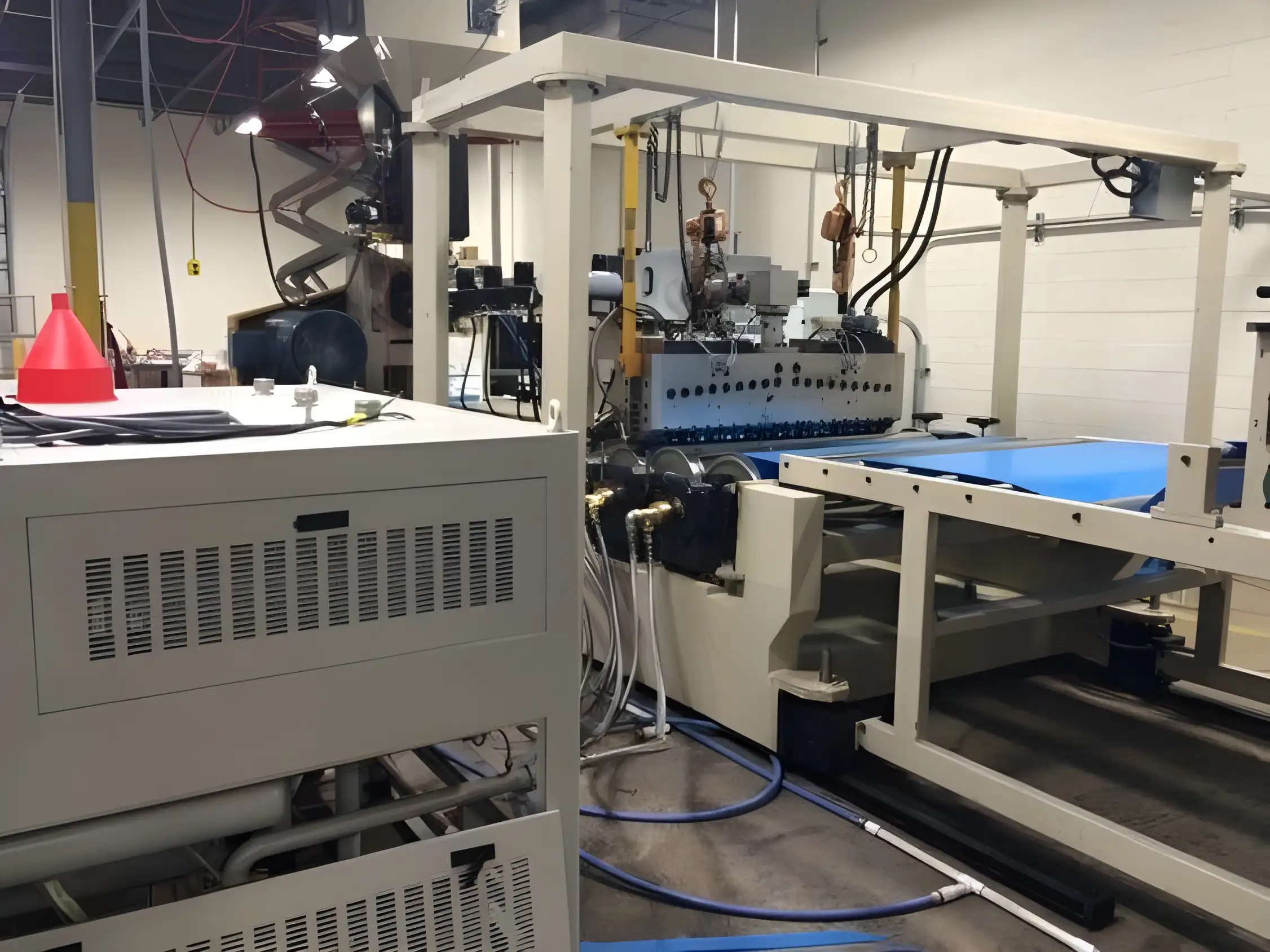
- Corrugated Die: Custom flat die with flute-shaped cavities (single- or multi-wall). Adjusting die gap sets sheet thickness. Die width sets max sheet width (common widths 1200, 2100, 2600 mm). Even flow through the die is critical for transparency and strength.
- Cooling & Calibration: Vacuum-assisted calibrator table or several cooling rolls. This section freezes the sheet dimensions and removes residual stress. Precision water cooling or chillers control roller temperature. Surface finish (mirror or matte) is applied by selecting roll textures.
- Haul-off & Winding: Multi-pair rubber-coated pullers (e.g. 6+ pairs) guide the sheet while maintaining tension. A servo-controlled winding unit reels the sheet into coils, keeping constant tension so inner and outer layers wind evenly. Panel stacking can be added for flat sheets.
- Cutting: PLC-driven cross-cut saw or guillotine cuts sheets to customer lengths. Edge-trimters or slitting units remove scrap and allow narrow strip production if needed.
- Control & QC: Central PLC/HMI controls all axes and heaters. Multi-zone heating ensures uniform melt. Optional in-line thickness gauges (laser) and vibration damping are used. Safety interlocks and automatic lubrication enhance reliability.
Products
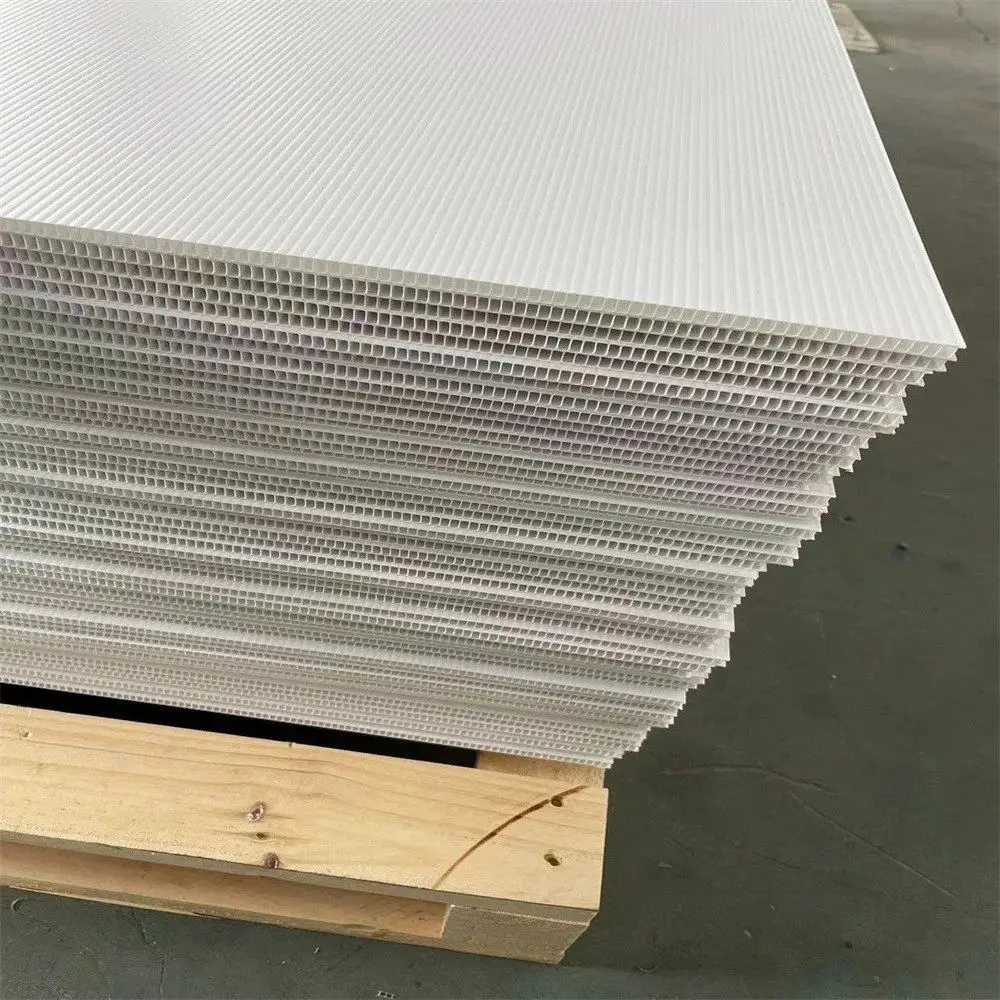
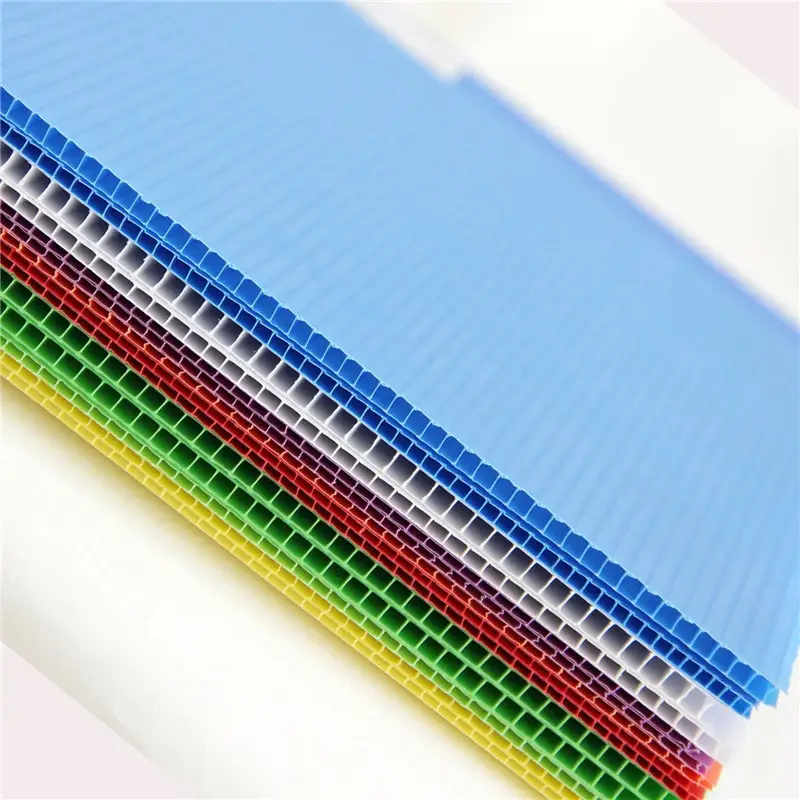
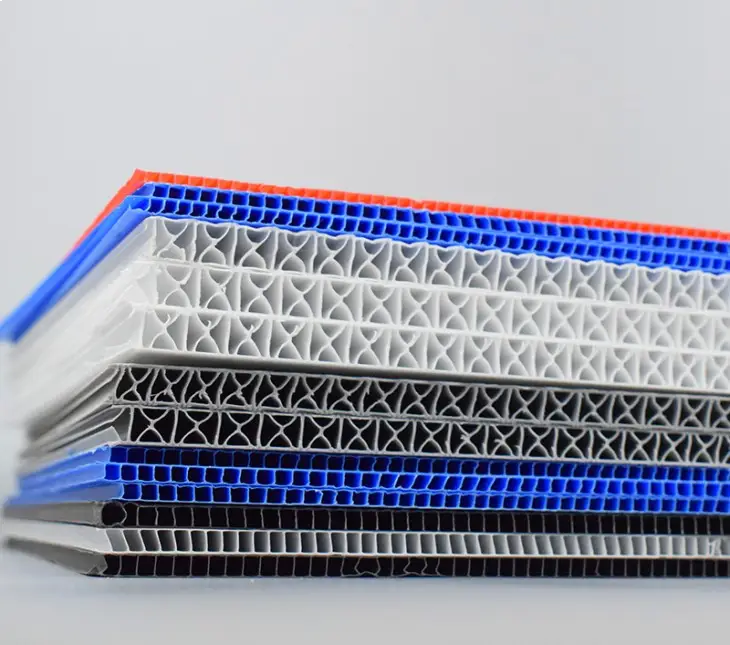
Use Cases / Applications
Corrugated PP sheets are used wherever rigid, water-resistant panels are needed:
- Packaging: Heavy-duty, reusable crates, totes and pallets (produce boxes for produce, meat, electronics). PP panels replace cardboard for wet or heavy loads.
- Signage & Display: Outdoor signs, point-of-purchase displays, and exhibition stands. Easy to print on (using flexo, UV, or screen print) and withstand weather and UV.
- Construction: Temporary floor/ceiling formwork, concrete molds, protective coverings. They are lightweight alternatives to plywood with reusable lifespan.
- Industrial: Machine guards, partitions, and walkways. Lab and industrial furniture (cabinets, dividers) where hygiene and durability matter.
- General: Office folders, storage bins, trays, agricultural seedling trays, and retail promotional signage. Because PP is 100% recyclable, these sheets are used in eco-friendly designs.
Competitive Advantages
- High Throughput & Consistency: Modern lines output 200–500 kg/h (6000+ kg/day) of hollow PP sheet. PLC automation yields very low waste (<2–3%) compared to manual corrugation methods.
- Lightweight Strength: The hollow panels are 50–80% lighter than solid equivalents yet very stiff. They resist moisture, chemicals and UV, offering longer life than cardboard or untreated wood.
- Design Flexibility: Tooling can produce single-wall or multi-wall (ABA/BAB) profiles with flute heights of 2–12 mm. Inline printing or lamination (corona-treated) adds colors and barrier layers. Custom additives (e.g. flame retardants) are easy to incorporate.
- Energy Efficiency: Efficient extruders and advanced controls minimize energy use. Vacuum venting and calibrated cooling prevent rework. Integrated line (extrusion through winding) reduces handling and labor.
- Sustainability: PP is 100% recyclable. Lines often run with 40–50% recycled PP or 50–60% CaCO₃ filler, cutting resin cost and carbon footprint. The durable panels themselves can be reused or recycled again.
Applications
Gallery
Main Features
Technical Specifications
| Component / Parameter | Typical Range / Value | Notes |
| Raw Material | PP (virgin/recycled pellets) | CaCO₃ filler up to ~60%; must be fully dried |
| Sheet Width | 1000–3000 mm | Typical 1200, 2100, 2600 mm |
| Sheet Thickness | 2–20 mm (hollow) | Single-wall 2–6 mm, double-wall 8–12 mm |
| Extruder Screw Diameter | Ø90–180 mm | L/D ~33–36; larger models (≤250 mm) available |
| Throughput (Corrugated Sheet) | 200–500 kg/h | Depends on width and speed (example: 300 kg/h @ 1.2 m) |
| Main Motor Power | 75–185 kW | Extruder motor; large lines ~150–185 kW |
| Total Line Power | ~100–200 kW | Includes haul-offs, heaters, vacuum, etc. |
| Cooling/Calibration | Vacuum table or chill rolls | Ensures flatness and stress relief |
| Haul-off Unit | Multi-pair puller (6+ rollers) | Maintains tension through cooling section |
| Cutting System | Servo cross-cut saw | CNC-controlled length cuts; removes edge trim |
| Winding/Stacking | Tensioned coil winding | Servo control to equalize roll tension |
| Control System | PLC + Touchscreen HMI | Multi-zone heating; auto-thickness control optional |
| Maintenance | Standard (lubrication, filters) | Requires dry hopper, filter changes, periodic checks |
Related products
-
 Full Extrusion Lines
PVC Twin Wall Hollow Roof Extrusion Line
-
 Full Extrusion Lines
WPC Profile Extrusion Line
-
 Full Extrusion Lines
PVC Transparent Granulation Line
-
 Full Extrusion Lines
SPC Flooring Extrusion Line