

Introduction to Sheet Factories
A sheet factory is an industrial facility dedicated to manufacturing sheets from different materials for use in packaging, construction, automotive manufacturing, furniture, agriculture, and other industrial sectors. Depending on the required product, a sheet factory may process plastic, metal, paper, or other materials using specialized production equipment and manufacturing technologies.
In the plastics industry, sheet factories commonly use extrusion technology to transform polymer raw materials into continuous sheets with specific thicknesses, widths, surface finishes, and physical properties. These sheets can be supplied as finished products or used as intermediate materials in further manufacturing processes, including thermoforming, printing, cutting, laminating, and fabrication.
The growing demand for lightweight, durable, and cost-effective materials has made sheet manufacturing an important part of modern industrial production. Establishing an efficient sheet factory requires careful consideration of raw materials, machinery, production capacity, quality control, and the intended applications of the finished sheets.
What Does a Sheet Factory Produce?
A sheet factory can manufacture a wide range of products depending on its production technology and the materials being processed. In plastic sheet manufacturing, the most common products include solid plastic sheets, hollow plastic sheets, multilayer sheets, and specialized sheets designed for particular industrial applications.
Solid plastic sheets feature a continuous structure and are available in different thicknesses, colors, and material formulations. They are commonly used in signage, protective barriers, industrial covers, and fabrication applications. Depending on the polymer, solid sheets can offer different levels of impact resistance, flexibility, chemical resistance, and transparency.
Hollow plastic sheets contain internal channels or cavities that reduce material consumption while providing useful stiffness and lightweight characteristics. Polypropylene hollow sheets, for example, are widely used in packaging, advertising displays, protective partitions, and reusable packaging solutions.
Multilayer plastic sheets are produced by combining two or more material layers in a single manufacturing process. This structure allows manufacturers to optimize product performance by combining different material properties, such as surface quality, impact resistance, weatherability, and cost efficiency.
The selection of the appropriate sheet type depends on the intended application, required mechanical properties, environmental conditions, and customer specifications.
How Does a Sheet Factory Work?
The production process in a plastic sheet factory typically begins with raw material preparation and continues through extrusion, shaping, cooling, thickness control, and final cutting or winding. The exact production sequence depends on the polymer, sheet design, and equipment configuration.
1. Raw Material Preparation
The first stage involves preparing the raw materials required for sheet production. Common polymers include polypropylene (PP), polyethylene (PE), polystyrene (PS), polyvinyl chloride (PVC), and acrylonitrile butadiene styrene (ABS). The choice of material depends on the required product characteristics and processing conditions.
Depending on the material and production system, raw materials may be supplied as pellets, granules, powders, or formulated compounds. Additives, colorants, stabilizers, fillers, and other processing ingredients may also be incorporated to achieve the desired product properties.
Proper material preparation helps maintain consistent processing conditions and reduces the risk of defects in the finished sheets.
2. Extrusion and Melting
Extrusion is one of the most widely used technologies for producing plastic sheets. During this stage, the polymer is fed into an extruder, where a rotating screw conveys, compresses, mixes, and melts the material inside a heated barrel.
The temperature profile, screw design, rotational speed, and material feed rate must be controlled according to the polymer being processed. Consistent melting and material mixing are essential for maintaining stable production and achieving uniform sheet quality.
For applications requiring specific surface properties, improved material distribution, or multiple layers, manufacturers may use specialized extrusion systems and co-extrusion technology.
3. Sheet Forming Through a Flat Die
After melting, the polymer passes through a flat extrusion die, which distributes the material across the required sheet width. The die is designed to produce a continuous molten polymer layer with a controlled profile.
Die design and operating conditions have a direct influence on sheet thickness distribution, width consistency, and surface quality. Proper adjustment of the die and melt flow conditions helps minimize variations and improve the stability of the production process.
Depending on the product requirements, the extrusion system may be configured for different sheet widths, thickness ranges, and material structures.
4. Cooling and Thickness Calibration
Once the molten polymer exits the die, it passes through a cooling and calibration system. In many plastic sheet production lines, chilled rollers are used to cool the material while controlling its thickness, surface finish, and dimensional stability.
The temperature, pressure, and speed of the rollers must be adjusted according to the material and the required product specifications. Inadequate cooling or incorrect roller settings may lead to warping, uneven thickness, surface defects, or dimensional variations.
Efficient cooling and calibration are therefore essential for producing sheets that meet industrial quality requirements.
5. Cutting, Trimming, and Winding
After cooling, the sheet moves through downstream equipment designed to prepare it for delivery or further processing. Depending on the product, this stage may include edge trimming, width adjustment, cutting to specific lengths, stacking, or winding into rolls.
Sheet products supplied in flat formats are commonly cut into individual sheets and stacked for packaging. Flexible or thinner sheet materials may be wound into rolls when their thickness and mechanical properties allow it.
The final handling system must be compatible with the sheet dimensions, production speed, and packaging requirements.
6. Quality Inspection and Packaging
The final stage involves inspecting the finished sheets to verify that they meet the required specifications. Common quality checks include thickness measurement, width verification, surface inspection, dimensional accuracy, and evaluation of relevant mechanical properties.
Additional tests may be required depending on the application. For example, packaging materials may require impact or folding tests, while construction-related products may require stiffness, weatherability, or other performance evaluations.
Once the sheets pass inspection, they are packaged, labeled, and prepared for storage or transportation.
Essential Equipment for a Sheet Factory
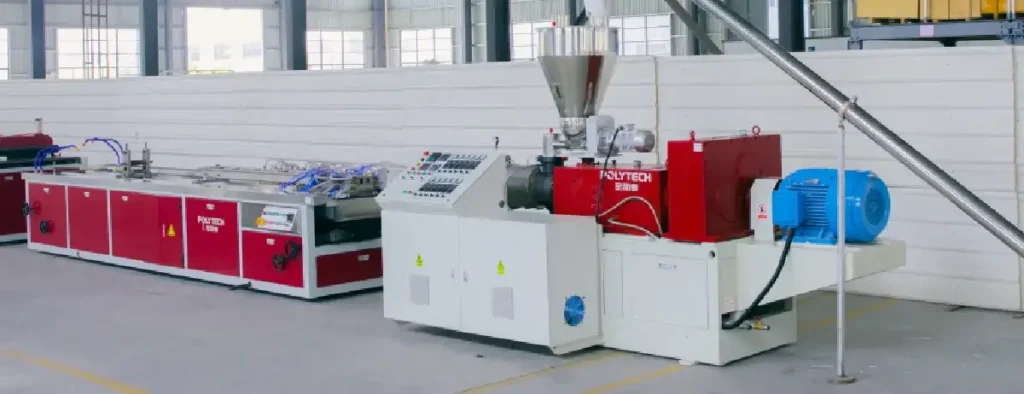
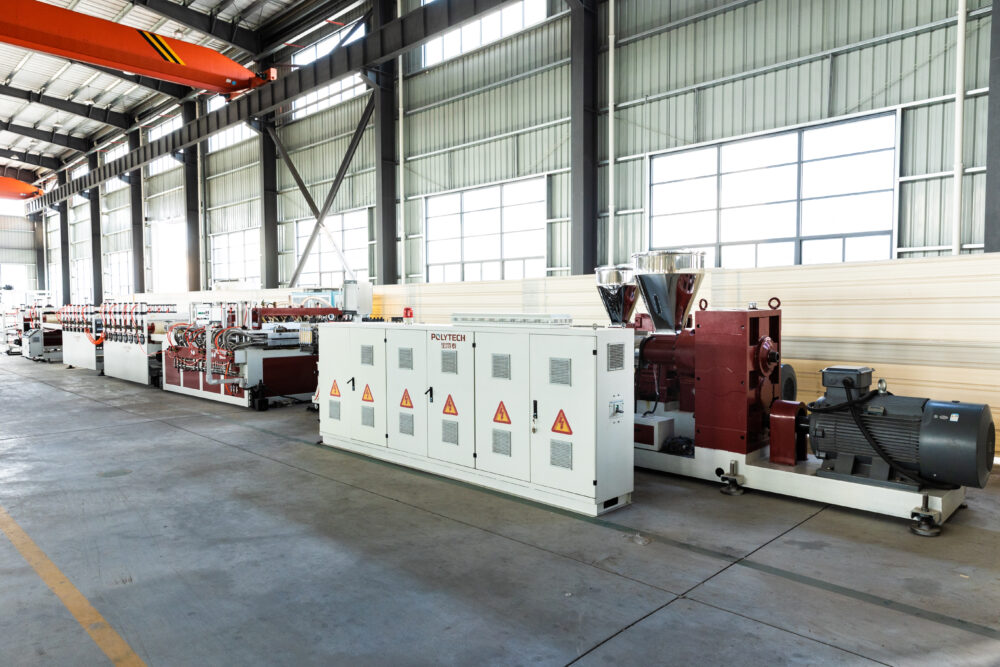
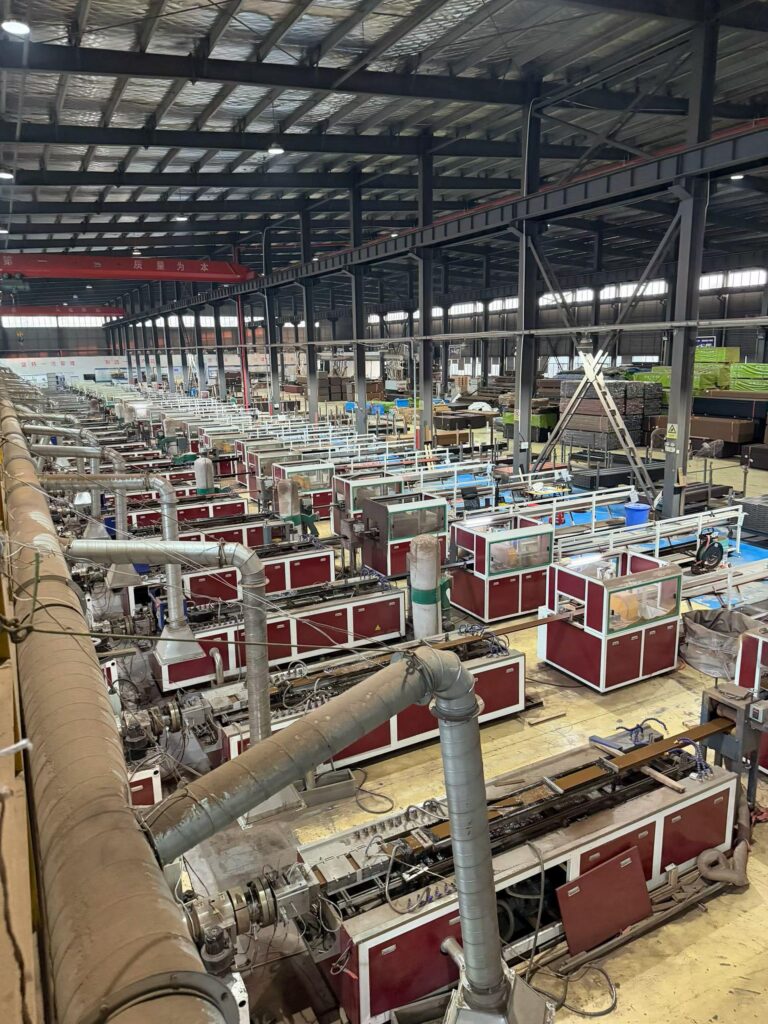
The equipment installed in a sheet factory depends on the type of material being processed and the required production capacity. A plastic sheet manufacturing facility generally consists of several interconnected machines that operate as an integrated production line.
Plastic Sheet Extrusion Machine
The extrusion machine is the main processing unit in many plastic sheet factories. It melts and conveys the polymer before delivering a continuous flow of material to the forming die.
Extruder selection depends on factors such as polymer characteristics, output requirements, screw design, processing temperature, and the desired sheet quality. Stable extrusion performance is important for maintaining consistent production and reducing material waste.
Flat Sheet Extrusion Die
The flat die distributes the molten polymer across the required width and helps establish the initial sheet profile. Its design must match the material, production speed, and target dimensions.
Accurate die adjustment is particularly important when manufacturing sheets with tight thickness tolerances or wide production formats.
Cooling and Calibration Rollers
Cooling rollers remove heat from the extruded material and help establish the final sheet thickness and surface finish. Their performance influences dimensional stability, flatness, and the overall appearance of the finished product.
Depending on the production line design, roller systems may include temperature-control equipment and adjustable pressure settings.
Haul-Off and Cutting Systems
Haul-off units pull the sheet through the production line at a controlled speed, helping synchronize the downstream equipment with the extrusion process. Cutting systems then prepare the material in the required dimensions.
Accurate speed control is essential because variations in line speed can affect sheet thickness and product consistency.
Winding and Stacking Equipment
Winding systems are used when the finished sheet can be supplied in rolls, while automatic stacking systems collect flat sheets in organized piles. These systems improve handling efficiency and help prepare products for packaging and transportation.
Automation can reduce manual handling requirements and improve production consistency, particularly in high-volume manufacturing facilities.
Types of Plastic Sheets Manufactured in a Sheet Factory
Plastic sheet factories can be configured to manufacture different products according to market demand and material requirements.
Polypropylene (PP) Sheets
Polypropylene sheets are valued for their low weight, chemical resistance, and versatility. They are used in packaging, industrial containers, protective panels, advertising displays, and various fabricated products.
Depending on the manufacturing process, PP sheets can be produced in solid or hollow structures. Their properties can also be adjusted through material formulation and processing conditions.
Polyethylene (PE) Sheets
Polyethylene sheets offer useful chemical resistance, moisture resistance, and flexibility, depending on the grade. They are commonly used in packaging, protective applications, lining systems, and industrial products.
The selection of the appropriate polyethylene grade depends on the required stiffness, impact performance, operating temperature, and processing method.
Polystyrene (PS) Sheets
Polystyrene sheets can be manufactured for applications requiring a smooth surface, dimensional consistency, and suitable thermoforming characteristics. They are often used in packaging, disposable product manufacturing, displays, and other applications where the selected grade meets the required performance specifications.
Polyvinyl Chloride (PVC) Sheets
PVC sheets are used in construction, industrial fabrication, advertising, and other applications requiring specific combinations of rigidity, chemical resistance, and durability.
Rigid and flexible PVC formulations have different processing requirements, so the extrusion equipment and operating conditions must be selected according to the product design.
Multilayer Plastic Sheets
Multilayer sheets are manufactured by combining different polymer layers to achieve a particular balance of properties. For example, a manufacturer may design a sheet with a functional outer layer and a different core material to balance surface performance, mechanical characteristics, and material cost.
Co-extrusion systems are commonly used for this purpose. The compatibility of the selected materials and the stability of the individual melt streams are important factors in producing high-quality multilayer sheets.
Applications of Sheet Manufacturing
Sheets manufactured in industrial factories serve a wide range of markets. Their applications depend on the material, thickness, structure, surface properties, and manufacturing quality.
Packaging Industry
Plastic sheets are widely used in packaging applications, including protective packaging, reusable containers, separators, trays, and packaging components. Hollow PP sheets are particularly useful when lightweight construction and repeated use are important.
Suitable sheet materials can help reduce product damage during handling and transportation while providing practical fabrication options.
Construction and Building Materials
Plastic sheets are used in protective barriers, interior panels, cladding components, temporary protection systems, and other construction-related products. The required material properties depend on exposure conditions, structural requirements, and applicable building standards.
Manufacturers must consider factors such as impact resistance, weather exposure, temperature variations, and dimensional stability when selecting materials for construction applications.
Advertising and Display Manufacturing
Solid and hollow plastic sheets can be processed into signs, display boards, promotional panels, and exhibition materials. Their low weight and ease of cutting make them suitable for applications that require customized shapes and printed surfaces.
The choice of polymer and surface finish depends on the intended display environment and the required service life.
Automotive and Transportation
Plastic sheets can serve as intermediate materials for interior panels, protective components, covers, and other transportation-related applications. Depending on the final use, manufacturers may require specific impact performance, heat resistance, surface appearance, or weight characteristics.
Materials intended for automotive applications must meet the relevant technical and regulatory requirements.
Agriculture and Industrial Manufacturing
Sheet materials are used in agricultural protection products, equipment covers, industrial partitions, fabricated components, and various customized products. Their performance depends on the selected polymer, formulation, thickness, and operating environment.
A sheet factory can serve these markets by adapting its production line to different sheet dimensions and product specifications.
Advantages of Establishing a Sheet Factory
A properly designed sheet factory can offer several operational and commercial advantages. However, the actual benefits depend on the selected technology, product range, market demand, and production management.
Flexible product manufacturing: A suitably configured production line may manufacture different sheet thicknesses, widths, colors, or material formulations, depending on its design and changeover requirements.
Continuous production capability: Extrusion technology supports continuous manufacturing, making it suitable for applications requiring consistent output and repeatable product dimensions.
Material utilization: Appropriate process control, product design, and scrap management can help reduce waste and improve raw material utilization.
Product customization: Sheet manufacturers can tailor products to specific customer requirements, including dimensions, colors, surface characteristics, and material structures.
Opportunities for automation: Automated feeding, thickness monitoring, cutting, stacking, and packaging systems can improve production control and reduce repetitive manual operations.
Access to multiple industries: Depending on the factory’s equipment and product portfolio, sheet manufacturing can serve packaging, construction, advertising, agriculture, and other industrial markets.
Factors to Consider When Planning a Sheet Factory
Establishing a sheet factory requires more than purchasing an extrusion machine. Production requirements, facility layout, utilities, material handling, and quality control must be evaluated together to ensure that the entire operation functions efficiently.
Production Capacity and Product Dimensions
The required output should be determined before selecting the production line. Manufacturers need to define the target sheet width, thickness range, material type, product structure, and expected production volume.
These requirements influence the extruder size, die configuration, cooling system, and downstream handling equipment.
Raw Material Selection
The polymer must be selected according to the intended application and required product properties. Factors such as mechanical performance, chemical resistance, processing behavior, availability, and material cost should be considered.
The use of additives, fillers, colorants, or recycled material may also affect processing conditions and final product quality. Any recycled content must be suitable for the intended application and meet the relevant product requirements.
Machinery Configuration and Automation
The production line should be configured to match the required products and operating conditions. Important considerations include extrusion capacity, screw design, die width, cooling efficiency, line speed, cutting accuracy, and the level of automation.
A balanced production line helps prevent downstream bottlenecks and supports more consistent operation.
Factory Layout and Utilities
The facility must provide adequate space for raw material storage, production equipment, finished product handling, maintenance access, and transportation. Electrical supply, cooling water, ventilation, and other utilities must be compatible with the equipment requirements.
Safe access to operating machinery and appropriate material-handling arrangements should also be incorporated into the factory layout.
Quality Control and Maintenance
A quality control system should define the product specifications and inspection procedures used throughout production. Routine checks can help identify variations before they result in significant material losses.
Preventive maintenance is equally important. Regular inspection of screws, barrels, dies, rollers, drive systems, and auxiliary equipment can help maintain production stability and reduce unplanned downtime.
Operating Costs and Market Demand
A sheet factory’s operating costs may include raw materials, electricity, labor, maintenance, packaging, transportation, and waste management. The relative importance of each cost depends on the product and production process.
Before investing in equipment, manufacturers should assess the target market, competing products, customer specifications, expected demand, and the likely utilization rate of the production line.
How to Choose the Right Sheet Manufacturing Equipment
Selecting suitable machinery is essential for achieving the required product quality and production performance. The best configuration depends on the intended sheet type rather than on machine capacity alone.
Start by identifying the polymer and defining the required product dimensions. A line designed for thin, flexible sheets may differ significantly from one intended for thick, rigid sheets or multilayer products.
Next, evaluate the extrusion system, flat die, cooling and calibration equipment, haul-off unit, and cutting or winding system as a complete production line. Each component must be compatible with the required operating speed and product specifications.
Manufacturers should also review the control system, ease of operation, maintenance requirements, availability of spare parts, and the supplier’s technical support capabilities. Where possible, production trials using the intended raw material can help verify whether the proposed equipment meets the required output and quality targets.
A careful equipment selection process helps establish a production system that aligns with both current requirements and potential future product development.
Conclusion
A sheet factory plays an important role in manufacturing materials used across packaging, construction, advertising, automotive, agriculture, and other industrial sectors. In plastic sheet production, extrusion technology provides an efficient method for transforming polymer raw materials into continuous sheets with controlled dimensions and application-specific properties.
Successful sheet manufacturing depends on selecting suitable raw materials, configuring the production equipment correctly, controlling processing conditions, and implementing effective quality inspection and maintenance procedures.
For businesses planning to establish or expand a sheet manufacturing operation, understanding the production process and evaluating the required equipment are important steps toward building a reliable and commercially viable facility. A well-planned production line can support consistent product quality, efficient material utilization, and the flexibility needed to respond to changing customer requirements.