

Introduction
Sheet extrusion is a fundamental process in the plastic manufacturing industry. It involves converting raw plastic pellets into continuous flat sheets that are widely used in packaging, construction, signage, and industrial applications. Because of its versatility, sheet extrusion allows manufacturers to produce materials with consistent thickness, surface quality, and mechanical properties.
As industries demand higher productivity and better quality, modern sheet extrusion lines integrate advanced machinery, automated controls, and precise temperature management. This ensures uniform material flow, reduces defects, and allows for faster production cycles. Furthermore, sheet extrusion is compatible with a variety of polymers, including PVC, PP, PE, and ABS, making it a highly flexible solution for multiple applications.
The process not only improves efficiency but also supports sustainability. By optimizing cooling systems and reducing scrap rates, manufacturers can produce high-quality sheets while minimizing energy consumption and waste. Consequently, sheet extrusion has become a key technology for companies looking to stay competitive in the fast-growing plastic industry.
Overview of Sheet Extrusion
Sheet extrusion is a critical process in the plastic manufacturing industry, enabling factories to produce high-quality plastic sheets for various applications. This process combines precision, efficiency, and versatility, making it a cornerstone of modern plastic production.
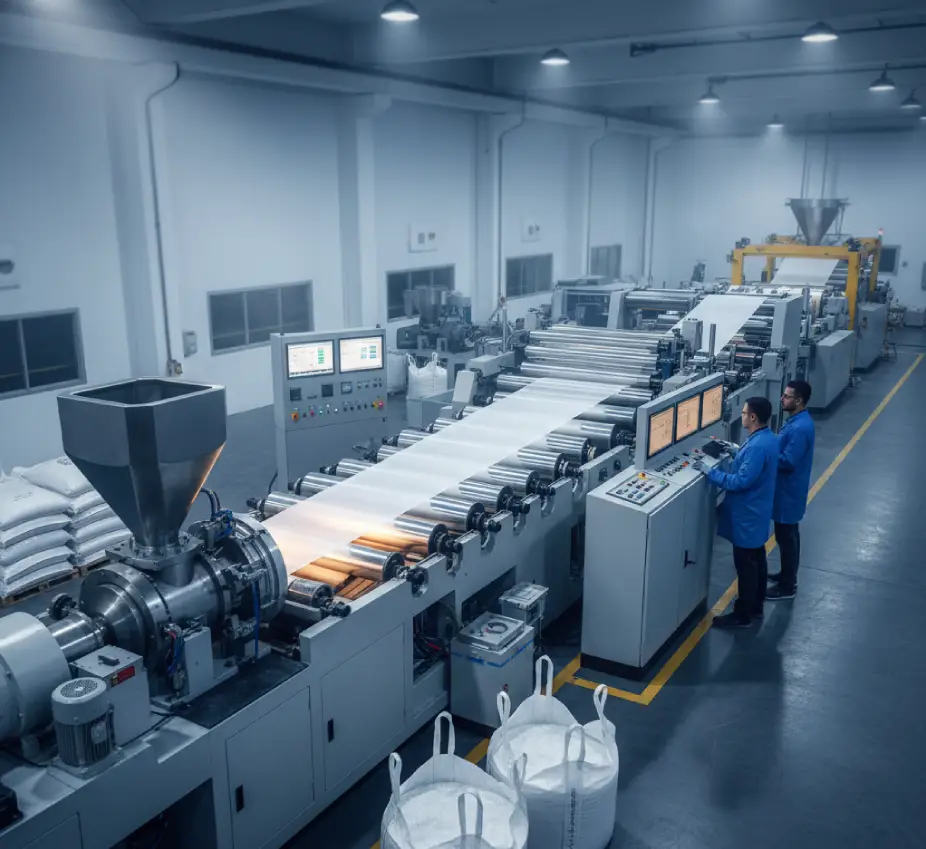
The process starts by feeding plastic pellets into an extruder, where heat and mechanical shear transform them into a molten material. This molten plastic is then forced through a flat die, forming a continuous sheet. Cooling rollers or air systems solidify the sheet, ensuring uniform thickness and a smooth surface. Because of this precise control, manufacturers can reduce defects such as warping, uneven thickness, or surface blemishes.
One of the main advantages of sheet extrusion is its compatibility with a wide range of polymers. PVC, PP, PE, and ABS are commonly used, each offering unique properties for specific applications. For example, PVC sheets are popular in construction and signage, while PP and PE are used for packaging and industrial components. The flexibility in material choice makes sheet extrusion suitable for multiple industries.
Sheet extrusion delivers several benefits that make it essential in plastic manufacturing. Firstly, it ensures high consistency in thickness and surface finish. Secondly, modern lines incorporate automation and sensors to monitor temperature, pressure, and flow rates in real time. This improves production efficiency and reduces material waste. Thirdly, the process can accommodate different sheet sizes and finishes, allowing manufacturers to meet both standard and customized requirements.
The versatility of sheet extrusion allows manufacturers to serve diverse markets. Flat sheets produced via this process are used in packaging, construction panels, signage, automotive interiors, and industrial applications. Additionally, sheet extrusion supports the production of laminated sheets and specialty profiles, further extending its utility in modern manufacturing.
Key Machinery and Components in Sheet Extrusion
Sheet extrusion relies on advanced machinery and precise components to transform raw plastic into high-quality sheets. Understanding these components is essential for optimizing production, reducing waste, and achieving consistent results across different polymers and applications.
The Extruder
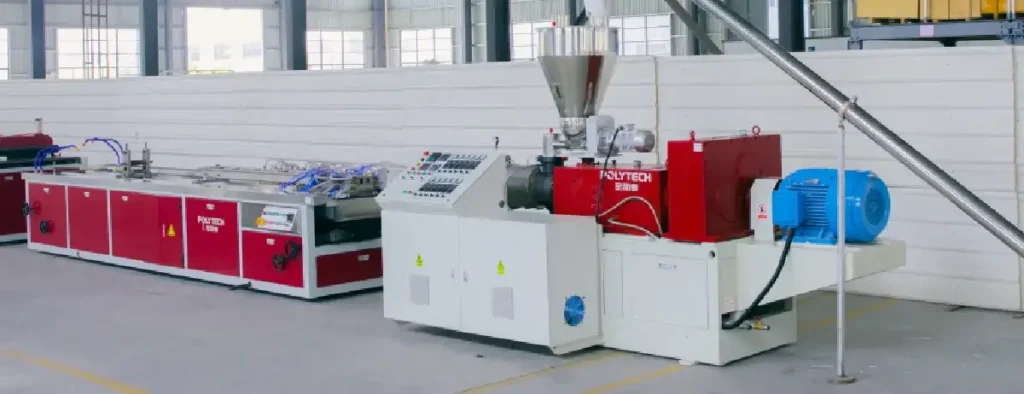
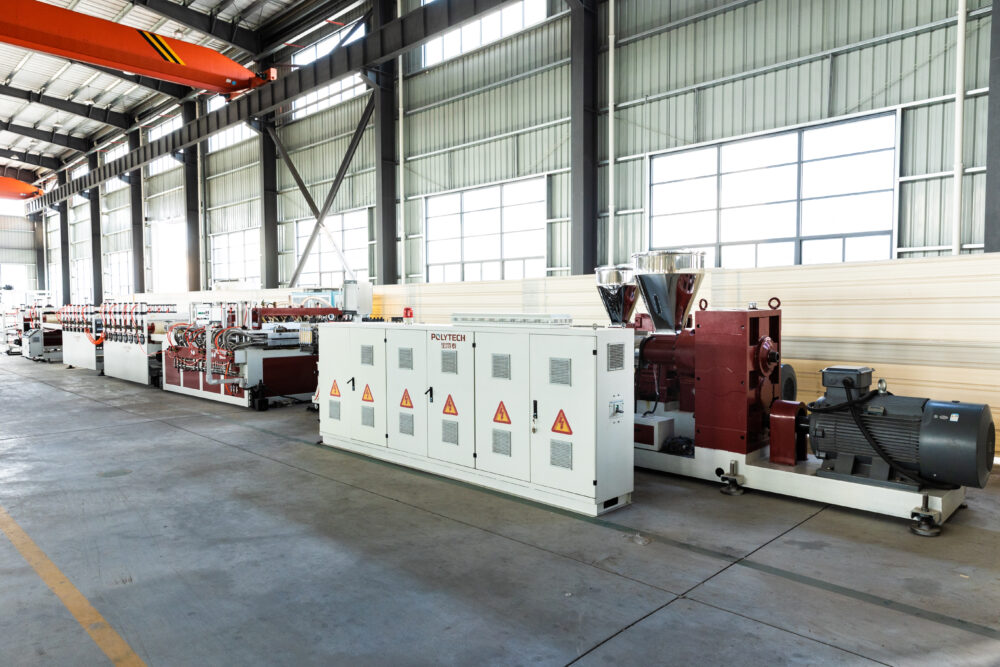
The extruder is the heart of the sheet extrusion line. It consists of a heated barrel and a rotating screw that melts the plastic pellets while mixing them uniformly. The screw design and barrel temperature profile play a critical role in determining the viscosity, flow, and homogeneity of the molten plastic. By carefully controlling these parameters, we ensure that the sheet extrusion process delivers uniform thickness and excellent surface quality.
Flat Die
Once the plastic is melted, it passes through a flat die that shapes the material into a continuous sheet. The design of the die is crucial because it directly affects the sheet’s flatness, width, and thickness consistency. Many modern dies incorporate adjustable lips and flow control systems, which allow us to fine-tune the sheet dimensions and optimize the extrusion process for different polymers.
Cooling System
After emerging from the die, the hot plastic sheet must be cooled rapidly to solidify its shape. Cooling is typically achieved using a combination of water-cooled rollers, air knives, or chill rolls. Efficient cooling not only stabilizes the sheet dimensions but also improves surface finish and prevents defects such as warping or shrinkage. By optimizing the cooling system, we can increase production speed without compromising quality.
Pull Rollers and Conveying Systems
Pull rollers transport the sheet along the line at a controlled speed, ensuring smooth movement through subsequent stages. Proper synchronization between the extruder speed and pull rollers is essential for maintaining uniform thickness and preventing stretching or distortion. Conveying systems guide the sheet to downstream processing or winding units, minimizing mechanical stress and reducing scrap.
Winding and Cutting Units
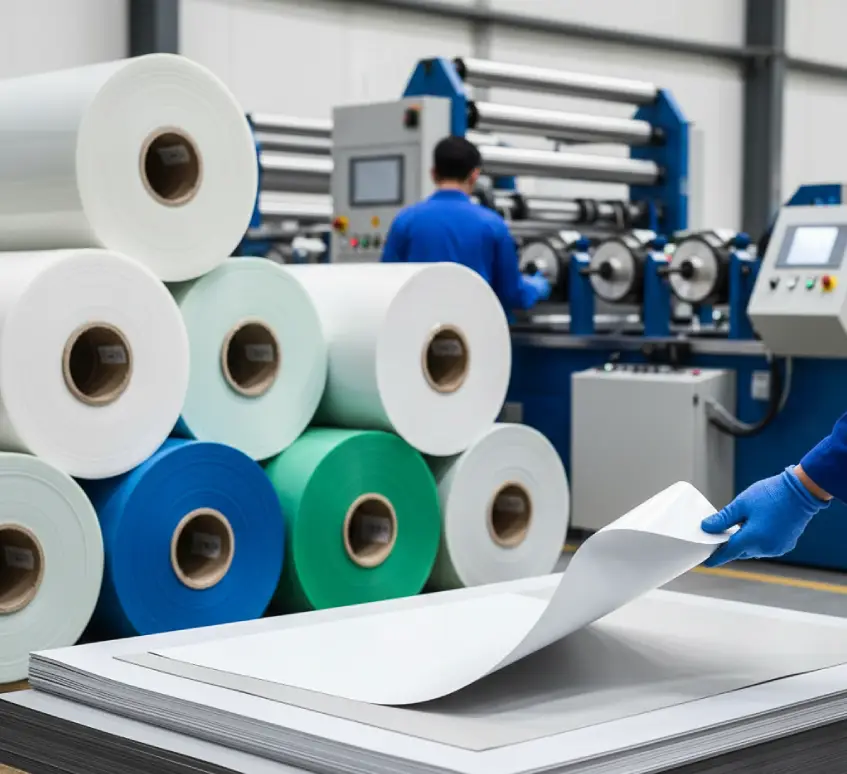
Finally, the sheet extrusion line often includes winding or cutting systems. Winding units roll the sheet into coils for storage and transport, while cutting units trim the sheets to desired dimensions. Both systems must be precisely controlled to avoid damage, maintain consistent sheet length, and ensure accurate packaging for delivery.
Automation and Monitoring Systems
Modern sheet extrusion lines are increasingly automated. Sensors continuously monitor temperature, pressure, and thickness, providing real-time feedback to operators. Some systems even include PLC or SCADA integration for remote monitoring and process control. By leveraging automation, we reduce human error, improve consistency, and enhance overall productivity in the sheet extrusion process.
Advantages of Sheet Extrusion
Sheet extrusion offers numerous advantages that make it a preferred method in the plastic manufacturing industry. Its versatility, efficiency, and high-quality output provide manufacturers with the ability to meet diverse industrial demands.
Consistent Thickness and Surface Quality
One of the main benefits of sheet extrusion is the production of sheets with uniform thickness and excellent surface finish. By carefully controlling the extrusion process and cooling stages, manufacturers can achieve precise dimensions across large volumes. This consistency is critical for industries such as packaging, automotive, and construction, where even small variations can affect product performance and aesthetics.
High Production Efficiency
Sheet extrusion allows for continuous production, which significantly improves output compared to other forming methods. Modern extrusion lines incorporate automation, sensors, and real-time monitoring, enabling operators to optimize process parameters and minimize downtime. As a result, factories can achieve faster production cycles while maintaining high-quality standards.
Material Versatility
Another advantage of sheet extrusion is its compatibility with a wide range of polymers, including PVC, PE, PP, and ABS. Each material offers unique properties, allowing manufacturers to tailor sheets for specific applications. For example, PVC sheets are commonly used in construction and signage, while PE and PP sheets are ideal for packaging and industrial components. This versatility makes sheet extrusion a highly flexible solution for multiple sectors.
Customization and Scalability
Sheet extrusion provides manufacturers with the ability to produce sheets of various thicknesses, widths, and finishes according to client requirements. Whether for standard sizes or custom applications, extrusion lines can be adjusted to meet specific production goals. Additionally, the process is highly scalable, allowing factories to expand capacity as demand grows without compromising quality.
Reduced Waste and Sustainability
Efficient sheet extrusion lines minimize scrap and material waste. By optimizing die design, cooling systems, and process controls, manufacturers can significantly reduce production losses. Furthermore, the ability to process recycled plastics supports sustainable manufacturing practices, aligning with environmental regulations and customer expectations.
Wide Industrial Applications
Sheets produced through extrusion can be used in countless applications, from packaging films and automotive panels to construction boards and industrial linings. Their uniformity, durability, and versatility make them essential components in modern manufacturing processes.
Challenges in Sheet Extrusion
While sheet extrusion offers numerous advantages, manufacturers face several challenges that can affect efficiency, quality, and sustainability. Understanding these obstacles is crucial for improving processes and achieving consistent high-quality output.
Maintaining Uniform Thickness
One of the primary challenges in sheet extrusion is achieving consistent thickness across the entire sheet. Variations in temperature, extrusion speed, or cooling rate can lead to uneven sheets, which may cause defects during downstream processes. To overcome this, manufacturers must carefully monitor extrusion parameters and maintain precise control over cooling systems.
Material Limitations
Different polymers have unique processing requirements. For example, PVC, PE, and PP respond differently to heat and shear forces. Improper handling can result in warping, bubbles, or surface imperfections. Operators must adjust screw speed, die design, and temperature settings based on the material being processed to ensure optimal results.
Energy Consumption
Sheet extrusion is an energy-intensive process. The extruder, heating systems, and cooling units require substantial electricity, and inefficiencies can increase operational costs. Companies are constantly seeking ways to reduce energy consumption through process optimization, energy-efficient machinery, and improved thermal management.
Managing Production Waste
Although sheet extrusion is more efficient than some other processes, scrap and material waste can still occur due to start-up runs, die adjustments, or defective sheets. Efficient recycling practices, careful monitoring, and process optimization are essential to minimize waste and improve sustainability.
Equipment Maintenance and Downtime
Extrusion lines involve complex machinery that requires regular maintenance. Downtime due to equipment failure can disrupt production schedules and increase costs. Predictive maintenance, real-time monitoring, and proper training for operators are necessary to keep production continuous and reliable.
Conclusion
Sheet extrusion remains a cornerstone of the plastic manufacturing industry. It provides manufacturers with the ability to produce high-quality sheets with uniform thickness, excellent surface finish, and material versatility. Despite the challenges of controlling thickness, energy consumption, and equipment maintenance, modern extrusion lines offer solutions through automation, real-time monitoring, and advanced tooling.
The process supports both large-scale production and custom applications, making it highly flexible and adaptable to various industrial needs. Furthermore, by integrating sustainable practices such as recycling and energy optimization, companies can reduce waste and align with environmental standards.
In summary, sheet extrusion is not only a highly efficient and versatile process but also a critical driver for innovation and competitiveness in the plastic manufacturing industry. Companies that invest in advanced machinery, skilled operators, and optimized processes will continue to benefit from the long-term advantages of this essential technology