

Introduction
A PVC production line plays a crucial role in modern manufacturing, enabling factories to produce pipes, profiles, sheets, cables, and a wide range of industrial products with high efficiency and consistent quality. PVC continues to dominate global markets due to its durability, cost-effectiveness, and excellent resistance to chemicals, moisture, and impact. As industries demand stronger and more reliable materials, PVC processing lines have become more advanced, smarter, and far more energy-efficient
Why PVC Is Essential Today
PVC stands out as one of the most versatile thermoplastics. It is widely used in construction, electrical systems, packaging, and infrastructure projects. Because it combines strength with low material cost, manufacturers rely heavily on PVC to deliver long-lasting and affordable solutions. This strong market demand is the main reason companies invest in a high-quality PVC production line to boost productivity and meet industry standards.
How PVC Production Lines Are Evolving
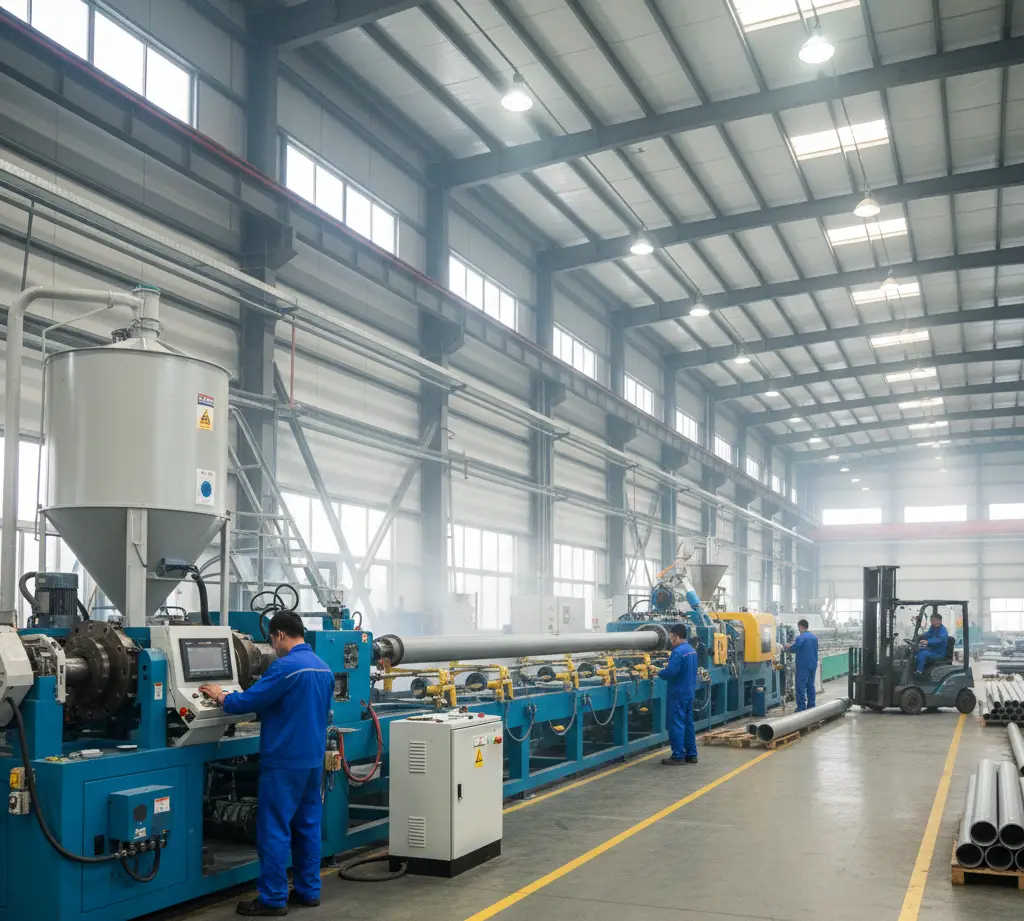
Over the years, PVC processing technology has advanced dramatically. Today’s systems offer precise temperature control, automated dosing, improved plasticization, and better mixing quality. As a result, manufacturers benefit from smoother operation, reduced waste, and superior product consistency. Furthermore, many modern PVC production lines are designed with energy-saving motors and digital monitoring systems to enhance performance and lower operating costs.
Meeting Growing Market Requirements
As global markets continue to expand, factories must deliver PVC products that meet strict performance and safety standards. This requires reliable machinery, optimized formulations, and efficient production workflows. Consequently, investing in a well-engineered PVC production line helps companies achieve stable output, stronger mechanical properties, and faster production cycles — all while maintaining competitive pricing.
Key Machinery Used in PVC Production
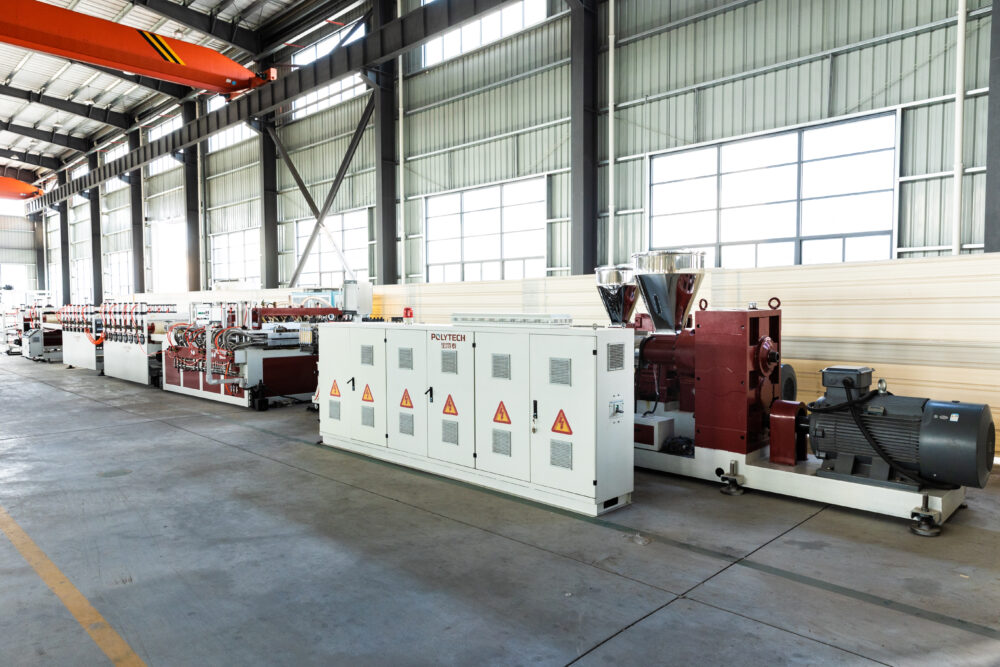
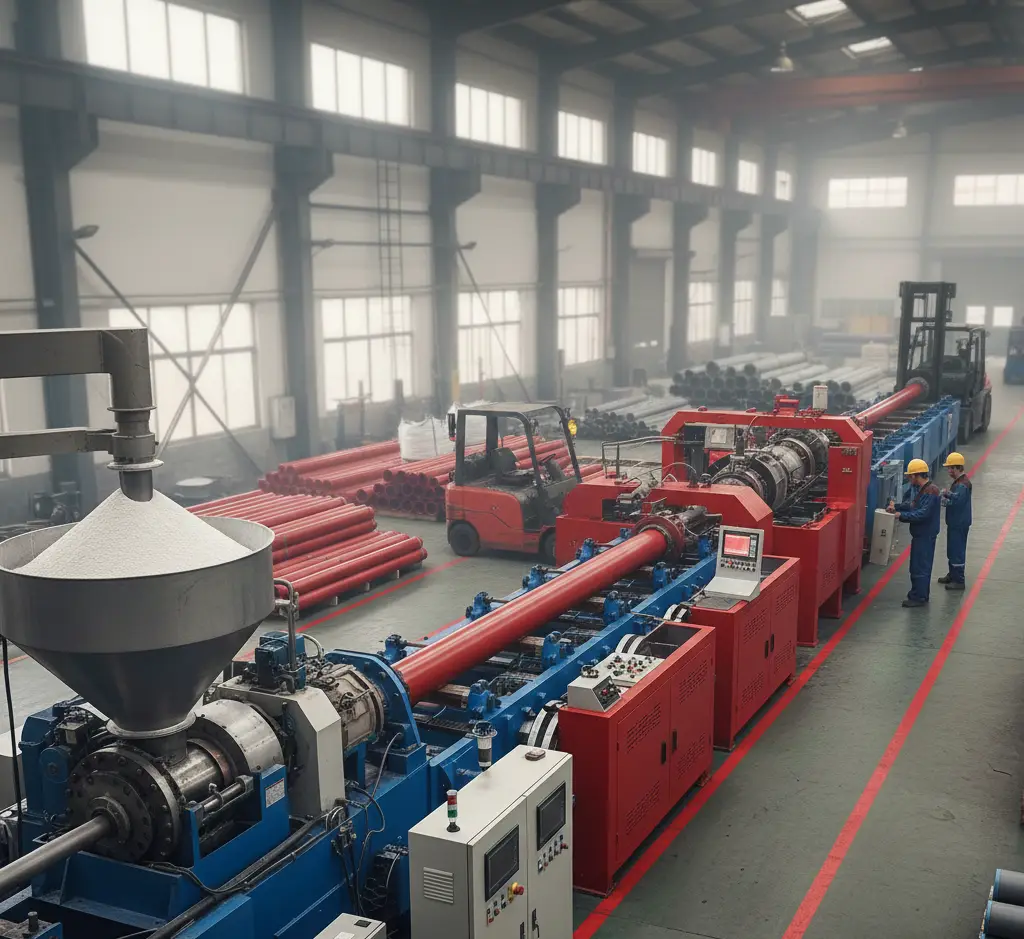
A PVC production line relies on several core machines that work together to ensure stable output, strong mechanical properties, and consistent product quality. Each piece of equipment plays a specific role in shaping raw PVC materials into finished pipes, profiles, sheets, or cables.
The mixing system is the first and most important stage of the PVC production line. It prepares the PVC powder by blending it with stabilizers, lubricants, fillers, and color additives.
- Hot mixers heat the material to ensure uniform distribution.
- Cold mixers cool the blend to the right processing temperature.
These machines guarantee consistent formulation, which directly affects product strength, color stability, and overall quality.
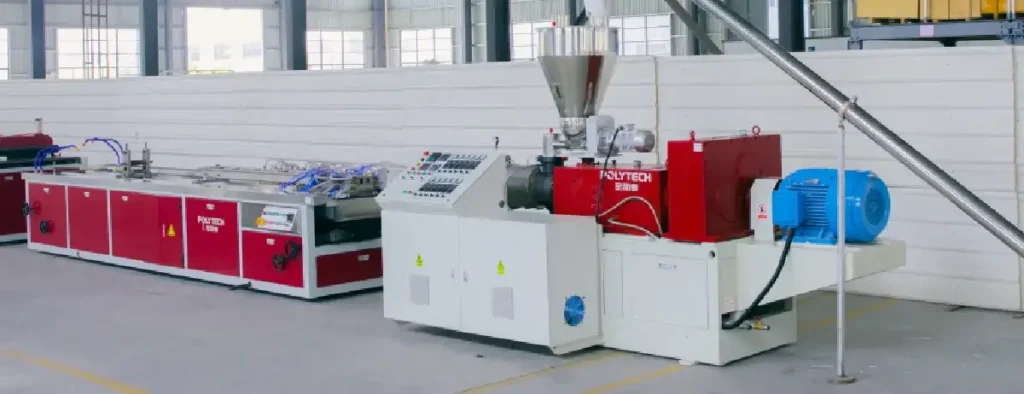
The twin-screw extruder is the heart of the PVC production line. It melts, plasticizes, and pushes the material forward with high pressure.
Because PVC requires precise temperature control, the extruder uses advanced heaters, cooling systems, and screw designs to avoid burning or poor plasticization.
Modern extruders also include automatic feeding systems, digital controls, and real-time monitoring to ensure stable performance and accurate dimensions.
The die head shapes the molten PVC into pipes, profiles, sheets, or panels depending on the production target.
High-quality die heads use polished steel, balanced flow channels, and heat distribution systems. This design ensures uniform thickness, smooth surfaces, and strong mechanical properties.
After leaving the die, the hot PVC shape enters the calibration tank, where it forms exact dimensions and straightness.
Next, cooling tanks stabilize the product using water sprays or immersion systems.
This stage is essential because proper cooling prevents warping, cracking, and internal stress — all of which affect long-term durability.
The haul-off machine pulls the PVC product steadily along the production line.
It uses rubber or caterpillar belts to maintain constant speed, which is critical for ensuring accurate thickness, uniformity, and smooth extrusion flow.
Modern haul-off units offer variable-speed control to match the production requirements of each product type.
The cutting machine trims PVC pipes, profiles, or sheets into precise lengths.
Depending on the line, the cutter may be:
- saw-type,
- planetary-type (for PVC pipes),
- or guillotine-style (for profiles and sheets).
Accurate cutting ensures clean edges and eliminates waste, especially during high-speed production.
The final stage of the PVC production line uses a stacker or collection table to receive finished products safely.
This ensures smooth handling, protects surfaces from scratches, and prepares items for packaging or further processing.
Many factories also include:
- Belling machines for PVC pipe sockets
- Printing units for marking specifications
- Inline measurement systems for diameter & thickness
- Automatic packaging machines
These additions improve efficiency and raise the final product’s market value.
Advantages of a Modern PVC Production Line
Higher Production Efficiency
Modern PVC production lines are engineered to deliver significantly higher throughput compared to older systems.
They feature optimized screw geometries, advanced heating zones, and automated feeding systems that ensure continuous and stable operation.
As a result, manufacturers can produce more material in less time, reducing overall operational costs and increasing profitability.
Superior Product Consistency
One of the biggest advantages of modern lines is the exceptional uniformity of the final PVC product—whether pipes, profiles, sheets, or cables.
Advanced process control systems automatically regulate temperature, pressure, and material flow, preventing variations and ensuring stable quality across every batch.
Lower Energy Consumption
Energy-efficient motors, intelligent temperature control, and optimized extrusion technology help reduce power consumption significantly.
This lowers production costs and makes the entire process more environmentally friendly, especially when combined with modern cooling and recycling systems.
Enhanced Automation & Reduced Labor Requirements
Modern PVC lines rely heavily on automation—covering feeding, extrusion, calibration, hauling, cutting, and packaging.
This reduces the manpower required, minimizes human error, and ensures consistent performance, even during long production cycles.
Automated fault-detection systems also help operators address issues quickly.
Improved Material Utilization
Advanced dosing and mixing systems ensure that raw materials, additives, and stabilizers are used efficiently.
This reduces waste, improves melt homogeneity, and enhances the overall mechanical and thermal properties of the final PVC product.
Better material utilization directly impacts cost efficiency and sustainability.
Flexibility in Product Customization
Modern lines support a wide range of formulations, colors, dimensions, and material blends.
Whether producing rigid PVC pipes, flexible profiles, multilayer sheets, or specialty compounds, the system allows for fast recipe switching and minimal downtime.
This flexibility helps manufacturers serve different market demands more effectively.
Higher Durability and Less Maintenance
Modern PVC machines come with robust mechanical structures, corrosion-resistant components, and advanced cooling/lubrication systems.
This results in longer machine life, fewer unplanned shutdowns, and reduced maintenance costs.
Smart diagnostics also predict failures before they occur.
Better Environmental Compliance
Many modern PVC production setups include dust-free feeding systems, fumes extraction units, and recycling sections for off-cuts and scrap.
This helps companies meet international environmental and safety standards, while also reducing their carbon footprint.
Stronger End-Product Performance
Improved mixing, homogenization, and extrusion precision result in PVC products with better mechanical strength, thermal stability, and long-term durability.
This leads to higher market acceptance and stronger competitive advantage.
Challenges in PVC Production
Despite the many advantages of modern PVC production lines, manufacturers still face several challenges that can impact quality, efficiency, and profitability. Identifying these obstacles is essential to optimize operations and stay competitive in the plastic industry.
Fluctuating Raw Material Prices
PVC resin and additives are influenced by global market conditions, oil prices, and supply chain disruptions.
Such fluctuations make it difficult for manufacturers to forecast costs and maintain stable production budgets.
To mitigate this, companies often explore alternative suppliers, optimize recycling practices, and negotiate long-term contracts.
Process Stability and Quality Control
Maintaining consistent product quality is a constant challenge. Small variations in temperature, pressure, or cooling rates can result in warping, surface defects, or dimensional inaccuracies.
Modern PVC production lines rely on advanced sensors and automated controls, but skilled operators are still essential to monitor and adjust the process when necessary.
Energy Consumption
PVC extrusion, mixing, and cooling processes consume significant energy. High power costs can affect profitability, particularly in regions with unstable electricity prices.
Implementing energy-efficient motors, heat recovery systems, and optimized cooling solutions helps reduce consumption and lower operational costs.
Equipment Maintenance and Downtime
Complex machines such as twin-screw extruders, die heads, and haul-off systems require regular maintenance.
Unexpected breakdowns can halt production, increase scrap, and cause financial losses. Preventive and predictive maintenance, combined with real-time monitoring, is crucial to avoid downtime.
Environmental and Regulatory Compliance
Manufacturers must meet strict environmental standards regarding emissions, dust, fumes, and plastic waste management.
Failing to comply can result in fines, production halts, and reputational damage. Investing in recycling units, fume extraction systems, and eco-friendly additives is essential to align with regulations.
Skilled Labor Shortage
Operating a modern PVC production line requires trained personnel who understand process control, machinery maintenance, and quality assurance.
A shortage of skilled technicians can limit production efficiency and slow problem resolution. Companies invest in training programs and competitive incentives to retain talent.
Market Pressure and Customization Demands
Clients increasingly demand tailored PVC products with specific dimensions, colors, and performance characteristics.
Meeting these demands requires flexible production setups, fast tooling changes, and adaptive formulations, which can challenge older or less automated PVC production lines.
Conclusion
A PVC production line remains a cornerstone of the plastic manufacturing industry, providing efficient, high-quality, and versatile solutions for producing pipes, profiles, sheets, and other essential products. Modern systems combine automation, precise temperature control, and advanced machinery to ensure consistent output, superior product performance, and reduced operational costs.
Despite challenges such as fluctuating raw material prices, energy consumption, and the need for skilled operators, the opportunities in PVC manufacturing continue to expand. Sustainable practices, recycling, and technological innovations allow manufacturers to meet strict environmental regulations while satisfying growing market demands.