

Introduction
The PVC extrusion machine plays a vital role in modern plastic manufacturing, providing a reliable and cost-effective way to produce high-quality pipes, profiles, sheets, and other PVC products. As industries continue to demand durable, lightweight, and versatile materials, PVC extrusion has become one of the most widely adopted processes worldwide.
This technology allows manufacturers to melt and shape raw PVC materials into continuous products with consistent dimensions and excellent performance. Whether used for water pipes, window frames, cable insulation, or decorative profiles, extrusion machines ensure precision, efficiency, and scalability. By understanding how a PVC extrusion machine works, its main components, and the available types, businesses can make informed decisions to improve productivity and meet growing market needs.
What is a PVC Extrusion Machine?
A PVC extrusion machine is a specialized piece of equipment designed to transform raw polyvinyl chloride (PVC) material into continuous shapes such as pipes, profiles, or sheets. Unlike traditional molding methods that create individual items, extrusion produces long, uniform products that can be cut into the desired lengths.
At the core of the process, the machine heats PVC granules or powder until they melt, then pushes the molten material through a precisely engineered die to form a specific shape. Once the extruded product leaves the die, it is cooled, calibrated, and cut, ensuring consistent quality and accuracy.
PVC extrusion machines are widely used in construction, electrical, packaging, and automotive industries because they combine efficiency with versatility. Their ability to handle different PVC formulations — from rigid to flexible — makes them indispensable in modern manufacturing.
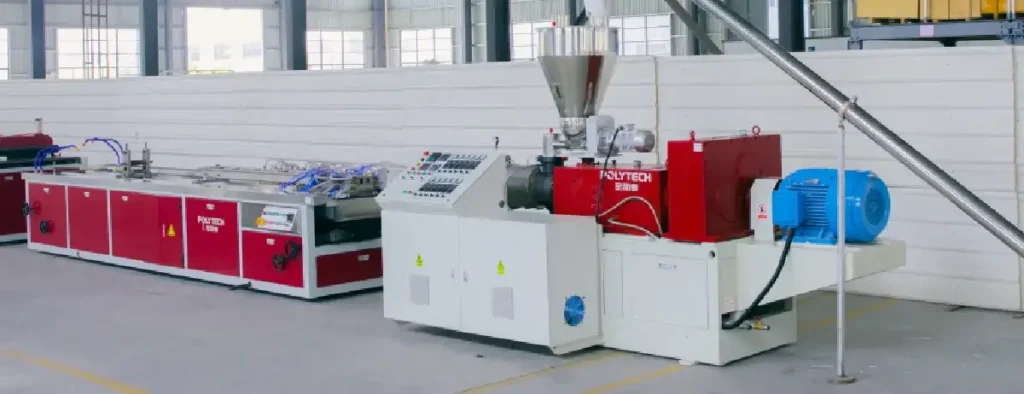
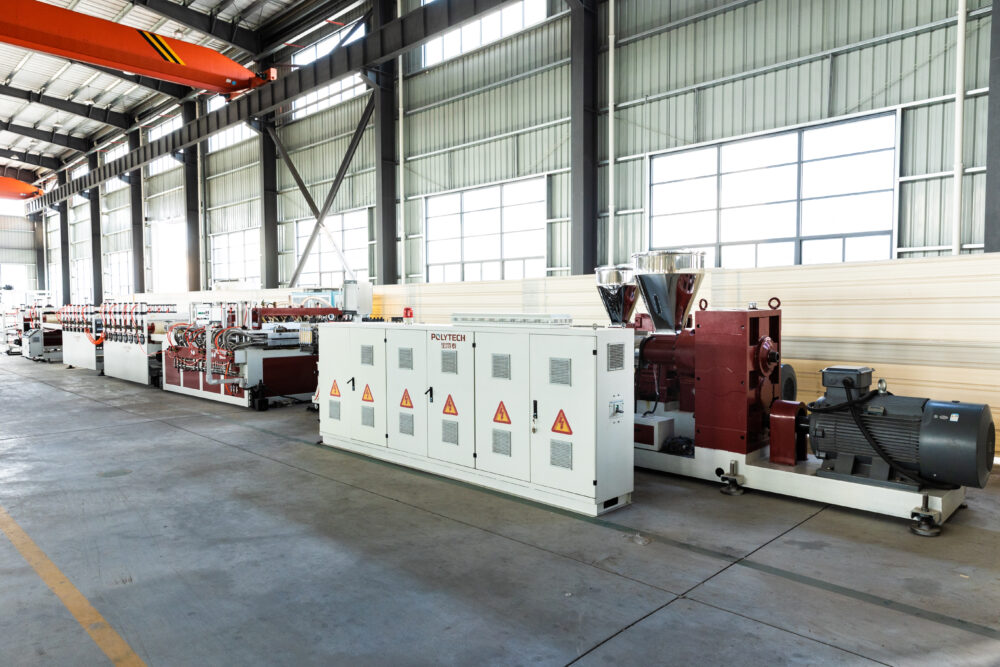
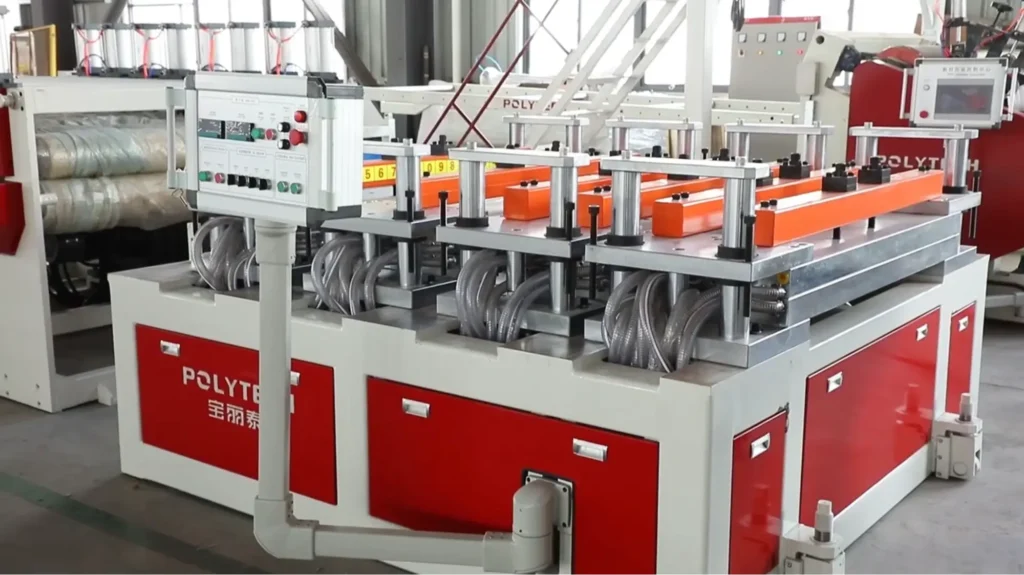
A PVC extrusion machine consists of several essential components that work together to transform raw material into a finished product. Each part of the system has a specific role in ensuring efficiency, precision, and product quality.
1. Extruder
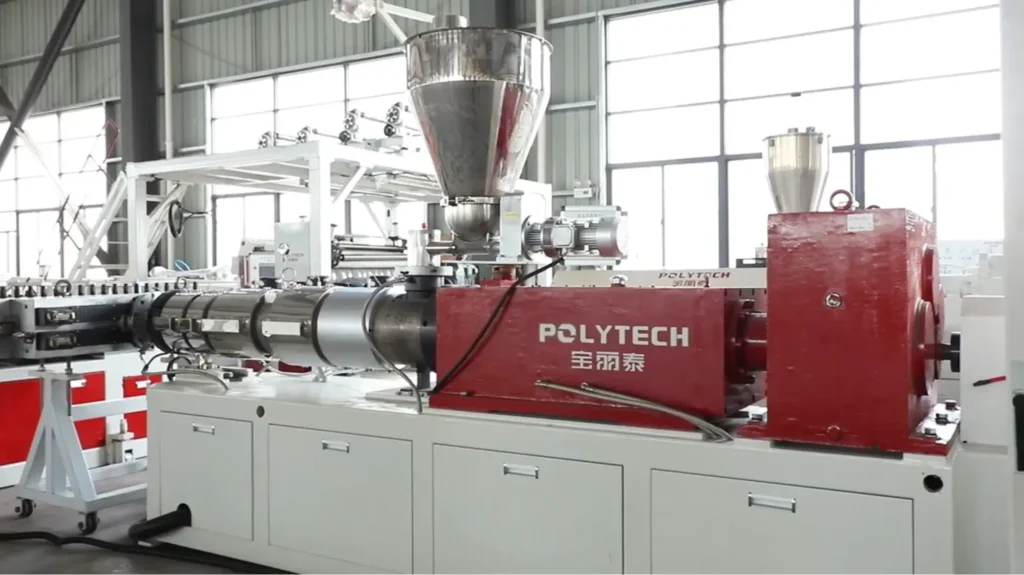
The extruder is the heart of the machine. It contains a rotating screw inside a heated barrel that melts and conveys PVC material forward. The screw’s design, whether single or twin, determines the machine’s output capacity and material handling capability.
2. Die Head
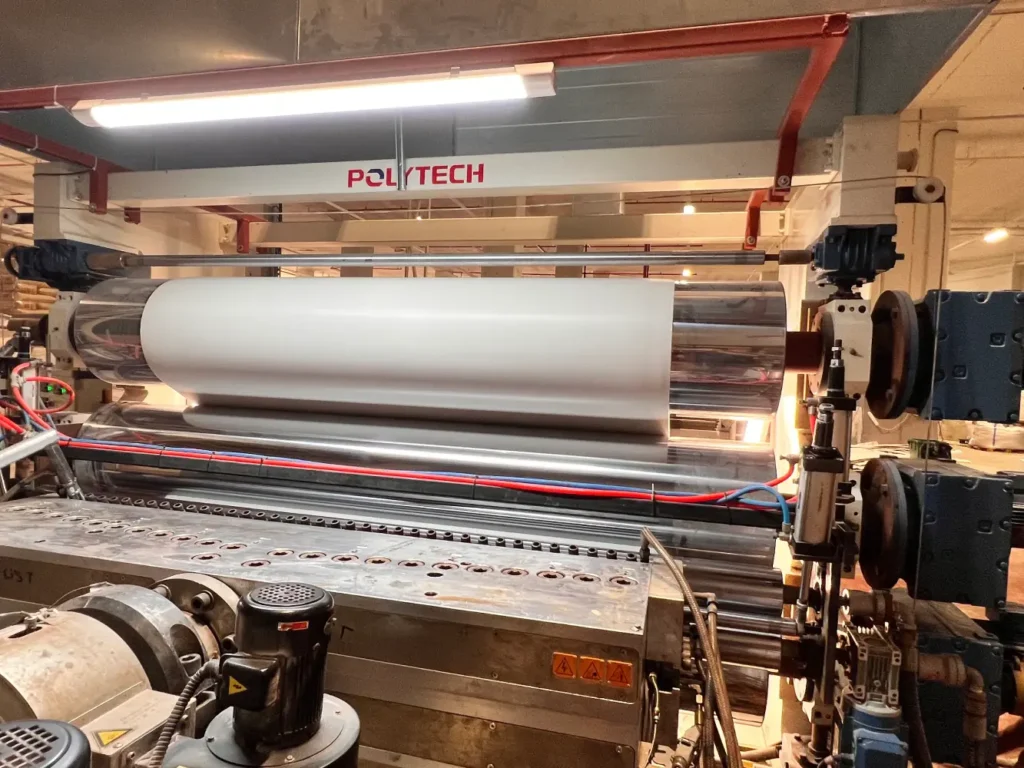
The die head shapes the molten PVC into the desired form, such as pipes, sheets, or profiles. High-precision dies are crucial because they directly affect the product’s dimensions, surface finish, and strength.
3. Calibration and Cooling System
After exiting the die, the hot PVC product enters a calibration and cooling system. This section uses vacuum calibration and water tanks to solidify the shape while maintaining dimensional accuracy.
4. Haul-Off Unit
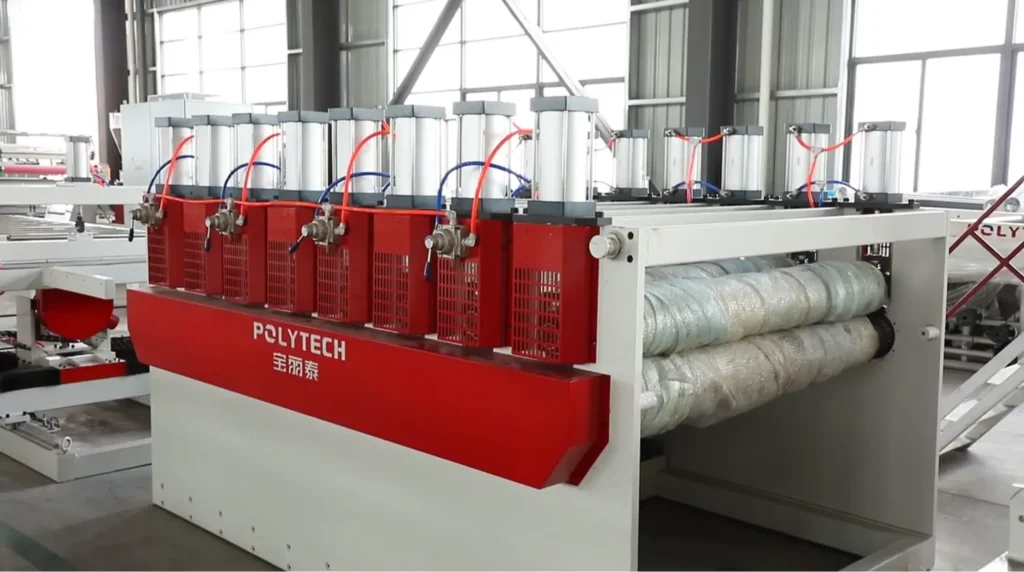
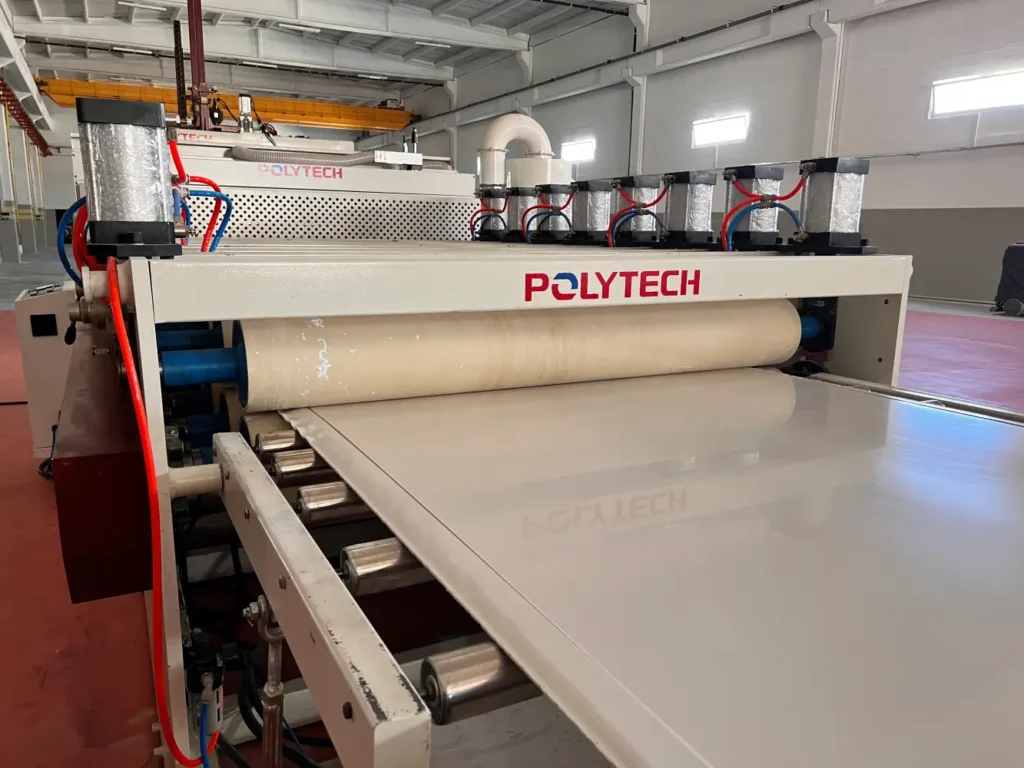
The haul-off, or pulling device, steadily draws the extruded PVC product through the line. It ensures consistent speed and prevents distortion during the cooling stage.
5. Cutting Machine
At the end of the line, a cutting unit slices the continuous extrudate into required lengths. Depending on the product type, manufacturers may use saws, planetary cutters, or blade systems.
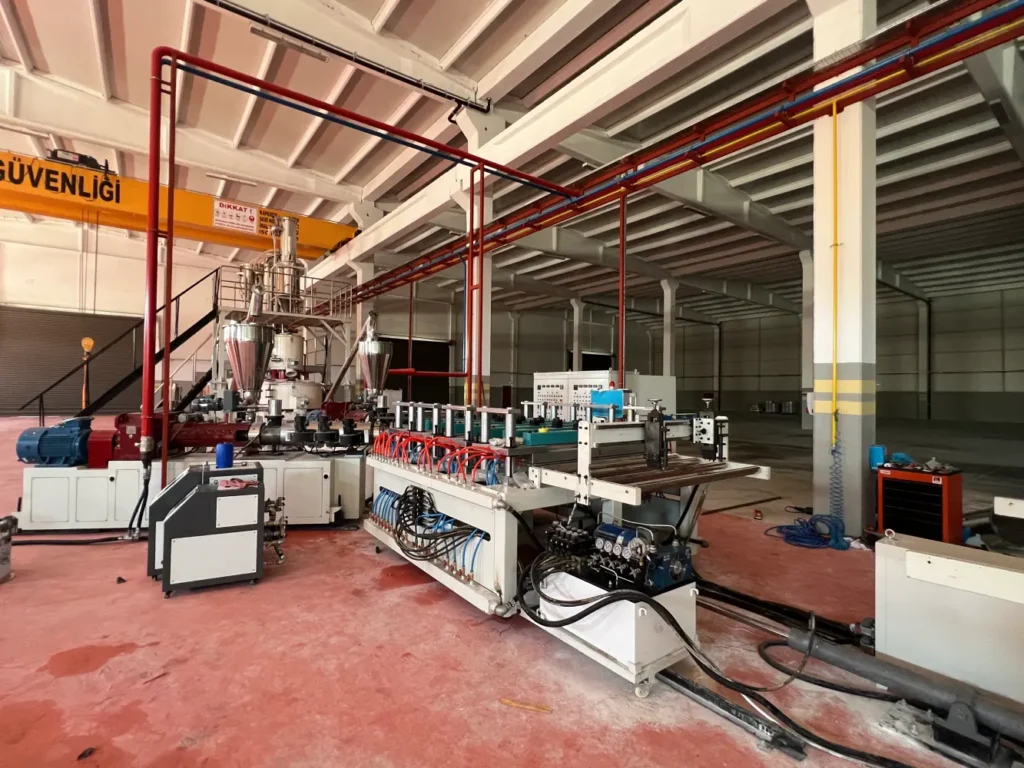
Together, these components form a highly synchronized system capable of producing reliable, high-performance PVC products across industries.
How the PVC Extrusion Process Works
The PVC extrusion process follows a systematic sequence that transforms raw PVC into finished products with precise shapes and consistent quality.
1. Feeding the Material
- The process begins with loading PVC powder or granules into the hopper of the extruder. Additives such as stabilizers, lubricants, or colorants can also be mixed in to enhance performance.
2. Melting and Conveying
- Inside the heated barrel, the rotating screw gradually melts the PVC material while pushing it forward. Controlled heating zones ensure uniform melting without degrading the material.
3. Shaping Through the Die
The molten PVC is then forced through a custom-designed die, which determines the product’s cross-sectional shape. Whether it is a pipe, sheet, or profile, the die ensures precision and repeatability.
4. Calibration and Cooling
Once the material exits the die, it is still hot and flexible. A calibration unit and water-cooling system stabilize the product’s dimensions, hardening it into the desired form.
5. Haul-Off and Cutting
- The haul-off unit maintains a steady pulling speed, ensuring smooth flow through the line. Finally, the cutter slices the continuous product into exact lengths ready for use or further processing.
By following these steps, the PVC extrusion machine delivers products that are strong, durable, and suitable for a wide range of industrial applications.
Types of PVC Extrusion Machines
Different production needs require different types of PVC extrusion machines. The two most common designs are single-screw and twin-screw extruders, each with unique advantages.
1. Single-Screw Extrusion Machine
A single-screw extruder uses one rotating screw to melt and push PVC material through the barrel. It is widely used for simple extrusion tasks such as producing basic pipes, sheets, and profiles.
Advantages: Lower cost, easy operation, and efficient for standard applications.
Limitations: Less effective when handling formulations that require high mixing or advanced compounding.
2. Twin-Screw Extrusion Machine
A twin-screw extruder employs two intermeshing screws that rotate together inside the barrel. This design provides superior mixing and higher output capacity, making it ideal for complex PVC products.
Advantages: Better plasticization, higher productivity, and flexibility to process rigid or flexible PVC.
Limitations: Higher investment cost and more complex maintenance.
3. Specialized Extrusion Lines
Beyond these two main types, manufacturers also design specialized PVC extrusion lines tailored for pipes, profiles, cables, or foam sheets. These machines are equipped with advanced controls, high-precision dies, and customized cooling systems to meet specific industry requirements.
Choosing the right machine depends on production volume, product specifications, and the type of PVC material being processed.
Applications of PVC Extrusion Machines
The PVC extrusion machine plays a central role in producing a wide variety of products that are essential across multiple industries. Thanks to its versatility, manufacturers can process both rigid and flexible PVC to meet diverse application needs.
1. Construction Industry
PVC pipes and profiles are widely used in building and infrastructure projects. They serve as water supply and drainage pipes, window and door frames, and electrical conduit systems due to their strength, durability, and resistance to corrosion.
2. Electrical and Telecommunications
PVC extrusion machines produce cable insulation and protective tubing, ensuring safety and reliability in electrical wiring and telecommunication networks.
3. Automotive Sector
In the automotive industry, extruded PVC components such as trims, seals, and protective covers improve vehicle performance while reducing weight and cost.
4. Packaging Industry
Flexible PVC sheets and films made through extrusion are used in packaging, especially for food, medical, and consumer goods, where transparency and durability are important.
5. Agriculture and Irrigation
PVC pipes created by extrusion are essential for irrigation systems, offering farmers an affordable and long-lasting solution for water distribution.
These applications demonstrate why the PVC extrusion machine remains one of the most valuable tools in modern manufacturing, supporting industries that rely on efficiency, precision, and scalability.
Features to Consider When Choosing a PVC Extrusion Machine
Selecting the right PVC extrusion machine is crucial for achieving consistent product quality and meeting production goals. Several key features should be evaluated before making an investment:
1. Output Capacity
The machine’s output, often measured in kilograms per hour, must match the production demand. High-capacity machines are ideal for large-scale manufacturing, while smaller units work best for specialized or limited runs.
2. Screw Design
The choice between single-screw and twin-screw extruders depends on the complexity of the product. Twin-screw designs offer better mixing and higher efficiency for demanding applications.
3. Precision of the Die Head
Since the die determines the final shape of the PVC product, high-quality dies with tight tolerances are essential for producing consistent dimensions and smooth finishes.
4. Cooling and Calibration Systems
Advanced cooling units ensure dimensional stability and reduce production defects. Efficient vacuum calibration systems help maintain precise product measurements.
5. Automation and Control Systems
Modern PVC extrusion machines come with PLC-based controls, touchscreens, and automated monitoring features. These systems enhance accuracy, reduce downtime, and allow for quick adjustments.
6. Energy Efficiency
Machines designed with optimized heating zones, efficient motors, and intelligent controls help reduce energy consumption, lowering operating costs.
7. Maintenance and Durability
A durable design with easy-to-maintain components minimizes breakdowns and ensures long-term reliability.
By considering these features, manufacturers can select a PVC extrusion machine that not only meets their current requirements but also supports future growth.
Latest Trends in PVC Extrusion Technology
The PVC extrusion machine industry continues to evolve, driven by innovation, sustainability, and the demand for higher efficiency. Manufacturers are adopting advanced technologies to stay competitive and meet market expectations.
1. Energy-Efficient Systems
New extrusion machines are designed with optimized heating and cooling zones, energy-saving motors, and intelligent control systems. These advancements reduce operating costs while maintaining high output
2. Automation and Smart Controls
Modern PVC extrusion lines feature PLC-based systems, real-time monitoring, and automatic adjustments. These smart controls improve consistency, minimize waste, and simplify machine operation.
3. Sustainable Manufacturing
The focus on eco-friendly solutions has led to machines capable of processing recycled PVC materials. This not only reduces environmental impact but also cuts raw material costs for manufacturers.
4. High-Precision Tooling
Advanced die and calibration systems allow for greater accuracy, enabling the production of complex shapes and high-quality finishes that meet strict industry standards.
5. Customization and Flexibility
Today’s extrusion machines are highly customizable, allowing manufacturers to adapt to specific product requirements such as pipes, profiles, or sheets with ease.
.
Conclusion
The PVC extrusion machine is a cornerstone of modern plastic manufacturing, enabling the efficient production of pipes, profiles, sheets, and other essential products. By understanding the machine’s components, working process, and applications, manufacturers can make informed choices that enhance productivity and quality.
As technology advances, PVC extrusion continues to become more energy-efficient, automated, and sustainable, ensuring its relevance in industries ranging from construction to automotive and beyond. For businesses looking to invest in reliable and scalable solutions, a well-chosen PVC extrusion machine remains a powerful asset for long-term growth.