


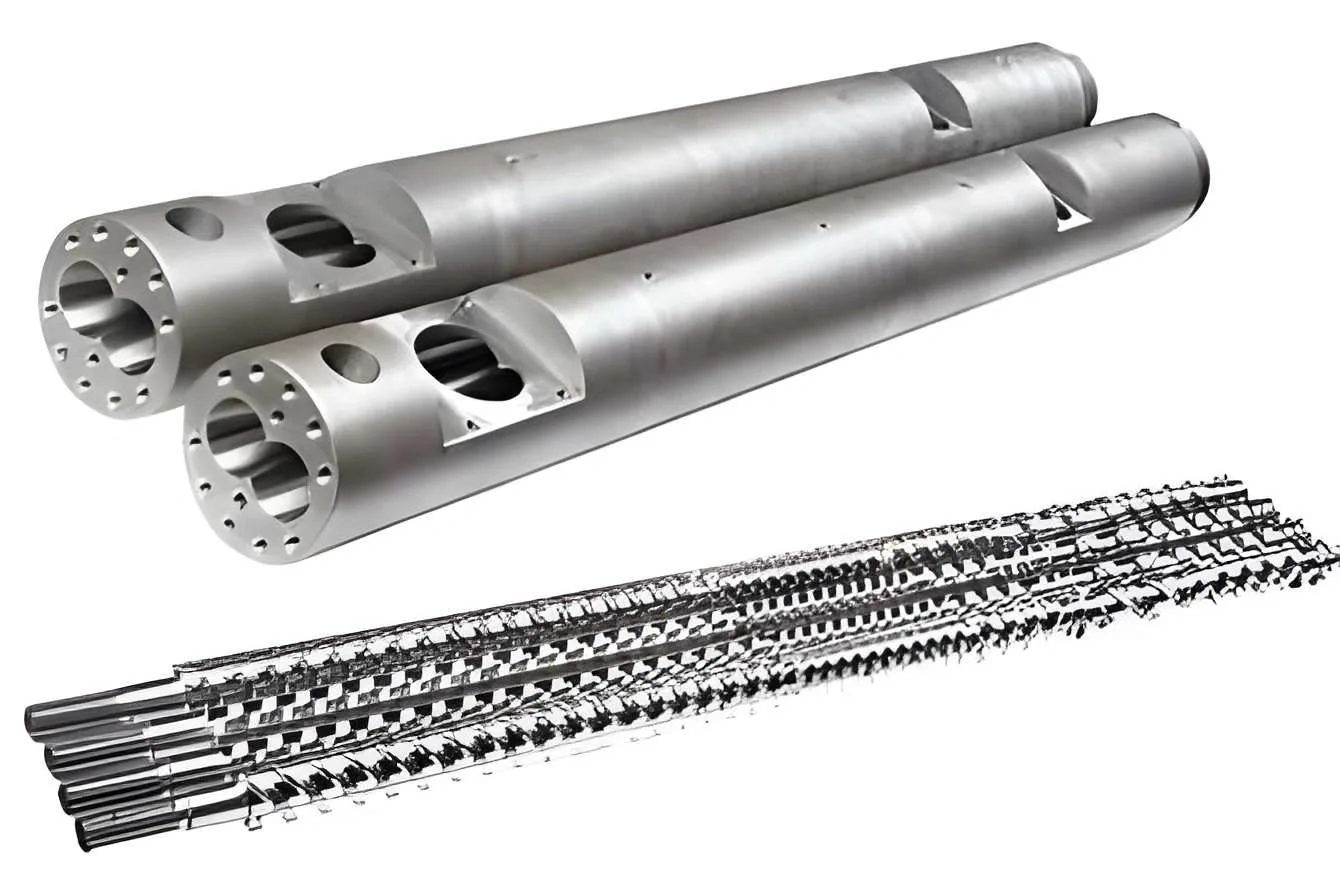
108/36 Parallel Twin-Screw Barrel
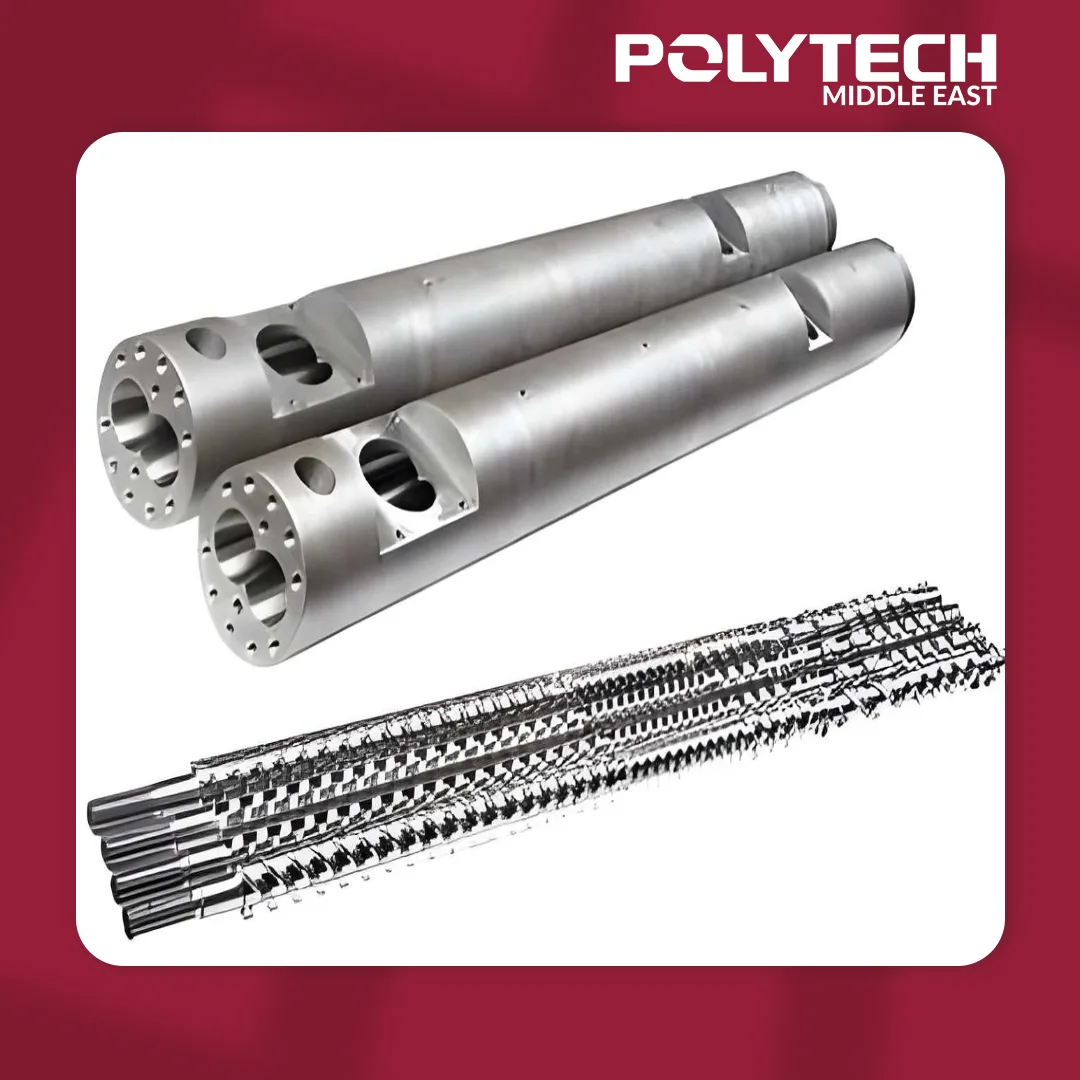
108/36 Parallel Twin-Screw Barrel
Discover the 108/36 parallel twin-screw barrel: a 108 mm diameter, L/D 36 extruder barrel with nitrided alloy steel. Learn about its design, wear-resistant bimetallic construction, throughput capabilities, applications (PVC, PP, ABS, WPC), and maintenance best practices.
Category -> Machines and Spare Parts
Description
Introduction
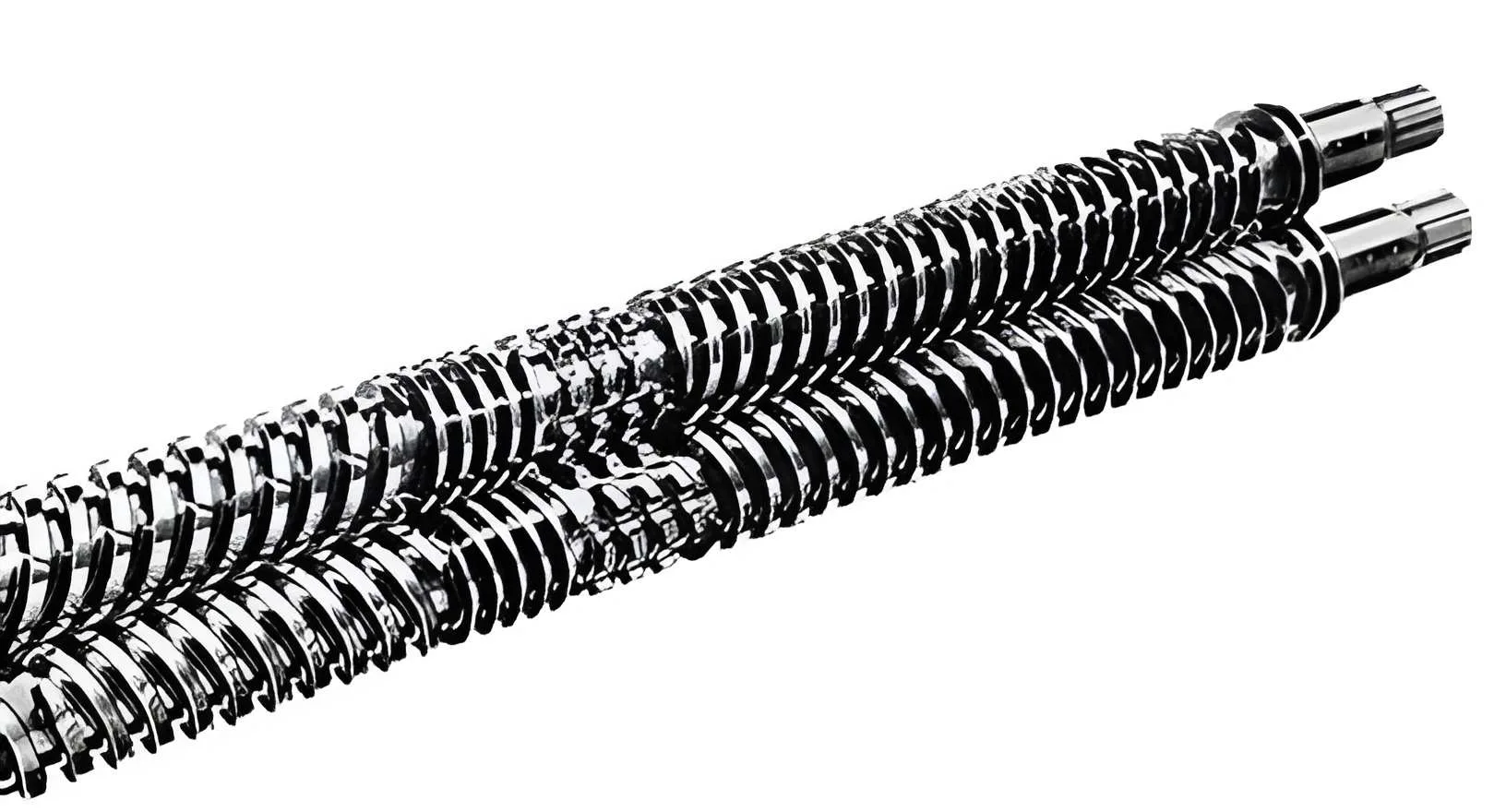
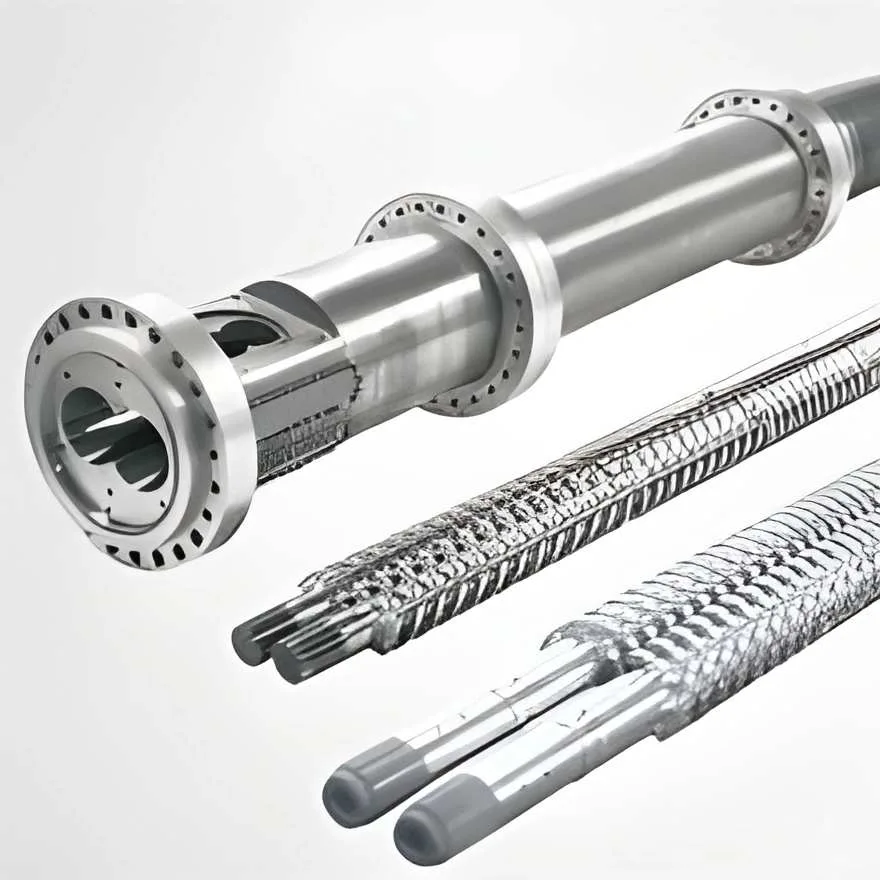
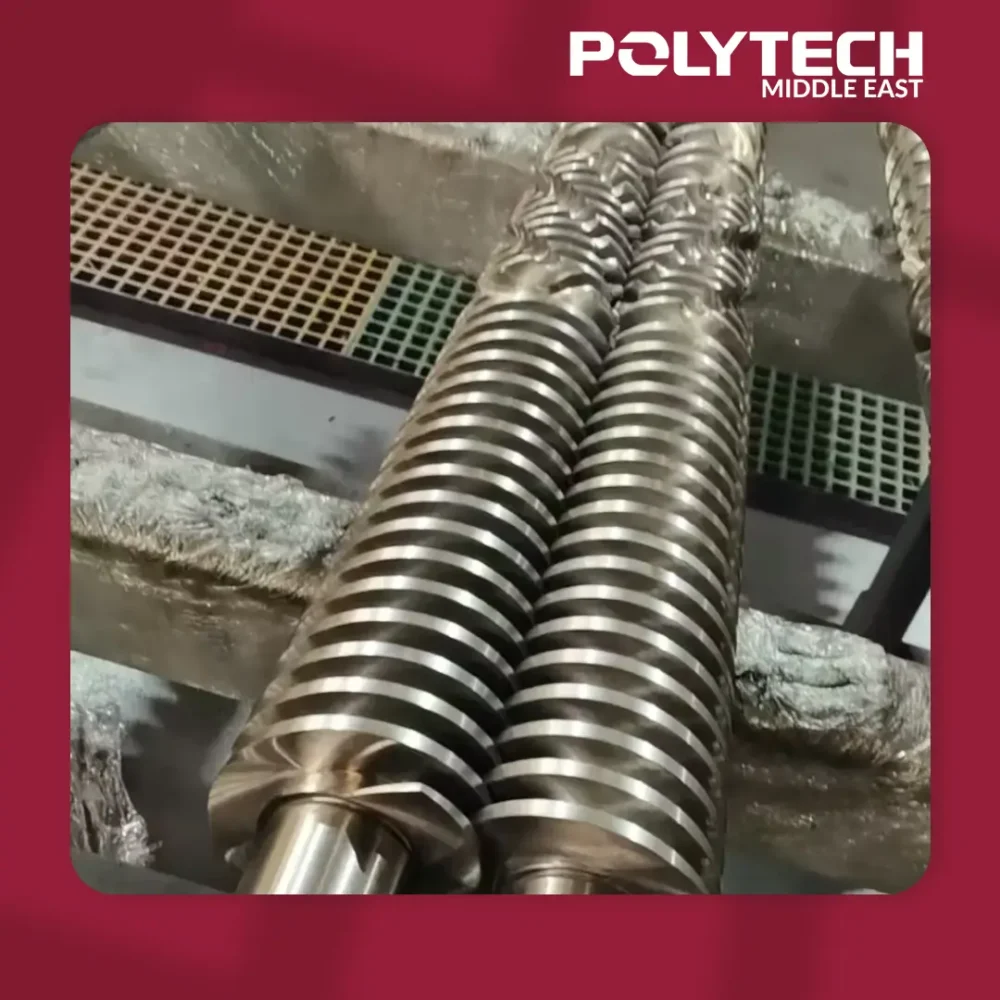
The 108/36 parallel twin-screw barrel is a precision-engineered component for co-rotating twin-screw extruders. It contains two intermeshing 108 mm diameter screws running side by side in a common barrel approximately 3.9 m long (L/D = 36). This large-diameter barrel provides high output and intense mixing, making it ideal for processing demanding polymers and composites. In operation, the parallel screws ensure uniform melting and stable pressure, which is why such barrels are widely used in lines for PVC pipes, PP/PE sheets, ABS profiles, WPC flooring, and similar products.
During manufacturing, the screw shafts and barrel are made from high-strength alloy steel (commonly 38CrMoAlA or equivalent) and then surface-hardened. A typical process is gas nitriding (~0.5–0.8 mm case) followed by hard chrome plating (~0.05–0.1 mm). This “bimetallic” construction yields an inner surface hardness around HRC 58–62 (approximately HV 850–1000), greatly enhancing wear and corrosion resistance. For example, suppliers report a ~2–3 mm Ni-alloy overlay fused onto each screw for abrasion resistance. The result is a barrel that resists wear from abrasive fillers (glass, calcium, wood fibers, etc.) while maintaining tight tolerances (screw straightness ~0.015 mm).
Key Features
- High Throughput & Mixing: The twin 108 mm screws generate strong shear and self-wiping action, producing very uniform melts and enabling very high throughput. (For context, a smaller 90/26 barrel delivers ~200–250 kg/h for PVC; a 108/36 barrel can handle proportionally higher rates with a robust drive system.) The intermeshing screws ensure intensive distributive and dispersive mixing, crucial for filled or multi-component compounds.
- Modular Construction: The barrel is built in segments (feed, transition, metering, etc.) and the screws consist of interchangeable elements (mixing blocks, kneaders, cutters) bolted end-to-end. This modular design simplifies customization and maintenance. Worn sections can be replaced individually without scrapping the entire screw, minimizing downtime.
- Wear-Resistant Bimetallic Design: Hardened alloy steel (38CrMoAlA) with nitrided/bimetallic liners gives the barrel exceptional durability. Polytech notes that nitriding and optional bimetal liners produce an effective surface hardness up to ~HRC60 (HV ~850–1000). Suppliers like Zhejiang Guangming offer thick (>2 mm) Ni-alloy overlay layers on twin screws for abrasive service. Overall, such barrels withstand years of use even with abrasive PVC and WPC compounds.
- Precise Temperature Control: The long L/D=36 barrel is divided into multiple independently-heated zones. Tight temperature control prevents overheating (critical for PVC) and ensures consistent melt quality. Water cooling passages are usually integrated to maintain stable melt viscosity.
- Stable Output & Flexibility: The co-rotating configuration and matched screw profile ensure smooth, self-compensating operation with minimal pulsation. The design handles a wide range of materials (PVC, PE, PP, ABS, engineering plastics, rubber compounds, etc.). Changing screw elements allows tuning of residence time, shear, and compression for different recipes.
Construction and Materials
A 108/36 twin-screw barrel is typically built around 38CrMoAlA alloy steel (or equivalent) for both screws and barrel. Key manufacturing features include:
- Base Material: High-strength alloy steel (e.g. JIS-SACM645/38CrMoAlA) for core toughness.
- Hardening: Gas nitriding (~0.5–0.8 mm case depth) followed by quenching produces an inner case ~HRC58–62.
- Bimetallic/Weld Overlay: On top of the nitrided layer, a nickel-base alloy is welded to achieve ~2–3 mm of wear-resistant overlay (HRC56–64).
- Chrome Plating (Optional): A thin hard-chrome layer (~0.05–0.1 mm) may be applied to further increase corrosion resistance.
- Tolerances: Manufacture adheres to tight tolerances (barrel ID runout ±0.025 mm/in, screw straightness ~0.015 mm) to ensure minimal clearance.
- Finish: Final barrel ID surface roughness is very low (Ra ≈ 0.4 µm) for smooth feeding.
Performance
In a twin-screw extruder, a 108/36 barrel supports very high output. While exact throughput depends on material and screw design, manufacturers cite hundreds of kg per hour for PVC and PE processing. For comparison, a 90/26 profile barrel is rated ~200–250 kg/h. Scaling up to 108/36 (with almost 44% more circumference per screw) allows significantly more feedstock. With a powerful drive (often 60–100 kW or more) and proper cooling, a 108 mm twin-screw line can reach well over 400 kg/h on standard polymers.
Typical operating parameters might include screw speeds in the 20–50 rpm range and multi-zone barrel temperatures tuned for the polymer. The parallel co-rotating design means torque is shared between screws, allowing higher shaft speeds than counter-rotating systems. Manufacturers often achieve very stable pressure and speed even under peak loads. As polytech observes, parallel twin barrels “deliver stable extrusion pressure and consistent product quality” even at high throughput.
Maintenance and Service
Proper maintenance extends barrel life. Operators should regularly inspect the screw/barrel clearance. Polytech recommends attention when wear nears about 0.2–0.3 mm (beyond this, mixing efficiency and pressure control degrade). When wear approaches those limits, solutions include re-chroming the barrel ID or replacing worn segments. Key practices include keeping the hopper and vent ports clean, ensuring all temperature zones work correctly, and monitoring drive load.
Installation should ensure perfect alignment of the barrels and screws, leak-free couplings, and robust bearings. After installation, run the empty extruder at low speed to verify smooth rotation. Many suppliers (like Zhejiang Guangming) offer lifetime technical support and spare parts for twin-screw systems. Keeping spare heating elements, thermocouples, and even a spare screw element or barrel liner on hand can reduce downtime.
Conclusion
The 108/36 parallel twin-screw barrel is a high-performance extrusion component built for maximum throughput and durability. Its large diameter and long L/D allow heavy-duty compounding and extrusion of PVC, PP, ABS, and filled plastics. With hardened 38CrMoAlA construction and deep nitriding/bimetal layers, it resists abrasive wear and maintains product consistency. Whether producing large PVC profiles, WPC panels, or engineering plastics, this barrel design delivers efficient mixing, stable operation, and extended service life. Consistent maintenance and the robust modular design ensure that manufacturers get reliable, long-term performance from their twin-screw extrusion lines.
Products
Applications
The 108/36 twin-screw barrel is used wherever large-volume mixing/extrusion is required. Common applications include: PVC profile and pipe extrusion, WPC (wood-plastic composite) decking and panel production, PP/PE sheet extrusion, ABS profile and tray extrusion, and high-load compound pelletizing. Its high wear resistance also makes it suitable for filled compounds (e.g., PVC with CaCO₃ or glass fiber). In each case, the barrel ensures the polymer and any additives are thoroughly melted and homogenized. (As one supplier notes, these barrels are “suitable for PVC, PE, PP, WPC extrusion, injection molding, and rubber processing”.)
Applications
Gallery

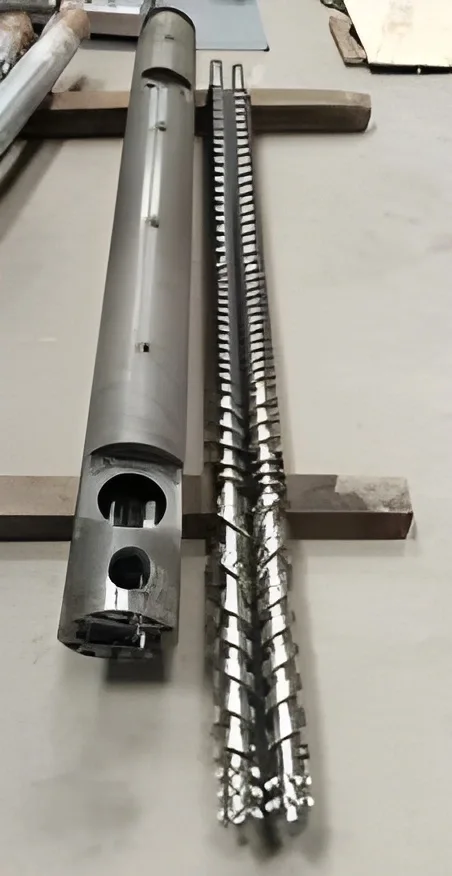
Main Features
Technical Specifications
| Specification | Details |
| Product Type | Parallel Twin Screw Barrel |
| Nominal Screw Diameter | 108 mm |
| L/D Ratio | 36:1 |
| Screw Configuration | Parallel Twin Screw |
| Barrel Design | Segmented or Integrated |
| Material Options | Alloy Steel / Nitrided Steel / Bimetallic |
| Internal Surface | Wear-Resistant Treatment or Bimetallic Lining |
| Processing Materials | PVC, PP, PE, ABS and Thermoplastic Compounds |
| Heating System | Controlled Barrel Heating |
| Cooling System | Water or Air Cooling |
| Typical Applications | Pipe, Profile, Sheet, Board and Other Plastic Extrusion |
| Manufacturing Process | Precision Machining |
| Configuration | Customized According to Extruder Requirements |
| Main Function | Melting, Mixing, Homogenizing and Conveying |
| Application Type | Plastic Extrusion Spare Part |
Related products
-
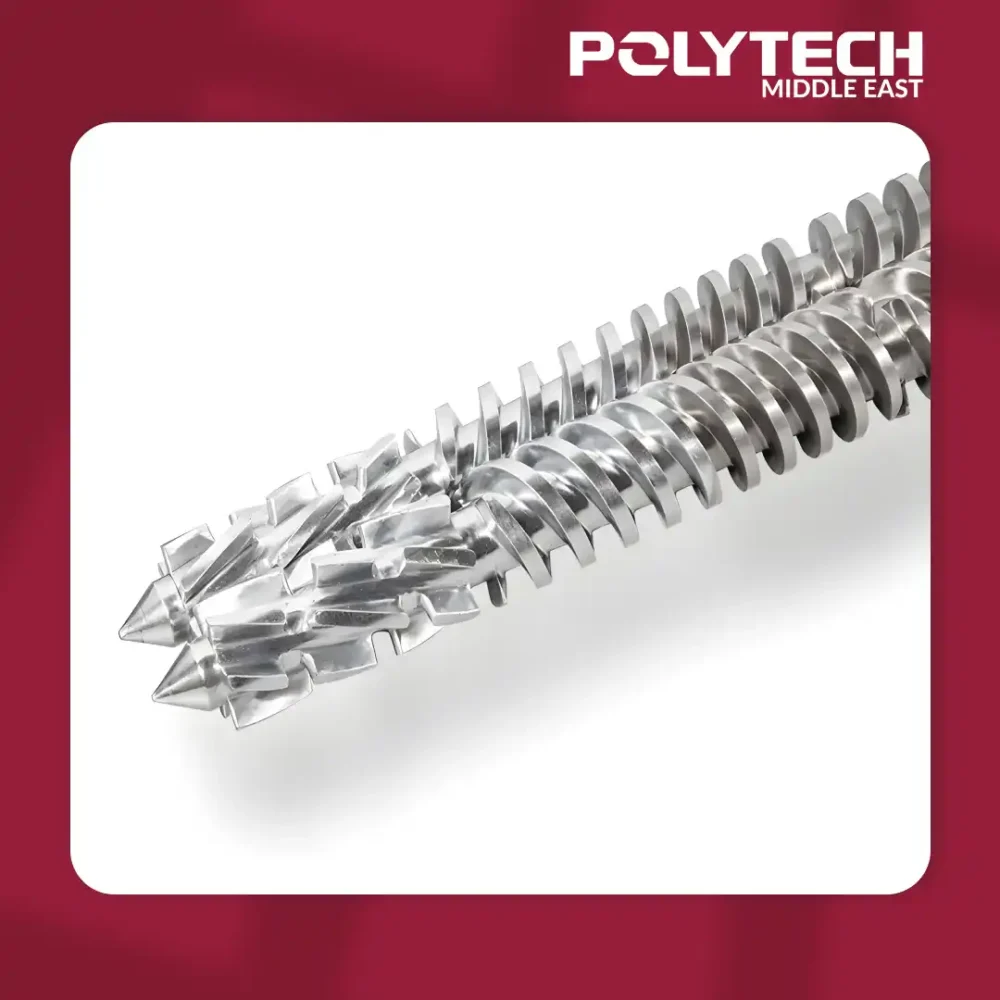 Machines and Spare Parts
45/90 Conical Twin-Screw Barrel
-
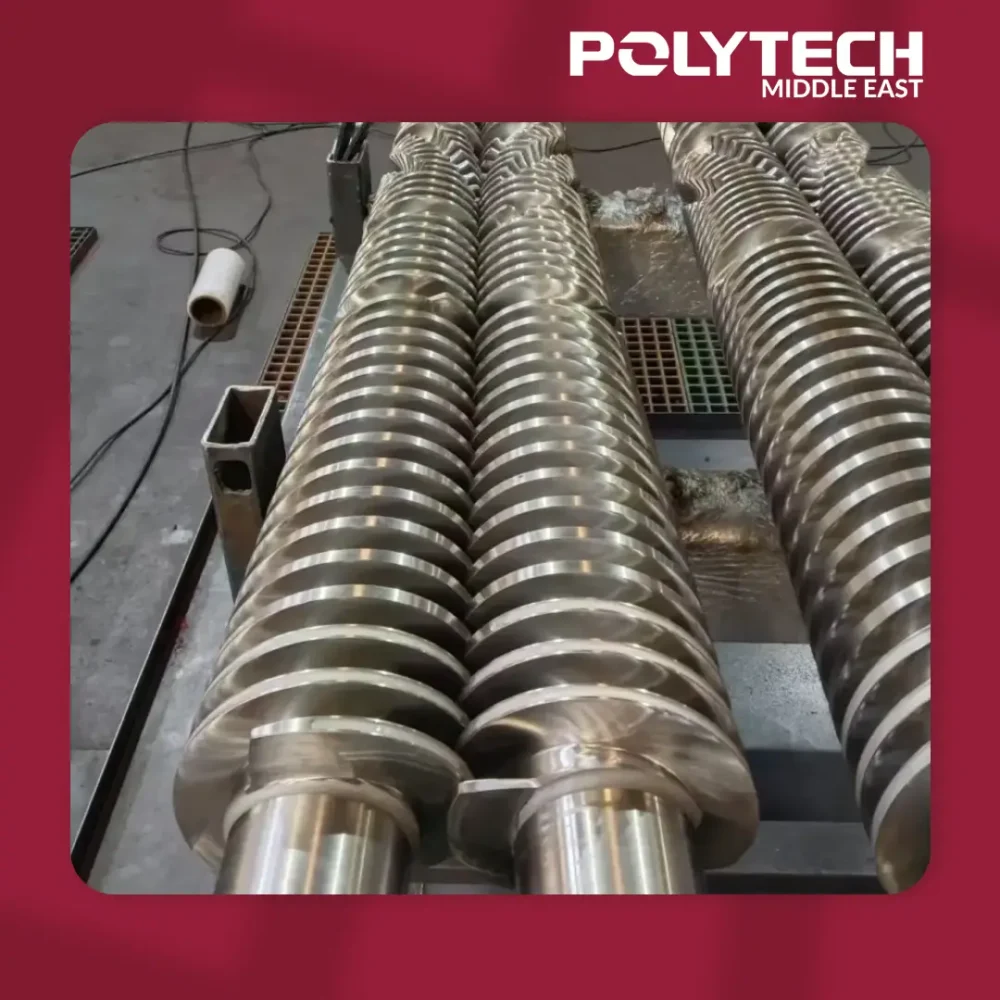 Machines and Spare Parts
92/188 Conical Twin-Screw Barrel
-
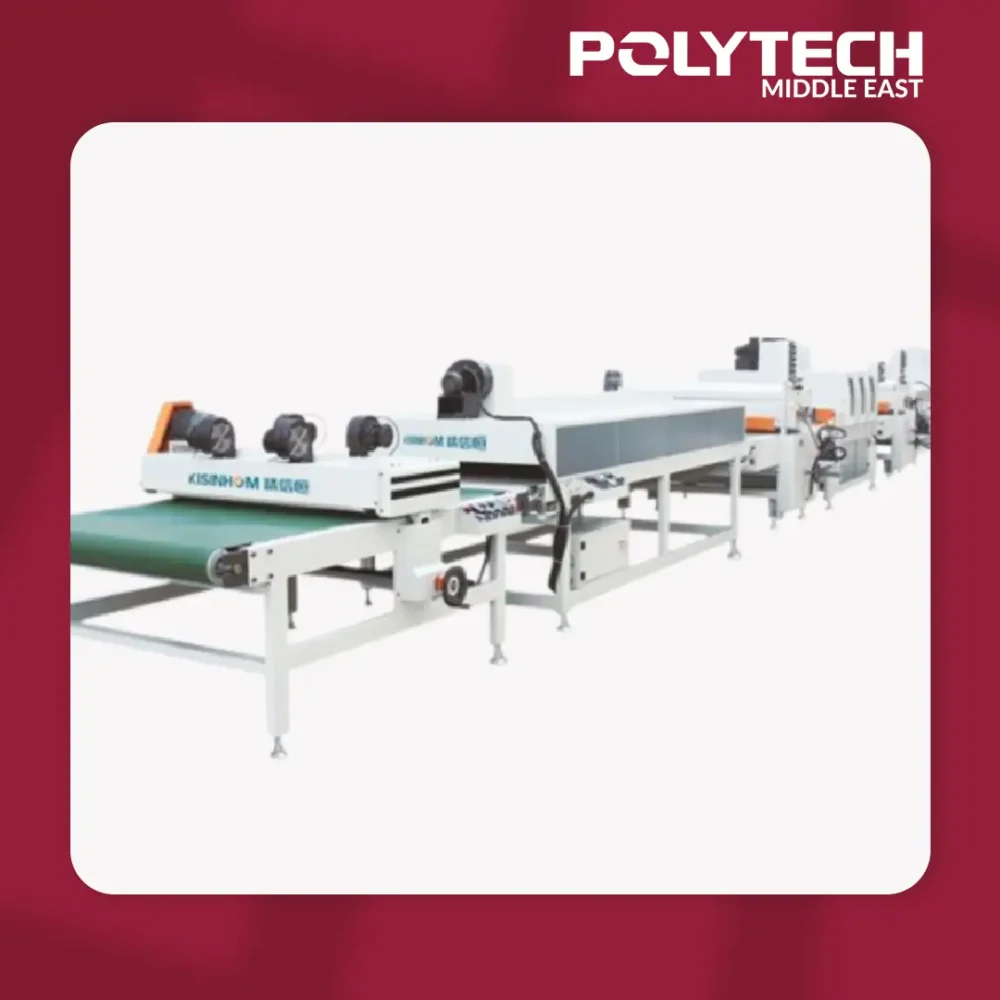 Machines and Spare Parts
UV Coating Machine for Flooring
-
 Machines and Spare Parts
80/156 Conical Twin Screw Barrel