

What is PP Plastic?
Overview and Properties
PP Plastic, or polypropylene, is a widely used thermoplastic polymer made by polymerizing propylene monomers. It belongs to the polyolefin family and stands out for being lightweight, strong, and chemically resistant. Its semi-crystalline structure gives it a good balance of toughness and flexibility, allowing it to resist impact and fatigue. Industries often use it for products that require durability and reliability, such as reusable containers, automotive components, and household items. Polypropylene melts between 160 and 170 °C, which is higher than many common plastics. This heat tolerance makes it suitable for hot-fill containers, microwaveable products, and sterilizable medical trays. Moreover, it can maintain performance under repeated stress, which is important for parts that undergo bending or heavy use.
Safety, Sustainability, and Applications
PP Plastic is non-toxic and safe for direct food contact, which explains its widespread use in food packaging, storage containers, and kitchenware. It is also recyclable, classified under recycling code #5, which helps reduce environmental impact and supports cost-effective production. Its chemical resistance allows it to handle acids, alkalis, and many solvents, making it useful in plumbing, laboratory equipment, and industrial containers. Overall, polypropylene combines strength, heat resistance, chemical stability, and light weight, making it practical, durable, and more sustainable than many other plastics.
Key Properties of PP Plastic
Polypropylene stands out among common plastics because it combines several valuable characteristics in one material. Unlike alternatives that excel in only a single area, this polymer balances strength, heat resistance, flexibility, and chemical stability. These features explain why it is not only popular in consumer goods but also trusted in demanding sectors such as healthcare, automotive, and construction. Before exploring its specific uses, it is important to understand the main properties that make polypropylene such a reliable choice.
PP Plastic offers excellent resistance to heat, which is one of the reasons behind its popularity. With a melting point that ranges between 160 and 170 °C, it can handle conditions that would normally deform or damage other commodity plastics. As a result, polypropylene plastic is widely used in applications such as hot-fill packaging, medical tools that require sterilization, and automotive components exposed to high temperatures. This property gives manufacturers more flexibility when designing products that must remain stable under heat.
In addition, PP Plastic provides a remarkable combination of toughness and flexibility. It shows strong impact resistance, which means it can absorb shocks without cracking, and it also withstands repeated bending, making it perfect for creating living hinges in caps and containers. Unlike brittle plastics, polypropylene plastic endures continuous stress without breaking easily. Therefore, industries often select polypropylene plastic when durability and long service life are required.
Moreover, PP Plastic has a relatively low density, making it lighter than many other commonly used polymers. This feature reduces the overall weight of finished products and cuts down on transportation costs. In practical terms, polypropylene plastic enables companies to produce cost-effective solutions without compromising strength. The lightweight nature of this material also contributes to energy efficiency, especially in sectors like packaging and automotive manufacturing, where reducing weight directly improves performance and sustainability.
Another significant property of polypropylene plastic is its outstanding resistance to a wide range of chemicals. It does not react easily with acids, bases, or organic solvents, which allows it to maintain its integrity in harsh environments. For this reason, polypropylene plastic is commonly used in chemical containers, medical applications, and piping systems where contact with aggressive substances is expected. Its chemical resistance extends the lifespan of products and ensures reliability even under demanding conditions.
Finally, polypropylene plastic is highly versatile when it comes to processing methods. Manufacturers can shape it using injection molding, blow molding, extrusion, or film conversion, depending on the desired application. This adaptability allows industries to produce thin, transparent films, rigid household goods, medical supplies, and even complex automotive parts. Consequently, polypropylene plastic provides not only performance but also design freedom, making it one of the most adaptable polymers available today.
Common Applications of PP Plastic
Polypropylene is not limited to one sector; instead, it is one of the most versatile plastics used worldwide. Thanks to its balance of strength, heat resistance, and chemical stability, this material supports industries ranging from packaging to automotive. It also adapts easily to different processing methods, which allows manufacturers to design products with varied shapes, thicknesses, and performance levels. Below are the most important fields where polypropylene plays a vital role.
Polypropylene has become a leading choice in packaging because it is safe for food contact, lightweight, and resistant to moisture and chemicals. It is used in snack wrappers, dairy tubs, bottles, and bottle caps. In film form, especially as BOPP (biaxially oriented polypropylene), it delivers clarity, gloss, and barrier protection against water vapor. These qualities help extend shelf life and improve product presentation. Packaging companies also prefer it because it is easy to print on, which makes branding and labeling more effective.
This material is a favorite for everyday items found in homes. Reusable kitchen containers, microwave-safe tubs, lids, and storage boxes all take advantage of its toughness and ability to withstand heat. Unlike some plastics that deform after repeated washing, polypropylene remains stable in dishwashers and keeps its shape under daily use. It is also odorless and non-toxic, which makes it suitable for products that come into direct contact with food and beverages.
The polymer is widely used in healthcare thanks to its safety and sterilization resistance. Syringes, pill bottles, surgical trays, and laboratory flasks are often made from it. Since it can survive autoclaving, which uses steam and pressure for sterilization, it ensures reliable performance in strict medical environments. Another benefit is its resistance to many chemicals, so lab containers made of polypropylene do not react with most substances stored inside.
In the automotive industry, this plastic contributes to lighter and more fuel-efficient vehicles. It is used in battery housings, bumpers, dashboards, interior trims, and cable insulation. Its balance of toughness and low weight makes it ideal for reducing car mass while keeping safety and durability intact. In addition, its resistance to acids, salts, and oils ensures that components last longer even under rough driving conditions. Car manufacturers also appreciate its easy moldability, which allows them to design complex shapes without sacrificing performance.
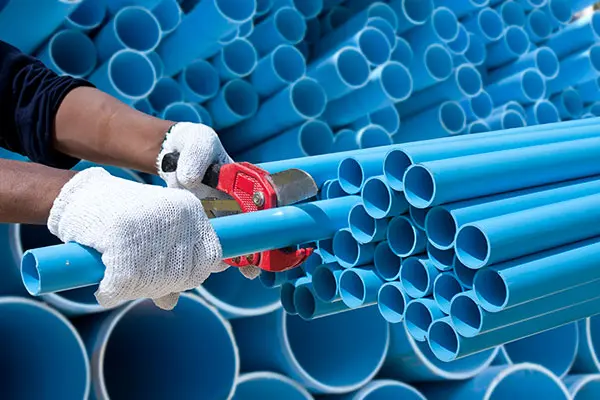
Polypropylene piping is increasingly replacing metal alternatives in plumbing. It does not corrode, leach harmful substances, or scale up over time. This makes it reliable for hot and cold water supply, heating systems, and chemical transport. Because it is lightweight, it is easier to install compared to steel or copper pipes. Its long service life and low maintenance needs reduce overall costs for both households and industries.
Nonwoven polypropylene has become essential in hygiene and filtration products. It is the main material in diapers, sanitary pads, masks, and filters. Manufacturers can engineer it to be water-repellent for protective clothing or water-absorbent for hygiene uses. It is also breathable, lightweight, and comfortable, which makes it suitable for medical gowns and masks. Beyond healthcare, nonwoven polypropylene is used in agriculture for crop protection fabrics and in furniture as upholstery backing.
Advantages vs. Limitations of PP Plastic
Polypropylene remains one of the most reliable plastics because it balances performance, cost, and versatility. However, like any material, it also comes with certain drawbacks that must be considered before use.
Advantages
- Heat resistance: It withstands high temperatures, with a melting point of about 160–170 °C, which gives it an edge over many other plastics. Lightweight: Since it has low density, it reduces product weight and cuts down on shipping costs.
- Chemical stability: It resists acids, bases, and many solvents, so it performs well in harsh environments.
- Durability and flexibility: The material combines toughness with the ability to bend repeatedly, making it perfect for living hinges and reusable containers.
- Recyclability: As recycling code #5, it can return to the production cycle and support sustainability efforts.
- Cost-effectiveness: Compared to engineering plastics, it delivers solid performance at a much lower cost.
Limitations
- Low-temperature brittleness: In very cold conditions, it becomes brittle and may crack.
- UV sensitivity: Prolonged exposure to sunlight causes degradation unless stabilizers are added.
- Limited transparency: Unlike PET or acrylic, it usually appears translucent or opaque, so it does not work well in clear packaging.
- Flammability: Without flame retardants, it burns easily.
- Environmental concern: Even though it is recyclable, collection and reuse rates stay low in many regions, which increases waste issues.
Advantages | Limitations | Withstands higher temperatures (160–170 °C) | Becomes brittle in very cold conditions |
|---|---|
Lightweight, reduces product weight and shipping costs | Sensitive to UV exposure without stabilizers |
Resistant to acids, bases, and many solvents | Limited transparency compared to PET or acrylic |
Tough yet flexible, ideal for living hinges | Burns easily unless treated with additives |
Recyclable (#5 plastic), supports sustainability | Recycling rates remain low in many regions |
How PP Plastic Compares to Other Plastics
Comparison with Polyethylene (PE)
Polypropylene (PP) provides higher rigidity and heat resistance than polyethylene (PE). While PE remains flexible at very low temperatures, it softens and deforms more easily under heat, which limits its use in high-temperature applications like hot-fill containers, microwaveable packaging, and sterilizable medical trays. Additionally, PP has a higher melting point (~160–170°C) compared to PE (~120–135°C), making it more suitable for products that require thermal stability. PE, on the other hand, is more economical for applications requiring extreme flexibility, such as plastic bags, film wraps, and protective sheeting.
Comparison with Polystyrene (PS)
Polystyrene (PS) is known for its clarity, stiffness, and cost-effectiveness in disposable packaging. However, it is brittle and cracks under impact, limiting its use in durable products. Polypropylene, in contrast, combines toughness with flexibility, making it ideal for reusable containers, living hinges, automotive interior trims, and medical components that must endure repeated handling. Moreover, PP can be easily blended with other materials or reinforced with fillers to improve impact strength, a feature not easily achievable with PS.
Comparison with Polyvinyl Chloride (PVC)
PVC is heavier and contains chlorine, which can release toxic halogens during burning. Polypropylene is lighter, non-halogenated, and safer in many applications. Its chemical resistance surpasses PVC in contact with acids, alkalis, and solvents, making it more versatile for plumbing, chemical transport piping, and industrial containers. Additionally, PP’s lower density reduces overall product weight, benefiting transportation and reducing fuel consumption in automotive parts. Unlike rigid PVC, polypropylene can be injection-molded or extruded into complex shapes without cracking, offering more design flexibility.
Comparison with Polyethylene Terephthalate (PET)
PET is widely used in beverage bottles and food packaging due to its excellent clarity and barrier properties. While PET provides transparency and gas barrier capabilities, PP outperforms it in heat tolerance and chemical resistance. Polypropylene is also lighter than PET, which can reduce shipping costs. Moreover, PP can be sterilized and reused in applications like laboratory containers and medical trays, whereas PET has limited reusability in high-heat conditions.
Recyclability
Polypropylene is classified as #5 in recycling codes and can be efficiently reprocessed into new products, including fibers, automotive parts, packaging, and household items. Compared to mixed plastics or PVC, which often face contamination issues, PP maintains material integrity during recycling. Furthermore, advances in mechanical and chemical recycling methods are increasing the reuse potential of polypropylene, contributing to environmental sustainability and reduced waste.
Overall Performance
No single plastic fits every application perfectly, but polypropylene balances strength, chemical resistance, heat tolerance, and lightweight properties better than many alternatives. Its versatility allows it to meet industrial, medical, household, and automotive requirements efficiently. In conclusion, polypropylene’s combination of affordability, durability, and adaptability explains why it remains one of the most popular plastics globally, consistently outperforming PE, PS, PVC, and PET in a wide range of real-world applications.
Conclusion
Polypropylene is a versatile, durable, and cost-effective material. Its key properties—including heat resistance, toughness, chemical stability, and lightweight nature—make it suitable for a wide range of applications, from packaging and household goods to medical devices and automotive components. While it has some limitations, such as UV sensitivity and low-temperature brittleness, its advantages and recyclability make it a practical choice for many industries.
In summary, polypropylene continues to be a material of choice because it balances performance, adaptability, and cost, offering solutions that meet the demands of both consumers and manufacturers.