

What Is a PP Hollow Sheet?
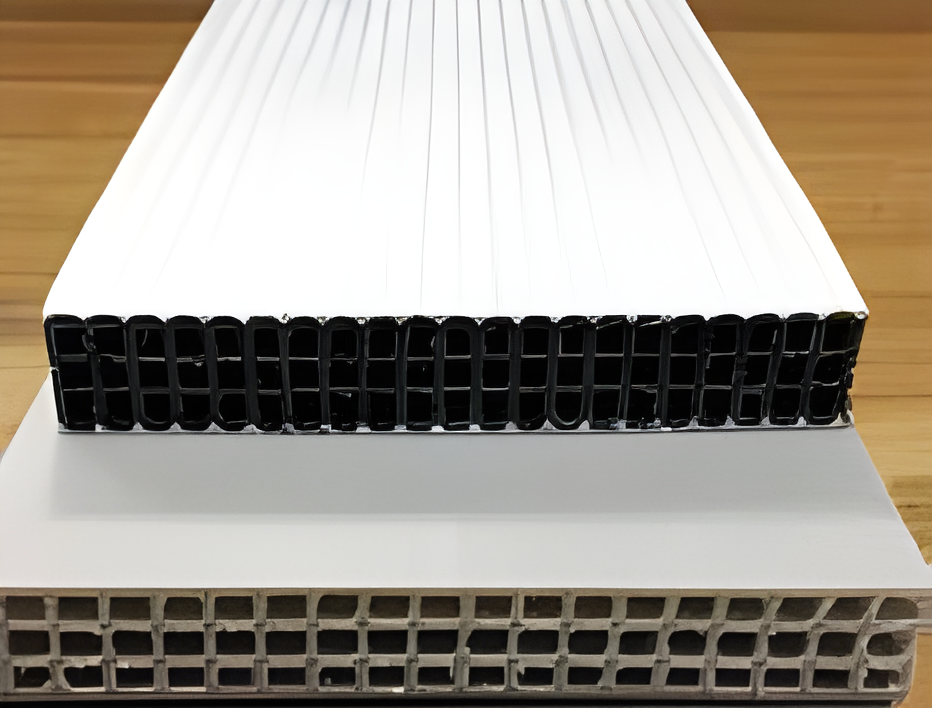
A PP hollow sheet, also known as a polypropylene hollow sheet, PP hollow board, or PP corrugated board, is a lightweight plastic sheet manufactured from polypropylene (PP). Unlike solid plastic sheets, it has a hollow fluted structure that provides a useful combination of strength, rigidity, and low weight.
The structure generally consists of two flat outer layers connected by internal plastic ribs or flutes. This design gives the sheet a high strength-to-weight ratio while using less material than a solid plastic board of comparable dimensions. PP hollow sheets are therefore widely used for packaging, advertising, construction protection, agriculture, and industrial applications.
How Are PP Hollow Sheets Made?
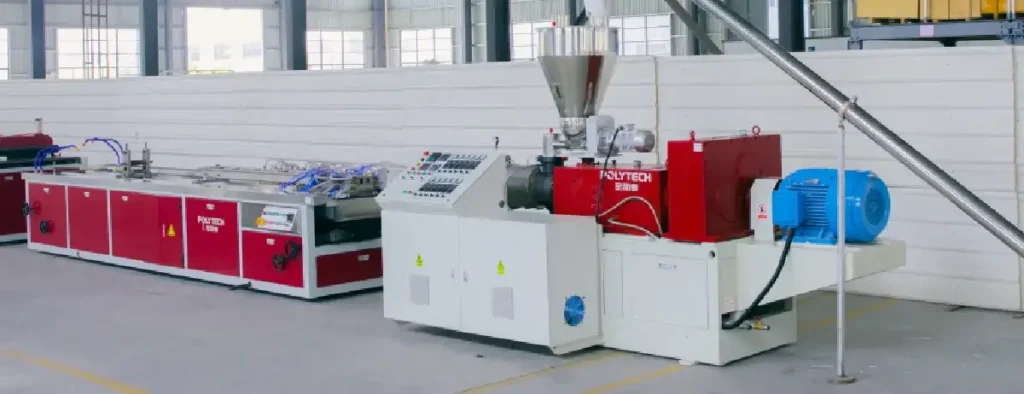
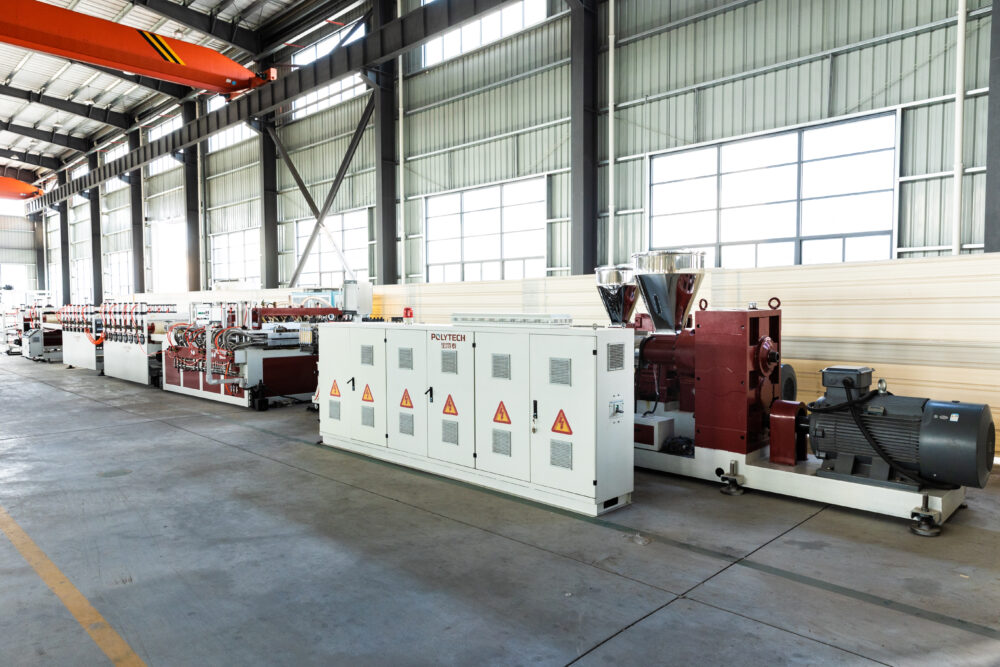
PP hollow sheet manufacturing is commonly based on an extrusion process. Polypropylene resin is melted and processed through an extrusion die that forms the characteristic hollow or fluted structure.
After leaving the die, the hot sheet is cooled and stabilized before being cut into the required dimensions. The extrusion process can be adapted to produce different thicknesses, widths, colors, and structural designs depending on the final application.
This manufacturing method allows producers to manufacture continuous polypropylene hollow sheets and customize their dimensions according to customer requirements.
PP Hollow Sheet vs. Solid Plastic Sheet
The main difference between a PP hollow sheet and a solid plastic sheet is their internal structure.
A solid plastic sheet has a continuous plastic structure throughout its thickness, while a PP hollow sheet contains internal flutes or hollow channels between its outer layers.
The hollow structure can significantly reduce weight while maintaining useful rigidity. As a result, PP hollow sheets can be advantageous when low weight and easy handling are important.
However, solid sheets can provide advantages in applications requiring higher puncture resistance or a completely solid cross-section. Therefore, the appropriate material depends on the specific application and performance requirements.
Key Features of PP Hollow Sheet
PP hollow sheets combine several properties that make them suitable for demanding applications.
Lightweight and Strong
One of the main advantages of a polypropylene hollow sheet is its lightweight construction. The internal fluted structure reduces the amount of material required while maintaining useful rigidity and mechanical strength.
This makes PP hollow boards easier to handle, transport, cut, and install compared with many heavier solid boards.
Water and Moisture Resistant
Polypropylene is naturally resistant to moisture, making PP hollow sheets suitable for environments where exposure to water can be expected. Unlike paper-based corrugated materials, polypropylene boards do not lose their basic structure simply because they become wet.
This property makes them useful for reusable packaging, agricultural applications, outdoor signage, and construction protection.
Chemical Resistance
PP is known for its resistance to many chemicals, which can make PP corrugated sheets suitable for a variety of industrial environments. The exact resistance depends on the chemical, concentration, temperature, and exposure conditions, so material compatibility should always be evaluated for specific applications.
Reusable and Recyclable
Another important advantage of polypropylene hollow sheets is their recyclability. PP is a thermoplastic material that can be collected, processed, and reused in suitable recycling systems.
The combination of durability, reusability, and recyclability makes PP hollow boards an attractive option for applications where packaging or protective materials are used repeatedly.
Easy to Process
PP hollow sheets can be converted into different shapes and products using cutting, scoring, folding, drilling, printing, and other suitable fabrication methods.
This flexibility allows manufacturers and end users to produce customized packaging boxes, dividers, signs, protective panels, and other products from the same basic sheet material.
Toggle #2
The dimensions of a PP plastic hollow sheet can vary according to the manufacturer and application. Common commercial products are available in thicknesses ranging from approximately 2 mm to 12 mm, while both standard and customized widths and lengths can be produced.
For example, one supplier lists a standard size of 1,220 × 2,440 mm and thicknesses from 2 to 12 mm, while customized dimensions are also available. Another supplier lists standard 4 × 8 ft sheets with thicknesses between 2 and 12 mm.
The appropriate thickness depends on factors such as:
- Required rigidity
- Product weight
- Impact resistance
- Application environment
- Packaging requirements
- Sheet dimensions
- Required durability
Applications of PP Hollow Sheets
The versatility of polypropylene hollow boards allows them to be used across several industries.
Packaging and Logistics
Packaging is one of the most common applications of PP hollow sheets. The material can be converted into reusable boxes, dividers, protective trays, layer pads, and other packaging components.
Compared with conventional paper-based packaging, polypropylene hollow boards offer advantages in applications requiring resistance to moisture and repeated handling.
Advertising and Signage
PP corrugated boards are also widely used for advertising and signage. Their flat external surfaces provide suitable areas for printing graphics, text, logos, and promotional information.
The combination of low weight, weather resistance, and printable surfaces makes them useful for indoor and outdoor signs, promotional displays, and temporary advertising boards.
Construction Protection
In the construction industry, PP hollow sheets can be used as temporary protection for floors, walls, doors, and other surfaces during construction and renovation projects.
Their lightweight design makes installation and removal relatively easy, while their resistance to moisture allows them to be used in environments where conventional paper-based protection may not be suitable.
Agriculture
Polypropylene hollow sheets can also be used in agricultural applications where lightweight, washable, and moisture-resistant materials are required.
Possible applications include crop protection products, packaging, partitions, and reusable containers. Their resistance to moisture makes them particularly useful in environments where exposure to water is common.
Industrial Applications
In industrial environments, PP hollow boards can be fabricated into protective packaging, partitions, separators, drawer systems, and customized components.
Their combination of low weight, rigidity, durability, and easy processing allows manufacturers to adapt the material to different industrial requirements.
Customization Options for PP Hollow Sheets
Modern PP hollow sheet manufacturers can offer different customization options depending on production requirements.
These may include:
- Different sheet thicknesses
- Customized width and length
- Multiple colors
- Printed surfaces
- UV-resistant grades
- Flame-retardant options
- Anti-static properties
- Corona-treated surfaces
Special treatments can improve the performance of PP hollow boards for specific applications. For example, UV treatment can help extend outdoor service life, while corona treatment can improve surface characteristics for printing and adhesion.
Advantages of PP Hollow Sheet
The growing use of polypropylene hollow sheets can be attributed to their combination of functional and economic advantages.
The major benefits include:
- Lightweight construction
- High strength-to-weight ratio
- Good rigidity
- Moisture resistance
- Resistance to many chemicals
- Reusability
- Recyclability
- Easy cutting and fabrication
- Printable surface
- Wide range of applications
- Customizable thickness and dimensions
- Suitable for indoor and outdoor applications
These characteristics make PP hollow sheets a practical alternative to several traditional board and packaging materials.
Why Choose PP Hollow Sheet for Industrial Production?
For manufacturers, selecting the right sheet material can influence product durability, transportation costs, production efficiency, and overall performance.
PP hollow sheets offer a balance between material consumption and structural performance. Their lightweight construction can simplify handling and transportation, while their resistance to moisture and repeated use makes them suitable for reusable products.
In addition, the ability to manufacture the sheets in different thicknesses, sizes, colors, and surface treatments allows manufacturers to develop products specifically suited to their target applications.
Conclusion
PP hollow sheet is a versatile polypropylene-based material that combines lightweight construction with strength, durability, moisture resistance, and recyclability. Its unique fluted structure makes it suitable for a wide variety of applications, including packaging, logistics, advertising, construction protection, agriculture, and industrial products.
With modern extrusion technology, manufacturers can produce polypropylene hollow sheets in different thicknesses, dimensions, colors, and customized configurations. This flexibility, together with the material’s practical performance, has made PP hollow boards an increasingly useful solution for modern plastic products and packaging applications.