

Introduction
PP extrusion is one of the most widely used manufacturing processes in the plastics industry, enabling the continuous production of high-quality polypropylene products with excellent strength, durability, and dimensional stability. Polypropylene (PP) is a versatile thermoplastic known for its lightweight structure, chemical resistance, moisture resistance, and excellent processing characteristics, making it an ideal material for numerous industrial applications.
Modern PP extrusion technology combines advanced extrusion equipment, precision temperature control, and automated production systems to manufacture products with consistent quality and high production efficiency. From packaging materials and industrial sheets to pipes, profiles, and technical components, polypropylene extrusion supports a wide range of industries around the world.
What Is PP Extrusion?
PP extrusion is the process of melting polypropylene resin and forcing it through a specially designed die to create continuous products with a uniform cross-sectional profile. The molten polymer is shaped, cooled, calibrated, and cut or wound depending on the final product requirements.
The continuous nature of the extrusion process allows manufacturers to produce large volumes efficiently while maintaining excellent dimensional accuracy and surface quality. Because polypropylene offers an outstanding balance of strength, flexibility, and chemical resistance, PP extrusion has become a preferred manufacturing method for both standard and customized plastic products.
The PP Extrusion Process
The extrusion process follows several carefully controlled stages to ensure reliable product quality.
1. Material Feeding
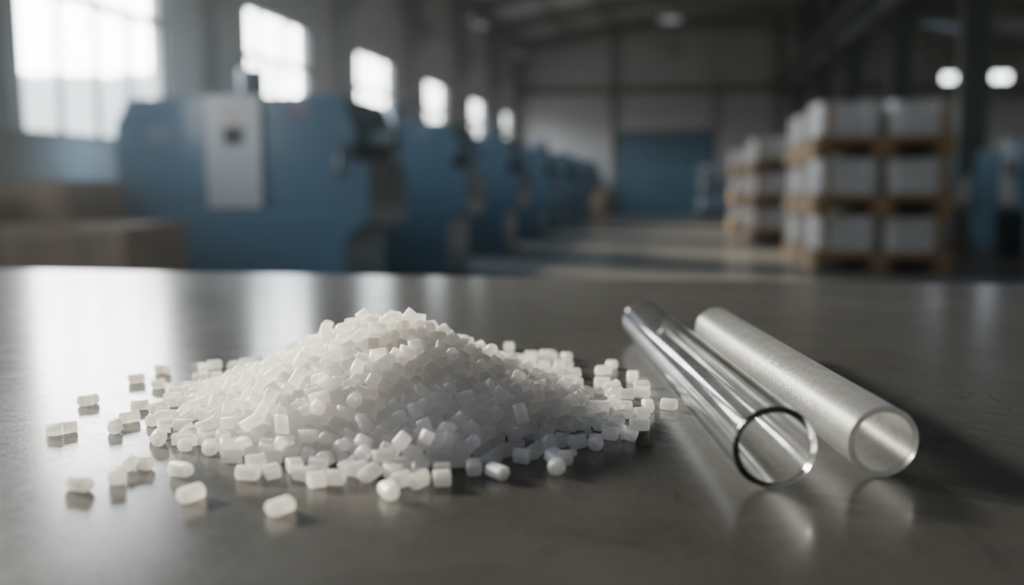
Polypropylene pellets are automatically fed into the extruder through a controlled feeding system.
2. Melting and Plasticizing
Inside the screw and barrel assembly, the polymer is heated, compressed, mixed, and converted into a homogeneous molten material.
3. Extrusion Through the Die
The molten polypropylene passes through a precision die that forms the desired product profile.
4. Cooling and Calibration
The extruded product is cooled using air or water cooling systems while calibration units maintain accurate dimensions.
5. Haul-Off and Finishing
The finished product is pulled at a constant speed before being cut, stacked, or wound according to production specifications.
Every stage is optimized to ensure stable production, consistent quality, and efficient material utilization.
Main Components of a PP Extrusion Line
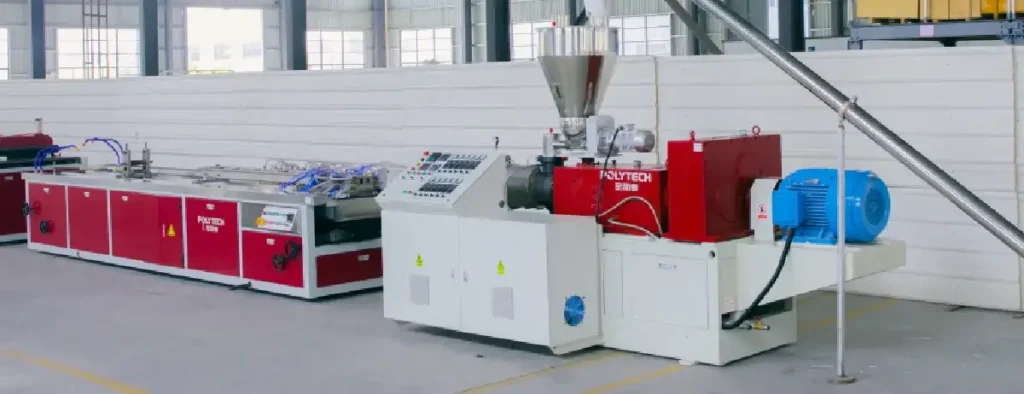
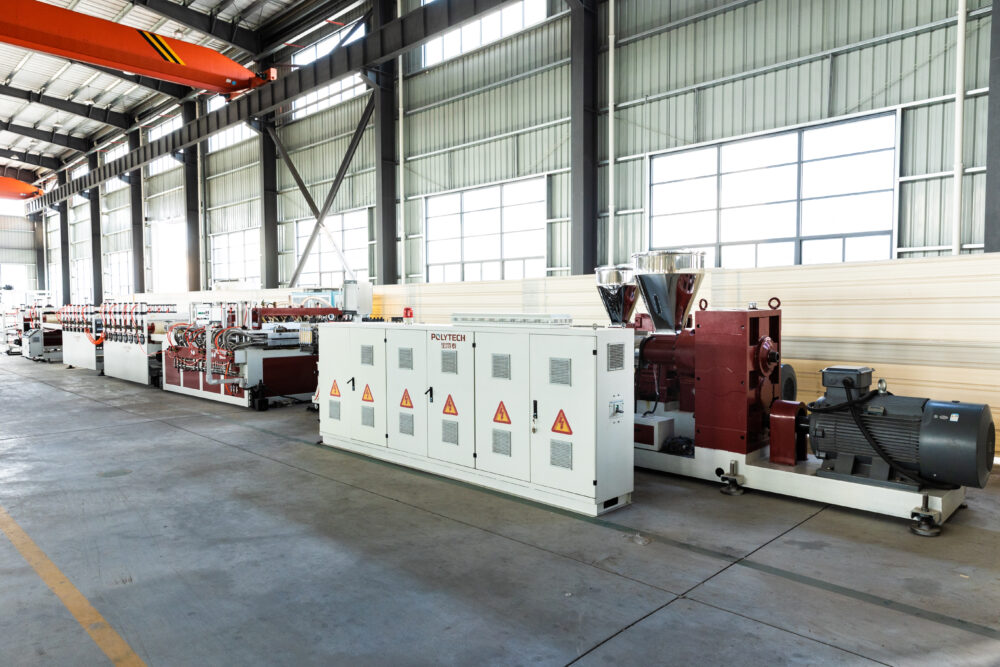
A complete PP extrusion system consists of several integrated components that work together throughout the production process.
Material Hopper
Provides continuous feeding of polypropylene pellets into the extrusion system.
Extruder
The primary processing unit responsible for melting and conveying the material.
Screw and Barrel
Ensure efficient mixing, plasticizing, and stable melt flow.
Extrusion Die
Shapes the molten polypropylene into the required profile, sheet, pipe, or other product.
Calibration Unit
Maintains dimensional accuracy immediately after extrusion.
Cooling System
Stabilizes the product while preserving its mechanical properties.
Haul-Off Unit
Maintains a constant production speed throughout the extrusion line.
Cutting or Winding System
Prepares finished products for storage, transportation, or further processing.
Benefits of PP Extrusion
PP extrusion provides several significant advantages that contribute to its popularity in plastic manufacturing.
1. Excellent Chemical Resistance
Polypropylene withstands exposure to many acids, alkalis, and industrial chemicals.
2. Lightweight Material
PP products offer high strength while remaining lightweight and easy to handle.
3. High Impact Performance
Properly processed polypropylene provides excellent toughness and durability.
4. Moisture Resistance
Polypropylene absorbs very little moisture, making it suitable for humid and outdoor environments.
5. Cost-Effective Manufacturing
The extrusion process supports continuous production with minimal material waste and low operating costs.
6. Excellent Processability
PP flows efficiently during extrusion, allowing stable production and high output rates.
7. Long Service Life
Extruded polypropylene products maintain their performance even under demanding operating conditions.
Applications of PP Extrusion
Polypropylene extrusion serves a broad range of industrial and commercial applications.
Packaging Industry
Rigid sheets, food packaging, containers, protective packaging, and thermoforming materials.
Construction Industry
Profiles, insulation products, decorative components, and building accessories.
Automotive Industry
Interior trim, technical components, battery cases, and lightweight structural parts.
Electrical Industry
Cable protection systems, electrical housings, insulation components, and technical profiles.
Medical Industry
Laboratory equipment, medical packaging, and specialized polymer products.
Consumer Products
Storage containers, furniture components, household goods, and industrial accessories.
The versatility of polypropylene makes it one of the most widely processed engineering plastics in the world.
Key Features of PP Extrusion
Modern polypropylene extrusion technology offers numerous features that improve manufacturing efficiency and product quality.
- High production capacity.
- Continuous manufacturing operation.
- Excellent dimensional accuracy.
- Smooth surface finish.
- Stable material processing.
- Automated process control.
- Low material waste.
- Energy-efficient production.
- Consistent product quality.
- Flexible product customization.
These features enable manufacturers to meet demanding industrial production requirements.
Quality Control in PP Extrusion
Maintaining product quality throughout the extrusion process is essential for achieving reliable performance and customer satisfaction.
Quality control procedures commonly include:
- Raw material inspection.
- Melt temperature monitoring.
- Pressure control.
- Dimensional measurement.
- Surface quality inspection.
- Mechanical property testing.
- Color consistency evaluation.
- Final product verification.
These inspections ensure that every production batch meets strict manufacturing standards.
Future of PP Extrusion
The future of PP extrusion is driven by technological innovation, sustainability, and digital manufacturing. Modern extrusion lines increasingly incorporate intelligent control systems, automated monitoring, and predictive maintenance technologies to maximize productivity and reduce downtime.
In addition, manufacturers are focusing on recyclable polypropylene materials, energy-efficient production systems, and environmentally responsible manufacturing practices to meet growing sustainability requirements while maintaining exceptional product performance.
Future of PP Extrusion
The future of PP extrusion is driven by technological innovation, sustainability, and digital manufacturing. Modern extrusion lines increasingly incorporate intelligent control systems, automated monitoring, and predictive maintenance technologies to maximize productivity and reduce downtime.
In addition, manufacturers are focusing on recyclable polypropylene materials, energy-efficient production systems, and environmentally responsible manufacturing practices to meet growing sustainability requirements while maintaining exceptional product performance.
Conclusion
PP extrusion is one of the most efficient and versatile manufacturing processes for producing high-quality polypropylene products. By combining advanced extrusion technology, precise process control, and reliable automation, manufacturers can produce durable, lightweight, and cost-effective products for a wide range of industries. As demand for high-performance polymer solutions continues to grow, PP extrusion remains a key technology in modern plastic manufacturing, delivering consistent quality, excellent productivity, and long-term value.