

Introduction
Plastic sheet extrusion is one of the most widely used manufacturing processes in the plastics industry. It involves melting thermoplastic materials and forcing them through a specially designed flat die to produce continuous plastic sheets with precise dimensions and consistent quality. The process is highly efficient and suitable for large-scale production, making it an essential technology for industries that require durable and versatile plastic sheets.
Modern plastic sheet extrusion lines are equipped with advanced automation systems that ensure accurate temperature control, stable material flow, and excellent surface quality. These production lines can process a variety of thermoplastic materials and produce sheets in different widths, thicknesses, and finishes to meet diverse industrial requirements.
How Plastic Sheet Extrusion Works
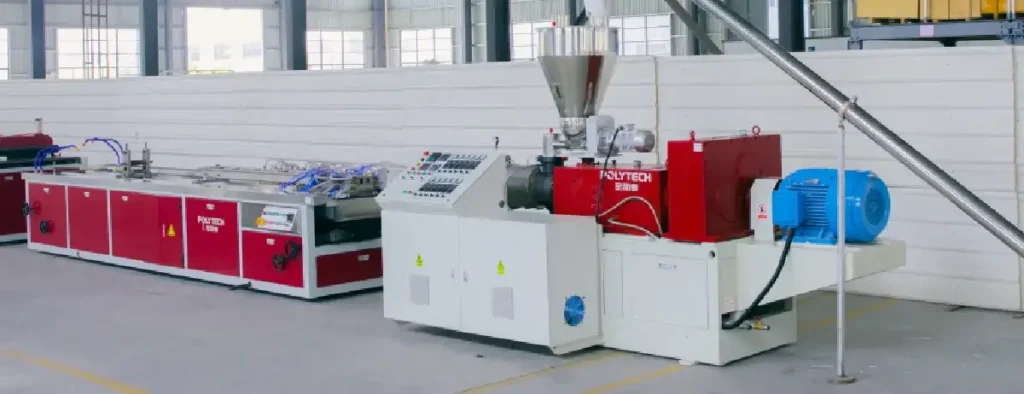
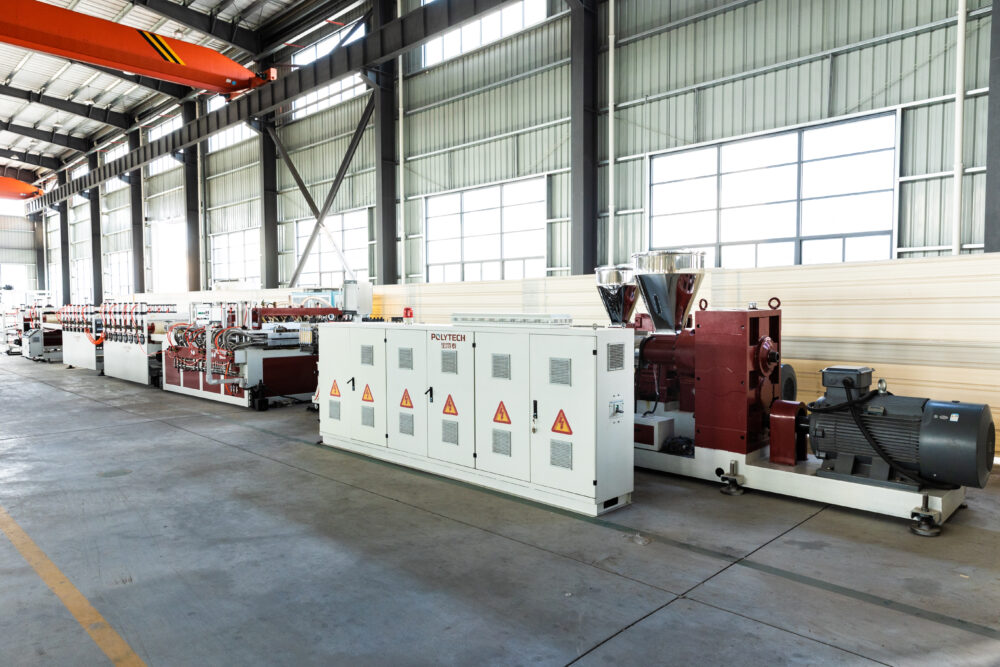
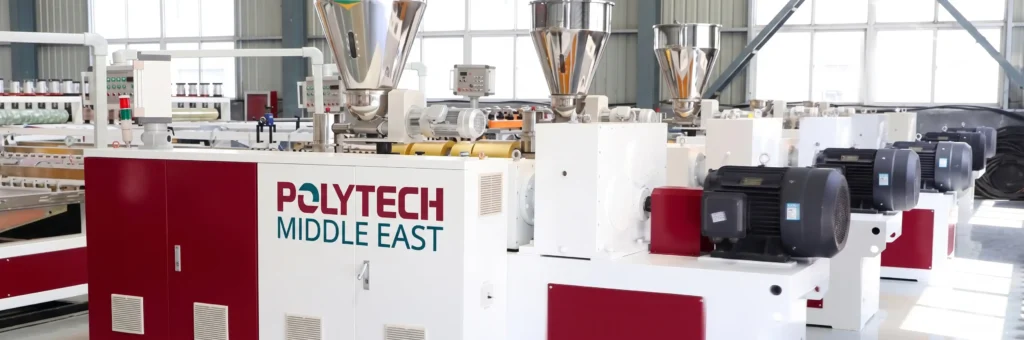
The plastic sheet extrusion process begins with feeding raw plastic materials into the extruder. Inside the extrusion system, the material is heated, melted, mixed, and homogenized through a rotating screw mechanism. The molten plastic is then pushed through a flat sheet die that forms the material into a continuous sheet.
After leaving the die, the sheet passes through a calibration and cooling section where its thickness and surface quality are precisely controlled. The finished sheet is then trimmed, cut, or wound depending on the final product requirements. This continuous production process ensures high productivity and consistent product quality.
Materials Used in Plastic Sheet Extrusion
Plastic sheet extrusion can process a wide range of thermoplastic materials, allowing manufacturers to produce sheets for different applications and performance requirements.
Common materials include:
PVC (Polyvinyl Chloride)
Used for construction materials, wall panels, advertising boards, and industrial applications.
PP (Polypropylene)
Suitable for packaging, thermoforming products, and chemical-resistant applications.
PE (Polyethylene)
Widely used in packaging, protective sheets, and industrial products.
PET (Polyethylene Terephthalate)
Popular for food packaging, transparent sheets, and recyclable products.
ABS (Acrylonitrile Butadiene Styrene)
Used in automotive, electronics, and engineering applications requiring high impact resistance.
PS (Polystyrene)
Commonly used for disposable products, packaging, and display applications.
Benefits of Plastic Sheet Extrusion
Plastic sheet extrusion offers numerous advantages compared to other manufacturing methods, making it one of the preferred production technologies in the plastics industry.
High Production Capacity
The continuous extrusion process allows manufacturers to produce large volumes of sheets efficiently.
Cost Effective Manufacturing
Optimized material usage and automated production reduce manufacturing costs.
Consistent Product Quality
Precise process control ensures uniform thickness, smooth surfaces, and reliable mechanical properties.
Flexible Product Design
Manufacturers can produce sheets in various sizes, colors, textures, and thicknesses.
Excellent Material Utilization
The process minimizes waste and supports recycling of production scrap.
Versatile Applications
Plastic sheets can be used across multiple industries, increasing production flexibility and market opportunities.
Applications of Plastic Sheet Extrusion
Extruded plastic sheets are used in a wide range of industries due to their durability, versatility, and ease of processing.
Construction Industry
Wall panels, ceiling panels, decorative sheets, partitions, and building materials.
Packaging Industry
Food packaging, protective packaging, trays, and thermoformed containers.
Advertising Industry
Display boards, signage panels, exhibition materials, and promotional products.
Automotive Industry
Interior components, protective panels, and technical parts.
Furniture Industry
Cabinet surfaces, decorative panels, and interior furnishing components.
Industrial Applications
Machine guards, chemical-resistant panels, protective covers, and fabrication materials.
Performance and Production Efficiency
Modern plastic sheet extrusion systems are designed to deliver high productivity while maintaining exceptional product quality. Advanced extrusion technology ensures efficient material plasticizing, stable output, and uniform sheet thickness.
Key performance advantages include:
- Continuous production capability.
- High output rates.
- Excellent thickness consistency.
- Smooth surface finish.
- Reduced material waste.
- Stable processing conditions.
- Precise dimensional control.
- Efficient energy utilization.
These performance characteristics help manufacturers achieve greater operational efficiency and improved product quality.
Quality Control in Plastic Sheet Extrusion
Quality control is essential for ensuring consistent sheet performance and customer satisfaction. Modern extrusion lines utilize advanced monitoring systems throughout the production process.
Quality control measures typically include:
- Raw material inspection.
- Melt temperature monitoring.
- Thickness measurement.
- Surface quality evaluation.
- Dimensional verification.
- Mechanical property testing.
- Final product inspection.
These procedures help ensure that every sheet meets required specifications and industry standards.
Conclusion
Plastic sheet extrusion remains one of the most efficient and versatile manufacturing technologies in the plastics industry. By combining advanced extrusion equipment, precise process control, and high-quality materials, manufacturers can produce durable and consistent plastic sheets for a wide range of applications. Whether used in construction, packaging, automotive, or industrial sectors, extruded plastic sheets continue to play a critical role in modern manufacturing and product development.