

Introduction
A plastic sheet extrusion machine is a vital piece of equipment in modern manufacturing, enabling the production of high-quality plastic sheets used in packaging, construction, automotive, and industrial applications. These machines convert raw polymer materials into uniform sheets with precise thickness, smooth surfaces, and consistent mechanical properties.
The Importance of Plastic Sheet Extrusion
Plastic sheets are highly versatile and serve countless purposes, from protective packaging and signage to furniture components and industrial panels. To meet growing market demand, manufacturers rely on efficient plastic sheet extrusion machines that combine speed, precision, and energy efficiency.
Technological Advancements
Recent innovations have transformed plastic sheet extrusion machines into highly automated systems. Features such as digital temperature control, automated feeding, advanced cooling, and real-time monitoring ensure consistent output and minimal material waste. These improvements allow manufacturers to optimize production, reduce downtime, and maintain high-quality standards.
Meeting Industrial Standards
The production of plastic sheets requires adherence to strict quality standards, including thickness tolerance, surface finish, and strength. Investing in a modern plastic sheet extrusion machine ensures that manufacturers can consistently meet these requirements while remaining competitive in a rapidly evolving market.
Types of Plastic Sheet Extrusion Machines
Manufacturers have several types of plastic sheet extrusion machines to meet diverse production needs. Each type is designed for specific materials, sheet thicknesses, widths, and production speeds. Understanding the differences helps factories choose the right system for their products.
Single-screw machines are the most commonly used systems for plastic sheet production.
- They feature a single rotating screw that melts and conveys the polymer material through a die to form a sheet.
- Single-screw machines are ideal for producing standard PVC, PE, or PP sheets.
- Their advantages include simplicity, lower maintenance, and cost-effectiveness.
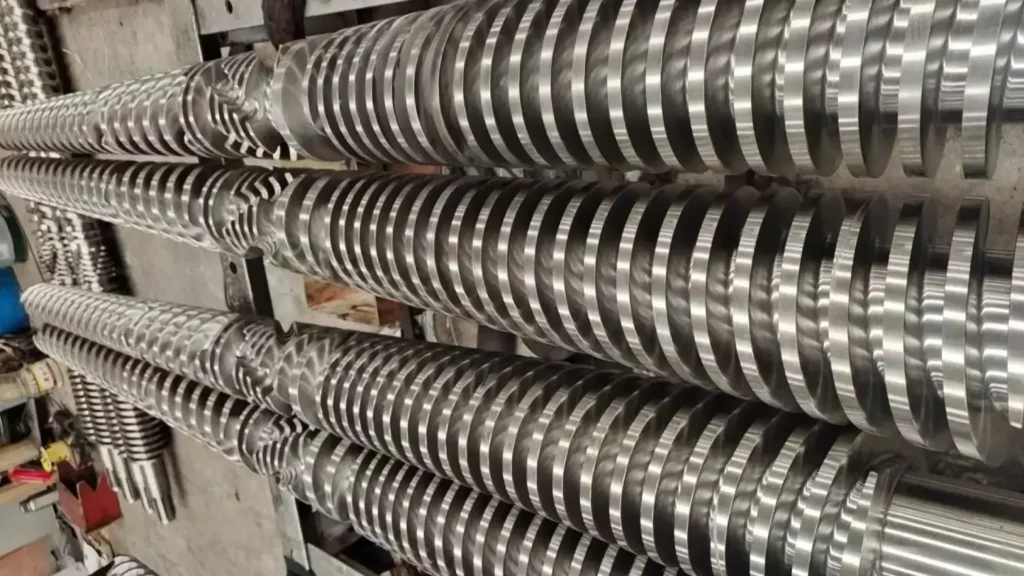
Twin-screw machines use two intermeshing screws to improve mixing, homogenization, and plasticization.
- They are suitable for processing blends, fillers, or recycled materials.
- Twin-screw systems provide better temperature control, higher throughput, and superior sheet quality.
- These machines are widely used in industries that require precision and consistent material properties.
Co-extrusion machines allow the production of multilayer sheets by combining two or more materials simultaneously.
- Each layer can have different properties, such as UV resistance, rigidity, or flexibility.
- Co-extrusion enhances sheet functionality and opens new applications in packaging, construction, and automotive sectors.
- Advanced co-extrusion lines often integrate digital control systems for layer thickness monitoring.
Cast sheet extrusion machines produce sheets by directly casting molten polymer onto a chilled roller or belt.
- This method yields smooth, glossy surfaces with precise thickness control.
- Cast sheets are ideal for applications requiring high optical clarity, such as signage, displays, and decorative panels.
- The process is efficient for both small-scale and large-scale production.
Calendering machines use heated rollers to form sheets from molten polymer.
- These machines are best for producing thin or medium-thick sheets with uniform thickness and excellent surface finish.
- They are commonly used for PVC, ABS, and other thermoplastic sheets.
- Roller-type extrusion ensures high-quality sheet surfaces and dimensional accuracy.
Key Components & Machinery in a Plastic Sheet Extrusion Machine
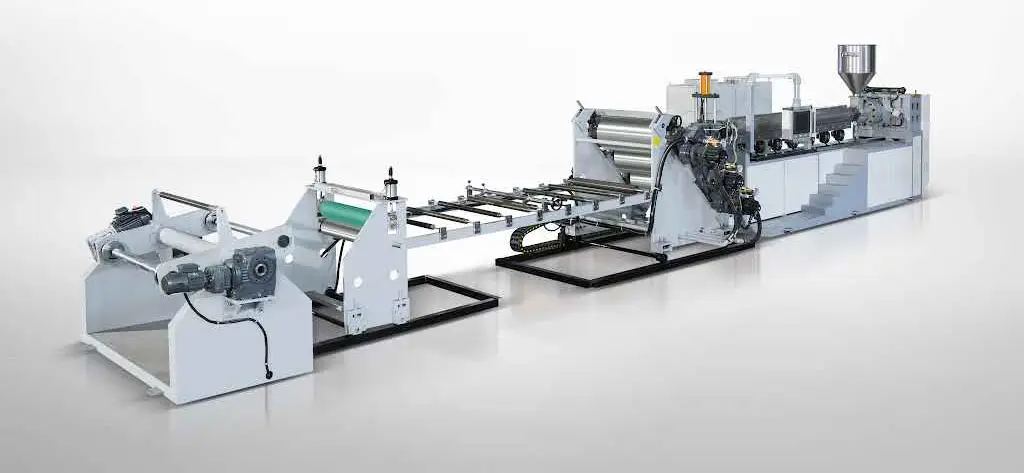
A modern plastic sheet extrusion machine relies on several essential components and supporting machinery to convert raw polymer into high-quality sheets. Each component plays a crucial role in ensuring consistent thickness, smooth surface finish, and precise mechanical properties.
Feeding System
The feeding system introduces raw polymer granules or powder into the extruder.
- It can include gravimetric or volumetric feeders for accurate dosing.
- Proper feeding ensures consistent melting and prevents material wastage, which is critical for maintaining product quality in a plastic sheet extrusion machine.
Extruder (Single or Twin Screw)
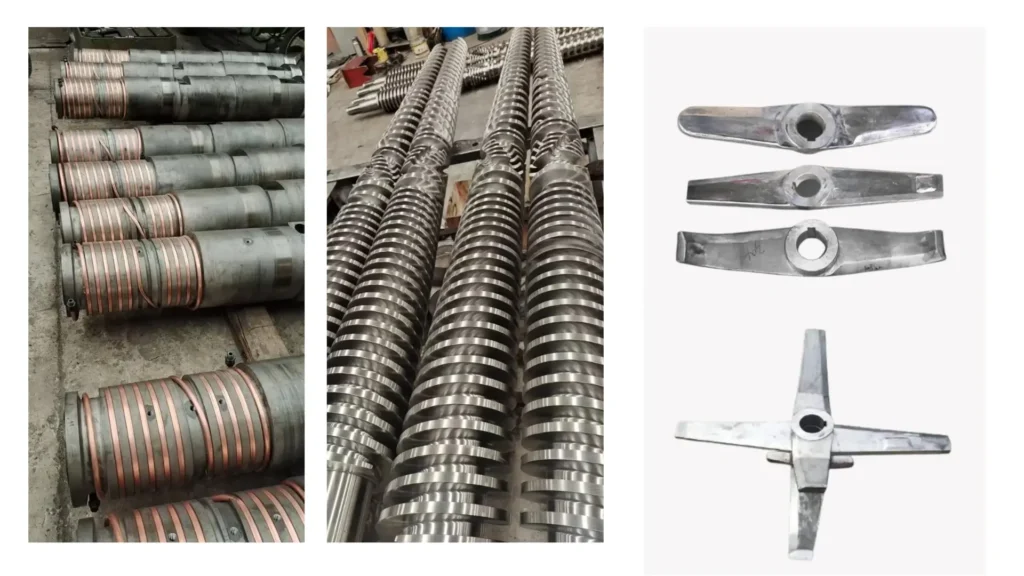
The extruder melts and plasticizes the polymer material, pushing it forward to the die.
- Single-screw extruders are simpler and cost-effective, ideal for standard PVC or PE sheets.
- Twin-screw extruders offer better mixing, especially for compounds, additives, or recycled material blends.
- Modern extruders feature advanced temperature control zones, energy-efficient motors, and automated monitoring systems.
Die Head
The die head shapes the molten polymer into a sheet of specific width and thickness.
- Precision-engineered die heads ensure uniform flow, smooth surfaces, and minimal thickness variation.
- Adjustable die lips allow manufacturers to fine-tune the sheet thickness during operation.
Cooling System (Calibrators & Rollers)
After extrusion, the hot sheet passes through a calibration and cooling section.
- Water-cooled or air-cooled rollers stabilize the sheet dimensions and solidify the polymer.
- Proper cooling prevents warping, internal stress, and surface defects.
Haul-Off (Puller Unit)
The haul-off machine pulls the sheet at a constant speed through the line.
- Rubber belts or caterpillar-type pullers maintain uniform tension, which is essential for accurate thickness and straightness.
- Advanced systems allow speed adjustments to match different sheet thicknesses and production rates.
Cutting and Stacking Units
Cutting units trim the sheet to desired lengths.
- Depending on the setup, cutting may be performed using rotary knives, guillotines, or planetary cutters.
- Stacking or collection tables receive the finished sheets safely, protecting surfaces from scratches and preparing them for packaging.
Optional Auxiliary Equipment
Many modern plastic sheet extrusion machines also include:
- Edge trimming units for clean finishes
- Inline thickness measurement systems
- Recoilers or winding units for flexible sheets
- Printing or embossing modules for custom patterns
These auxiliary units enhance product quality, reduce manual handling, and allow greater flexibility for different sheet applications.
Advantages of Using a Plastic Sheet Extrusion Machine
Investing in a modern plastic sheet extrusion machine offers multiple benefits for manufacturers aiming to improve efficiency, product quality, and flexibility. These advantages help companies stay competitive and meet evolving market demands.
High Production Efficiency
Modern extrusion machines are designed to process polymers continuously, enabling high throughput and faster cycle times.
- Automated feeding and precise temperature control ensure stable operations.
- As a result, manufacturers can produce more sheets per hour while minimizing downtime and waste.
Consistent Product Quality
A well-engineered plastic sheet extrusion machine guarantees uniform thickness, smooth surfaces, and accurate dimensions.
- Advanced die heads and calibration systems maintain consistent quality across all production batches.
- This reliability is critical for applications such as packaging, construction, and industrial panels where precision matters.
Energy Efficiency
Modern machines feature energy-saving motors, intelligent heating systems, and optimized cooling methods.
- Reduced energy consumption lowers operational costs and enhances sustainability.
- Factories benefit from lower electricity bills while maintaining high production performance.
Automation and Reduced Labor
Automation systems handle feeding, extrusion, haul-off, cutting, and stacking.
- This reduces manual labor, minimizes human error, and allows operators to monitor multiple processes simultaneously.
- Integrated sensors and digital controls provide real-time feedback to optimize production.
Flexible Production and Customization
Advanced machines can handle different polymers, thicknesses, sheet widths, and additives.
- Co-extrusion and multi-layer sheet capabilities allow manufacturers to produce functional sheets with specific properties such as UV resistance or flame retardancy.
- Rapid changeovers and adaptable systems make it easier to meet diverse customer requirements.
Improved Material Utilization
Efficient feeding, precise dosing, and consistent extrusion reduce material waste.
- Better polymer plasticization ensures minimal scrap and higher-quality sheets.
- Optimized material use lowers costs and contributes to environmentally responsible manufacturing.
Enhanced Safety and Environmental Compliance
Modern extrusion lines include dust-free feeding, fume extraction, and recycling units.
- This helps manufacturers comply with strict environmental regulations and maintain a safe working environment.
- Sustainable practices also improve corporate reputation and market appeal.
Challenges in Plastic Sheet Extrusion
Even with advanced technology, operating a plastic sheet extrusion machine comes with several challenges. Manufacturers must address these obstacles to maintain high quality, efficiency, and profitability.
Raw Material Fluctuations
The prices and quality of PVC, PE, or other polymer resins can vary due to global market trends, supply chain disruptions, and oil price changes.
- These fluctuations affect production costs and consistency.
- Manufacturers need reliable suppliers and may adopt recycling strategies to mitigate cost and quality risks.
Maintaining Process Stability
Producing uniform plastic sheets requires precise control of temperature, pressure, and cooling rates.
- Even minor deviations can cause warping, surface defects, or thickness variations.
- Skilled operators, combined with automated monitoring systems, are essential to ensure stable production.
Energy Consumption
Plastic sheet extrusion lines consume significant energy for heating, plasticizing, and cooling.
- High energy costs can reduce profitability.
- Implementing energy-efficient motors, optimized heating zones, and heat recovery systems helps minimize consumption.
Equipment Maintenance and Downtime
Extruders, die heads, calibration rollers, and haul-off units require regular maintenance.
- Unexpected breakdowns can halt production, cause scrap, and lead to financial losses.
- Preventive and predictive maintenance programs are crucial for minimizing downtime.
Environmental and Regulatory Compliance
Factories must comply with environmental regulations regarding emissions, dust, fumes, and plastic waste.
- Non-compliance can result in fines or shutdowns.
- Recycling units, fume extraction systems, and dust-free feeding help meet strict standards.
Skilled Labor Requirement
Operating a plastic sheet extrusion machine effectively requires trained personnel familiar with process control, troubleshooting, and quality management.
- A shortage of skilled technicians can limit productivity and increase error rates.
- Training programs and competitive incentives help attract and retain qualified operators.
Conclusion
A plastic sheet extrusion machine is a cornerstone of modern plastic manufacturing, offering efficient, high-quality, and versatile solutions for producing sheets used across multiple industries. Modern machines combine automation, precise temperature control, and advanced machinery to ensure consistent output, superior surface finish, and accurate dimensions.
Despite challenges such as energy consumption, raw material fluctuations, and the need for skilled operators, the advantages of modern extrusion systems make them indispensable. Manufacturers benefit from higher productivity, reduced waste, improved sustainability, and the flexibility to produce customized sheets that meet evolving market demands