

Introduction
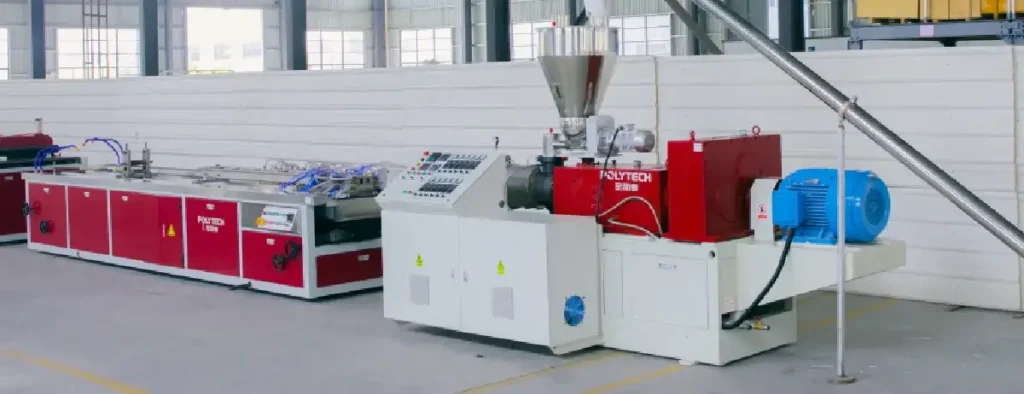
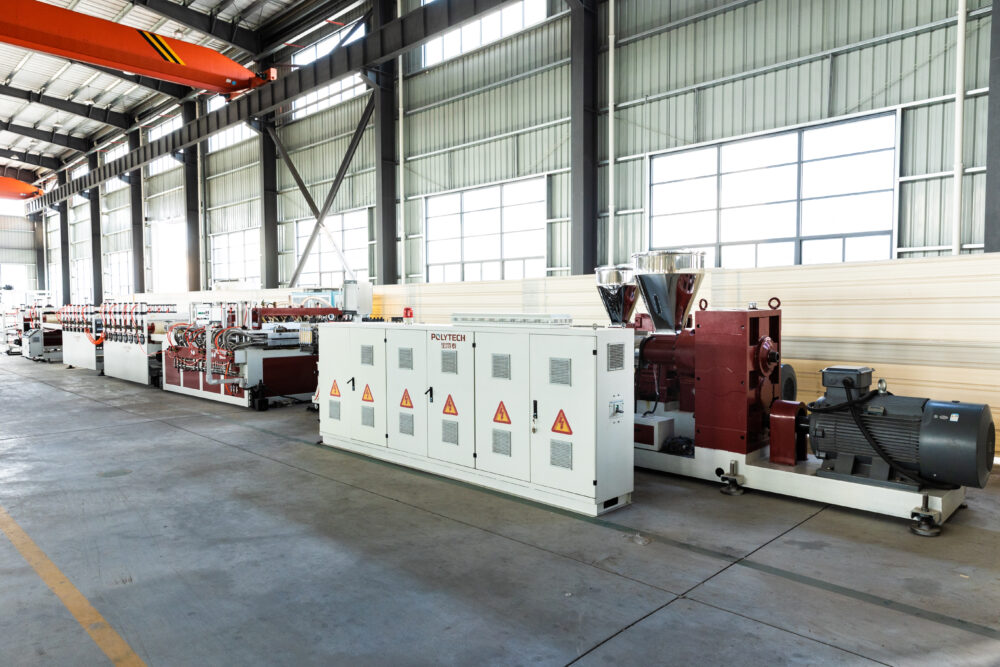
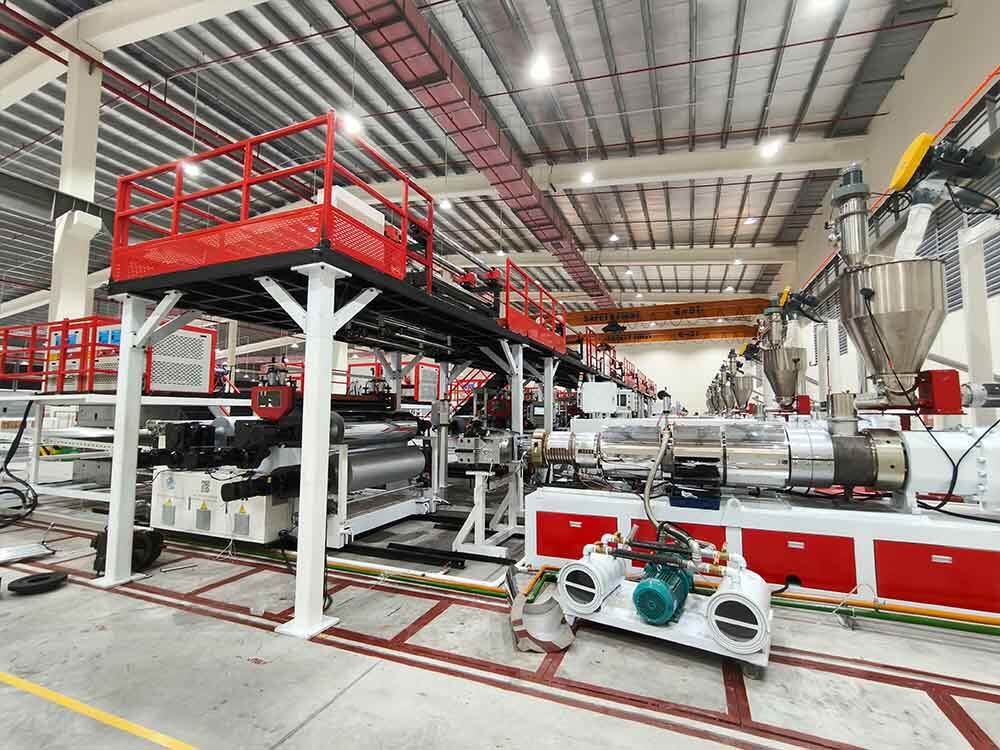
A plastic production line is an integrated manufacturing system designed to transform plastic raw materials into finished or semi-finished products through a continuous and controlled production process. Depending on the product being manufactured, a plastic production line can include extrusion, molding, cooling, calibration, cutting, winding, stacking, and packaging equipment.
Modern plastic production lines are designed to achieve high output, consistent product quality, efficient material utilization, and reliable long-term operation. By combining advanced machinery with automated control systems, manufacturers can produce plastic products with accurate dimensions, excellent surface quality, and consistent performance.
What Is a Plastic Production Line?
A plastic production line consists of several machines and auxiliary systems that work together to complete a specific plastic manufacturing process. Instead of relying on individual machines and manual handling, an integrated production line allows materials to move smoothly from one processing stage to another.
The configuration of the line depends on the type of plastic product being produced. Lines can be designed for pipes, profiles, sheets, films, panels, tubing, pellets, and many other plastic products.
This flexibility makes plastic production lines suitable for both standard manufacturing and customized industrial applications.
How a Plastic Production Line Works
The manufacturing process begins with the preparation and feeding of plastic raw materials. Depending on the application, materials may be supplied in the form of pellets, powders, recycled materials, or specialized compounds.
The material then enters the primary processing machine, where it is heated, melted, mixed, and formed. In extrusion-based production, the molten polymer passes through a die that determines the shape of the finished product.
After forming, the product moves through cooling and calibration equipment to stabilize its dimensions. Depending on the application, the final stages may include trimming, cutting, winding, stacking, inspection, and packaging.
Main Components of a Plastic Production Line
A complete plastic production line may contain several integrated components.
Material Feeding System
The feeding system provides a continuous and controlled supply of raw materials to the processing equipment.
Main Processing Machine
This is the central production unit responsible for melting, mixing, forming, or otherwise processing the plastic material.
Die or Molding System
The die or mold determines the final shape and dimensions of the plastic product.
Cooling and Calibration System
Cooling equipment stabilizes the product after forming, while calibration systems help maintain precise dimensions.
Haul-Off System
Haul-off equipment transports the product through the production line at a controlled and consistent speed.
Cutting or Winding Unit
Depending on the product, the finished material can be cut into specific lengths, stacked, or wound into rolls.
Control System
PLC and HMI systems allow operators to monitor and adjust important production parameters throughout the manufacturing process.
Key Features of Modern Plastic Production Lines
Modern plastic production lines incorporate advanced technologies designed to improve production efficiency and product quality.
Important features include:
- High production capacity.
- Continuous manufacturing operation.
- Automated process control.
- Precise temperature regulation.
- Accurate product dimensions.
- Stable material processing.
- Energy-efficient operation.
- Reduced material waste.
- User-friendly control systems.
- Flexible production configurations.
These features help manufacturers achieve stable output while reducing unnecessary production interruptions.
Benefits of Using a Plastic Production Line
1. Higher Productivity
Continuous automated production enables manufacturers to achieve higher output compared with manual or partially integrated manufacturing processes.
2. Consistent Product Quality
Automated process control helps maintain uniform dimensions, thickness, surface finish, and material properties.
3. Reduced Production Costs
Efficient material usage, automation, and reduced manual labor can help lower overall manufacturing costs.
4. Lower Material Waste
Modern production systems optimize processing conditions and reduce scrap during manufacturing.
5. Improved Operational Control
Integrated monitoring systems provide greater control over temperatures, speeds, pressures, and other critical production parameters.
6. Production Flexibility
Many plastic production lines can be configured for different product sizes, materials, and specifications.
7. Reliable Long-Term Operation
Industrial-grade components and automated systems are designed to support continuous production under demanding conditions.
Materials Used in Plastic Production
Plastic production lines can process a wide range of thermoplastic materials depending on the required product characteristics.
Common materials include:
- PVC (Polyvinyl Chloride)
- PE (Polyethylene)
- HDPE (High Density Polyethylene)
- LDPE (Low Density Polyethylene)
- PP (Polypropylene)
- ABS (Acrylonitrile Butadiene Styrene)
- PET (Polyethylene Terephthalate)
- PC (Polycarbonate)
- WPC (Wood Plastic Composite)
- SPC (Stone Plastic Composite)
Material selection depends on factors such as strength, flexibility, chemical resistance, weatherability, thermal performance, and final product requirements.
Applications of Plastic Production Lines
Plastic production lines are used in a wide range of industrial sectors.
Construction Industry
Plastic production lines manufacture pipes, profiles, wall panels, ceiling panels, roofing products, cable ducts, and other building materials.
Packaging Industry
Production systems can manufacture plastic films, sheets, containers, trays, and protective packaging products.
Automotive Industry
Plastic production technology supports the manufacture of interior components, technical profiles, protective parts, and lightweight components.
Electrical Industry
Production lines are used for cable trunking, conduits, insulation products, and electrical protection systems.
Furniture and Interior Design
Plastic profiles, decorative panels, skirting boards, and finishing components can be produced using specialized lines.
Recycling Industry
Integrated production systems can process recycled plastic materials and convert them into reusable pellets or finished products.
Quality Control in Plastic Production
Quality control is essential for maintaining consistent production performance. Modern plastic production lines use monitoring and inspection systems throughout the manufacturing process.
Important quality control procedures include:
- Raw material inspection.
- Temperature monitoring.
- Production speed control.
- Product thickness measurement.
- Dimensional inspection.
- Surface quality evaluation.
- Mechanical performance testing.
- Final product inspection.
These procedures help reduce defects and ensure that finished products meet the required specifications.
Automation and Smart Production
Automation has become an important part of modern plastic production lines. Advanced control systems can automatically regulate production temperatures, extrusion speeds, feeding rates, cooling conditions, and other critical parameters.
Smart monitoring technologies can also provide real-time production data, helping operators identify performance changes and respond quickly to potential issues. Predictive maintenance systems can further reduce unexpected downtime by identifying equipment conditions before major failures occur.
Energy Efficiency and Sustainable Production
Energy efficiency is an increasingly important consideration in plastic manufacturing. Modern production lines are designed to optimize heating, cooling, motor operation, and material processing to reduce unnecessary energy consumption.
Sustainable production can also involve the use of recycled materials, efficient material handling, reduced scrap generation, and recycling systems that return production waste to the manufacturing cycle.
These approaches allow manufacturers to improve resource utilization while supporting more environmentally responsible production.
Choosing the Right Plastic Production Line
Selecting the appropriate plastic production line depends on several important factors.
Manufacturers should consider:
- Product type and dimensions.
- Required production capacity.
- Raw material characteristics.
- Automation requirements.
- Energy consumption.
- Available production space.
- Quality requirements.
- Maintenance and spare parts availability.
- Future production expansion.
A properly configured production line can improve manufacturing efficiency and provide greater flexibility for long-term business development.
Conclusion
A plastic production line provides an efficient and reliable solution for manufacturing a wide range of plastic products. By integrating material feeding, processing, forming, cooling, calibration, cutting, winding, and automated control systems, modern production lines deliver high productivity and consistent product quality.
With advancements in automation, energy efficiency, recycling, and smart manufacturing, plastic production lines continue to evolve to meet the changing requirements of modern industry. For manufacturers seeking reliable, cost-effective, and scalable plastic production, an advanced production line provides a strong foundation for efficient and sustainable manufacturing.