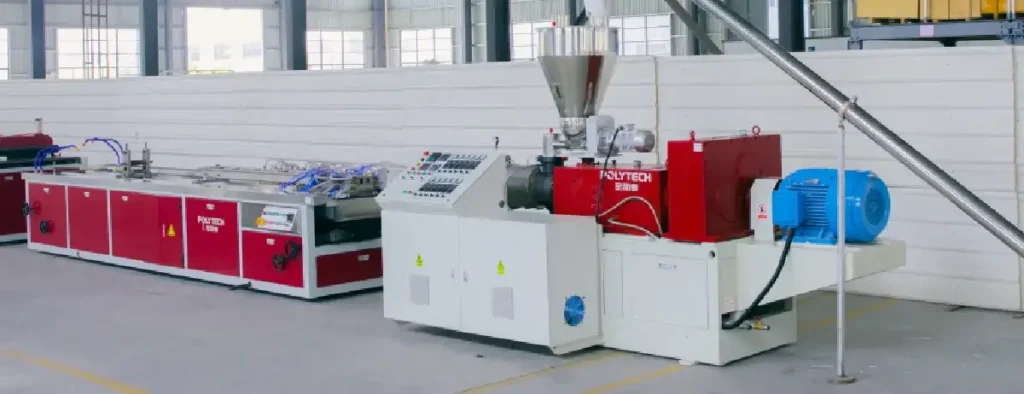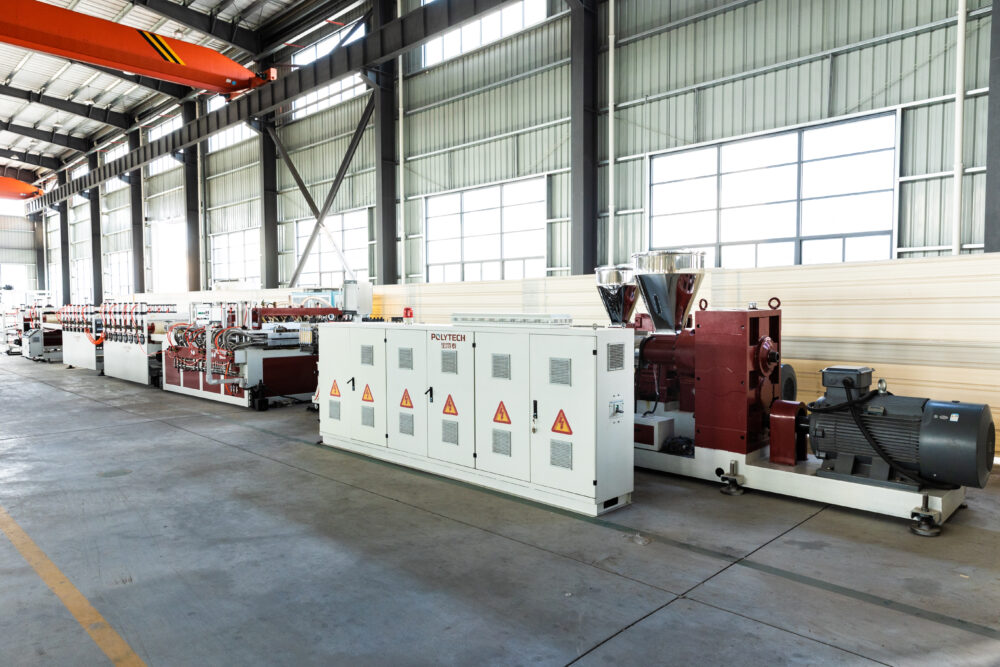


Introduction
Plastic moulds have become the foundation of modern manufacturing. Every industry that relies on plastic parts—whether simple, complex, large, or extremely detailed—depends on accurate moulds to achieve stable and repeatable production. Because consumer expectations keep rising, factories need tools that deliver precision, durability, and speed. Plastic moulds offer exactly that, which makes them essential for any company aiming to stay competitive in today’s fast-evolving market.
As global demand for plastic components continues to grow, manufacturers face increasing pressure to improve quality while also reducing costs. Plastic moulds help them meet these goals by shaping products with consistent dimensions, smooth finishes, and minimal defects. In addition, the use of advanced moulds allows companies to support both high-volume mass production and highly customized product designs. This flexibility strengthens their ability to serve diverse sectors such as automotive, medical devices, electronics, packaging, construction, and household goods.
Furthermore, the technology behind plastic moulds has advanced rapidly in recent years. New tool steels now offer higher resistance to wear and heat, which extends mould life and lowers long-term maintenance costs. At the same time, improvements in CNC machining, EDM systems, and simulation software allow engineers to design and produce moulds with exceptional accuracy. Because of these technological upgrades, manufacturers can achieve shorter cycle times, faster delivery, and better energy efficiency.
Another important factor is the growing focus on sustainability. Many companies now seek mould designs that support recycled materials, reduce wastage, and improve cooling efficiency. Plastic moulds play a major role in these initiatives because optimized tooling can significantly reduce scrap rates and minimize the environmental impact of large-scale production. As industries shift toward greener standards, mould innovation becomes even more critical.
In conclusion, plastic moulds form the backbone of the plastic manufacturing ecosystem. They enable reliable production, support advanced product development, and help companies adapt to changing market demands. As technology continues to evolve, the importance of high-performance plastic moulds will only increase, shaping the future of global manufacturing.
Types of Plastic Moulds
Plastic moulds come in several forms, and each type serves a different purpose depending on the required product shape, production speed, and material properties. Because industries now produce a huge variety of plastic parts, manufacturers rely on specialized mould designs to maintain accuracy and efficiency. Below is a detailed look at the most important types used across modern factories.
Injection moulds are the most common and widely used type of plastic moulds. They support extremely high production rates and deliver precise, repeatable results. During the process, molten plastic flows into a steel cavity and cools quickly, creating parts with consistent dimensions and excellent surface finishes. These moulds are ideal for automotive dashboards, electronic housings, medical device components, packaging items, and many consumer products.
Blow moulds are designed for producing hollow products. The process begins by forming a heated plastic tube, which is then expanded inside the mould using air pressure. As a result, manufacturers can create bottles, tanks, containers, and cosmetic packaging with thin and uniform walls. Because demand for lightweight containers keeps increasing, blow moulds remain essential in packaging and beverage industries.
Compression moulds work differently from injection moulds. Instead of injecting melted material, manufacturers place preheated plastic directly into the mould cavity and apply pressure until the part forms. This method works well for high-strength components that need excellent durability. It is commonly used in electrical housings, appliance parts, and industrial fittings. Since it handles tougher materials, this type of plastic moulds is favored for heavy-duty applications.
Although they are technically classified as “dies,” many factories consider them a category within plastic moulds. Extrusion dies shape continuous profiles like pipes, tubes, sheets, films, and cable coatings. The plastic exits the die in a steady flow, meaning the shape remains consistent along the entire length. This method is perfect for construction products, drainage systems, insulation layers, and packaging films.
Rotational moulds create large, seamless, and hollow parts. The mould rotates while heated plastic coats the inner surface evenly. This slow and controlled process makes it possible to produce tanks, playground equipment, traffic barriers, furniture, and water storage units. Because rotational moulds reduce internal stress and eliminate joints, the final products remain strong and durable.
Thermoforming moulds shape heated plastic sheets into trays, containers, covers, and packaging displays. As the sheet softens, it forms tightly around the mould under pressure or vacuum. These moulds are simple, fast, and cost-effective, which makes them ideal for food packaging and lightweight consumer items.
Many industries use multi-cavity plastic moulds when they need high production output. These moulds produce multiple identical parts in a single cycle. On the other hand, family moulds create different components from one mould, which helps reduce tooling costs, especially in early production stages.
Key Processes and Machinery in Plastic Mould Production
Producing high-quality plastic moulds requires a structured workflow and advanced machinery. Each step builds on the previous one, which ensures the mould delivers accuracy, strength, and long-term reliability. Because modern industries demand faster cycles and tighter tolerances, the entire production process depends heavily on precision engineering and well-calibrated tools.
Design and Engineering
The process begins with detailed 3D modelling. Engineers analyze product geometry, choose the ideal cavity layout, and calculate shrinkage, cooling requirements, and flow behavior. This early stage is extremely important because any small error in the design can affect the entire performance of the mould later. In addition, simulation software helps predict material flow and cooling patterns, which reduces trial-and-error during manufacturing.
Material Selection
Choosing the right steel grade greatly influences the life and durability of plastic moulds. Tool steels like P20, H13, and S7 are common options because they resist wear, high temperatures, and heavy pressure. As production cycles increase, strong materials become even more important, especially for moulds used in automotive, medical, or high-precision electronics.
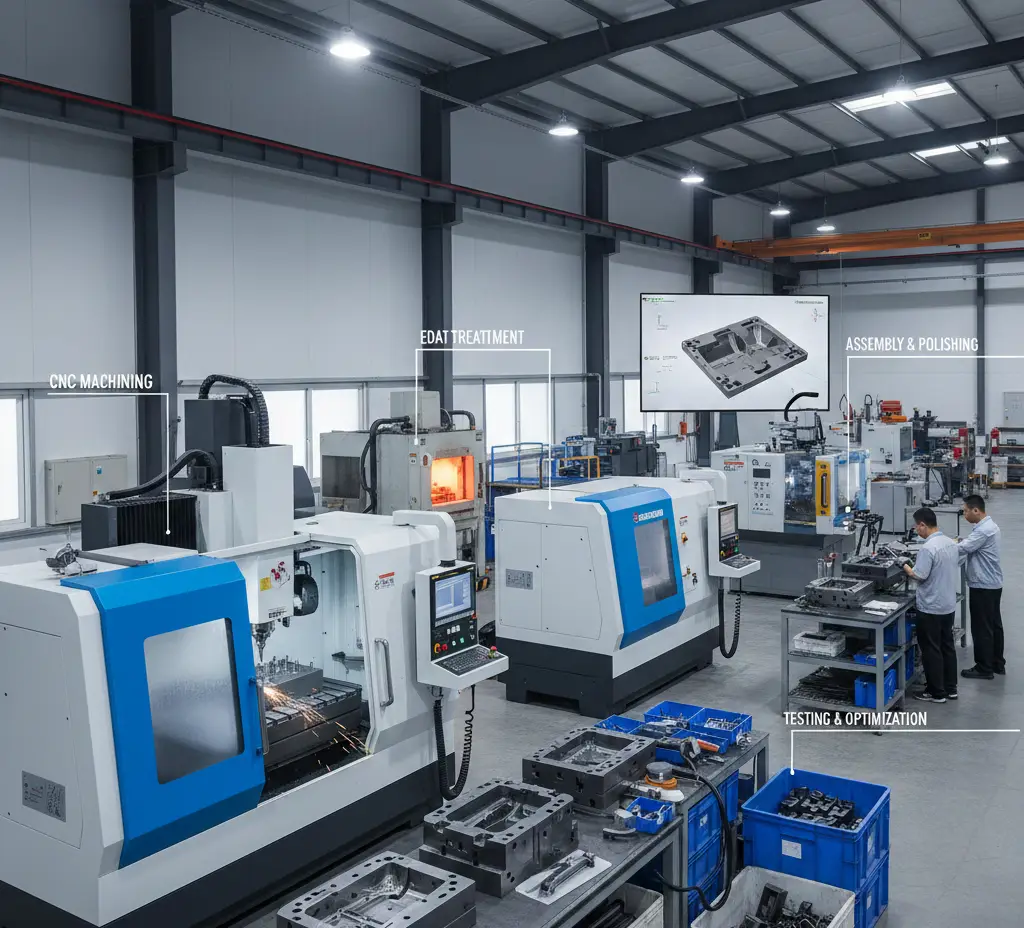
CNC Machining
CNC milling shapes the mould cavity with extreme accuracy. This stage forms the base geometry, cooling channels, and structural features. Because CNC machines deliver micrometer-level precision, manufacturers rely on them to ensure smooth internal surfaces and consistent dimensions. Faster spindle speeds and five-axis systems now help reduce machining time and improve overall efficiency.
EDM (Electrical Discharge Machining)
EDM is used when the cavity design includes deep grooves, tight corners, or sharp details. The process removes metal using controlled electrical sparks, which makes it perfect for complex features that standard cutting tools cannot reach. As a result, EDM adds flexibility to mould manufacturing and allows engineers to achieve intricate shapes without compromising strength.
Heat Treatment
After machining, the mould undergoes hardening and tempering to increase strength and stability. This step ensures the mould can withstand repeated injection cycles without deformation. Because industries often run continuous production, heat treatment extends mould life and reduces long-term maintenance costs.
Assembly and Polishing
Once all components are ready, technicians assemble the mould, install cooling lines, and tune alignment. Polishing then improves surface finish and ensures smooth plastic flow during moulding. A well-polished cavity reduces friction, prevents defects, and improves the appearance of the final product.
Testing and Optimization
The final stage involves trial runs. Engineers test the mould under real production conditions to verify filling behavior, cooling time, ejection force, and dimensional accuracy. If any issue appears, adjustments are made immediately. This step guarantees that plastic moulds perform reliably before they enter full-scale production.
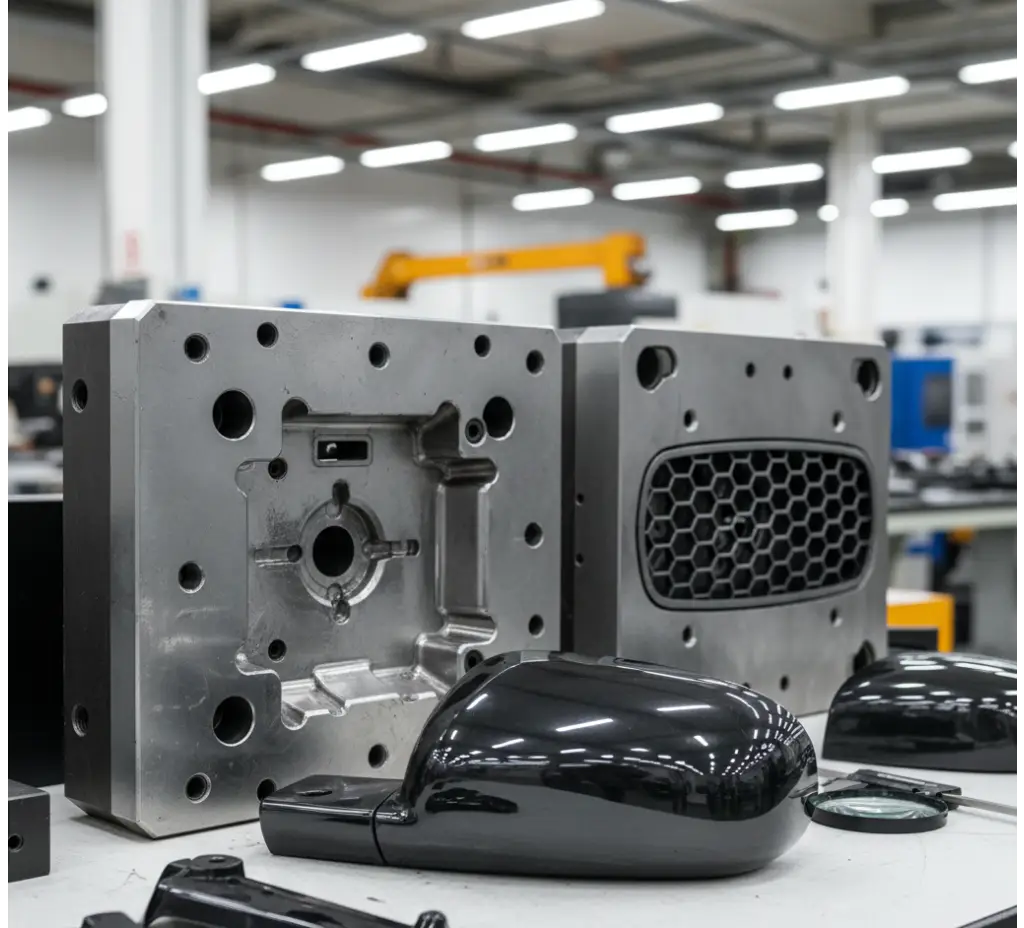
Opportunities & Trends in the Plastic Moulds Industry
The plastic moulds industry is experiencing rapid growth as new technologies, materials, and production methods continue to reshape the market. Because manufacturers constantly look for faster cycles, better accuracy, and lower costs, several major opportunities now stand out. At the same time, strong trends are pushing companies toward smarter designs and more efficient tooling systems.
Growing Demand for High-Precision Components
Many sectors—especially automotive, medical, and electronics—now require extremely accurate plastic parts. This shift creates new opportunities for companies that invest in advanced plastic moulds capable of producing complex shapes with minimal deviation. As product designs become more detailed, high-precision tooling becomes even more valuable.
Expansion of Automation and Smart Manufacturing
Automation continues to drive major improvements in mould production. CNC machines, automated polishing systems, and robotic handling units all help reduce labor time and improve consistency. In addition, smart sensors inside plastic moulds allow real-time monitoring of temperature, pressure, and cooling performance. Because of this trend, manufacturers can predict issues earlier and optimize mould life more effectively.
Rising Use of Simulation and Digital Twin Technology
Digital simulation tools help engineers analyze material flow, shrinkage, cooling balance, and stress distribution before manufacturing starts. This trend reduces trial-and-error and shortens development time. In many cases, companies use digital twins to recreate the complete behavior of plastic moulds under real production conditions, which improves design accuracy and lowers costs.
Growing Focus on Sustainable Production
As industries move toward greener practices, plastic moulds play a key role in reducing waste and supporting recycled materials. Optimized cooling systems, improved gating designs, and better steel selection all reduce scrap rates and increase energy efficiency. In addition, more companies now design moulds specifically for bio-plastics and eco-friendly polymers, opening new opportunities in sustainable manufacturing.
Increased Demand for Multi-Cavity and High-Speed Moulds
Production volumes continue to grow, especially in packaging, consumer goods, and medical supplies. This trend boosts demand for multi-cavity plastic moulds that can produce several parts per cycle. High-speed moulds also become more popular because they reduce cycle time and help manufacturers compete in fast-moving markets.
Adoption of Additive Manufacturing in Tooling
3D printing is starting to influence the mould industry. Although it does not replace traditional processes, it supports rapid prototyping, conformal cooling channels, and custom inserts. This emerging trend allows companies to produce plastic moulds faster and test multiple design variations with lower cost.
Conclusion
Plastic moulds continue to shape the foundation of global manufacturing. As industries demand faster production, tighter tolerances, and more advanced product designs, the importance of high-quality moulds becomes even greater. Throughout the entire production chain, these moulds make it possible to deliver consistent results, reduce material waste, and support large-scale operations with exceptional reliability.
In addition, rapid advancements in machining, automation, simulation, and material technology are opening new opportunities for companies willing to innovate. The shift toward sustainable manufacturing also highlights a major advantage: well-designed plastic moulds can significantly reduce energy use and scrap rates, helping factories meet modern environmental standards with confidence.
At the same time, rising global competition makes continuous improvement essential. Manufacturers who invest in precision engineering, smart production systems, and skilled technical teams gain a clear advantage. Because the industry continues to evolve quickly, staying updated with new techniques and emerging trends is now a key factor for long-term growth.
In the end, plastic moulds remain indispensable tools that enable industries to create strong, accurate, and efficient products. With the right investment in technology and design, companies can achieve higher performance, stronger competitiveness, and a more sustainable manufacturing future