


Introduction
Plastic compounding is one of the most important processes in the plastics industry, allowing manufacturers to enhance the performance, appearance, and processing characteristics of polymer materials. The process involves blending base polymers with carefully selected additives, fillers, reinforcements, pigments, and stabilizers to create customized plastic compounds that meet specific application requirements.
Modern plastic compounding has become essential for industries seeking materials with improved strength, durability, heat resistance, flexibility, flame retardancy, UV stability, and color consistency. Using advanced compounding technology, manufacturers can develop high-performance materials for construction, automotive, packaging, electrical, medical, and consumer product applications.
What Is Plastic Compounding?
Plastic compounding is the process of combining one or more polymers with functional additives to produce a homogeneous material with enhanced physical, mechanical, thermal, or chemical properties. Unlike simple mixing, compounding ensures that every ingredient is uniformly dispersed throughout the polymer matrix, resulting in consistent quality and reliable performance.
The final compounded material is typically converted into plastic pellets, making it easy to transport, store, and process in downstream manufacturing operations such as extrusion, injection molding, blow molding, and thermoforming.
The Plastic Compounding Process
The compounding process follows several carefully controlled stages to ensure consistent material quality and optimal performance.
1. Raw Material Selection
Base polymers, additives, fillers, colorants, and reinforcing materials are selected according to the required product specifications.
2. Accurate Material Feeding
All ingredients are precisely measured and fed into the compounding system using automated dosing equipment.
3. Melting and Mixing
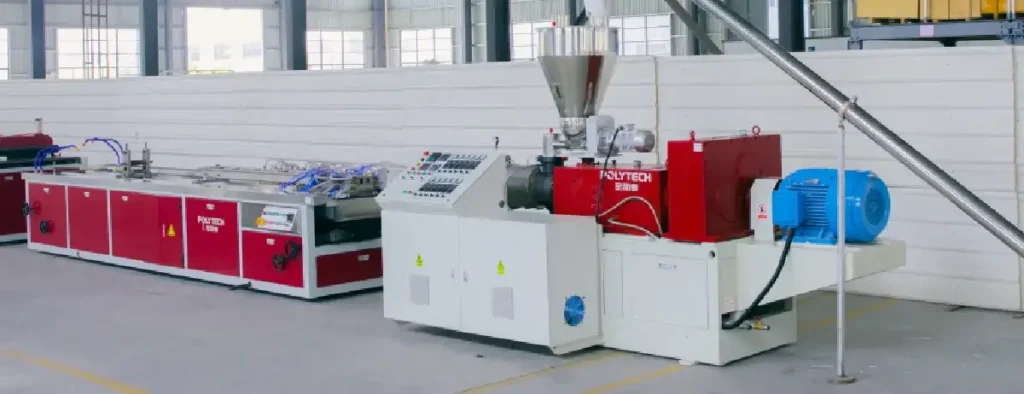
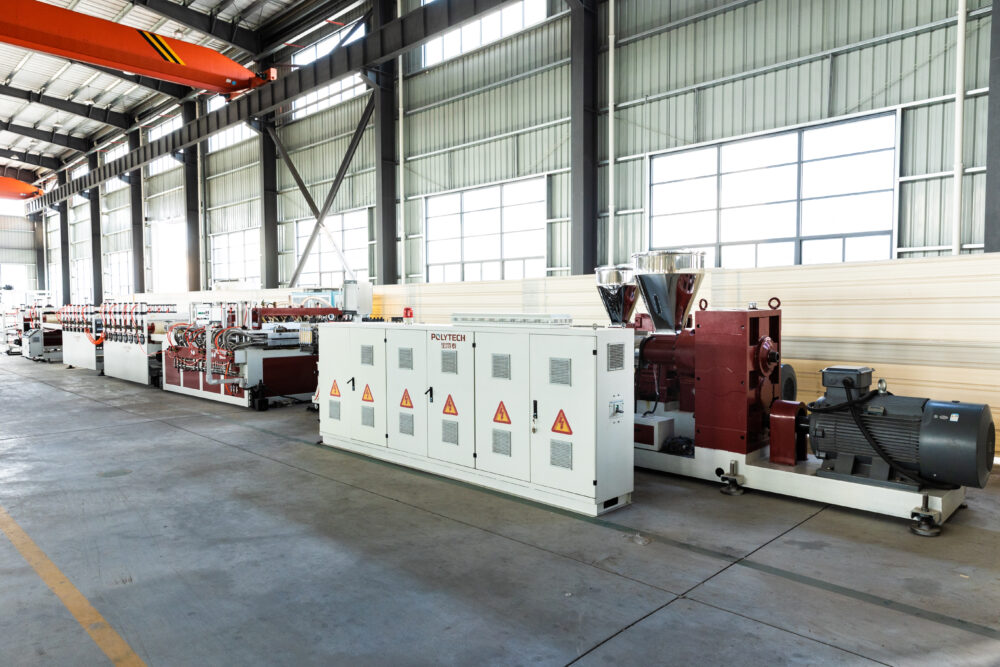
Inside the compounding extruder, materials are melted, mixed, dispersed, and homogenized to achieve a uniform composition.
4. Extrusion and Pelletizing
The compounded material exits the die as continuous strands, which are cooled and cut into uniform pellets.
5. Quality Inspection
The finished compound is tested to verify mechanical properties, color consistency, dimensional stability, and processing performance.
Every stage is closely monitored to maintain high production standards and consistent batch quality.
Materials Used in Plastic Compounding
Plastic compounding can process a wide variety of thermoplastics depending on the desired application.
Common polymers include:
- PVC (Polyvinyl Chloride)
- PE (Polyethylene)
- HDPE (High Density Polyethylene)
- PP (Polypropylene)
- ABS (Acrylonitrile Butadiene Styrene)
- PET (Polyethylene Terephthalate)
- PA (Polyamide)
- PC (Polycarbonate)
- EVA (Ethylene Vinyl Acetate)
- TPU (Thermoplastic Polyurethane)
Common additives include:
- Color masterbatches
- UV stabilizers
- Heat stabilizers
- Flame retardants
- Impact modifiers
- Lubricants
- Processing aids
- Mineral fillers
- Glass fiber reinforcement
- Antioxidants
These materials allow manufacturers to create compounds tailored to demanding industrial requirements.
Key Features of Plastic Compounding
Modern plastic compounding technology offers several features that improve production efficiency and material performance.
Excellent Material Homogeneity
Advanced mixing systems ensure uniform distribution of all ingredients throughout the polymer.
Precise Formulation Control
Automated dosing systems maintain accurate formulations and consistent production quality.
Flexible Material Development
Manufacturers can create customized compounds for specific industries and applications.
High Production Capacity
Continuous compounding lines support efficient large-scale manufacturing.
Excellent Process Stability
Modern equipment delivers reliable output with consistent material properties.
Wide Material Compatibility
Compounding systems can process numerous polymers and additive combinations.
Benefits of Plastic Compounding
Plastic compounding provides significant advantages for manufacturers and product developers.
1. Improved Mechanical Strength
Compounded materials offer enhanced impact resistance, stiffness, and durability.
2. Better Thermal Performance
Special additives improve heat resistance and long-term thermal stability.
3. Enhanced Chemical Resistance
Customized formulations increase resistance to chemicals, moisture, and harsh environments.
4. Superior Appearance
Color consistency, surface finish, and visual quality are significantly improved.
5. Optimized Processing
Compounds flow more efficiently during extrusion and molding, reducing production issues.
6. Product Customization
Manufacturers can produce materials specifically designed for unique customer requirements.
7. Cost Optimization
Fillers and performance additives help balance material cost while maintaining required properties.
These benefits make compounding one of the most valuable processes in modern polymer engineering.
Applications of Plastic Compounds
Plastic compounds are used across a wide range of industries where enhanced material performance is required.
Construction Industry
Pipes, fittings, wall panels, ceiling systems, window profiles, cable ducts, and insulation products.
Automotive Industry
Interior trim, under-the-hood components, cable protection systems, and lightweight engineering parts.
Electrical Industry
Cable insulation, conduit systems, connectors, electrical housings, and flame-retardant components.
Packaging Industry
Rigid packaging, flexible packaging, food containers, industrial packaging, and protective films.
Medical Industry
Medical tubing, laboratory equipment, healthcare packaging, and technical polymer components.
Consumer Products
Furniture components, household appliances, sporting goods, storage products, and decorative plastic items.
Quality Control in Plastic Compounding
Maintaining consistent material quality is essential throughout the compounding process. Advanced quality control systems ensure every batch meets technical specifications.
Quality assurance procedures commonly include:
- Raw material verification.
- Formulation accuracy checks.
- Melt flow testing.
- Color consistency analysis.
- Density measurement.
- Mechanical property testing.
- Thermal stability evaluation.
- Final pellet inspection.
These inspections help guarantee reliable performance in downstream manufacturing processes.
Future of Plastic Compounding
Plastic compounding continues to evolve with innovations in automation, smart process control, and sustainable material development. Manufacturers are increasingly producing recyclable compounds, bio-based formulations, and lightweight engineering materials to meet environmental regulations and market demands.
Advanced twin-screw compounding technologies, digital monitoring systems, and precision dosing equipment are also improving production efficiency while ensuring exceptional compound quality.
Conclusion
Plastic compounding is a critical process that transforms standard polymers into high-performance materials tailored for modern industrial applications. By combining advanced extrusion technology, precise formulation control, and comprehensive quality assurance, manufacturers can produce customized compounds with superior mechanical, thermal, and processing characteristics. As industries continue to demand innovative and sustainable materials, plastic compounding will remain a key technology driving the future of polymer manufacturing.