

Introduction
Manufacturing plastic products plays a major role in today’s industrial world, shaping everything from simple household items to highly engineered components used in automotive, medical, and construction sectors. As industries continue to expand, the demand for efficient, cost-effective, and durable plastic solutions grows even faster.
A Rapidly Evolving Industry
Over the past decade, the plastic sector has become one of the fastest-moving manufacturing fields. New technologies, smarter machinery, and advanced polymers now allow factories to produce stronger, lighter, and more sustainable products. Because of this constant evolution, companies must adapt quickly to keep up with modern production standards.
Why Plastic Products Dominate the Market
Plastic materials offer unique advantages such as flexibility, durability, low cost, and excellent design freedom. These benefits make manufacturing plastic products essential for businesses that want to deliver high performance without compromising on efficiency or affordability. Additionally, improved recycling systems and eco-friendly materials help the industry move toward more sustainable production.
The Need for Efficient Systems
As demand increases, manufacturers must focus on precision, automation, and consistent product quality. Modern equipment—from injection molding machines to extrusion lines—helps factories achieve faster cycle times, reduced waste, and better property control. Consequently, companies can meet customer expectations while maintaining competitive production costs.
Key Machinery Used in Manufacturing Plastic Products
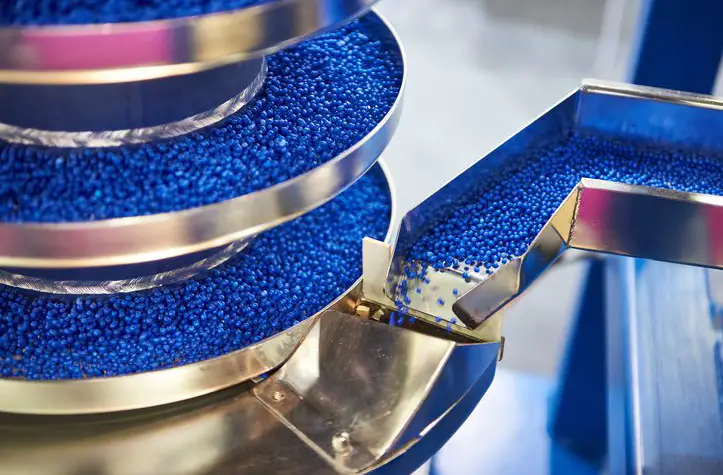
Manufacturing plastic products depends heavily on advanced machinery that controls temperature, pressure, speed, and material flow with excellent precision. Each machine plays a specific role in shaping raw polymers into strong, durable, and visually appealing products.
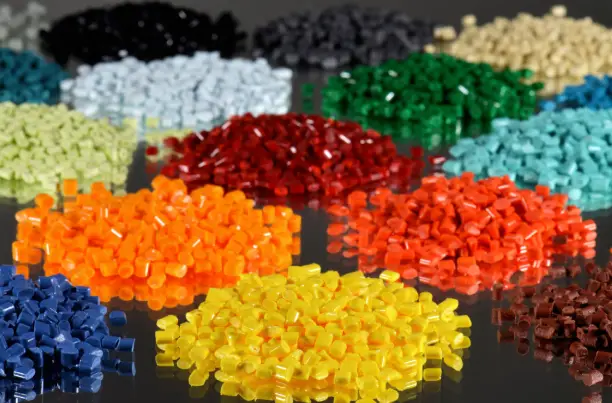
Injection molding machines are essential for producing high-volume plastic components with intricate designs. These machines melt plastic pellets and inject the molten material into a tightly engineered mold.
Modern systems come with automated controls, servo motors, and energy-efficient heaters, which help manufacturers achieve consistent part quality and reduce cycle times. They are widely used in electronics, automotive parts, medical devices, and consumer products.
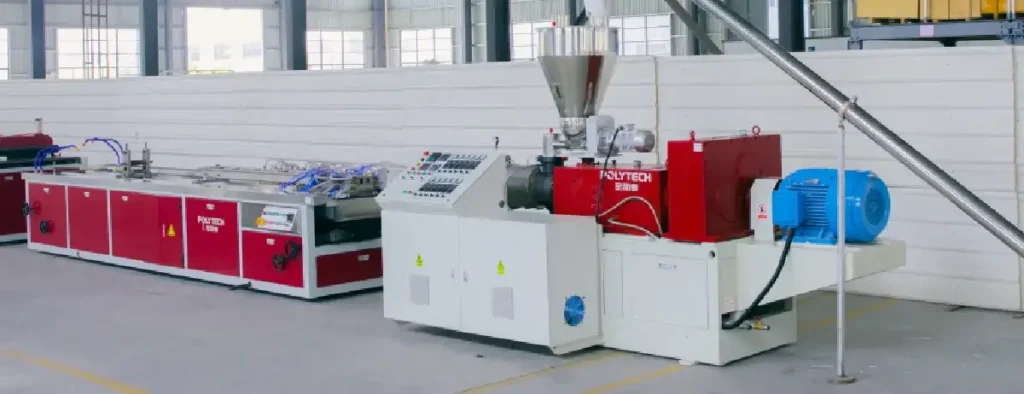
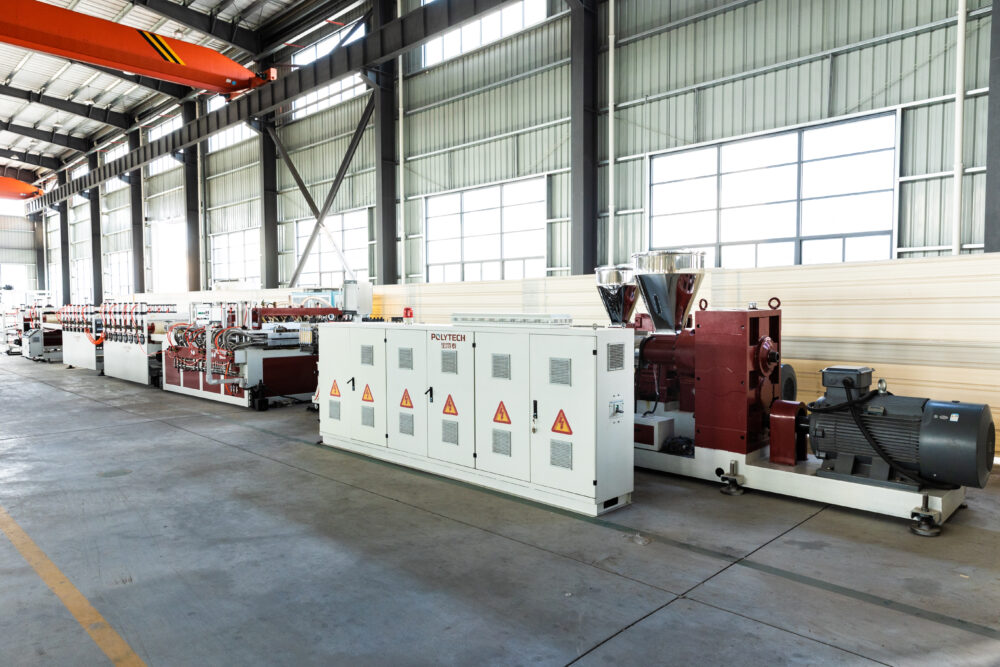
Extrusion lines are vital for creating continuous profiles such as pipes, tubes, films, cables, and plastic sheets. These lines typically include an extruder, die head, cooling unit, haul-off system, and cutter.
Because extrusion provides steady output and minimal material waste, it plays a major role in manufacturing plastic products that require uniform thickness and long lengths. High-tech extrusion systems now offer precise temperature control, automated dosing, and advanced monitoring sensors.
Blow molding machines are specifically designed for producing hollow items like bottles, containers, and industrial tanks. These systems heat plastic preforms and use compressed air to inflate them into the mold.
Newer blow molding technologies deliver improved energy efficiency, faster production speeds, and better wall-thickness distribution — all of which contribute to stronger and lighter packaging solutions.
Thermoforming machines heat plastic sheets until they soften, then shape them over a mold using vacuum or pressure. These machines are commonly used to manufacture food packaging trays, appliance housings, automotive panels, and display covers.
With the addition of automatic trimming units, robotic stacking, and digital temperature control, thermoforming offers both speed and accuracy.
Rotational molding machines create large, seamless, and hollow plastic products. The machine rotates the mold in multiple directions while heating polymer powder inside it.
Because of its slow, controlled process, rotomolding ensures uniform wall thickness and exceptional durability — making it ideal for tanks, outdoor furniture, playground components, and industrial bins.
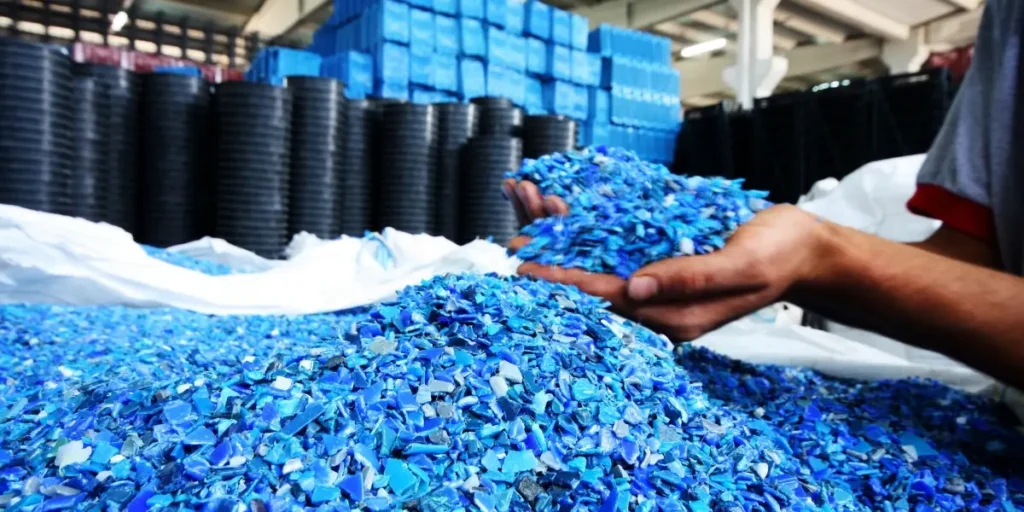
Since sustainability has become a major priority, recycling machines now play a bigger role in manufacturing plastic products. These systems shred, wash, dry, and reprocess plastic waste into reusable pellets.
Recycling lines help factories reduce material costs, minimize waste, and meet environmental standards, especially in industries that require high volumes of plastic.
Alongside the main production machines, manufacturers also rely on a range of auxiliary equipment, including:
- Material dryers to remove moisture
- Mixers and blenders for color and additive distribution
- Chillers for precise cooling
- Robotic arms for automatic part handling
- Quality-control systems for inspection
This supporting equipment improves efficiency and ensures stable production at all stages.
Challenges in Manufacturing Plastic Products
Although manufacturing plastic products has become more advanced and efficient, the industry still faces several challenges that can impact quality, cost, and sustainability. Understanding these obstacles allows manufacturers to improve performance and stay competitive in a fast-changing market.
Rising Raw Material Costs
The cost of polymers such as PP, PE, PVC, and ABS continues to fluctuate due to global supply chain issues, oil price changes, and geopolitical factors. These variations make it difficult for manufacturers to maintain stable production budgets.
Therefore, companies must explore alternative materials, optimize recycling systems, and negotiate flexible sourcing agreements to manage long-term costs.
Maintaining Consistent Product Quality
Achieving uniform dimensions, smooth surfaces, and strong mechanical properties can be challenging, especially when manufacturing plastic products at high speeds. Even small deviations in temperature, pressure, or cooling can lead to defects like warping, sinking, or uneven thickness.
As a result, manufacturers rely on real-time monitoring systems, automated controls, and skilled technicians to ensure precise quality standards.
Environmental Impact and Sustainability Pressure
Environmental regulations have become stricter, and industries face increasing pressure to reduce plastic waste. Governments and consumers expect companies to adopt eco-friendly materials, improve recycling, and lower their carbon footprint.
Because of this, manufacturers must invest in biodegradable polymers, energy-efficient machinery, and closed-loop recycling systems to stay compliant.
High Energy Consumption
Many plastic processing methods — including injection molding, extrusion, and blow molding — require significant energy for heating, melting, and cooling. High energy costs can reduce factory profitability, especially in regions with unstable electricity prices.
To overcome this issue, manufacturers upgrade to servo-driven machines, advanced insulation, and intelligent energy management systems.
Machinery Maintenance and Downtime
Extrusion lines, molding machines, and auxiliary equipment need continuous maintenance. Unexpected breakdowns can cause production delays, increased waste, and financial losses.
Consequently, factories must adopt preventive and predictive maintenance programs, supported by sensors and data analysis technologies.
Skilled Labor Shortage
The rapid growth of manufacturing plastic products requires more trained technicians who understand modern machinery, automation, and digital control systems. However, many factories struggle to find workers with the right skill set.
Training programs, improved safety standards, and competitive wages help attract and retain qualified professionals.
Increasing Demand for Customization
Customers now expect personalized designs, faster delivery, and high flexibility. Meeting these demands can be challenging, especially for factories operating with older machinery or slow changeover processes.
To stay competitive, companies must adopt modular equipment, digital production planning, and advanced tooling technologies.
Opportunities & Industry Trends
The industry of manufacturing plastic products is evolving rapidly, creating new opportunities for companies that want to innovate, reduce costs, and stay competitive. With the rise of advanced technologies and growing demand for sustainable solutions, manufacturers can take advantage of several emerging trends that are reshaping the market.
Growth in Sustainable and Recycled Materials
One of the biggest opportunities today is the shift toward eco-friendly materials. Consumers and governments worldwide are demanding sustainable alternatives, which encourages companies to use recycled plastics, biodegradable polymers, and renewable additives.
Because of this trend, factories adopting circular production models can attract more customers, reduce raw material expenses, and comply with global environmental regulations.
Expansion of Automation and Smart Manufacturing
Automation is transforming the entire workflow of manufacturing plastic products. Modern factories now rely on robotic arms, AI-driven inspection systems, and fully automated extrusion or molding lines.
These technologies reduce labor costs, improve product consistency, and minimize errors. As Industry 4.0 continues to grow, manufacturers that invest in digital systems gain a major advantage in speed, accuracy, and real-time decision-making.
Rising Demand in Key Sectors
The demand for plastic components is expanding across industries such as automotive, healthcare, consumer electronics, and construction.
For example, lightweight automotive parts help reduce fuel consumption, while medical-grade plastics are essential for devices and single-use items. This creates long-term opportunities for companies that specialize in high-precision and high-performance plastic products.
Innovation in Processing Technologies
New machinery advancements — including energy-efficient extruders, multi-cavity injection molding systems, and advanced cooling technologies — allow manufacturers to produce better products in less time.
As technology improves, companies can achieve faster cycle times, lower energy usage, and higher-quality output, making innovation a key driver of future success.
Demand for Customization and Specialized Design
Customers increasingly want personalized designs, unique colors, and tailor-made components. This trend opens opportunities for manufacturers equipped with flexible tooling, modular machines, and rapid prototyping technologies such as 3D printing.
By offering custom solutions, companies can differentiate themselves and build stronger relationships with clients.
Global Market Expansion
Emerging markets in Africa, Asia, and the Middle East are experiencing rapid industrial growth. This expansion increases the need for manufacturing plastic products, especially in packaging, infrastructure, and automotive applications.
Companies willing to export or establish regional partnerships can unlock new revenue streams and broaden their global presence.
Conclusion
Manufacturing plastic products continues to play a vital role in nearly every modern industry, from packaging and construction to automotive and medical applications. As global demand grows, companies must balance efficiency, quality, and sustainability to remain competitive. By adopting advanced machinery, integrating automation, and exploring innovative materials, manufacturers can improve production performance while reducing waste and operating costs.
Moreover, ongoing trends such as smart manufacturing, recycled materials, and customized product design offer promising opportunities for growth. With the right strategies and technologies, businesses can overcome industry challenges and position themselves as leaders in a rapidly evolving market.