

Introduction
Manufacturing machines form the backbone of modern industrial production. They enable factories to transform raw materials into finished products with greater speed, precision, and consistency. Over the years, technology has reshaped how industries operate, shifting from manual labor to fully automated systems that deliver higher efficiency and reduced operational cost. Because of this shift, manufacturing machines now play a critical role in improving quality control, boosting output capacity, and enabling companies to scale production with ease.
Moreover, industries today demand versatility. Production lines must adapt quickly to new product designs, materials, and customer trends. Therefore, manufacturers rely on advanced machinery capable of performing multiple functions, whether in plastic processing, metal fabrication, packaging, or assembly. As innovation continues to accelerate, manufacturing machines have evolved into smart, digitally monitored systems that ensure smoother workflow, lower downtime, and improved workplace safety.
As a result, these machines are not just tools—they are strategic assets that define industrial performance. Understanding how they work, their types, and the advantages they offer can help businesses invest wisely and build stronger, more future-ready production environments.
Types of Manufacturing Machines
Manufacturing machines come in many categories, each designed to handle specific processes within a production line. Choosing the right machine depends on material type, production volume, level of precision, and automation requirements. Below are the most common types used across different industries.
These machines handle the first stage of production, where raw materials are prepared for manufacturing.
- Examples include mixers, grinders, crushers, and melting units.
- In plastic factories, extrusion units melt polymers before shaping, while in metal industries, cutting and casting systems prepare metal blocks for machining.
- This stage determines product quality from the very beginning.
Forming machines give products their final structure.
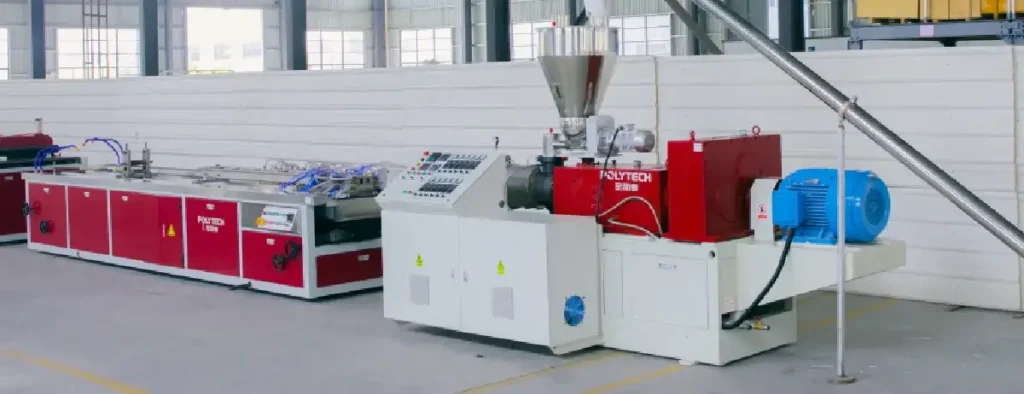
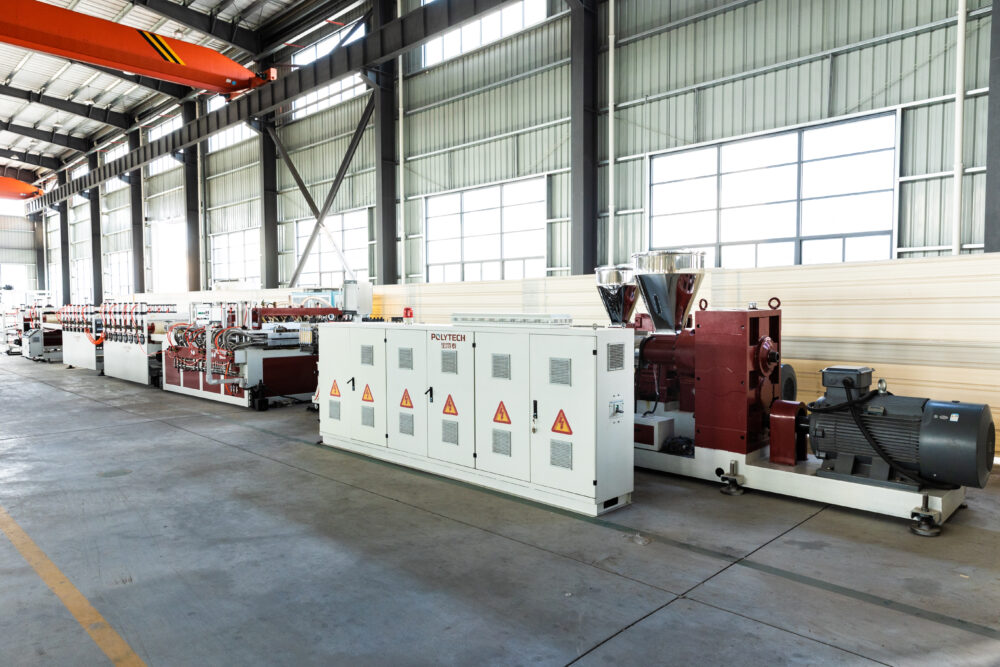
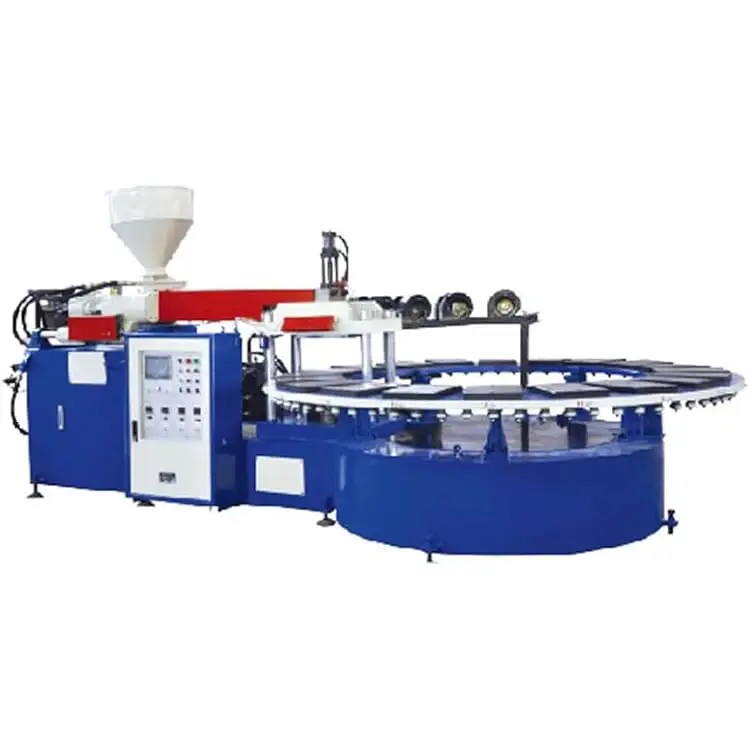
- They include injection molding machines, sheet extruders, blow molding systems, rolling mills, and press machines.
- Such manufacturing machines shape materials into sheets, pipes, components, or final end-products with high accuracy.
- They are essential for industries where precision and strength matter.
After shaping, products often require assembly.
- Robotics, conveyor-based assembly systems, and automated fastening units greatly speed up this stage.
- They improve consistency and reduce human error in complex manufacturing tasks.
- Automotive and electronic industries rely heavily on automated assembly machines.
Once products are complete, packaging becomes the next critical step.
- Packaging units fill, seal, wrap, and label products ready for transport.
- These manufacturing machines ensure protection, proper branding, and longer shelf life.
- They are widely used in food, medical, household, and plastic product industries.
Computer-controlled cutting machines are used where extreme accuracy is required.
- CNC routers, laser cutters, and milling machines shape materials with micron-level precision.
- They support custom production, prototyping, and detailed manufacturing jobs.
- This category is increasing rapidly as industries demand more complex geometries.
Even the best factory needs verification equipment.
- Testing machines measure strength, durability, dimensions, and overall product quality.
- Vision-inspection systems use cameras and AI to detect defects instantly.
- These units help maintain high product standards and reduce faulty output.
Increased Production Speed
One of the biggest advantages of using manufacturing machines is the dramatic increase in production speed. Automated systems can operate continuously without fatigue, meaning production lines can run 24/7 if needed. This allows companies to meet high market demand efficiently and deliver products faster than manual production methods ever could. The result is shorter lead times, faster order completion, and an overall boost in industrial output.
Higher Product Consistency and Quality
Machines perform tasks based on programmed instructions, ensuring every product is made with the same dimensions, finish, and precision. This reduces variability that typically appears in manual labor and significantly improves product reliability. Consistent quality not only increases customer satisfaction but also strengthens brand credibility and reduces waste from defective items.
Reduced Labor Costs
By automating repetitive and physically demanding tasks, companies require fewer workers to achieve the same — or even greater — output. Although the upfront cost of machinery may be high, the reduction in long-term labor expenses and employee overhead makes automation financially advantageous. Businesses can also redirect skilled labor to more critical or creative roles instead of routine production tasks.
Improved Efficiency and Workflow
Manufacturing machines streamline the entire production cycle, minimizing downtime and optimizing process flow. Automated systems reduce bottlenecks, maintain continuous operation, and allow smoother transitions between production stages. This results in better resource management, more predictable delivery times, and overall operational stability within factories.
Better Use of Raw Materials
Modern machines are designed to work with high accuracy, enabling precise cutting, mixing, and shaping of materials. This level of precision minimizes excess usage and reduces scrap generation, lowering material waste and saving money. Over time, efficient material utilization contributes to sustainable production practices and higher profitability per unit produced.
Enhanced Workplace Safety
Automation allows dangerous, repetitive, or physically strenuous tasks to be handled by machines instead of workers. This reduces exposure to hazards such as sharp tools, extreme temperatures, heavy loads, and toxic materials. With fewer risks comes a safer working environment, fewer workplace injuries, and higher employee morale and well-being.
Scalable Production Capabilities
As demand grows, production can be scaled up quickly by adding more machines, increasing automation, or upgrading existing equipment. This flexibility allows factories to expand output without needing major increases in manpower or workspace. Scalability is essential for businesses aiming to grow and compete in high-demand markets.
High Precision and Technical Accuracy
Machines excel in high-precision manufacturing where fine tolerances and exact specifications are required. Applications such as micro-components, aerospace parts, medical devices, and electronics benefit greatly from machine accuracy. This level of precision ensures stronger performance, better integration with other parts, and reduced error rates in assembly.
Lower Long-Term Costs
Although machines may involve significant initial investment, they generate long-term financial savings by minimizing labor requirements, reducing production mistakes, and improving energy efficiency. Maintenance and operational costs are predictable, and the overall return on investment increases as output and product quality improve over time.
Real-Time Monitoring and Insights
Modern manufacturing machines are often equipped with sensors, digital controls, and data logging systems. These features enable real-time monitoring of performance indicators like temperature, speed, pressure, and output quality. With access to this data, companies can implement predictive maintenance, reduce downtime, and make better-informed production decisions.
Technological Integration in Modern Manufacturing Machines
Modern manufacturing machines have evolved beyond basic mechanical operation — they now function as intelligent, interconnected production systems. These advancements allow factories to improve speed, precision, and workflow stability while reducing human intervention and operational cost. With digital transformation rising globally, the integration of automation, sensors, advanced software, and AI-driven optimization is becoming a defining pillar in industrial manufacturing.
Smart Monitoring & Real-Time Performance Control
One of the biggest developments in today’s manufacturing machines is real-time monitoring technology. Sensors track temperature, vibration, cycle time, and pressure to ensure that every step remains within target performance. If a fault or fluctuation occurs, the system identifies the source instantly, helping engineers take corrective action before production stops. This predictive approach reduces downtime, prevents machine failure, and keeps product quality consistent across multiple production runs.
Smart monitoring also enables remote supervision — operators can check machine status, performance graphs, and system health from a control room or even a connected device. Over time, this forms a detailed operational database that helps companies fine-tune settings, schedule maintenance intelligently, and extend machine lifespan.
Automation & Robotics for Faster, Safer Production
Automation is at the core of modern industrial progress. Robotics now perform tasks like cutting, molding, stacking, packaging, and quality inspection with impressive accuracy and repeatability. This reduces the burden on manual labor and minimizes human error during high-speed production. Automated feeding systems ensure materials reach the machine smoothly, which prevents stoppages and increases hourly output.
By removing human involvement from high-risk or repetitive operations, factories also improve workplace safety. Workers shift from hazardous processing to monitoring, programming, and decision-making — a transition that strengthens productivity while raising technical skill value inside the workplace.
Data-Driven Manufacturing & Continuous Optimization
Manufacturing machines today generate large quantities of performance data — cycle times, tooling wear, cooling rates, rejected parts, and material consumption. This information is more than just numbers; it becomes a powerful tool for growth. Engineers can analyze trends and modify settings to reduce waste, increase speed, and boost energy efficiency. Over months of operation, even a small improvement can lead to massive cost savings and higher market competitiveness.
AI-assisted analytics are expanding rapidly as well. Machines use intelligent algorithms to adjust temperatures automatically, maintain optimal pressure, and improve dimensional accuracy without manual retuning. When production changes or new product specifications are introduced, adaptable control software allows instant reconfiguration instead of rebuilding the system from scratch.
Conclusion
Manufacturing machines do more than just speed up production — they redefine how industries grow and innovate. When companies rely on advanced machinery, they reduce inconsistencies, improve surface finish, achieve tighter tolerances, and minimize operational errors. This leads to products that meet market requirements with less waste and lower long-term cost. In addition, machines allow factories to scale from small-batch production to full industrial capacity without sacrificing accuracy or workflow stability.
As global demand increases, industries that invest in modern equipment gain the power to diversify product lines, enter new markets, and respond quickly to customer needs. Technology such as automation, CNC control, robotics, and smart data monitoring continues to expand the capabilities of manufacturing systems, offering higher flexibility and efficiency. Looking ahead, factories that adopt intelligent manufacturing machines today will shape the future of production — faster, cleaner, smarter, and more competitive than ever.