

Introduction
Machine maintenance is a fundamental part of successful operations in the plastic manufacturing industry. Production lines rely heavily on continuous machine performance, precise control, and stable output quality. Without proper machine maintenance, plastic processing equipment can experience unexpected breakdowns, reduced efficiency, and increased material waste. As a result, manufacturers may face production delays and increased operating costs that affect overall business performance.
Furthermore, maintenance plays a vital role in ensuring safety and operational stability inside plastic manufacturing facilities. Regular inspections, proper servicing, and timely adjustments help detect mechanical issues at an early stage. This approach minimizes downtime and protects critical components from severe damage. Therefore, maintenance is not only a routine activity but a strategic process that supports productivity, quality control, and long-term sustainability in the plastic industry.
Types of Machine Maintenance
Understanding the different types helps plastic manufacturers choose the most effective approach for their production lines. Each maintenance type serves a specific purpose and supports machine reliability in a different way. By combining more than one method, companies can achieve better equipment performance and reduce unexpected downtime.
Preventive maintenance focuses on regular inspections, cleaning, lubrication, and part replacement before failures occur. In plastic manufacturing, this type of maintenance helps keep extrusion machines, injection molding units, and pelletizing systems operating smoothly. Moreover, preventive maintenance reduces wear on critical components and improves production consistency. As a result, manufacturers can avoid sudden breakdowns and maintain stable output quality.
Predictive machine maintenance relies on monitoring equipment conditions such as vibration, temperature, and operating hours. This approach allows plastic manufacturers to analyze machine behavior and identify potential problems early. Consequently, maintenance teams can plan repairs at the right time instead of reacting to unexpected failures. Predictive machine maintenance also helps reduce maintenance costs while increasing machine availability.
Corrective maintenance takes place after a machine failure occurs. Although this method restores equipment operation, it often leads to unplanned downtime and production losses. In plastic processing facilities, corrective maintenance can affect delivery schedules and material efficiency. Therefore, companies usually combine corrective actions with preventive strategies to minimize operational risks.
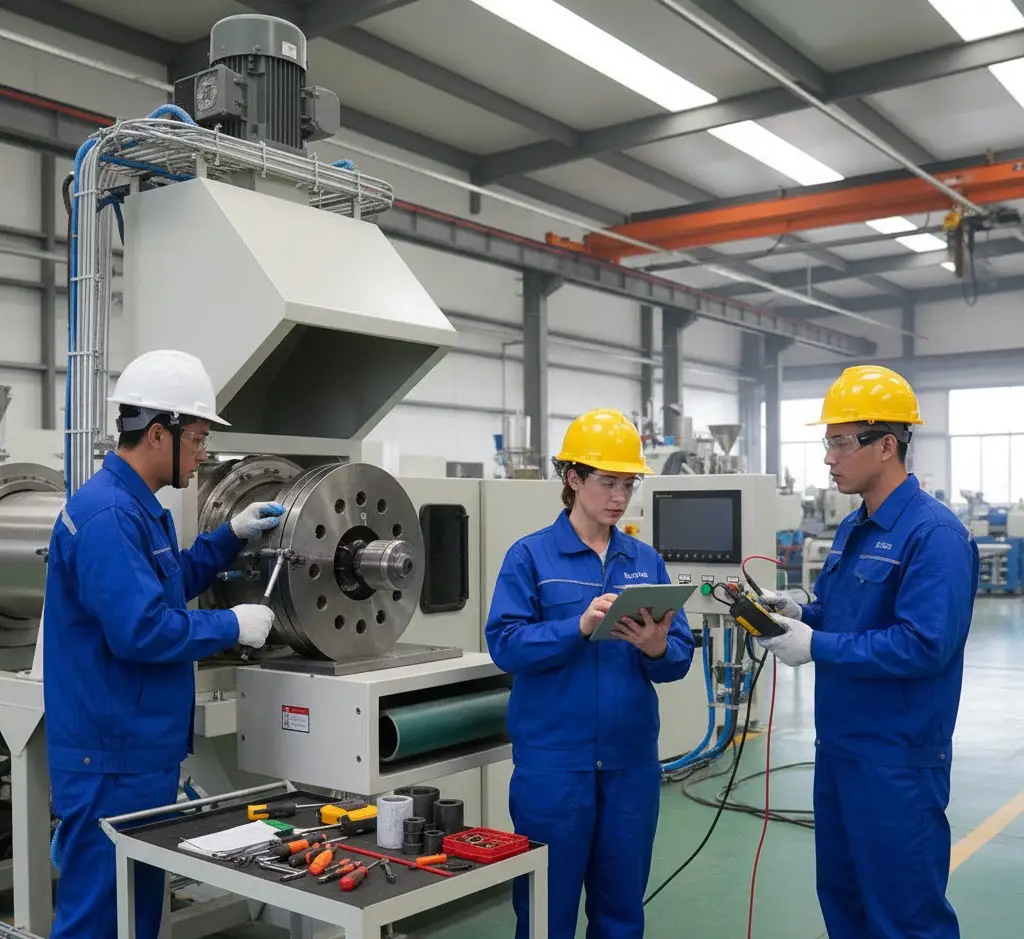
Routine machine maintenance includes daily or weekly checks performed by operators during normal production activities. These tasks often involve visual inspections, basic adjustments, and cleanliness control. In plastic manufacturing environments, routine maintenance supports safe machine operation and helps maintain consistent product quality. Additionally, it strengthens operator awareness and reduces the likelihood of major mechanical issues.
Condition-based machine maintenance depends on real-time equipment conditions rather than fixed schedules. Maintenance teams perform actions only when indicators show signs of wear or performance decline. In plastic manufacturing, this approach helps optimize maintenance timing for injection molding and extrusion machines. As a result, companies reduce unnecessary maintenance tasks while maintaining high machine efficiency.
Proactive maintenance focuses on identifying and eliminating the root causes of machine problems. Instead of treating symptoms, this method addresses issues such as improper alignment, poor lubrication practices, or incorrect operating parameters. In plastic processing facilities, proactive maintenance improves machine reliability and reduces long-term equipment damage. Consequently, it supports consistent production and lowers overall maintenance costs.
Emergency maintenance occurs when sudden machine failures disrupt production and require immediate attention. This type of maintenance often involves higher costs and safety risks, especially in plastic manufacturing environments with continuous production lines. Therefore, manufacturers aim to limit emergency maintenance by strengthening preventive and predictive maintenance programs.
Benefits of Machine Maintenance
Maintenance offers significant advantages for plastic manufacturing facilities by improving operational efficiency and equipment reliability. When companies follow structured machine maintenance programs, they can maintain consistent production quality while reducing unexpected interruptions. As a result, maintenance becomes a key factor in achieving stable and cost-effective manufacturing operations.
Reduced Downtime
It helps prevent sudden equipment failures that cause production stoppages. In plastic processing lines, downtime can lead to material waste and delayed deliveries. Therefore, proper machine maintenance ensures smoother operations and uninterrupted production flow.
Improved Equipment Lifespan
It protects critical components from excessive wear and damage. By performing timely inspections and adjustments, plastic manufacturers can extend the lifespan of their machinery. Consequently, companies reduce replacement costs and maximize the return on equipment investment.
Consistent Product Quality
Well-maintained machines operate with higher precision and stability. In plastic manufacturing, this consistency directly affects product dimensions, surface finish, and material performance. Thus, machine maintenance supports high-quality output and customer satisfaction.
Enhanced Workplace Safety
It helps identify mechanical risks and unsafe operating conditions. By maintaining guards, controls, and moving parts, manufacturers create safer production environments. As a result, companies reduce workplace accidents and protect their workforce.
Lower Maintenance Costs
Preventive and predictive machine maintenance reduces the need for costly emergency repairs. When companies plan maintenance activities in advance, they control expenses more effectively. Moreover, efficient machine maintenance minimizes production losses caused by unexpected breakdowns.
Machine Maintenance Best Practices
Applying effectivemaintenance best practices helps plastic manufacturers improve reliability, reduce downtime, and maintain consistent production quality. By following structured maintenance strategies, companies can protect their equipment and ensure smooth daily operations. Therefore, best practices play a crucial role in maximizing machine performance and operational efficiency.
Develop a Machine Maintenance Schedule
Creating a clear maintenance schedule ensures that inspections, servicing, and part replacements occur on time. In plastic manufacturing, scheduled maintenance helps keep injection molding, extrusion, and recycling machines operating efficiently. As a result, companies avoid unexpected failures and maintain stable production flow.
Train Maintenance and Production Teams
Well-trained teams perform maintenance tasks more accurately and safely. When operators understand machine behavior and maintenance procedures, they can identify early warning signs of mechanical issues. Consequently, training improves response time and reduces the risk of major equipment damage.
Use Quality Spare Parts
Using high-quality spare parts supports machine durability and performance. In plastic processing facilities, reliable components help maintain precise machine operation and reduce wear. Moreover, quality parts minimize repeated repairs and long-term maintenance costs.
Monitor Machine Performance
Continuous monitoring allows manufacturers to track temperature, vibration, and operating efficiency. This approach supports predictive maintenance and helps identify performance changes early. Therefore, monitoring systems contribute to smarter maintenance decisions and improved machine reliability.
Keep Machines Clean and Organized
Clean machines operate more efficiently and last longer. In plastic manufacturing environments, dust, residue, and material buildup can affect machine accuracy. Regular cleaning supports safe operation and maintains consistent product quality.
Conclusion
Machine maintenance is an essential part of achieving efficient and reliable operations in the plastic manufacturing industry. By applying structured maintenance strategies, manufacturers can reduce downtime, extend equipment lifespan, and maintain consistent product quality. Moreover, effective machine maintenance improves workplace safety and helps control long-term operating costs.
When companies understand the different types of machine maintenance and follow proven best practices, they create more stable and productive manufacturing environments. Investing in proper maintenance is not only a technical decision but also a strategic step toward sustainable growth.