

Introduction
A machine for plastic is an essential part of modern manufacturing, enabling the production of a wide range of plastic products used in construction, packaging, automotive, medical, electrical, and consumer industries. These machines are designed to process raw plastic materials efficiently and transform them into finished products with precise dimensions, consistent quality, and excellent performance.
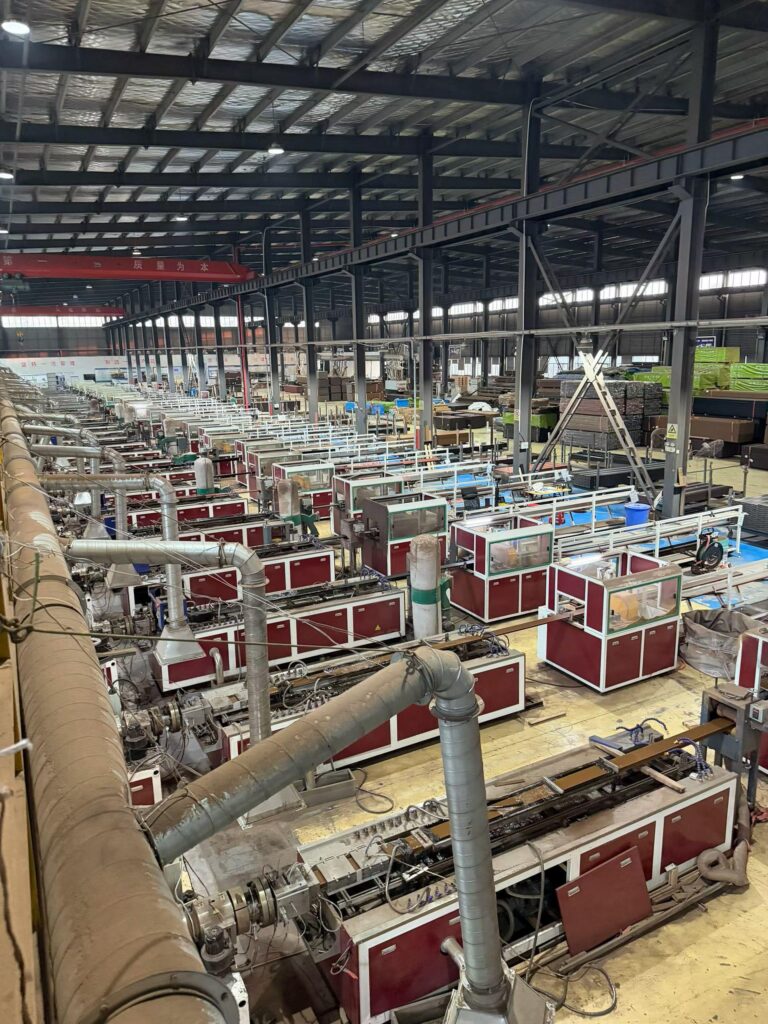
As global demand for plastic products continues to increase, manufacturers rely on advanced plastic machinery to improve productivity, reduce operational costs, and maintain high production standards. Modern plastic processing equipment combines automation, precision engineering, and energy-efficient technologies to support continuous industrial production.
Performance and Manufacturing Efficiency
Modern plastic machines are engineered to deliver high productivity while maintaining excellent product quality and operational reliability.
Key performance characteristics include:
- High production output.
- Continuous manufacturing capability.
- Precise process control.
- Consistent product quality.
- Efficient material utilization.
- Reduced production waste.
- Energy-efficient operation.
- Stable long-term performance.
These capabilities help manufacturers optimize production and improve profitability.
Types of Plastic Processing Machines
The plastics industry utilizes various types of machinery, each designed for specific manufacturing processes and product requirements.
Plastic Extrusion Machines
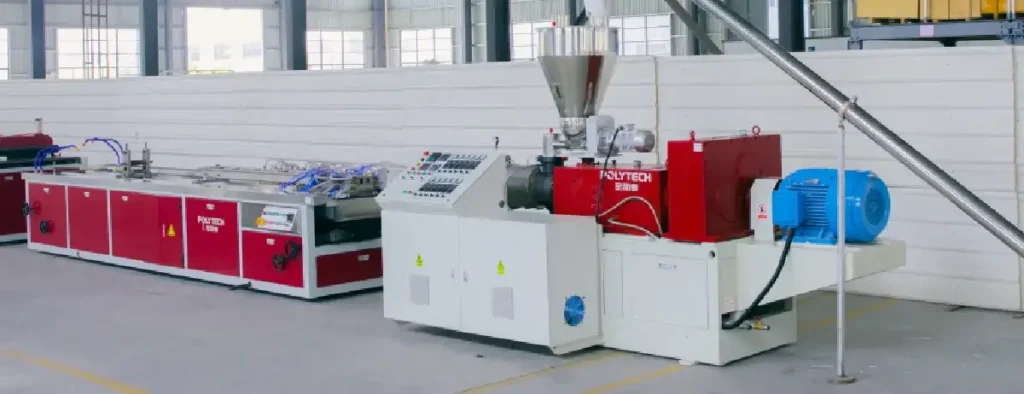
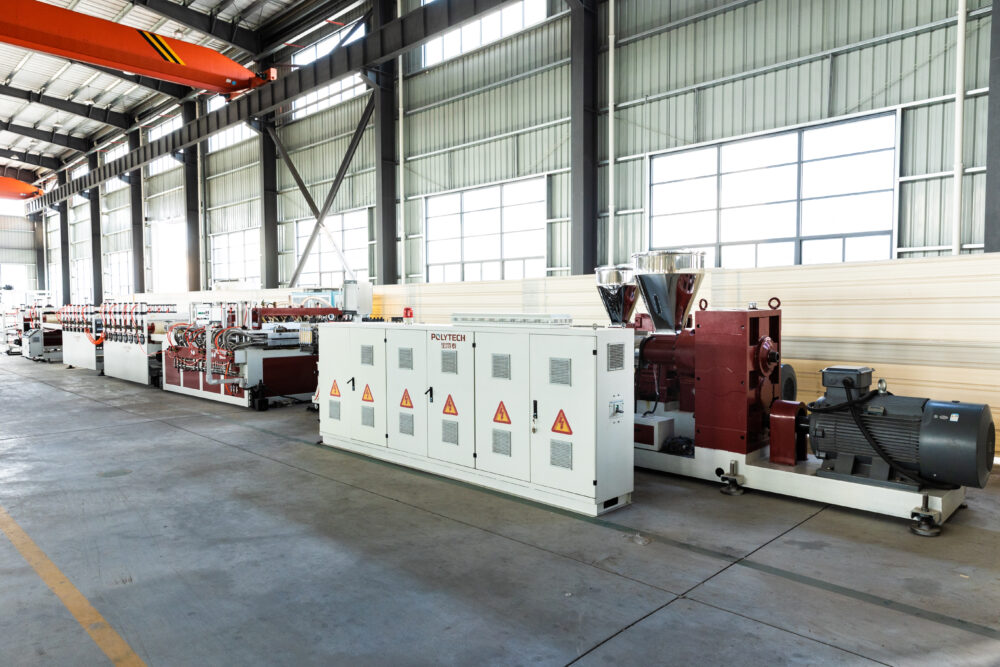
Extrusion machines are used to manufacture pipes, profiles, sheets, panels, films, tubing, and cable management products through a continuous production process.
Plastic Recycling Machines
These machines convert plastic waste into reusable raw materials, supporting sustainable manufacturing and reducing environmental impact.
Plastic Pelletizing Machines
Pelletizing systems transform processed plastic materials into uniform granules that can be used in future production cycles.
Plastic Mixing and Compounding Equipment
Compounding machines blend polymers, additives, fillers, and colorants to create customized material formulations.
Plastic Molding Machines
Molding systems produce complex plastic components for automotive, packaging, consumer goods, and industrial applications.
Each machine plays a critical role in supporting efficient and reliable plastic manufacturing operations.
Main Components of a Plastic Machine
Modern plastic machinery consists of several integrated components that work together to ensure smooth production and consistent product quality.
Material Feeding System
Provides accurate and continuous delivery of raw materials into the processing equipment.
Processing Unit
The core section where materials are melted, mixed, formed, or processed according to production requirements.
Drive System
Includes motors and transmission components responsible for powering the machine.
Heating and Cooling Systems
Maintain optimal processing temperatures to ensure stable material performance.
Control System
Advanced PLC and automation systems monitor and regulate production parameters.
Product Handling Equipment
Includes calibration units, haul-off systems, cutters, conveyors, and stacking equipment used in product finishing.
Benefits of Advanced Plastic Machinery
Investing in high-quality plastic machines provides numerous advantages for manufacturers.
Increased Productivity
Automated systems allow higher production rates with minimal manual intervention.
Improved Product Quality
Precision controls ensure consistent dimensions, appearance, and material properties.
Lower Operating Costs
Efficient equipment reduces energy consumption and minimizes material waste.
Production Flexibility
Modern machines can process various materials and produce multiple product types.
Reduced Downtime
Durable components and advanced monitoring systems improve operational reliability.
Long Service Life
Robust machine construction supports continuous industrial use and extended equipment lifespan.
These benefits make modern plastic machinery a valuable investment for manufacturing facilities.
Applications of Plastic Machines
Plastic processing machines are used across numerous industrial sectors worldwide.
Construction Industry
Production of pipes, wall panels, ceiling panels, profiles, sheets, and building materials.
Packaging Industry
Manufacturing films, containers, trays, sheets, and protective packaging products.
Automotive Industry
Production of interior components, technical parts, and lightweight plastic solutions.
Electrical Industry
Manufacturing conduits, cable ducts, insulation materials, and electrical components.
Medical Industry
Production of medical tubing, packaging, and specialized healthcare products.
Consumer Goods Industry
Creating furniture components, storage products, household items, and decorative materials.
The versatility of plastic machines enables manufacturers to serve a wide variety of markets and applications.
The Future of Plastic Machinery
The plastic manufacturing industry continues to evolve through advancements in automation, digital monitoring, and energy-efficient technologies. Modern machines now incorporate smart control systems, real-time production monitoring, and predictive maintenance capabilities that improve operational efficiency.
In addition, sustainability initiatives are driving the development of recycling technologies and environmentally responsible production solutions. These innovations help manufacturers reduce waste, improve resource utilization, and meet growing environmental expectations.
Conclusion
A machine for plastic is a fundamental element of modern manufacturing, providing the technology needed to produce high-quality plastic products efficiently and consistently. From extrusion and recycling to compounding and molding, plastic machinery supports countless industrial applications worldwide. With ongoing advancements in automation, performance, and sustainability, modern plastic machines continue to play a crucial role in driving productivity and innovation across the plastics industry.