

Introduction
Machine design is the engineering discipline dedicated to creating mechanical devices that perform specific tasks. It integrates principles of mechanics, materials science, kinematics, and manufacturing to turn ideas into functional machines. In practical terms, machine design involves defining a machine’s purpose, calculating loads and forces, selecting materials, and detailing components to ensure the device works reliably under real-world conditions. This article provides a comprehensive overview of machine design, covering its fundamental concepts, types, workflows, tools, applications, and future trends
What Is Machine Design?
Machine design refers to the creative and systematic process of developing machines or mechanical systems to fulfill a desired function. In essence, it’s the bridge between an engineer’s ideas and a working product. The process typically starts by identifying requirements (e.g. force output, speed, size constraints, cost, safety), and proceeds through concept generation, analysis, prototyping, and testing. Good machine design balances multiple factors: it ensures that the machine can withstand applied loads without failure, meets performance criteria (speed, accuracy, efficiency), is manufacturable and maintainable, and often considers economic and environmental constraints.
Engineers rely on foundational engineering principles in machine design. For example, mechanics of materials helps determine whether shafts, gears, or frames can endure stress, strain, and fatigue during operation. Kinematics and dynamics inform how moving parts interact, influencing things like gear ratios, linkage motion, and vibration. Thermodynamics or fluid mechanics may apply if the machine involves heat engines or hydraulics. Manufacturing knowledge guides choices of materials and production methods (e.g. casting, machining, injection molding). These fundamentals ensure that designs are both functional and safe.
Engineering Fundamentals of Machine Design
Machine designers must apply core engineering concepts throughout the process. Key fundamentals include:
Statics and Dynamics: Calculating forces, torques, and motion. Engineers use free-body diagrams and equations of equilibrium to size beams, shafts, and supports, and dynamics to predict moving part behavior.
Mechanics of Materials: Analyzing stress, strain, and deformation in components under load. Concepts like bending stress, torsional stress, and fatigue life are critical to ensure parts don’t fail under repetitive loads.
Kinematics of Mechanisms: Designing linkages, cams, gears, and belt/pulley systems that create the desired motion. This involves velocity, acceleration, and motion path analysis to synchronize moving parts smoothly.
Materials Science: Selecting suitable materials (metals, plastics, composites) based on properties such as strength, stiffness, weight, corrosion resistance, and cost. The right material choice can vastly improve machine performance and longevity.
Manufacturing Processes: Ensuring the design is manufacturable. Designers must consider machining tolerances, assembly methods, joining techniques (welding, bolting), and whether the design allows cost-effective production.
Control and Electronics (for mechatronic machines): When machines incorporate sensors, actuators, or controllers, knowledge of electrical and control engineering becomes important to integrate feedback systems (e.g. servomotors in robotic arms).
By grounding the design in these engineering areas, designers create machines that not only perform the intended task, but also meet safety and reliability standards.
Types of Machine Design
Machine design projects can take several forms, and engineers often categorize them by purpose or stage of development. Common types include:
New Machine Design: Creating a machine for a new application or function that has not been built before. This often starts from basic principles and may involve significant innovation.
Redesign/Upgrade: Improving an existing machine’s performance, efficiency, or features. This might involve replacing parts, reconfiguring components, or applying new technology to an old design.
Custom or Production Design: Adapting a machine design for manufacture in quantity. Here, the focus is on standardization, cost reduction, and ease of assembly (design for manufacturability).
Component Design: Sometimes a “machine” is part of a larger system. For example, designing a gearbox or pump as a component of an automobile or industrial process.
Energy Conversion Machines: Special category involving machines that convert energy forms (e.g. engines, turbines, electric motors). These designs integrate thermodynamics or electromagnetics as core elements.
Some technical classifications in the literature include static vs. dynamic design (static for stationary structures vs dynamic for moving parts) and mechanism design vs. structural design. However, in practice, most machine design projects combine multiple aspects (structural integrity, motion, power transmission) in one workflow.
Machine Design Process and Workflow
Machine design follows a structured process, typically iterative and multi-stage. A typical design workflow includes:
Requirements Definition: Clarify what the machine must do. Gather specifications like loads, speeds, dimensions, operating environment, regulations, and budget. This step often involves stakeholders (clients, users) to ensure all needs are captured.
Conceptual Design: Brainstorm and sketch multiple concepts or architectures. Engineers might use freehand sketches, block diagrams, or simple CAD sketches. During this phase, creativity is key—many ideas (even some that seem outlandish) are generated before narrowing down. Techniques like morphological charts or TRIZ may be used.
Preliminary Analysis: Perform rough calculations or simulations to evaluate concepts. For example, check whether preliminary gear ratios produce required speed, or whether a selected material can handle the expected forces. This may involve hand calculations or quick CAD models.
Detailed Design (CAD Modeling): Create detailed computer-aided design (CAD) models of the chosen concept. Designers define exact dimensions, tolerances, material specifications, and assembly relationships. Complex assemblies (e.g. using CAD software like SolidWorks or Creo) allow engineers to visualize the full machine.
- Simulation and Analysis: Use engineering analysis tools (such as finite element analysis, multibody dynamics simulation, or CFD) to validate the design. For example, apply FEA to see stress concentrations in parts, run motion simulations for mechanism kinematics, or use CFD for fluid flow and thermal aspects. Insights from simulation often send the design back to revision for improvement.
Prototyping: Build a physical prototype or one/subsystem of the machine. Prototyping can be done with 3D-printed parts, off-the-shelf components, or custom-made elements. Testing the prototype under real or simulated conditions identifies any practical issues (fit, wear, noise, user interface) that digital models might miss.
Testing and Optimization: Instrument the prototype and run tests to measure performance, stress responses, vibrations, etc. Use test data to refine the design. This iterative loop (simulate, prototype, test, redesign) continues until the machine meets all performance, safety, and cost targets.
Final Documentation: Once validated, the final design is documented with engineering drawings, bill of materials (BOM), assembly instructions, and specifications needed for production. Proper documentation ensures the design can be manufactured and maintained correctly.
Throughout this workflow, cross-functional collaboration is common. For instance, designers often work with manufacturing engineers, electrical engineers (for mechatronic systems), and end-users to refine requirements and solutions. Modern workflows increasingly use concurrent engineering practices, where multidisciplinary teams collaborate in parallel to reduce development time.
Key Tools and Software in Machine Design
Today’s machine designers leverage advanced computer tools to boost productivity and innovation. Important tools include:
Computer-Aided Design (CAD) Software: Programs like SolidWorks, AutoCAD, CATIA, PTC Creo, Siemens NX, and Autodesk Inventor allow designers to create precise 2D drawings and 3D models of parts and assemblies. CAD systems support parametric modeling (easily adjusting dimensions) and often include libraries of standard components (nuts, bearings, etc.). They also generate the drawings and BOMs needed for manufacturing.
Computer-Aided Engineering (CAE) / Simulation Software: Analysis tools are integral to machine design. Finite Element Analysis (FEA) software (ANSYS, Abaqus, Fusion 360, Nastran) lets engineers simulate stresses, strains, and deflections in components. Computational fluid dynamics (CFD) tools (Fluent, OpenFOAM, Autodesk CFD) handle fluid flow and heat transfer problems. Multibody dynamics software (ADAMS, Simscape Multibody) analyzes mechanisms and vibrations. Simulation-driven design helps catch problems early and optimizes designs before any physical prototype is made.
Generative Design and Optimization Tools: Newer CAD platforms (like Autodesk Generative Design or nTopology) incorporate artificial intelligence and optimization algorithms to suggest efficient component geometries. For given loads and constraints, these tools can propose organic, often lightweight, structures that human designers might not conceive on their own.
CAM and 3D Printing Software: Once a design is finalized, Computer-Aided Manufacturing (CAM) software prepares instructions for CNC machining or additive manufacturing. Software like Mastercam, or 3D printer slicers (for example Cura or Slic3r), translate CAD models into tool paths and machine code. The rise of metal 3D printing and CNC milling has made rapid prototyping and manufacturing easier than ever.
Product Lifecycle Management (PLM) and Collaboration Tools: Complex machine design projects often use PLM systems (PTC Windchill, Siemens Teamcenter, etc.) to manage revisions, documents, and collaboration among large teams. Cloud-based CAD (Onshape, Fusion 360’s cloud features) enables real-time collaboration on models.
Using these tools, machine designers can streamline workflow, reduce errors, and explore many design alternatives quickly. As one industry source notes, modern machine design increasingly “relies on CAD and simulation tools to improve efficiency and accuracy in development”.
Real-World Applications of Machine Design
Machine design principles apply across countless industries and devices. Some examples include:
Automotive and Transportation: Designing engines, transmissions, suspension systems, and chassis components. For instance, engineers design gearboxes using machine design to ensure durability under high torque. Electric vehicle motor and battery cooling systems are also products of advanced machine design.
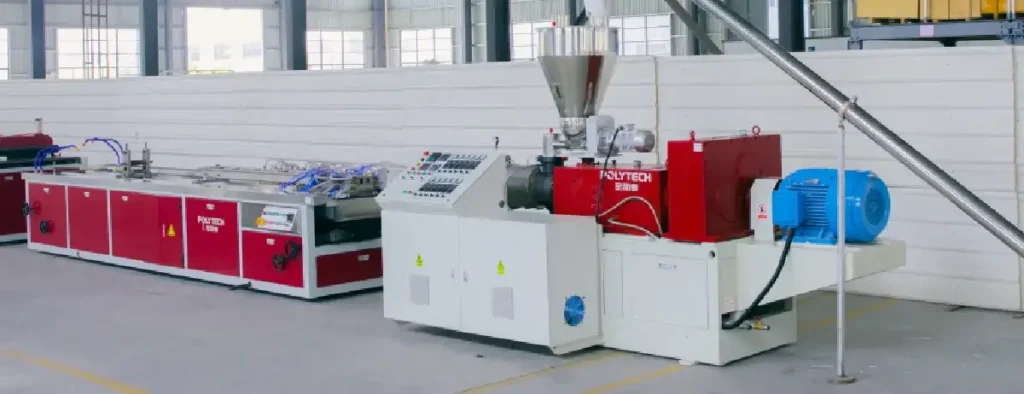
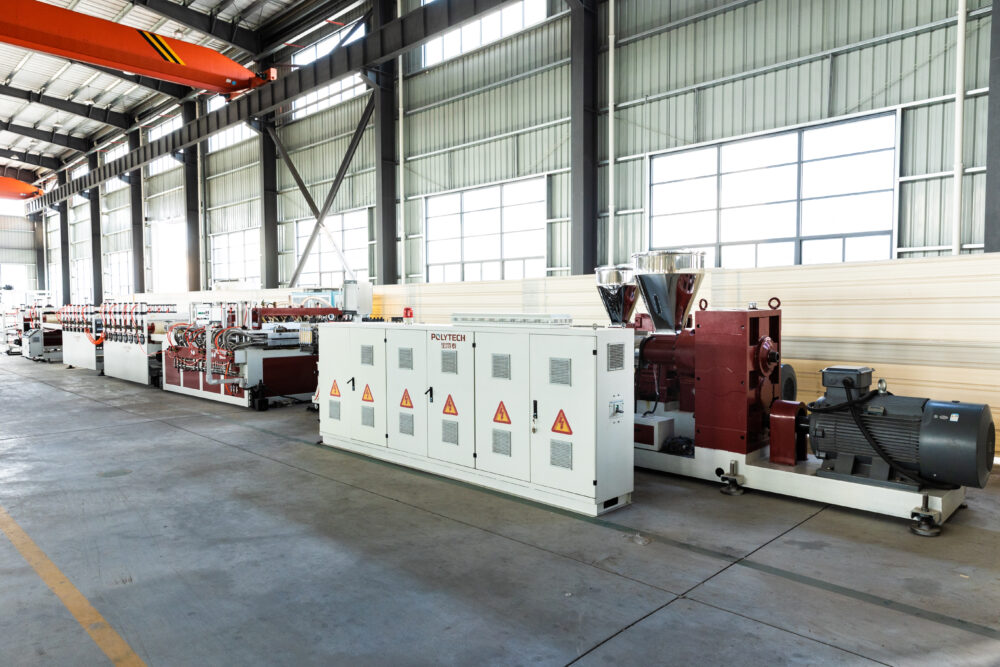
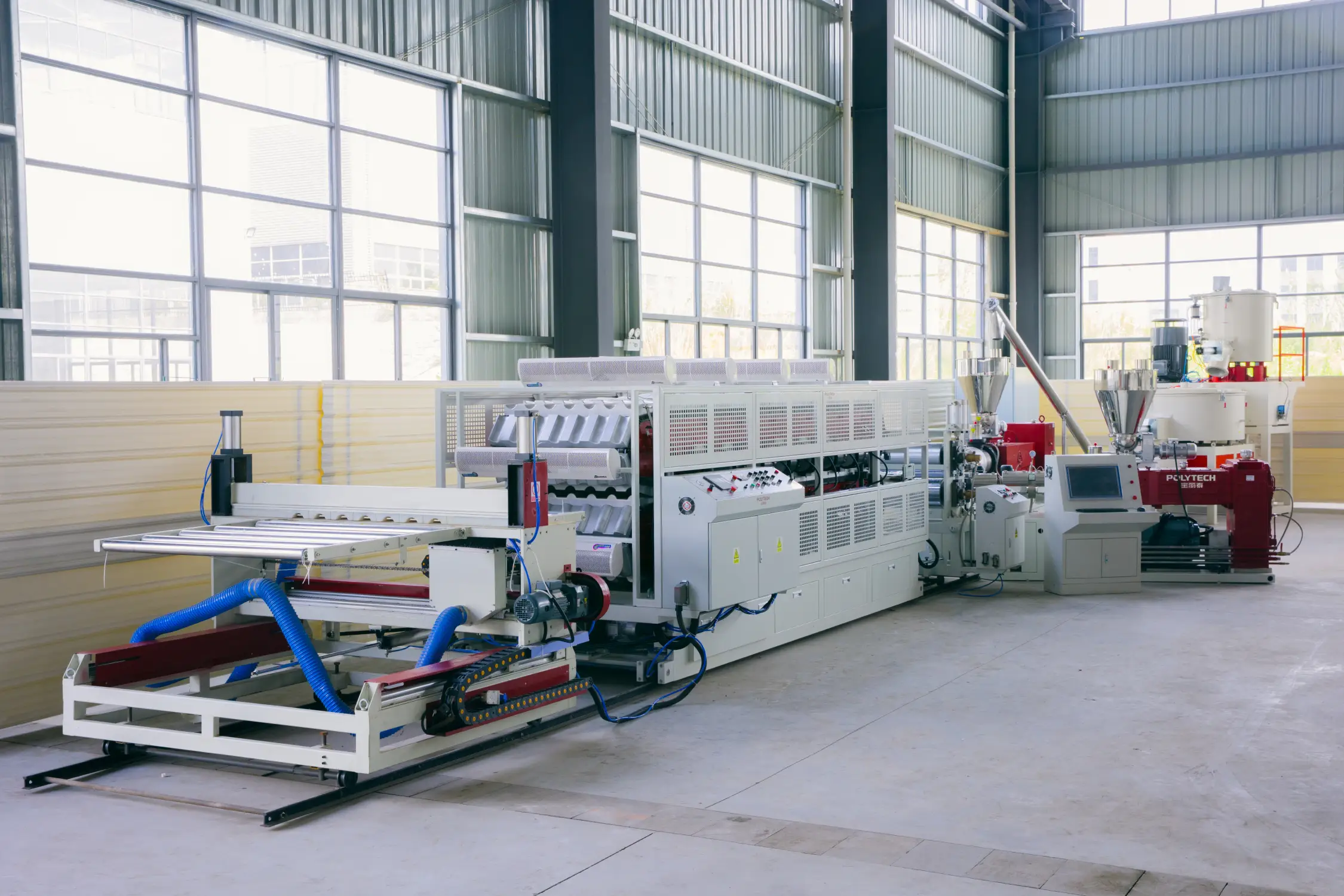
Industrial Machinery: Creating factory equipment like conveyor systems, presses, packaging machines, and CNC machine tools. Each must be designed for reliability under continuous use. A heavy-duty hydraulic press, for example, is the result of detailed machine design to withstand high forces and ensure safety.
Robotics and Automation: Robots and automated systems (industrial robots, drones, assembly line arms) rely on precise mechanism design for motion and load-bearing. Designing a robotic arm involves kinematics (for reach and flexibility), actuator selection, and structural analysis to prevent flexing under load.
Aerospace and Defense: Aircraft landing gear, actuators, and missile guidance mechanisms are products of high-stakes machine design. These systems require meticulous analysis for weight optimization and extreme reliability under varying temperature and pressure conditions.
Consumer and Medical Devices: Everyday machines like 3D printers, kitchen appliances, or medical pumps are designed using machine design. For instance, designing a medical ventilator requires integrating pneumatic mechanisms, electronics, and user controls into a compact, safe device.
Energy and Power Systems: Wind turbines, hydroelectric turbines, and pumps all involve machine design to convert energy efficiently. For example, the rotor and gearbox in a wind turbine are designed to balance performance with material fatigue life under cyclic loads.
In each application, the core of machine design is the same: start with requirements (e.g. load capacity, speed, durability), apply engineering analysis, and iterate toward an optimized mechanical solution. The result is a physical product—be it a smartphone component or a factory robot—that reliably fulfills its function.
Emerging Trends in Machine Design
Machine design is evolving rapidly thanks to new technologies and practices. Some of the emerging trends shaping the field include:
Generative and AI-Driven Design: As mentioned, generative design tools leverage artificial intelligence to explore thousands of design variations. This leads to innovative geometries (often lightweight, organic shapes) that balance strength with minimal material. Such approaches are becoming more common, especially in industries like aerospace and automotive, where reducing weight is crucial.
Additive Manufacturing (3D Printing): The ability to 3D-print metal and plastic parts is transforming design freedom. Designers can create complex internal channels or lattice structures (for cooling or weight reduction) that were impossible with traditional machining. This encourages rethinking parts to be more integrated and material-efficient.
Digital Twins and Virtual Prototyping: Machine designers now create digital twins—virtual replicas of machines that simulate real-world operation. With digital twins, engineers can monitor performance data (sometimes in real time) and predict failures before they happen. Virtual reality (VR) and augmented reality (AR) tools also allow teams to visualize and interact with 3D models, aiding in design reviews and assembly planning.
Integration of Sensors and IoT: More machines are designed with embedded sensors for condition monitoring and feedback control. For example, an industrial pump might include vibration sensors that help predict bearing wear. Designers now often consider how to incorporate electronics and connectivity from the early stages.
Sustainability and Materials: Environmental considerations are influencing machine design. This includes designing for recyclability, using sustainable materials, and optimizing energy efficiency. For instance, hybrid and electric vehicle drivetrains require rethinking traditional engine systems for lower emissions.
Multidisciplinary Collaboration: Modern machines are increasingly mechatronic, combining mechanical, electrical, and software components. Trends in machine design thus include tighter collaboration between mechanical engineers, electrical engineers, and software developers, often using integrated development platforms.
Together, these trends point toward a future where machine design is more automated, data-driven, and interdisciplinary. Engineers who embrace these technologies can design more efficient, intelligent machines at a faster pace than traditional methods allow.
In summary, machine design is the backbone of mechanical engineering innovation. By applying sound engineering fundamentals, leveraging powerful design tools, and following a systematic workflow, designers turn ideas into tangible machines. The field continues to evolve with advances like AI-driven design and additive manufacturing, promising ever more capable and efficient machines for the future.