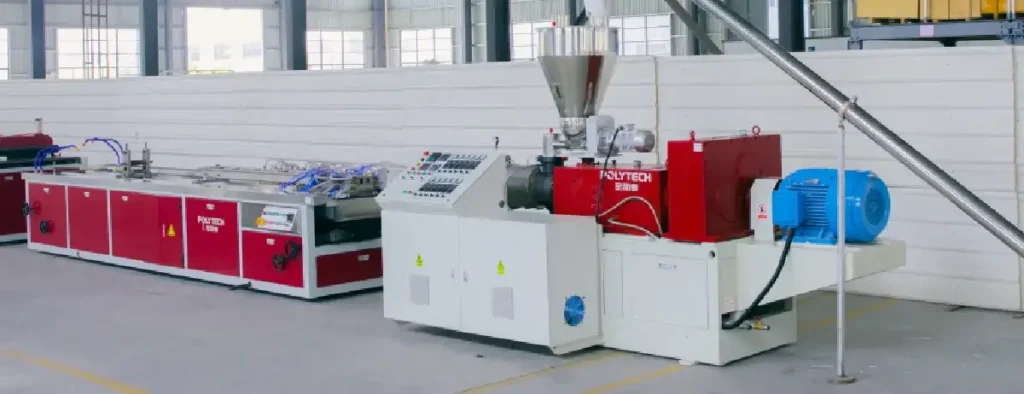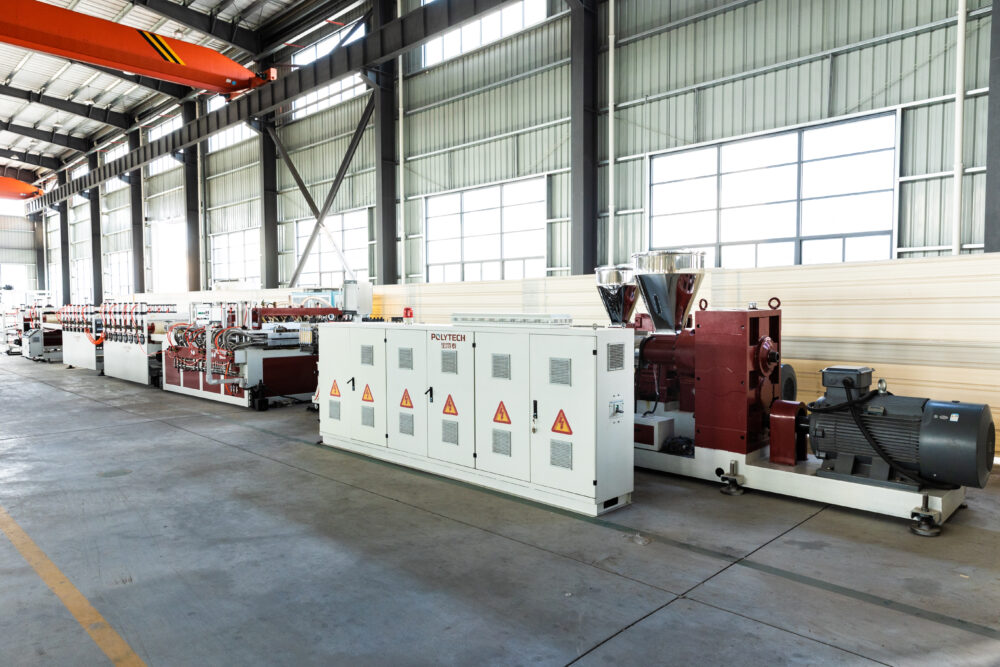


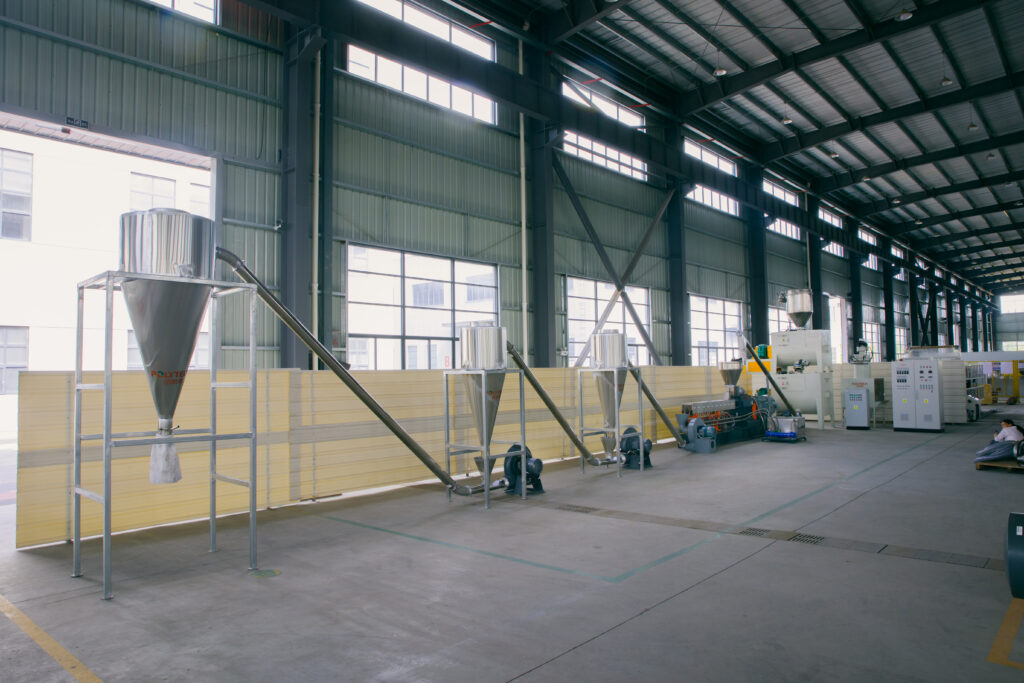
What Is a Granulation Line?
A granulation line is an integrated production system designed to convert powders or fine particles into uniform granules with controlled size, density, moisture, and flow properties. Granulation is widely used in industries where consistent particle characteristics are important for downstream processing and final product quality.
Modern granulation lines can integrate multiple processing stages into one continuous or batch production system. Depending on the application, a complete line may include mixing, granulation, drying, milling, conveying, and other material-handling operations.
Leading granulation technology providers emphasize integrated process design, automation, efficient material transfer, and optimized production performance.
How Does a Granulation Line Work?
The working principle of a granulation line depends on the type of material and the required final product. In a typical process, raw powder is first introduced into the system and mixed to achieve a homogeneous composition.
The material then undergoes a granulation process in which smaller particles are combined to form larger and more uniform granules. Depending on the production method, granulation can be performed using wet or dry processing technologies.
After granulation, the material may pass through a drying system to reduce moisture content. Additional equipment such as a mill or sifter can then be used to control particle size before the finished granules are transferred to the next production stage.
An integrated system can reduce unnecessary manual handling and provide smoother material transfer between processing units.
Main Components of a Granulation Line
A complete granulation production line can contain several machines working together. The exact configuration depends on the material, production capacity, and required granule characteristics.
1. High Shear Mixer Granulator
A high shear mixer granulator combines and processes powders efficiently while introducing the necessary liquid or binding agent when wet granulation is required. It provides intensive mixing and helps create a consistent granulated product.
2. Fluid Bed Granulator and Dryer
Fluid bed technology can be used for both granulation and drying applications. Heated process air passes through the material, allowing efficient moisture removal and controlled processing.
Fluid bed dryers and granulators are commonly integrated into pharmaceutical granulation systems to create a streamlined production process.
3. Vacuum Conveying System
Material transfer is an important part of an automated granulation line. Vacuum conveying systems can transport processed material between machines while reducing manual handling and helping control dust exposure.
Closed material handling can also contribute to cleaner and more efficient production environments.
4. Cone Mill
A cone mill can be incorporated into a granulation line to control and improve the particle size distribution of the granulated material. It is particularly useful when a specific granule size is required for subsequent manufacturing operations.
5. Control and Automation System
Modern granulation lines can use PLC-based control systems and graphical HMI interfaces to monitor and control important process parameters. Automation can improve production consistency, reduce operator intervention, and provide better process monitoring.
Wet Granulation vs. Dry Granulation
There are two major approaches to powder granulation: wet granulation and dry granulation.
Wet Granulation
Wet granulation uses a liquid binder to help powder particles form larger granules. After the granulation stage, the material normally requires drying to achieve the desired moisture level.
Wet granulation is suitable when improved flowability, compressibility, and particle uniformity are required.
Dry Granulation
Dry granulation forms granules without adding a liquid binder. The powder is compacted and then processed into granules using suitable equipment.
Dry granulation can be useful for materials that are sensitive to moisture or heat, making the selection of the appropriate granulation method an important part of process design.
Benefits of a Modern Granulation Line
A well-designed granulation line can provide several important advantages for industrial production.
Improved Production Efficiency
Automation and integrated equipment can reduce manual operations and improve the overall efficiency of the production process. Combining several processing stages into one coordinated system can also reduce unnecessary transfer time.
Consistent Granule Quality
Controlled mixing, granulation, drying, and particle-size reduction can help manufacturers achieve more consistent granule characteristics.
Reduced Manual Handling
Automated conveying and closed material-transfer systems can minimize manual intervention and reduce the potential for dust generation during production.
Better Process Control
PLC and HMI-based control systems allow operators to monitor and adjust important process parameters. This can improve repeatability and make production easier to manage.
Flexible Production
Granulation lines can be designed and customized according to production capacity, material characteristics, factory layout, and specific process requirements. Both Glatt and Senieer emphasize customized and application-specific line concepts.
Applications of Granulation Lines
Granulation equipment is used in a variety of industries where powder materials need to be converted into controlled granular products.
Important applications include:
- Pharmaceutical manufacturing
- Food processing
- Nutraceutical production
- Chemical processing
- Fine chemicals
- Animal feed production
- Powder processing industries
- Health product manufacturing
The equipment configuration can vary significantly depending on the application, material properties, hygiene requirements, and desired production capacity. Senieer, for example, describes granulation solutions for pharmaceutical, food, health-product, feed, and fine-chemical applications.
Choosing the Right Granulation Line
Selecting the right granulation line equipment depends on several factors, including:
- Type and characteristics of the raw material
- Required granule size
- Production capacity
- Moisture requirements
- Wet or dry granulation process
- Batch or continuous production
- Required level of automation
- Factory layout
- Cleaning requirements
- Safety and containment requirements
A detailed understanding of the complete production process is important before selecting individual machines. A properly engineered granulation line should be designed around the final product requirements rather than simply combining standard equipment.
Continuous and Batch Granulation Lines
Granulation systems can be designed for either batch production or continuous processing.
Batch granulation processes handle a defined quantity of material during each production cycle. This approach can provide flexibility when different formulations or product types need to be manufactured.
Continuous granulation, on the other hand, is designed for an uninterrupted flow of material through the processing stages. Glatt highlights both batch and continuous line concepts, with vertical or horizontal product flow configurations available according to individual production requirements.
Why Is Equipment Integration Important?
A granulation line is more than a collection of individual machines. The way the equipment is connected and controlled has a major impact on overall production performance.
An integrated system can provide controlled material flow from mixing and granulation through drying, milling, and final transfer. This reduces unnecessary handling and can help create a more stable and efficient production process.
Glatt describes this approach as competence across the complete line, while Senieer provides integrated systems combining equipment such as high-shear granulators, fluid bed dryers, fluid bed processors, cone mills, conveying systems, and blenders.
Safety and Hygiene in Granulation Systems
Safety and product protection are essential considerations when designing a granulation production line, particularly in pharmaceutical and food-processing applications.
Modern systems can incorporate closed product handling, grounding and monitoring systems, safety interlocks, dust-control solutions, and cleaning systems. Automated processes can also reduce direct operator contact with the processed material.
Proper equipment selection and line design are therefore essential for maintaining safe, clean, and reliable production conditions.
Granulation Line: A Complete Production Solution
Modern granulation technology is moving toward more integrated, automated, and efficient production systems. Instead of operating individual machines separately, manufacturers can connect mixing, granulation, drying, milling, conveying, and control systems into one coordinated production line.
This approach can improve productivity, reduce manual handling, optimize process control, and provide more consistent product quality.
Conclusion
A granulation line is an essential production solution for industries that process powders and require controlled, uniform granules. From wet and dry granulation to fluid bed drying, milling, conveying, and automated control, each stage plays an important role in achieving reliable production results.
By selecting the appropriate granulation equipment and integrating the different processing stages into a complete production system, manufacturers can improve efficiency, product consistency, safety, and overall process performance.
Modern granulation lines can be customized for different production requirements, making them a flexible solution for pharmaceutical, food, chemical, nutraceutical, and other powder-processing industries.