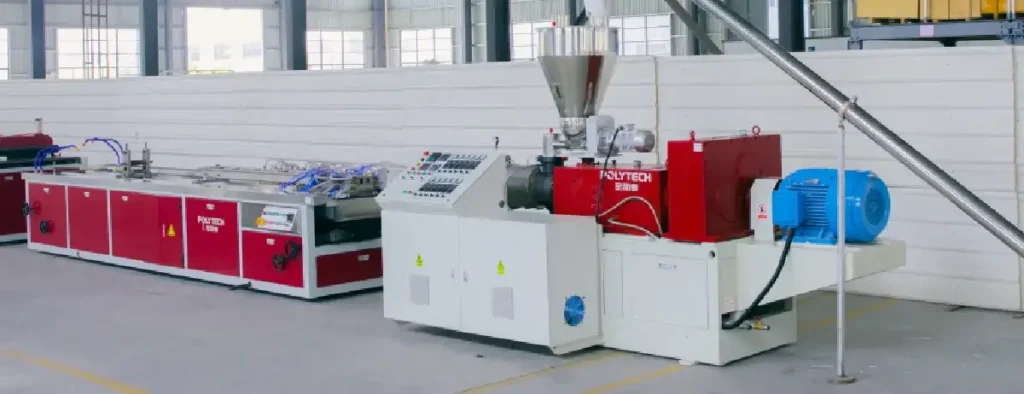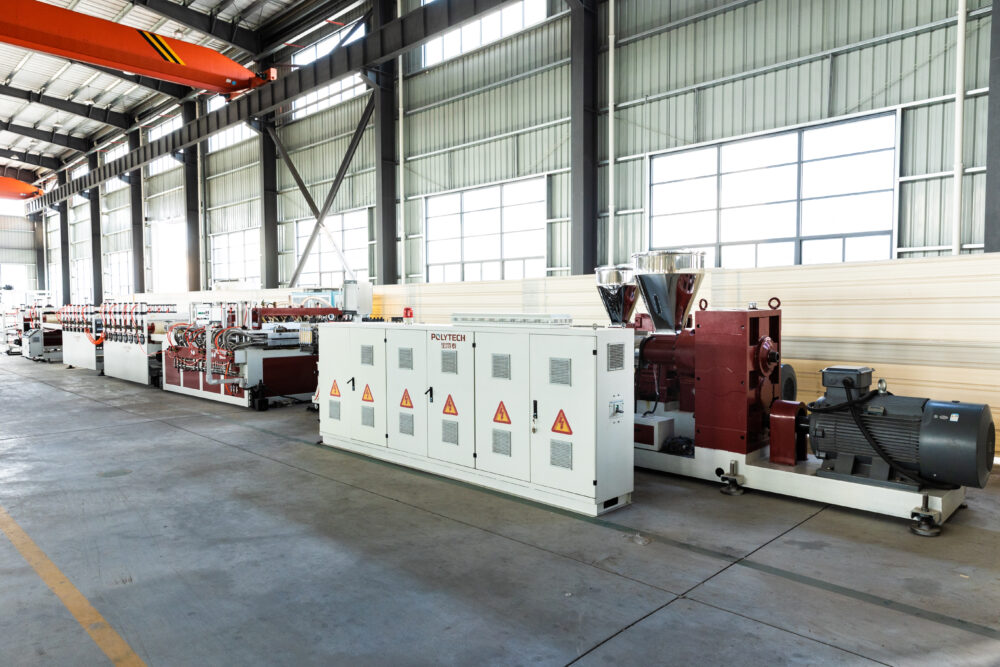


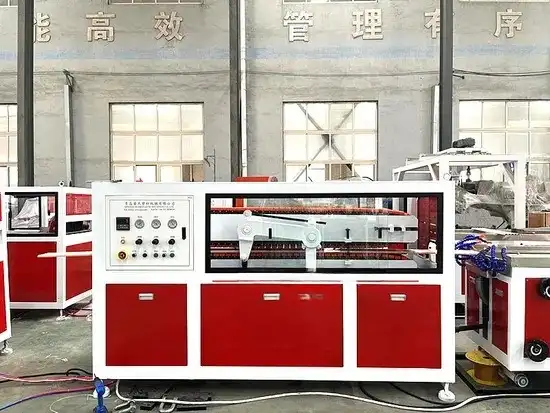
Introduction to Extrusion Products
Extrusion products are manufactured by forcing a material through a specially designed die to create a continuous product with a consistent cross-sectional shape. This manufacturing method is widely used in the plastics, rubber, metal, and food processing industries because it supports continuous production, dimensional consistency, and a broad range of product designs.
In the plastics industry, extrusion is one of the most important manufacturing technologies for converting polymer raw materials into finished or semi-finished products. These products include plastic pipes, profiles, sheets, films, tubes, panels, and many other components used in construction, packaging, agriculture, automotive manufacturing, and industrial applications.
The properties and dimensions of extrusion products depend on several factors, including the selected raw material, die design, processing temperature, screw configuration, cooling system, and production speed. Understanding these factors helps manufacturers select suitable extrusion equipment and achieve the required product quality.
What Are Extrusion Products?
Extrusion products are materials or components formed by continuously pushing a processed material through a die that determines the product’s cross-sectional geometry. Unlike manufacturing processes that create individual parts in separate cycles, extrusion can produce long, continuous lengths of material that are cut, wound, or processed further according to specific requirements.
Plastic extrusion products are typically manufactured by melting polymer granules or pellets inside an extruder and forcing the molten material through a forming die. After leaving the die, the material passes through cooling, calibration, and downstream handling equipment to achieve the required dimensions and physical properties.
One of the main advantages of extrusion is its ability to produce a wide variety of shapes and product structures. By changing the die design, polymer formulation, and production line configuration, manufacturers can produce products ranging from simple plastic tubes to complex profiles and multilayer sheets.
Extrusion products may be supplied directly to customers as finished goods or used as intermediate materials in other manufacturing operations, such as thermoforming, fabrication, printing, lamination, and assembly.
Types of Extrusion Products
Extrusion technology is used to manufacture many different products, depending on the material being processed, the die configuration, and the intended application.
1. Plastic Pipes and Tubes
Plastic pipes and tubes are among the most widely produced extrusion products. They are manufactured in different diameters, wall thicknesses, lengths, and material grades to meet the requirements of various industries.
Common materials include polyvinyl chloride (PVC), high-density polyethylene (HDPE), low-density polyethylene (LDPE), and polypropylene (PP). Each material offers different characteristics in terms of chemical resistance, flexibility, pressure performance, temperature resistance, and durability.
Plastic pipes are widely used in water distribution, drainage, irrigation, sewage systems, electrical cable protection, and industrial fluid transportation. The appropriate material and pipe design depend on operating pressure, fluid compatibility, temperature, installation conditions, and applicable standards.
2. Plastic Sheets and Boards
Plastic sheets and boards are produced by extruding molten polymer through a flat die to create a continuous sheet with a controlled width and thickness. Cooling and calibration systems help establish the final dimensions and surface characteristics.
Solid plastic sheets are used in signage, protective panels, industrial fabrication, packaging, and construction-related applications. Depending on the polymer, they can provide impact resistance, chemical resistance, flexibility, or transparency.
Hollow plastic sheets feature internal channels that reduce material consumption while providing useful stiffness and lightweight construction. Polypropylene hollow sheets are commonly used in reusable packaging, advertising displays, protective partitions, and storage applications.
Sheet extrusion lines can also be configured to manufacture multilayer products when different surface and core properties are required.
3. Plastic Profiles
Plastic profiles are extrusion products manufactured with specific cross-sectional shapes. Their designs may include channels, grooves, hollow sections, connecting features, or other geometries required for installation and assembly.
PVC profiles are commonly used in window and door systems, while other plastic profiles are used in furniture components, decorative panels, cable management systems, sealing applications, and industrial assemblies.
Profile extrusion requires accurate die design and dimensional control because the product must maintain its intended shape throughout cooling. Depending on the profile geometry, the production line may include specialized calibration tables, vacuum sizing systems, cooling tanks, haul-off units, and cutting equipment.
4. Plastic Films
Plastic films are thin, flexible materials produced through extrusion processes designed for film manufacturing. Depending on the required thickness and product properties, manufacturers may use blown film extrusion or cast film extrusion.
Blown film extrusion forms a tubular polymer film that is expanded into a bubble before cooling and winding. Cast film extrusion, by contrast, delivers molten polymer through a flat die onto a cooling system, producing a film with controlled thickness and surface characteristics.
Plastic films are widely used in food packaging, agricultural covers, shopping bags, protective wrapping, industrial packaging, and various consumer products. Film performance depends on material selection, thickness, sealing characteristics, mechanical strength, and the intended application.
5. Plastic Panels and Wall Cladding
Extrusion technology can produce plastic panels used in interior decoration, wall cladding, ceilings, and other building applications. PVC panels and wood-plastic composite (WPC) profiles are examples of products manufactured using specialized extrusion systems.
PVC panels are valued for their relatively low weight, ease of installation, and suitability for different surface finishes. WPC products combine wood-based materials with thermoplastic polymers to create composite products with application-specific mechanical and appearance characteristics.
Depending on the product design, extrusion lines may incorporate profile dies, calibration systems, cooling equipment, cutting units, and surface finishing processes.
6. Rubber Extrusion Products
Rubber extrusion is used to manufacture continuous rubber components with specific cross-sectional shapes. Products include sealing strips, gaskets, hoses, weatherstripping, and industrial rubber profiles.
The manufacturing process depends on the rubber compound and may involve additional operations such as vulcanization or curing after extrusion. These operations help develop the required final mechanical properties and performance.
Rubber extrusion products are commonly used in automotive manufacturing, construction, machinery, industrial sealing, and fluid-handling applications.
7. Metal Extrusion Products
Metal extrusion is another important application of extrusion technology. In this process, metal is forced through a die to create a product with a defined cross-sectional shape. Aluminum is particularly common because it can be extruded into a wide range of profiles.
Extruded aluminum products are used in building frames, heat sinks, transportation components, structural systems, and industrial equipment. Depending on the metal and process, extrusion may be performed under hot or cold conditions.
Although metal extrusion and plastic extrusion share the basic principle of forming material through a die, their equipment, processing conditions, material behavior, and downstream operations differ considerably.
How Are Plastic Extrusion Products Manufactured?
Plastic extrusion is a continuous manufacturing process that transforms polymer raw materials into products with controlled dimensions and shapes. The production line configuration varies according to the product type, but the main stages are generally similar.
1. Raw Material Feeding
The process begins with feeding polymer pellets, granules, or other suitable feedstock into the extruder hopper. Depending on the formulation and material requirements, the raw material may be blended with colorants, stabilizers, fillers, processing aids, or other additives.
Some polymers and formulations require drying or additional preparation before processing. Appropriate material handling helps maintain consistent feeding behavior and reduces the risk of moisture-related defects or processing instability.
2. Melting and Material Mixing
Inside the extruder, a rotating screw conveys the polymer through a heated barrel. As the material moves forward, heat from the barrel and mechanical energy generated by the screw help melt and homogenize the polymer.
Screw geometry, rotational speed, temperature settings, and feed rate affect material mixing and output stability. These parameters must be selected according to the polymer’s processing characteristics and the required production rate.
Consistent melting is important because variations in material temperature or flow can lead to defects such as uneven thickness, surface irregularities, or dimensional inconsistency.
3. Die Forming
The molten polymer is delivered through a die that shapes the material into the required product geometry. Different dies are used for pipes, tubes, profiles, sheets, and films.
The die must distribute the melt appropriately and provide the intended cross-sectional shape. Die design, temperature control, melt pressure, and flow balance influence product quality.
For multilayer products, co-extrusion technology can combine two or more polymer streams through a specially designed die to create a product with multiple functional layers.
4. Cooling and Calibration
After leaving the die, the extruded material must be cooled and stabilized. The cooling method depends on the product geometry and may involve water tanks, calibration tables, vacuum sizing systems, chilled rollers, air cooling, or combinations of these technologies.
Pipes and profiles often require calibration equipment to maintain their external dimensions. Sheets are commonly cooled and sized using rollers, while films may use air rings or chill rolls depending on the extrusion method.
Effective cooling and calibration help reduce deformation and maintain the required dimensional tolerances.
5. Haul-Off and Cutting
A haul-off system pulls the product through the downstream equipment at a controlled speed. Maintaining synchronization between extrusion output and haul-off speed is essential for achieving consistent dimensions.
Depending on the product, the finished material may be cut into fixed lengths, wound into rolls, or transferred to additional processing equipment. Pipes and profiles are commonly cut to specified lengths, whereas films and many flexible sheets are wound into rolls.
6. Quality Control and Final Inspection
Quality control is an essential part of extrusion manufacturing. The inspection methods depend on the product and may include dimensional measurement, thickness testing, visual inspection, mechanical testing, and evaluation of relevant material properties.
For pressure pipes, additional tests may be required to verify performance under specified operating conditions. For plastic films, manufacturers may evaluate tensile properties, thickness variation, sealing behavior, or other application-specific characteristics.
Consistent inspection helps identify production deviations and supports compliance with customer specifications and applicable industry standards.
Materials Used in Extrusion Products
Selecting the right raw material is critical to the performance and suitability of an extrusion product. Each polymer has different processing characteristics and physical properties.
Polyvinyl Chloride (PVC)
PVC is widely used for pipes, profiles, panels, conduits, and other construction-related products. Depending on its formulation, PVC can be produced as a rigid or flexible material.
Its applications include drainage systems, window and door profiles, cable protection, wall panels, and industrial components. Processing conditions must be carefully controlled to prevent thermal degradation.
Polypropylene (PP)
PP is used in pipes, sheets, hollow boards, packaging products, and selected industrial components. It offers low density, useful chemical resistance, and a broad range of processing possibilities.
PP extrusion products are commonly selected when low weight and application-specific mechanical or chemical properties are important.
Polyethylene (PE)
PE is widely used in pipes, films, tubing, and protective products. Different polyethylene grades provide different combinations of flexibility, stiffness, impact resistance, and environmental stress resistance.
HDPE is frequently used for pressure pipes and industrial applications, while LDPE and linear low-density polyethylene (LLDPE) are common in flexible film manufacturing.
Acrylonitrile Butadiene Styrene (ABS)
ABS is an engineering thermoplastic used for profiles, sheets, and other products requiring a combination of impact resistance, rigidity, and surface quality.
Its suitability depends on the grade, operating environment, and requirements of the finished product.
Thermoplastic Elastomers (TPEs)
Thermoplastic elastomers combine elastomer-like flexibility with thermoplastic processing characteristics. They are used to manufacture seals, flexible profiles, grips, and other products that require elastic behavior.
The specific TPE formulation determines its hardness, flexibility, chemical resistance, and temperature performance.
Applications of Extrusion Products Across Industries
Extrusion products support manufacturing operations in numerous industrial sectors because the process can produce continuous materials with application-specific dimensions and properties.
Construction Industry
The construction sector uses extruded pipes, profiles, conduits, panels, and cladding products. These materials may be used in drainage systems, cable protection, window and door assemblies, interior finishing, and other building applications.
Material selection depends on the installation environment, expected service life, mechanical requirements, and relevant building or product standards.
Packaging Industry
Plastic films, sheets, tubes, and hollow boards are widely used in packaging applications. Extrusion makes it possible to manufacture materials with different thicknesses, widths, and functional properties.
Packaging manufacturers may use these products for protective wrapping, bags, trays, reusable containers, dividers, and other packaging components.
Agriculture
Extrusion products are used in irrigation pipes, agricultural films, protective covers, and selected water distribution systems. These products must be suitable for their operating environment, including exposure to sunlight, temperature variations, moisture, and agricultural chemicals where relevant.
The correct polymer grade and product design help determine durability and performance under field conditions.
Automotive Industry
Extruded plastic and rubber components are used in automotive interiors, sealing systems, protective covers, tubing, and cable management applications.
Depending on the intended use, manufacturers may require specific dimensional accuracy, temperature resistance, flexibility, surface finish, or mechanical strength.
Electrical and Electronics Industry
Plastic extrusion is used to manufacture cable insulation, protective conduits, wire coverings, and selected electrical enclosures or profiles.
Electrical applications may require materials with defined insulation properties, flame performance, thermal stability, and compliance with applicable standards.
Furniture and Interior Design
Extruded plastic profiles and composite products are used in furniture edging, decorative trims, panel systems, and selected interior components. PVC and WPC products are examples of materials that can be processed into customized shapes and finishes.
The extrusion process allows manufacturers to develop profiles that fit specific assembly requirements and design preferences.
Advantages of Extrusion Manufacturing
Extrusion offers several advantages for producing continuous products across different industries. The benefits depend on the material, equipment configuration, product requirements, and operating conditions.
Continuous production: Extrusion can manufacture long lengths of material without requiring a separate forming cycle for each section. This makes it suitable for high-volume production of pipes, profiles, films, and sheets.
Design flexibility: Changing the die and adjusting the production setup allows manufacturers to produce different cross-sectional shapes and dimensions within the capabilities of the equipment.
Consistent product dimensions: Properly controlled extrusion, cooling, and calibration systems help maintain dimensional consistency and repeatable product quality.
Material versatility: Extrusion can process a wide range of thermoplastics, elastomers, metals, and other suitable materials, although each material requires an appropriate process and machine configuration.
Integration with downstream processes: Extrusion lines can be integrated with cutting, winding, printing, lamination, co-extrusion, and other manufacturing operations.
Potential for material efficiency: Suitable process control and effective scrap management can reduce waste and improve raw material utilization. Actual material efficiency depends on the product design, startup losses, process stability, and recycling practices.
Factors to Consider When Selecting Extrusion Equipment
Selecting suitable extrusion equipment requires a clear understanding of the product, raw material, required output, and operating conditions.
Product Type and Dimensions
The first step is to define the product geometry, dimensions, wall thickness or sheet thickness, and required tolerances. Pipe, profile, film, and sheet production lines use different dies and downstream equipment, so the machine configuration must match the intended application.
Material Characteristics
The selected extruder must be compatible with the polymer or compound being processed. Factors such as melt viscosity, processing temperature, thermal sensitivity, moisture sensitivity, and additive content influence the required screw design and temperature-control system.
Production Capacity
Required output should be evaluated alongside product dimensions and quality requirements. A machine’s nominal output alone does not determine actual production performance, which also depends on material characteristics, die design, cooling capacity, and downstream line speed.
Energy Consumption and Operating Costs
Energy use, raw material consumption, labor, maintenance, and downtime all affect manufacturing costs. Comparing equipment based on the expected production conditions can provide a more useful assessment than relying only on the purchase price.
Automation and Process Control
Modern extrusion lines may include automatic feeding, temperature control, melt-pressure monitoring, thickness measurement, and synchronized downstream equipment. The appropriate automation level depends on production volume, product tolerances, and operational requirements.
Maintenance and Technical Support
Reliable equipment operation depends on preventive maintenance, access to spare parts, operator training, and technical support. These factors should be considered when comparing extrusion machinery suppliers and planning long-term production operations.
The Role of Extrusion Products in Modern Manufacturing
Extrusion products remain important because they provide manufacturers with a practical way to produce continuous materials in standardized or customized shapes. From plastic pipes and packaging films to building profiles and industrial seals, extruded materials support a wide range of everyday and specialized applications.
Developments in screw design, die engineering, automation, process monitoring, and material formulation continue to improve the capabilities of extrusion manufacturing. Depending on the application, manufacturers may also adopt co-extrusion, recycled-material processing, and more efficient cooling and handling systems.
Choosing the right combination of material, equipment, and process parameters is essential for achieving the desired balance of product quality, manufacturing efficiency, and operating cost.
Conclusion
Extrusion products are essential components and materials used in construction, packaging, agriculture, automotive manufacturing, electrical systems, and many other industries. The extrusion process enables the continuous production of pipes, tubes, sheets, films, profiles, panels, and other products with a wide range of shapes and properties.
Successful extrusion manufacturing depends on selecting suitable raw materials, designing the correct die, maintaining stable processing conditions, and using effective cooling, calibration, and quality control systems.
For manufacturers planning to establish or expand an extrusion operation, understanding the available product types and production technologies is an important step toward selecting equipment that meets their technical requirements and long-term business objectives.