

Introduction
Extrusion production is one of the most efficient and widely used manufacturing methods in modern industry. The process involves forcing a material through a specially designed die to create continuous products with a fixed cross-sectional profile. In the plastics industry, extrusion production is essential for manufacturing pipes, profiles, sheets, panels, tubing, films, cable ducts, and many other products used across various sectors.
The popularity of extrusion production comes from its ability to provide continuous operation, high productivity, consistent quality, and cost-effective manufacturing. Modern extrusion systems combine advanced machinery, automation technologies, and precise process control to meet the growing demands of global industries.
Understanding the Extrusion Production Process
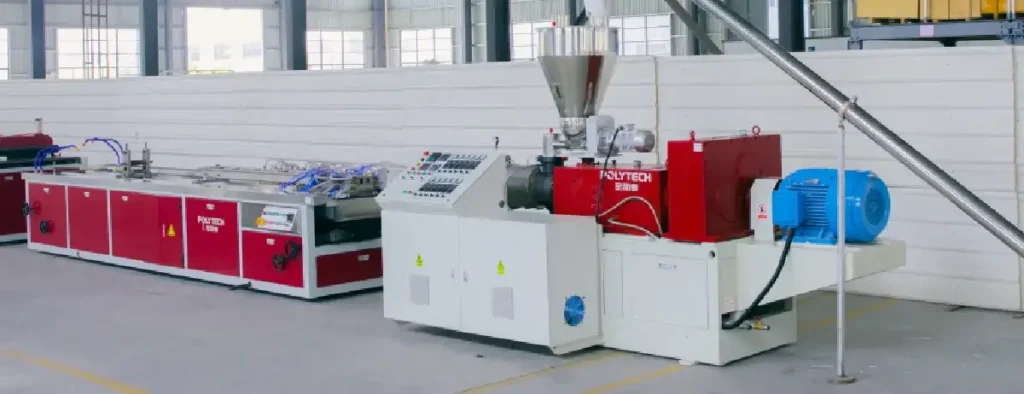
The process begins with feeding raw materials into an extrusion machine. Inside the extruder, the material is heated, compressed, mixed, and transformed into a homogeneous molten state.
The processed material is then pushed through a specially designed die that determines the final product shape. After exiting the die, the product enters cooling and calibration systems where dimensions are stabilized and product quality is maintained. The final stage includes cutting, winding, stacking, or packaging according to production requirements.
Because extrusion operates continuously, it offers significant advantages in productivity and manufacturing efficiency compared to many other production methods.
Main Stages of Extrusion Production
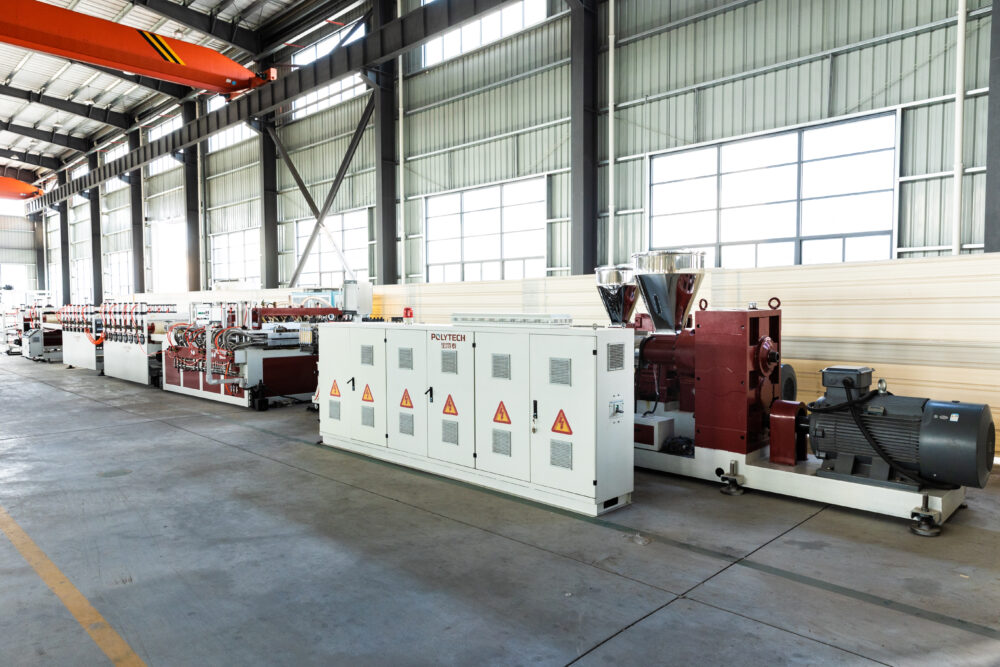
A typical extrusion production line consists of several critical stages working together to ensure smooth operation and consistent product quality.
1. Raw Material Feeding
Materials are accurately delivered into the extrusion system to ensure stable processing conditions.
2. Melting and Plasticizing
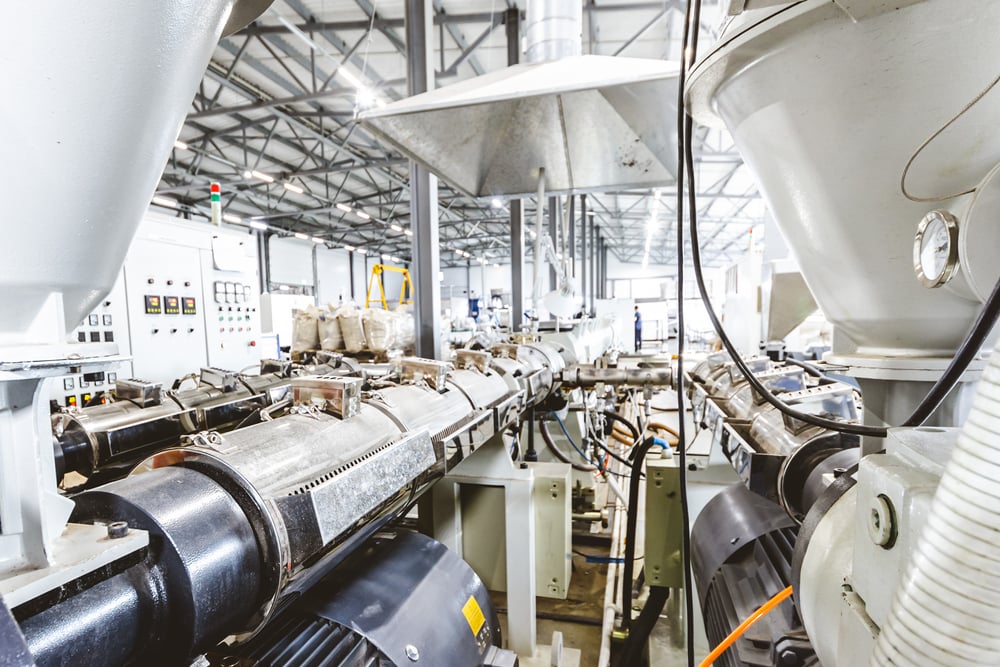
The screw and barrel system melts and homogenizes the material for uniform processing.
3. Shaping Through the Die
The molten material passes through a precision die that creates the desired product profile.
4. Cooling and Calibration
Cooling systems stabilize the product dimensions and improve surface quality.
5. Haul Off and Cutting
The product is transported and cut into specified lengths or prepared for further processing.
Each stage contributes to achieving high-quality production and reliable manufacturing performance.
Benefits of Extrusion Production
Extrusion production offers numerous advantages that make it one of the most preferred manufacturing technologies worldwide.
High Production Efficiency
Continuous operation enables manufacturers to achieve high output volumes with minimal interruptions.
Consistent Product Quality
Advanced process control ensures precise dimensions, uniform thickness, and stable material properties.
Cost Effective Manufacturing
Efficient use of raw materials and automated production reduce overall manufacturing costs.
Production Flexibility
Extrusion systems can produce a wide range of products in different sizes, shapes, and specifications.
Minimal Material Waste
The process maximizes material utilization and supports recycling of production scrap.
Scalability
Extrusion lines can be configured to support both medium-scale and large-scale production requirements.
These advantages contribute significantly to operational efficiency and business profitability.
Industrial Applications of Extrusion Production
Extrusion production supports countless industrial sectors due to its efficiency and flexibility.
Construction Industry
Production of pipes, profiles, wall panels, ceiling panels, window frames, and cable management systems.
Packaging Industry
Manufacturing films, sheets, containers, and protective packaging products.
Electrical Industry
Production of conduits, insulation materials, and cable protection systems.
Automotive Industry
Manufacturing trim components, interior profiles, and technical plastic parts.
Medical Industry
Production of medical tubing and specialized healthcare products.
Consumer Products
Creating furniture components, decorative profiles, and household items.
The broad range of applications demonstrates the importance of extrusion production in modern manufacturing.
Materials Used in Extrusion Production
Extrusion production can process numerous materials depending on the application and product requirements.
Common materials include:
- PVC (Polyvinyl Chloride)
- HDPE (High Density Polyethylene)
- LDPE (Low Density Polyethylene)
- PP (Polypropylene)
- ABS (Acrylonitrile Butadiene Styrene)
- PET (Polyethylene Terephthalate)
- PC (Polycarbonate)
- TPU (Thermoplastic Polyurethane)
The versatility of extrusion technology allows manufacturers to serve multiple industries using a wide variety of materials.
Performance and Production Efficiency
Modern extrusion production lines are designed to deliver outstanding performance while maintaining product consistency and operational reliability.
Key performance characteristics include:
- High output capacity.
- Continuous manufacturing operation.
- Precise dimensional control.
- Stable material processing.
- Reduced downtime.
- Energy-efficient operation.
- Excellent surface quality.
- Long-term production reliability.
These performance benefits help manufacturers achieve greater productivity while maintaining high quality standards.
Quality Control in Extrusion Production
Quality control is a critical element of successful extrusion production. Manufacturers implement comprehensive monitoring systems throughout the production process to ensure product consistency and compliance with technical specifications.
Typical quality control procedures include:
- Raw material inspection.
- Melt temperature monitoring.
- Dimensional verification.
- Surface quality inspection.
- Mechanical property testing.
- Final product evaluation.
These measures help maintain production stability and ensure customer satisfaction.
Future of Extrusion Production
Advancements in automation, digital monitoring, and energy-efficient technologies continue to improve extrusion production capabilities. Smart manufacturing systems now provide real-time process monitoring, predictive maintenance, and enhanced production optimization.
Additionally, growing interest in sustainability has encouraged manufacturers to adopt recycling technologies and environmentally responsible production practices. These innovations are shaping the future of extrusion manufacturing and improving overall industry efficiency.
Conclusion
Extrusion production remains one of the most important manufacturing processes in modern industry. Its ability to provide continuous operation, high efficiency, product consistency, and production flexibility makes it an essential technology for numerous industrial applications. As manufacturing technologies continue to advance, extrusion production will remain a key driver of innovation, productivity, and sustainable industrial growth.