

Introduction
Extrusion manufacturing is at the heart of modern plastic production. It is the process that enables manufacturers to create continuous shapes such as pipes, tubes, sheets, films, and custom profiles with high precision and efficiency. By melting plastic materials and forcing them through a shaped die, extrusion transforms raw polymers into durable, functional, and cost-effective products.
The extrusion manufacturing process plays a vital role in shaping the global plastics industry. It provides scalability, consistency, and flexibility—allowing manufacturers to meet growing market demands while maintaining tight quality standards. From building materials and packaging to automotive parts and electronic components, extrusion manufacturing enables the production of high-performance plastic solutions across industries.
With continuous advancements in machinery, automation, and polymer science, the extrusion manufacturing process continues to evolve—delivering improved product precision, lower waste, and greater sustainability. As industries worldwide seek efficient and eco-friendly production methods, extrusion manufacturing remains the foundation of innovation and reliability in modern plastic production.
What Is Extrusion Manufacturing in Plastics?
Extrusion manufacturing in plastics is a continuous production process where raw plastic materials, usually in the form of pellets or granules, are melted and shaped into long, consistent profiles. The process begins with feeding the material into a heated barrel, where it is melted and mixed by a rotating screw. The molten plastic is then forced through a die, which defines the final shape of the product.
Unlike other manufacturing methods that produce individual pieces, extrusion is designed for continuous output, making it highly efficient for producing products such as:
Pipes and tubes for water, gas, and industrial applications.
Plastic sheets and films used in packaging, signage, and construction.
Profiles and trims for windows, doors, and furniture.
Wires and cable coatings for electrical insulation.
The key advantage of extrusion is its ability to produce long, uniform products with consistent quality, while also being adaptable to different polymers, including PVC, PE, PP, ABS, and more.
Types of Plastic Extrusion Processes
Plastic extrusion is highly versatile, and depending on the design of the die and equipment, it can produce a wide variety of products. Below are the main types, explained in more detail:
This process uses a circular die to produce continuous hollow shapes.
Applications:
- Construction: Water supply, sewage pipes, and drainage systems.
- Industrial: Tubing for chemicals and gases.
- Medical: Catheters, IV tubing, and flexible medical hoses.
- Automotive: Fuel lines, brake system tubing, and protective conduits.
- Materials commonly used: PVC, HDPE, LDPE, PP, and PEX.
Produces wide, flat sheets of plastic with consistent thickness.
Sheets can later be thermoformed into trays, packaging, or machine covers.
Applications:
- Signage and Displays: PMMA, PETG, or polycarbonate sheets.
- Packaging: Food trays, blister packs.
- Construction: Wall panels, roofing sheets, and insulation boards.
- Materials used: PET, PP, PVC, PS, and ABS.
Produces thin plastic films either through cast film extrusion or blown film extrusion.
Cast Film Extrusion: The molten polymer is pressed into thin sheets by cooling rollers. Offers high clarity and strength.
Blown Film Extrusion: The molten plastic is inflated into a bubble, cooled, and flattened into rolls. Used for high-volume flexible packaging.
Applications:
Food Packaging: Wrappers, cling films, pouches.
Agriculture: Greenhouse covers, mulch films.
Consumer Products: Shopping bags, garbage bags.
Industrial: Stretch wrap for palletizing goods.
Designed to create products with custom cross-sections.
Applications:
Building Industry: Window frames, door seals, curtain rails.
Electrical: Cable ducts, conduits.
Furniture: Decorative trims, edging strips.
Automotive: Weather seals, bumpers, and dashboards.
Materials used: PVC, PP, TPE, and ABS.
A specialized extrusion process where molten polymer coats a conductor (wire or cable).
Applications:
- Electronics: Insulation for power cables, telecom wires, and fiber optics.
- Automotive: Harnesses, battery cables.
- Aerospace and Defense: High-performance insulation materials.
- Materials used: PVC, XLPE, PTFE, and silicone-based polymers.
📌 Summary: Each extrusion type serves a different industry, but they all share the same benefits: efficiency, scalability, and cost-effectiveness. By selecting the right extrusion process, manufacturers can meet specific performance and design requirements for their products.
Main Equipment Used in Plastic Extrusion
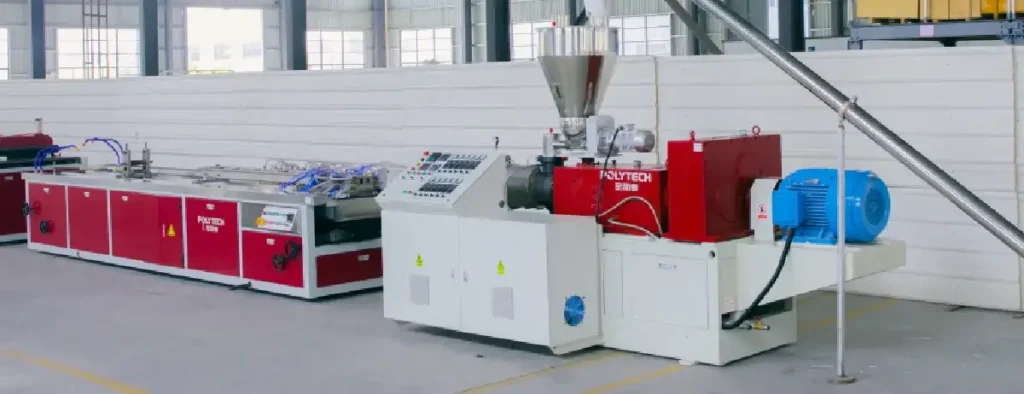
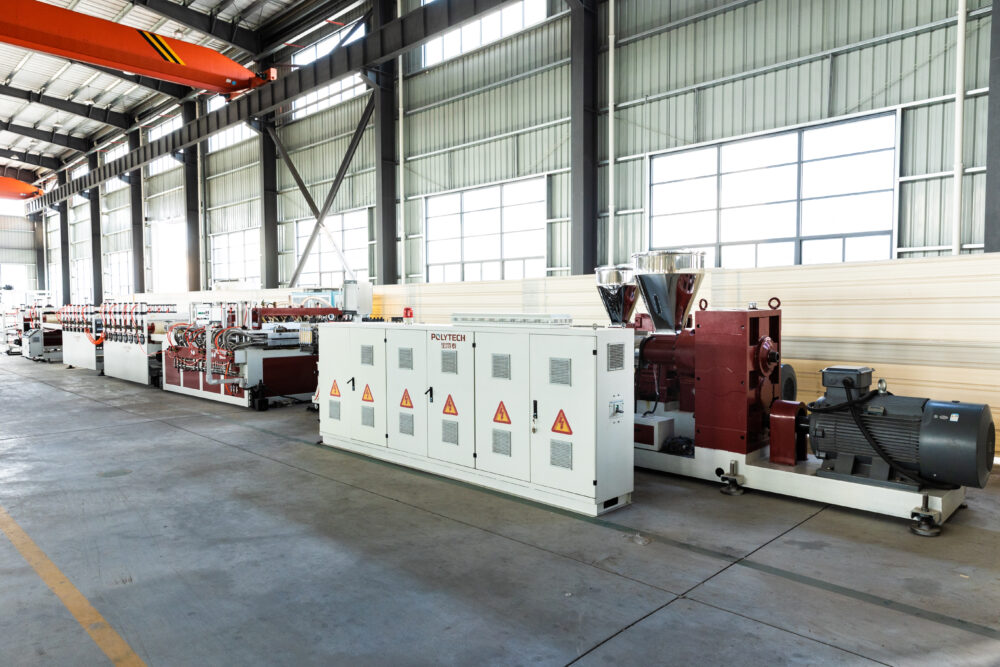
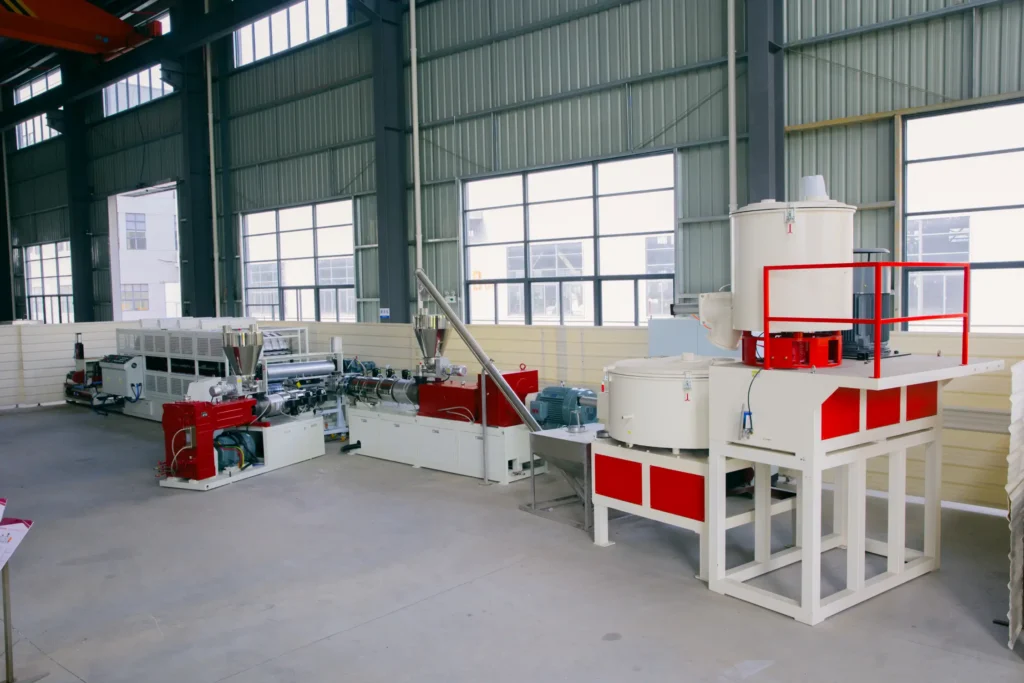
Plastic extrusion requires specialized machinery to transform raw polymer pellets into finished products. The process involves several key components, each playing an essential role in ensuring consistent quality and efficiency.
Barrel Design: Usually made from hardened steel with heating zones (electric heaters or oil circulation) to provide controlled melting.
Screw Design:
- Metering Zone: Ensures uniform melt.
- Compression Zone: Increases pressure, removes air.
- Feeding Zone: Moves solid pellets forward.
Advanced Features:
- Vented Extruders: Remove gases and moisture during melting.
- Co-extrusion Machines: Combine multiple layers of polymers for complex products (e.g., multilayer pipes, films).
- Volumetric Feeders: Supply material at a fixed rate.
- Gravimetric Feeders: Precisely control weight of input for consistency.
- Drying Units: Essential for hygroscopic plastics like PET or Nylon to avoid bubbles and weak spots.
- Additive Mixers: Add colorants, stabilizers, or fillers before melting.
Screw L/D Ratio (Length to Diameter):
High L/D ratio (30:1) → Better mixing, for films and sheets.
Low L/D ratio (20:1) → Faster melting, for pipes and rods.
Material: Screws are coated with bimetallic alloys to resist wear when processing glass-filled or abrasive polymers.
- Flat Dies: For sheets and films. Precision-lip adjustment allows uniform thickness.
- Annular Dies: For pipes and tubes. Air or water cooling stabilizes the circular shape.
- Profile Dies: Custom-made to produce complex profiles (e.g., window frames, cable insulation).
- Co-extrusion Dies: Allow multiple polymers to flow together in layers (e.g., barrier films, multi-layer pipes).
Water Bath Cooling Tanks: Pipes and profiles are pulled through long water channels for dimensional stability.
Vacuum Calibration Tanks: Used for pipes/profiles to ensure roundness and precise diameters.
Air Rings & Cooling Towers: In blown film extrusion, air rings stabilize the bubble before collapsing it into flat film.
- Caterpillar Pullers: Rubber belts or chains grip the product without damaging the surface.
- Synchronisation: Pulling speed is synchronized with screw speed to control product thickness and dimensions.
- Rotary Cutters: For pipes and hollow profiles, offering high-speed cutting without deformation.
- Saw Cutters: For thick-walled pipes and large profiles.
- Automatic Winders: For films and sheets, equipped with tension control to avoid wrinkles.
- Stackers: For rigid sheets and panels.
- PLC (Programmable Logic Controller) integration allows automatic control of:
Barrel temperature.
Screw speed.
Haul-off synchronization.
- SCADA Systems: Provide real-time monitoring, energy consumption data, and predictive maintenance alerts.
✅ Key Point: Modern extrusion lines are not just about the machines themselves, but also about automation, efficiency, and product consistency. Factories that invest in advanced extruders with PLC/SCADA control stand out with higher productivity and lower waste.
Advantages of Extrusion Manufacturing
Extrusion manufacturing offers several advantages that make it one of the most widely used plastic production methods in the industry.
High Efficiency and Productivity:
The extrusion process runs continuously, allowing factories to produce large volumes of plastic products without frequent stops. This leads to lower production costs and faster delivery times.
Wide Material Compatibility:
The process works with various thermoplastics such as PVC, HDPE, PP, ABS, and PET, giving manufacturers flexibility to choose the right material for each application — from rigid pipes to flexible films.
Consistent Product Quality:
Automated control systems maintain precise temperature and pressure levels, ensuring that every batch has the same thickness, strength, and surface finish.
Sustainability and Low Waste:
Unlike other manufacturing methods, extrusion minimizes waste since most scrap or off-spec material can be re-ground and reused. This supports eco-friendly operations and cost efficiency.
High Customization:
Factories can easily change dies, color additives, or polymer blends to produce different shapes and finishes — making extrusion suitable for both standard and specialized products.
Energy and Cost Efficiency:
Modern extrusion lines use energy-saving heaters, servo motors, and automatic cooling systems, reducing power consumption and maintenance costs while improving throughput.
Common Products Made by Extrusion
Extrusion manufacturing is behind a wide range of plastic products used in daily life and industrial applications. The versatility of the process allows factories to create components with different shapes, sizes, and performance levels.
Pipes and Tubes:
One of the largest product categories in extrusion. These include water pipes, gas pipes, conduit tubes, and medical tubing. They are valued for their durability, smooth surface, and resistance to corrosion.
Plastic Profiles:
Used in windows, doors, cable insulation, and construction trims. Extrusion allows precise control of complex cross-sections, making it ideal for custom architectural and electrical parts.
Films and Sheets:
Produced through flat-die or blown-film extrusion, these are used for packaging, labels, and protective coverings. Factories can adjust thickness and transparency to match client requirements.
Wires and Cables Coating:
In the electrical industry, extrusion applies insulating and protective layers around copper or aluminum wires, ensuring flexibility and safety in harsh environments.
Plastic Rods and Bars:
Often used as raw material for machining, 3D printing filaments, and prototype parts. They offer dimensional stability and can be cut or shaped easily.
Multi-Layer Products:
Advanced co-extrusion technology enables the creation of multi-layer films and pipes with improved barrier properties, combining different polymers for strength, flexibility, and chemical resistance.
✅ In summary: Extrusion allows plastic factories to meet a wide spectrum of market demands — from construction and packaging to automotive and electronics — all with precision, repeatability, and cost efficiency.
Quality Control & Testing in Extrusion Manufacturing
Quality assurance plays a crucial role in extrusion manufacturing, ensuring that every product leaving the factory meets performance, safety, and durability standards. Modern extrusion plants integrate smart monitoring systems and precise testing methods to maintain consistent output quality.
Raw Material Inspection:
The process begins with verifying raw polymer quality. Key parameters like melt flow index (MFI), moisture levels, and additive proportions are carefully tested before entering the extruder, ensuring stable material behavior during processing.
In-Process Monitoring:
Advanced PLC and sensor systems constantly supervise temperature, pressure, and screw speed. Real-time feedback allows automatic adjustments to maintain uniform flow, reducing operator errors and material waste.
Dimensional Accuracy:
Using laser or ultrasonic gauges, products such as pipes, profiles, and films are measured continuously to ensure thickness precision and flawless surface finish.
Mechanical Performance Testing:
Regular sampling verifies tensile strength, flexibility, and impact resistance. These tests confirm compliance with global standards such as ISO and ASTM, guaranteeing reliable end-use performance.
Surface and Visual Inspection:
Skilled technicians — supported by automated vision systems — monitor color uniformity, gloss, and surface quality to detect bubbles or imperfections early in production.
Environmental Resistance Tests:
For outdoor or industrial applications, products undergo UV exposure, thermal aging, and chemical resistance testing to confirm long-term stability and endurance.
✅ In summary: Effective quality control ensures that extrusion factories maintain customer confidence, deliver consistent products, and uphold international certification standards across all production batches.
Conclusion
The extrusion manufacturing process continues to be one of the most efficient and adaptable methods in the plastic industry. Through ongoing improvements in automation and material science, manufacturers can now achieve exceptional accuracy, strength, and sustainability in every product.
As technology evolves, the extrusion manufacturing process plays a key role in meeting the growing demand for high-performance plastic components used across industries — from construction to packaging.
By maintaining strict quality standards and innovation, the extrusion manufacturing process ensures consistent results that support modern production needs and global sustainability goals. Moreover, understanding and optimizing the extrusion manufacturing process allow companies to enhance efficiency, reduce waste, and deliver reliable products that meet international standards.