

Introduction
An extrusion line machine is one of the most important pieces of equipment in the plastics manufacturing industry. It is designed to transform raw thermoplastic materials into continuous products with consistent shapes, dimensions, and mechanical properties. Whether producing pipes, profiles, sheets, panels, tubing, pellets, or cable management systems, extrusion line machines provide the efficiency, precision, and reliability required for large-scale industrial production.
Modern extrusion lines combine advanced mechanical engineering, intelligent automation, and precise temperature control to achieve high productivity while maintaining excellent product quality. Their ability to operate continuously makes them one of the most cost-effective manufacturing solutions available today.
What Is an Extrusion Line Machine?
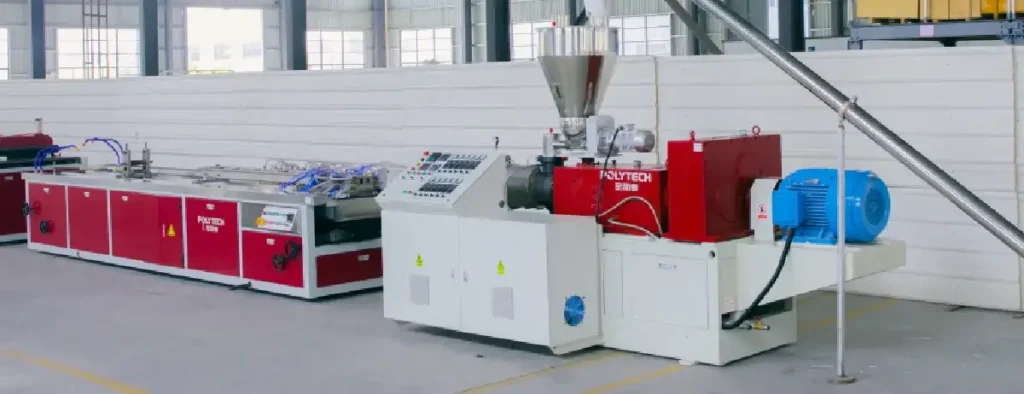
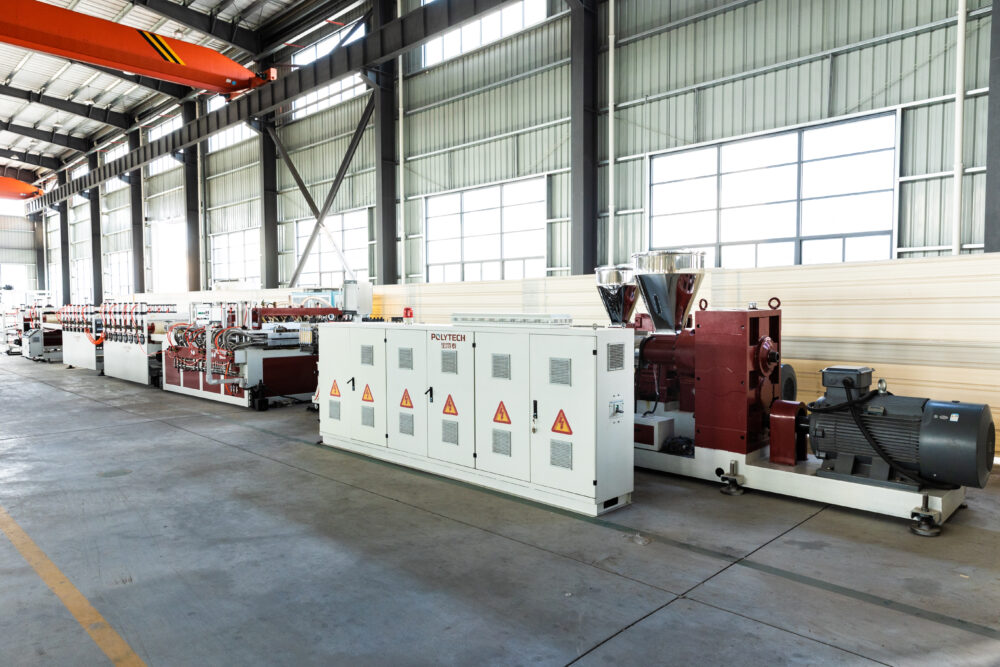
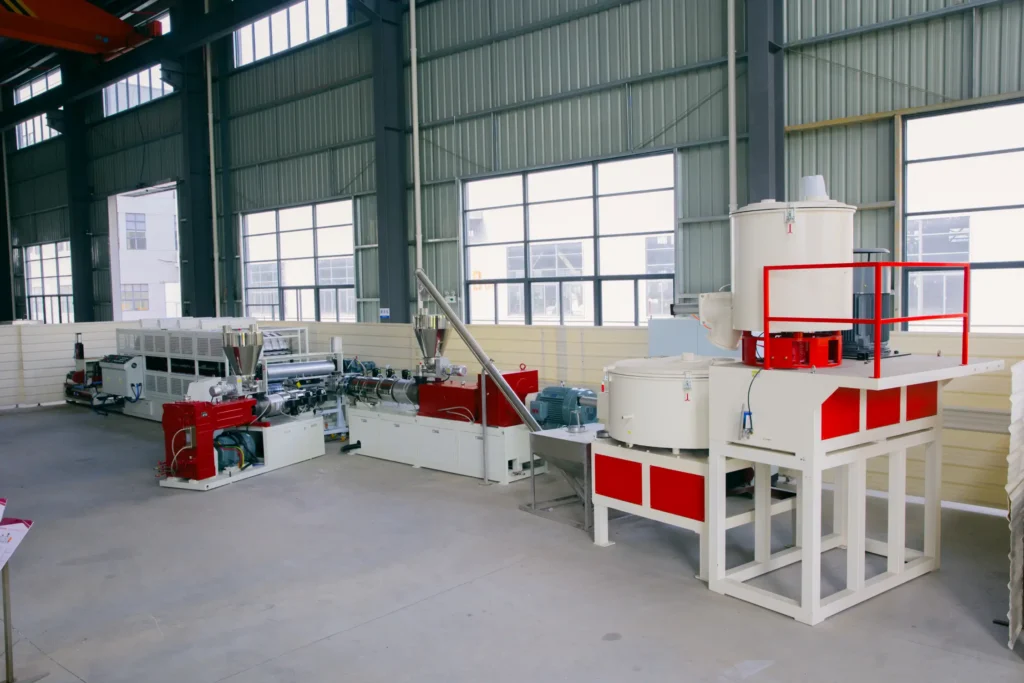
An extrusion line machine is a complete production system that melts plastic raw materials, forms them into a desired shape using an extrusion die, and cools the product before it is cut or collected. Unlike standalone equipment, an extrusion line consists of several integrated machines working together to ensure smooth and uninterrupted production.
Depending on the final product, extrusion lines can be configured for manufacturing plastic pipes, sheets, profiles, wall panels, ceiling panels, pellets, cable trunking, tubing, and many other plastic products.
The flexibility of modern extrusion technology allows manufacturers to produce customized products with excellent dimensional accuracy and consistent performance.
Main Components of an Extrusion Line Machine
A complete extrusion line consists of several integrated systems, each performing a specific function within the production process.
Material Feeding System
Automatically delivers raw materials into the extrusion machine while maintaining a consistent feed rate.
Extruder
The central unit responsible for melting, mixing, plasticizing, and conveying the material.
Screw and Barrel
Ensure efficient melting, material homogenization, and stable production output.
Extrusion Die
Shapes the molten plastic into the required profile, pipe, sheet, or panel.
Calibration Unit
Maintains dimensional accuracy immediately after the material exits the die.
Cooling System
Uses water or air cooling to stabilize the product and improve its mechanical properties.
Haul-Off Machine
Pulls the finished product through the production line at a controlled speed.
Cutting or Winding Unit
Cuts products to the required length or winds continuous products for storage and transportation.
Benefits of Using an Extrusion Line Machine
Investing in a modern extrusion line provides numerous operational and economic advantages.
1. High Production Efficiency
Continuous operation enables manufacturers to produce large volumes without frequent interruptions.
2. Excellent Product Consistency
Advanced process control ensures uniform dimensions and reliable product quality.
3. Cost-Effective Manufacturing
Efficient material utilization and automation help reduce production costs.
4. Production Flexibility
Extrusion lines can process different thermoplastic materials and manufacture various product types.
5. Reduced Material Waste
Optimized extrusion technology minimizes scrap and improves raw material utilization.
6. Long Equipment Lifespan
Robust machine construction supports reliable operation under continuous industrial conditions.
7. Easy Process Automation
Integrated control systems simplify machine operation and improve production management.
Applications of Extrusion Line Machines
Extrusion line machines support manufacturing across numerous industries.
Construction Industry
Production of water pipes, drainage pipes, wall panels, ceiling panels, window profiles, cable ducts, and decorative building materials.
Packaging Industry
Manufacturing plastic sheets, films, packaging materials, and protective products.
Electrical Industry
Production of cable trunking, conduit pipes, insulation materials, and wire protection systems.
Automotive Industry
Manufacturing interior trim, tubing, technical profiles, and lightweight engineering components.
Furniture Industry
Production of decorative profiles, furniture edges, boards, and interior finishing materials.
Recycling Industry
Processing recycled polymers into reusable pellets and raw materials for future manufacturing.
How an Extrusion Line Machine Works
The production process begins with feeding plastic raw materials into the extruder through an automatic feeding system.
Inside the extruder, the material passes through the screw and barrel assembly where it is heated, compressed, mixed, and transformed into a homogeneous molten material. The melt is then pushed through a specially designed die that forms the required product profile.
After exiting the die, the product enters the calibration and cooling section where its dimensions are stabilized. Finally, haul-off units transport the product to cutting, winding, stacking, or packaging systems depending on the production requirements.
This continuous manufacturing process ensures high productivity, consistent product quality, and minimal material waste.
Key Features of Modern Extrusion Line Machines
Modern extrusion lines incorporate advanced technologies that improve production efficiency and product consistency.
Key features include:
- Fully automated production control.
- High output capacity.
- Precision temperature regulation.
- Stable extrusion performance.
- Energy-efficient operation.
- User-friendly PLC control systems.
- Accurate dimensional control.
- Continuous production capability.
- Flexible material processing.
- Low maintenance requirements.
These features allow manufacturers to maximize productivity while maintaining high manufacturing standards.
Materials Processed by Extrusion Line Machines
Modern extrusion line machines are compatible with a wide variety of thermoplastic materials.
Common processing materials include:
- PVC (Polyvinyl Chloride)
- HDPE (High Density Polyethylene)
- LDPE (Low Density Polyethylene)
- PP (Polypropylene)
- PE (Polyethylene)
- ABS (Acrylonitrile Butadiene Styrene)
- PET (Polyethylene Terephthalate)
- PC (Polycarbonate)
- WPC (Wood Plastic Composite)
- SPC (Stone Plastic Composite)
This broad compatibility enables manufacturers to serve multiple industrial sectors using a single production technology.
Quality Control and Production Reliability
High-quality extrusion line machines integrate advanced monitoring systems that ensure stable production and consistent product quality.
Quality control procedures typically include:
- Raw material inspection.
- Melt temperature monitoring.
- Pressure control.
- Thickness and dimensional measurement.
- Surface quality inspection.
- Mechanical performance testing.
- Final product verification.
These procedures help manufacturers maintain product consistency while reducing production defects and downtime.
Future of Extrusion Line Technology
Extrusion technology continues to evolve with innovations in automation, smart manufacturing, and sustainable production. Modern extrusion lines increasingly feature digital monitoring systems, remote diagnostics, predictive maintenance, and energy-efficient designs that improve overall production performance.
Additionally, growing demand for recyclable materials and environmentally friendly manufacturing is driving the development of advanced extrusion systems capable of processing recycled polymers and bio-based plastics with exceptional efficiency.
Conclusion
An extrusion line machine is a complete manufacturing solution that delivers high productivity, exceptional product quality, and long-term operational reliability. By combining advanced extrusion technology, intelligent automation, and precision engineering, these production systems support the efficient manufacturing of pipes, profiles, sheets, panels, and numerous other plastic products. As industrial manufacturing continues to advance, extrusion line machines remain one of the most important technologies for achieving efficient, cost-effective, and sustainable plastic production.